1918: How Bethlehem Steel fought a war and pestilence

It’s a nice jolt when you learn something new about a subject you thought you knew pretty much about.

That happened to me recently when my wife and I watched a fascinating live-streamed presentation on the Facebook page of the National Museum of Industrial History. The speaker was James Higgins, a historian of medicine who’s an expert on the 1918-19 influenza pandemic.

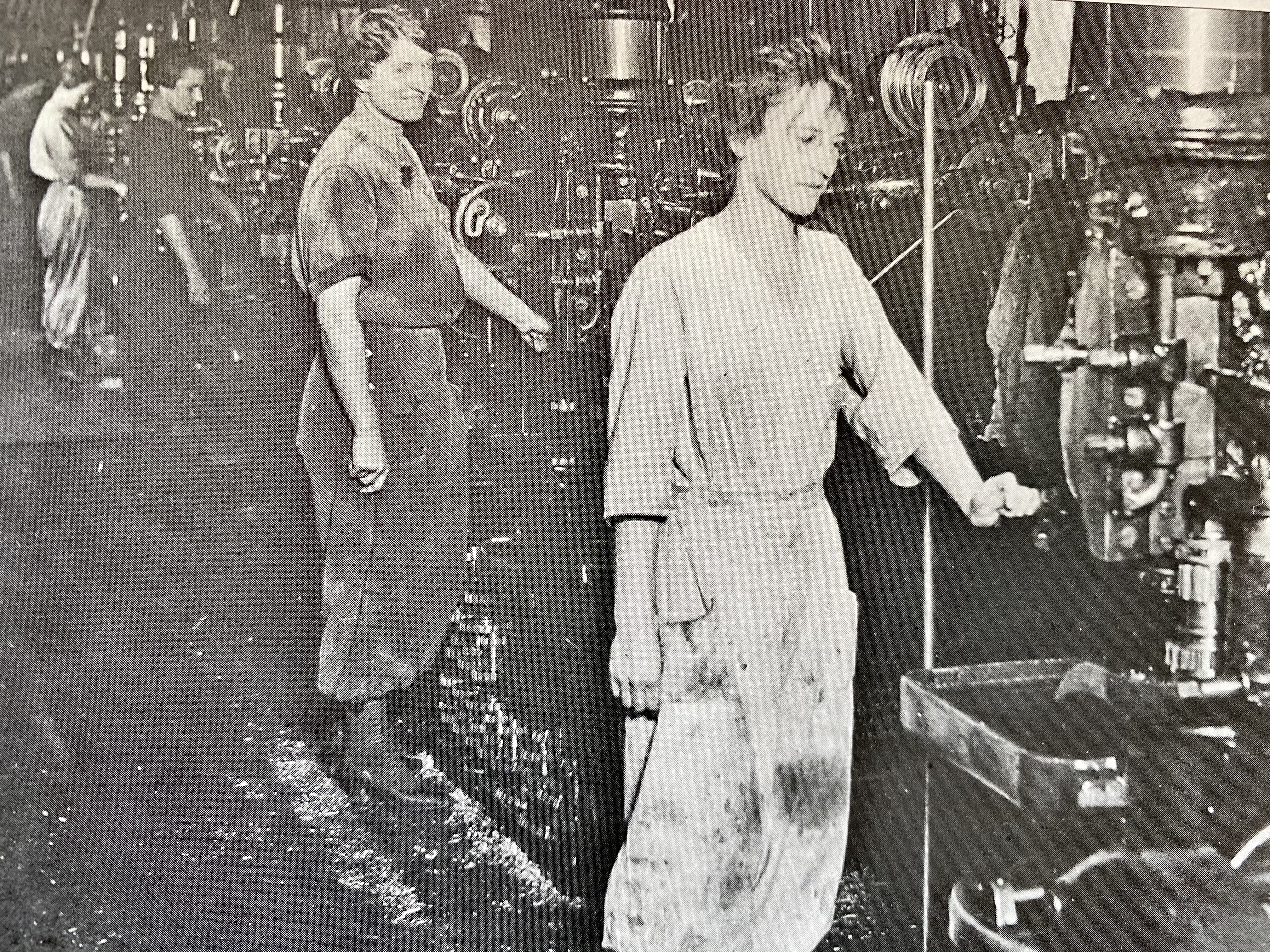
Drill press operators at Bethlehem Steel during WWI

Women operating drill presses at Bethlehem Steel during the First World War

He talked about how Bethlehem Steel took a lead in fighting the spread of the virus, which killed more than 67,000 Pennsylvanians and some 50 million people worldwide. At the time, south Bethlehem was packed with 31,000 workers making guns, shells, armor plate, submarine parts and other materiel for the First World War.

The company was the No. 1 munitions maker in America and had been frenetically serving the Allied cause since the war began in 1914. When the Lusitania was torpedoed and sunk by a German submarine in 1915, the great passenger liner was carrying 1,250 cases of artillery shells headed for the British army. (That piece of info comes from Erik Larson’s book Dead Wake.)

I knew about the steelmaker’s lucrative role in the war effort from my work on Forging America: The Story of Bethlehem Steel, a 117-page special section published by The Morning Call in December 2003 as the once-mighty corporation was passing out of existence. It was published again as a softcover book in 2010.

What I didn’t know was that the company went to great lengths to protect its workers and the people of Bethlehem from the deadly virus, and how that was done with commendable results.

As Higgins told it, the head of Bethlehem Steel’s medical division, Dr. Loyal Shoudy, visited Camp Devens, Massachusetts, the first major military camp to be hit by the second wave of ultra-virulent flu in the fall of 1918. A hundred men were dying there each day. It was clear to Shoudy that people couldn’t take care of themselves during the outbreak; they had to be hospitalized.

At a City Council meeting near the end of September, Bethlehem’s leaders realized that the virus was catastrophic and would come to their town. They would have to prepare. The mayor, Archibald Johnston, also was first vice president of Bethlehem Steel, so he could move the bureaucracy in both the city and at the steel plant. Shoudy would direct the medical efforts.

The company and the military, which had close ties to the plant, asked the state to impose a crowd ban – social distancing — in the Lehigh Valley. Pennsylvania’s acting health commissioner, Benjamin Royer, liked the idea and went even further, imposing a ban all across the state.

Bethlehem closed schools, including Lehigh University and Moravian College, and houses of worship. Police raided cafes and hotels to keep people apart.

In the Northampton Heights neighborhood, Bethlehem Steel did something extraordinary. The first week of October, it opened an emergency hospital — not just for its workers, but for everyone in Bethlehem. Shoudy managed it. The company covered all of the costs, including cots, sheets, medicine, food and pay for the doctors and nurses. Army doctors were brought over from Camp Crane in Allentown, the training site for ambulance drivers headed to France. Homes and boardinghouses were searched for sick people, who were taken to the hospital for professional medical care.

“In my estimation,” Higgins said, “that saved dozens and dozens of lives.”

Where exactly was the emergency hospital? Apparently, Higgins said, the site was paved over about 60 years ago to make room for a basic oxygen furnace.

Bethlehem’s war production never faltered, and Bethlehem had the lowest death rate among cities its size for flu and pneumonia. Its mortality rate was far lower than that of mill towns in western Pennsylvania, such as Braddock and Homestead.

“Bethlehem Steel made little or no effort to ameliorate the plight of its workers and their families during any other epidemic in the late 19th and early 20th century,” Higgins said. “I think more than anything else, what Bethlehem Steel wanted to do was protect production. If you protect production, you protect profits.”

To see Higgins’ hour-long presentation, go to the NMIH Virtual Museum and scroll down to “Bethlehem Steel, Industry, and the 1918 Influenza Pandemic with James Higgins.” Click on the video. The host is Glenn Koehler, who handles marketing and public relations for the museum, which is on the old Bethlehem Steel site.

You’ll learn a lot. How Bethlehem Steel fought the pandemic of 1918-19 is a lesson that resonates today, as we struggle to blunt the contagion of the killer coronavirus.

Scout’s honor: How a WWII hero got recognition

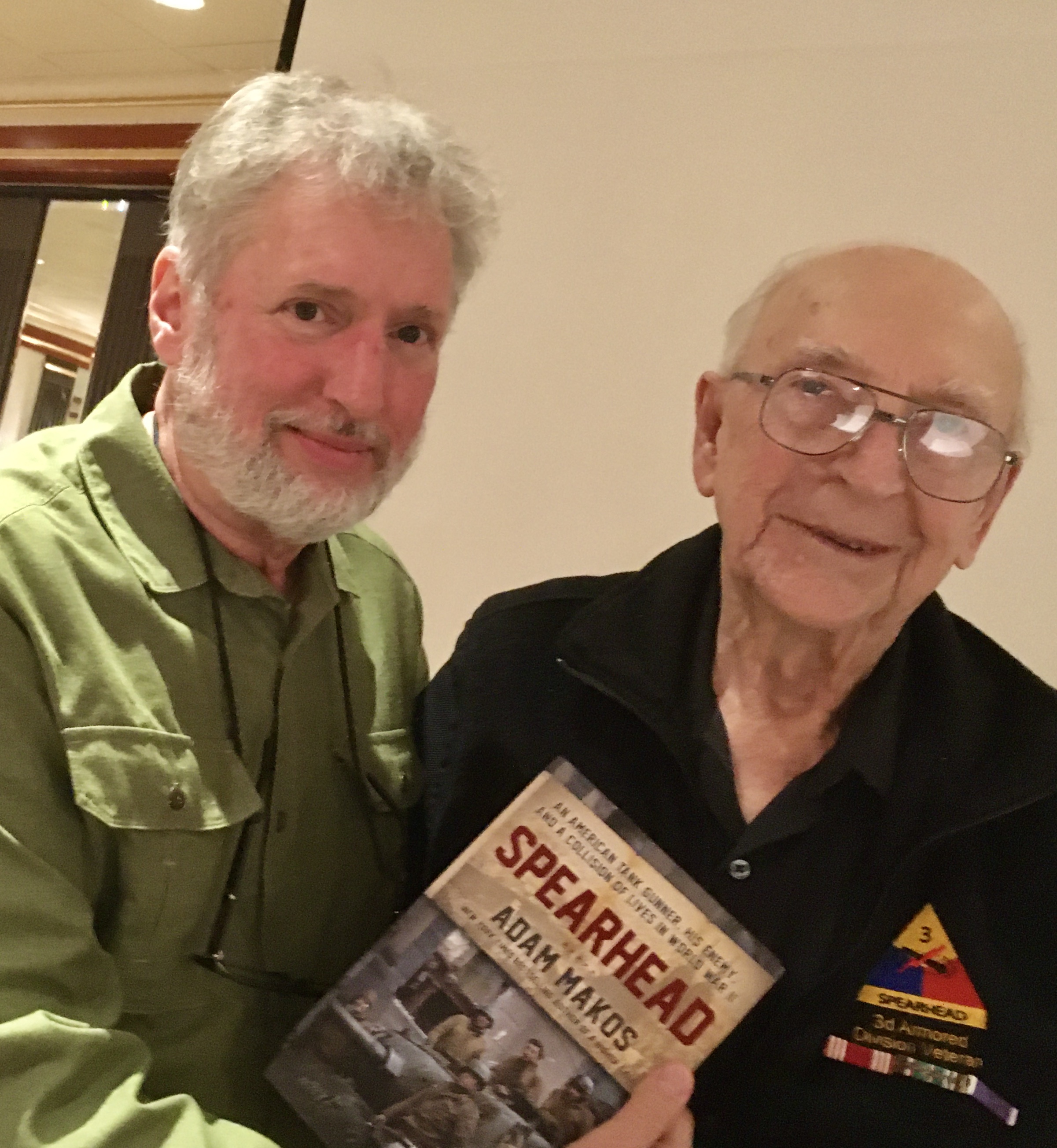
World War II hero Clarence Smoyer with David Venditta

Famed World War II tank gunner Clarence Smoyer with me at October 15, 2019, meeting of the Lehigh Valley Veterans of the Battle of the Bulge outside Bethlehem, Pennsylvania.

You might have heard of Clarence Smoyer.

There’s a best-selling book, Spearhead, which says on its cover, “An American tank gunner, his enemy and a collision of lives in World War II.”

Smoyer is the tank gunner the book is about. He played a crucial role in the battle for Cologne, Germany’s “Fortress City.” He happens to live in Allentown, Pennsylvania, as I do.

Over the course of seventeen years, I interviewed more than a hundred war veterans for The Morning Call. Smoyer wasn’t among them. How did I overlook an outstanding ex-soldier who was practically in my backyard?

I never knew about him, that’s why. No one told me there was a guy originally from Lehighton whose duel with a German Panther tank in Cologne was caught on film and made him a hero. What a gripping and remarkable story he had to tell!

And best-selling author Adam Makos told it in Spearhead, published this year.

So, how did Makos know about Smoyer?

A former co-worker of mine, reporter Nicole Radzievich, wrote about Smoyer several times this year for The Call and pointed me to an online story by WNEP-TV near Scranton.

Peter Semanoff met Smoyer almost twenty years ago while doing an Eagle Scout project with World War II veterans in Lehighton, WNEP reported. Semanoff later went to Lycoming College, where he got to know Makos, a fellow student. Makos became a writer of WWII stories, and Semanoff urged him to interview Smoyer. He was persistent about it over the years, and Makos ultimately took him up on it. The result was Spearhead.

A part of Semanoff’s story jogged my memory. Eight years ago, when I was still at The Call, someone called my attention to an Eagle Scout project – a booklet of interviews with Lehigh Valley veterans. The Scout was Keegan Amal Boyle of Troop 306 in Bethlehem.

For reasons I can’t recall, I didn’t do anything with the tip, other than save a digital copy of Boyle’s booklet. It was a missed opportunity. Now I was wondering if he, like Semanoff, had interviewed Smoyer. It was just a hunch.

I looked at the booklet for the first since time since I’d gotten it.

“I wanted to work on an Eagle Scout project that would represent the influences of the Lehigh Valley on the world,” Boyle wrote in his introduction. “I wanted to invoke inspiration in the minds of the citizens of this area by demonstrating the rich history that we have in our own backyards.”

He wrote that World War II veterans “represent the foundation of America and the values that our country protects. … My main objective in publishing these stories is to capture the essence of a time when American loyalty meant more than saying the Pledge of Allegiance.”

Boyle’s booklet, which he self-published, contains his stories on fifteen veterans, with now-and-then photos of each. Among the interviewees is Charles Gubish, a Marine I wrote about in 2015 for my series, War Stories in Their Own Words.

And yes, Smoyer is in the booklet. Boyle quotes him as being employed as a woodworker in Slatington and working at Bethlehem Steel before he was drafted into the Army. The interview doesn’t touch on Smoyer’s combat experiences. It’s chronological and ends with his arrival in England to train for the invasion of Normandy.

Boyle got his Eagle Scout Award in August 2011. He was eighteen. He planned to attend McDaniel College in Maryland and study law. I’d like to get in touch with him.

In September at the World War II Memorial in Washington, Smoyer was awarded a Bronze Star, which he had been in line to get almost 75 years ago. The medal was pinned on the 96-year-old by Army Maj. Peter Semanoff, who had met Smoyer while doing an Eagle Scout project nearly two decades ago and persuaded Makos to interview him.

Dear Nicky, we’ve missed you these 50 years

Nicky Venditti

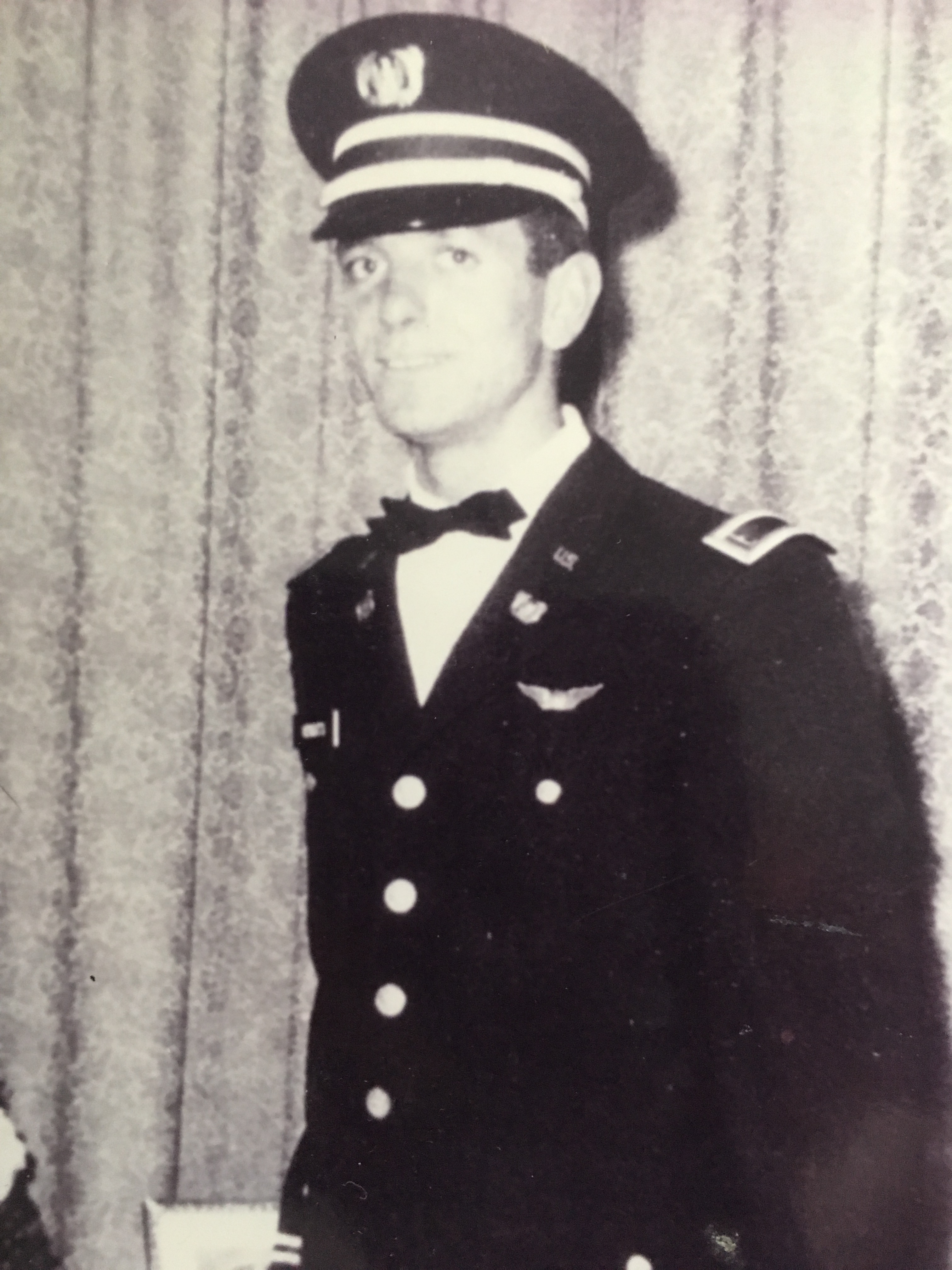
Warrant Officer Nicholas L. Venditti at home in Malvern, Pennsylvania, in June 1969, just before leaving for Vietnam. In a few weeks, he will die.

The fiftieth anniversary of the moon landing recalls a grim week in my family’s history. The day before the Apollo 11 launch, my cousin Nicky Venditti died in Vietnam.

It was his eleventh day in the country. He hadn’t even set foot in a Huey helicopter, which he had learned to fly, and it wasn’t the enemy that killed him. It was a training accident. A sergeant teaching a class on grenade safety for new arrivals set off a live grenade by mistake. Nicky was badly cut up in the explosion and lost a leg below the knee. He hung on at first, but died in an evacuation hospital five days later, on July 15, 1969.

I went to Vietnam in 1998 and connected with Nicky at the former U.S. base at Chu Lai, along the South China Sea. Under the sun, in awful heat and haunting silence, I stood first where the orientation building had been, on a landing zone called Bayonet, and then at the hospital site on a bluff by the sea. It was part of my twenty-year effort to re-create Nicky’s life and learn the details of what happened to him – work that resulted in my book Tragedy at Chu Lai.

My roses at Nicky's grave

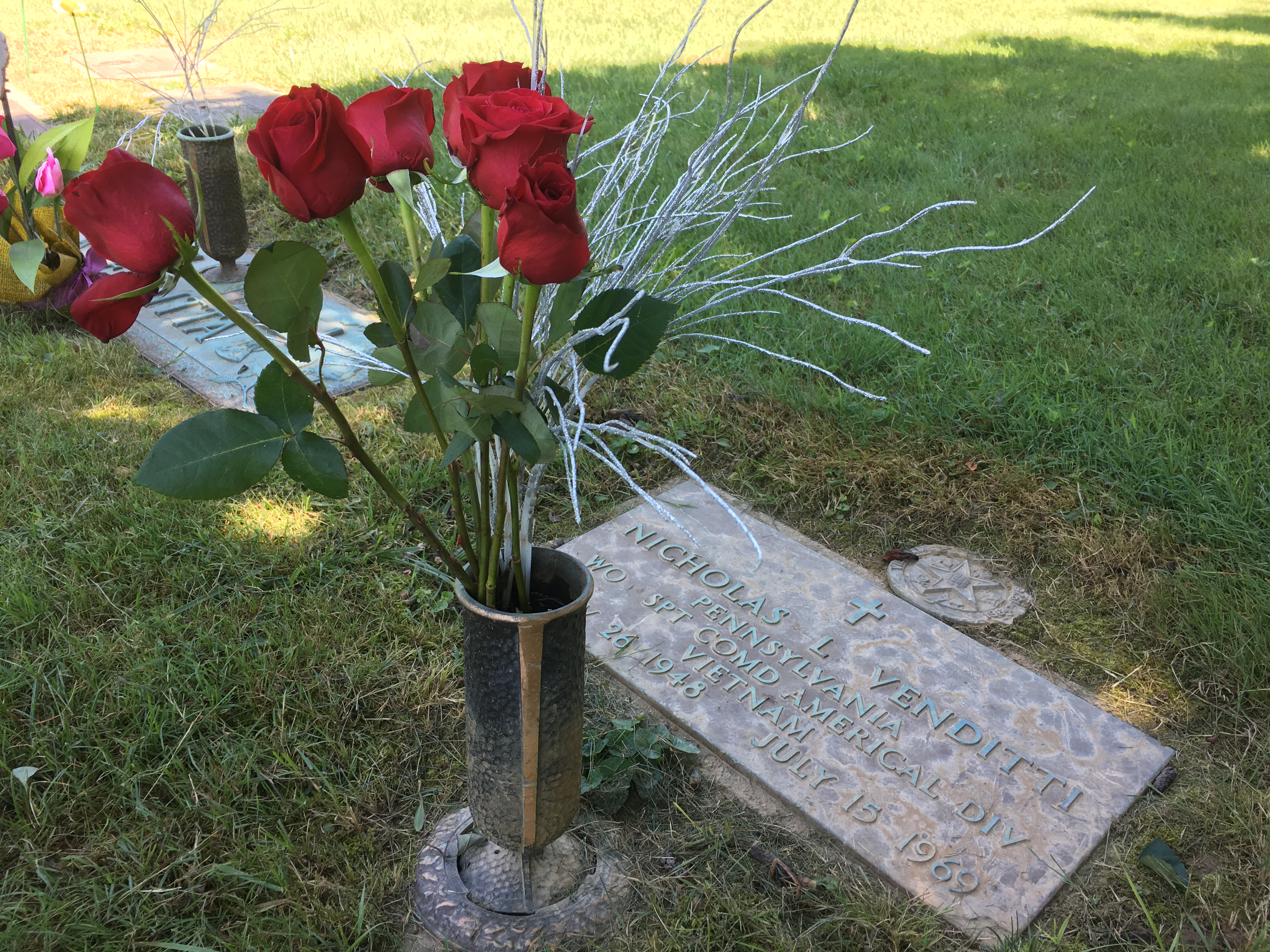
The roses I placed on Nicky’s grave July 15, 2019

When I started the project in the mid-1990s, I visited Nicky’s grave at Philadelphia Memorial Park in Frazer. “I know what happened to you,” I said. “Now I want to get to know you.” He was twenty when he went to Vietnam as an Army helicopter pilot, and I was fifteen, a big gulf when you’re a kid. We came from a large Italian family, lived in different towns and saw each other only on special occasions. I remember he once smiled and said “Hi” to me at a family picnic. The only other time I recall seeing him was at a party at his parents’ home in Malvern, Pennsylvania, held to send him off to boot camp.

Last Monday, July 15, for the first time in years, I went to Nicky’s grave again, this time with roses to lay there. I sat on the grass in the shade of magnolia trees and spoke to him, some of it mere chit-chat. But I was solemn as well. How sad and unfair it was, I said, that he had missed out on fifty years of living. I wanted him to know that his family and friends remember him, mourn him and wish he were still here with us.

I like to think that somehow Nicky knew I was there and got the message.

From cockpit to Norden bombsight: My father-in-law’s World War II journey

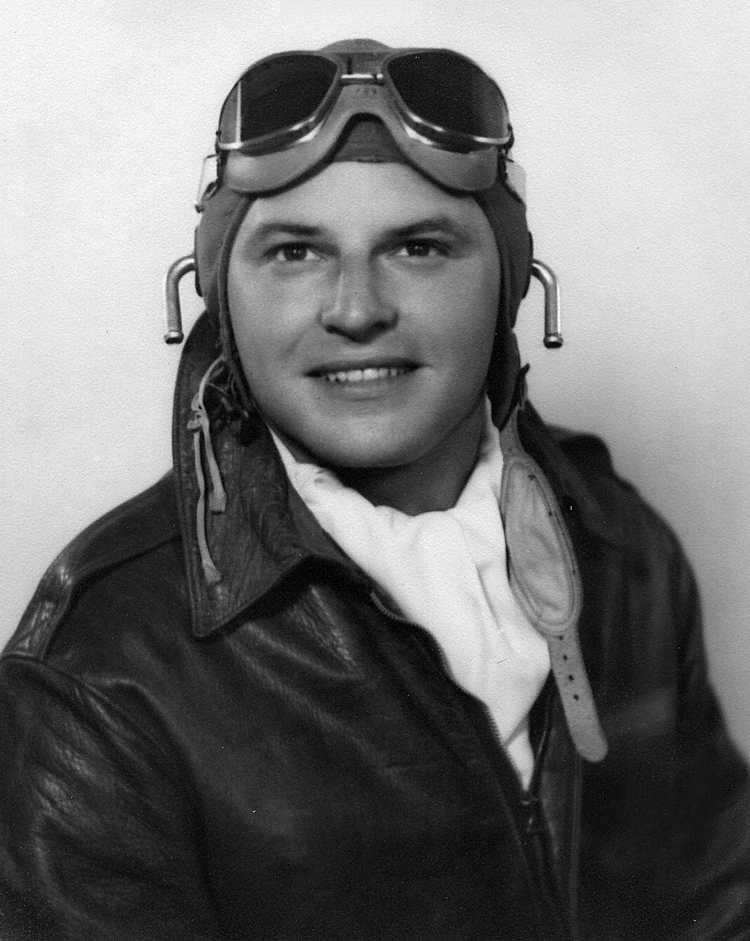
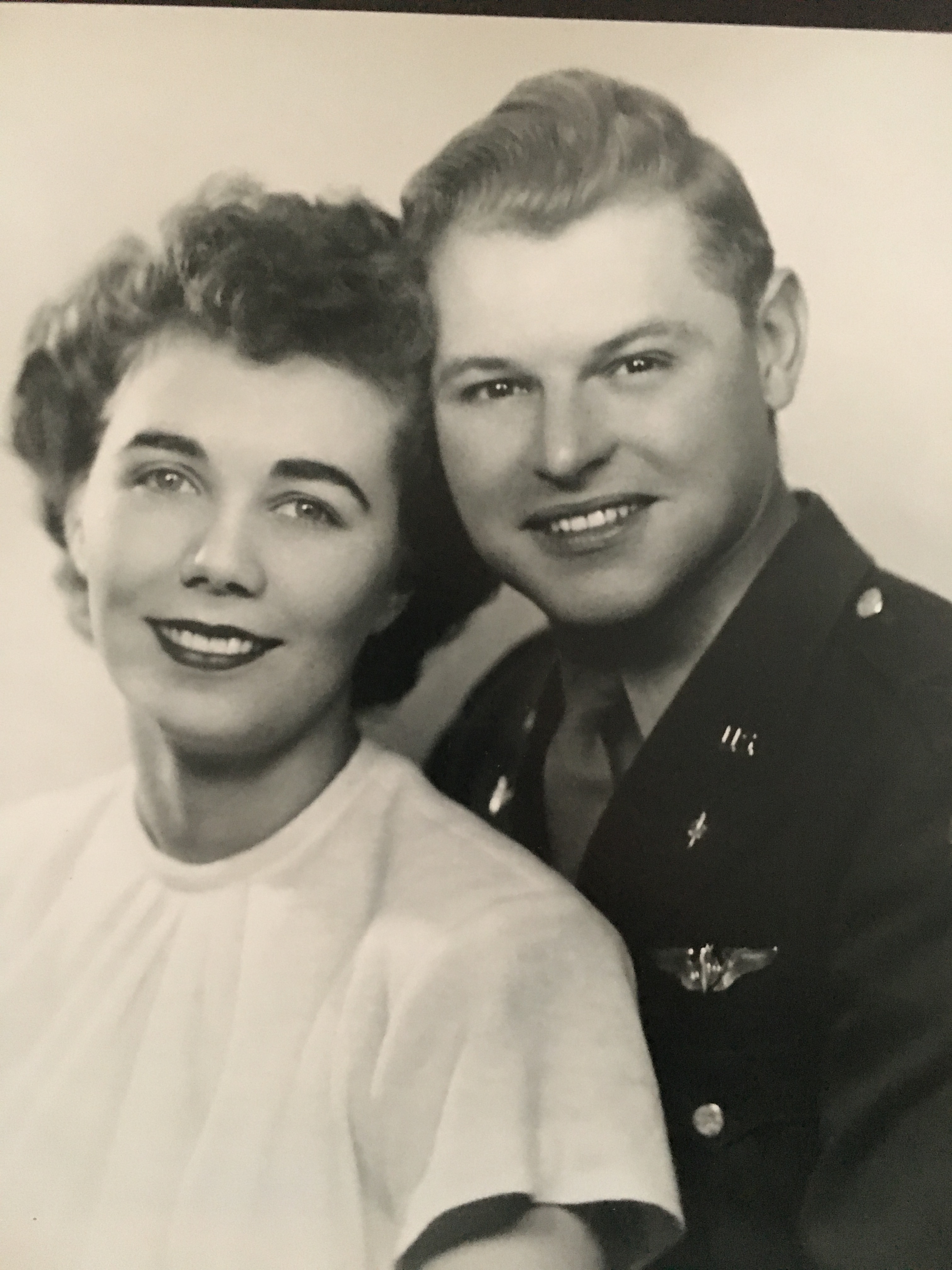
Harry F. Schleicher as an aviation cadet in World War II

More than just about anything, Harry Schleicher wanted to fly for the Army Air Forces in World War II. He had two years of college behind him, and experience working in a chemical lab, when he left his home in Easton, Pennsylvania, to become a pilot. It was 1943.

Months of training followed, ultimately taking him to California, where he met a woman at a USO dance who would soon become his wife.

But the bottom fell out of his dream. A mistake at the end of a practice flight, a flawed landing, marked the end of his days in a cockpit. The Air Corps, with a host of pilot candidates on tap, could afford to be selective. Harry was dropped from the program.

He put his disappointment behind him and went to bombardier school in Texas, where he was stationed when the war ended. This time he made the grade.

Now an officer, he stayed on to teach others – including young fliers from China, which was then embroiled in a civil war – how to use the ingenious Norden bombsight.

Forty-one years later, when I married his younger daughter, Harry was a musician, a retired metallurgist and a retired captain in the Air Force Reserve with a hobby of building radio-controlled model planes. He happily noted my interest in historic aviation, buying me a plastic kit for the enormous B-36 Peacemaker bomber and taking me to the Old Rhinebeck Aerodrome, where we saw biplanes “dogfighting” over a make-believe French village. We even went for a small-plane ride over the Lehigh Valley, a birthday gift from his wife, Naomi.

Cancer took Harry’s life in 1999, when he was 80. Naomi gave her daughter Mary and me all of his service records and Air Force pins and insignias, and even several caps he’d worn. We’ve kept these belongings in a plastic bin stored in the attic, where I also have my dad’s World War II memorabilia.

Recently I got out Harry’s things and started leafing through the paperwork. There was so much, it was overwhelming. He seemed to have held onto everything, his Air Corps orders, medical reports, even his handwritten flight logs from when he was an aviation cadet. Everything came with dates, but it was all scattered and unconnected.

That’s when I got the idea of how I could pay tribute to my father-in-law for his service to the country. By culling these documents, I could find order in his experience. I could narrate the story of his military career by walking through it as it happened, one step at a time. It seemed the best way to do that was to compile a timeline.

After days of poring over his papers, here’s what I came up with:

HARRY F. SCHLEICHER

1919

July 20: Harry is born in Easton, Pennsylvania.

Harry as a student at Easton High School, 1937

1937

June 23: He graduates from Easton High School.

1940

November 12: At age 21, he starts work at Ingersoll-Rand Co., Phillipsburg, New Jersey, in Metallurgical Department’s chemical lab. His job is to analyze metals.

1942

Harry leaves Lafayette College after two years. He studied metallurgy and chemistry.

1943:

March: Harry’s father, Harry H. Schleicher, dies. He was a mail carrier.

May 20: Harry completes a course in metallurgy and metallography in Engineering Science and Management War Training Program at Lafayette.

August 7: He gets three references to help him qualify for flight training. One is from Walter W. Seibert, M.D., who wrote in part: “Reliance can be placed upon his integrity and honesty.” Another is from B.F. Shepherd, chief metallurgist at Ingersoll-Rand: “His work … has been excellent from the standpoint of both quality and quantity. His attitude and ability to get along with his fellow workers are outstanding.” Elton E. Stone, principal of Easton High School: “[Harry’s] moral character and conduct were excellent. … He belonged to the German Club, the band and the orchestra. He was honest and obedient. I believe him to be a loyal American citizen.”

August 9: Harry is ordered to report for Army physical on August 16 at 32nd Street and Lancaster Avenue, Philadelphia.

August 16: At physical exam in Philadelphia, Harry states he has no fear of flying. He says he had measles, mumps, whooping-cough and chicken pox as a boy. He has had no serious illnesses or head injury or operations, no hay fever, asthma or other allergy. His family history is “negative.” The two flight surgeons who examined him say he meets physical requirements and they “recommend appointment for aviation cadet training.”

August 19: Aviation Cadet Examining Board in Allentown finds Harry qualified for aviation cadet training.

September 22: He is inducted into Army at age 24 with 13 others selected by Draft Board 1 in Easton. He is assistant leader of the group, meaning he was responsible for enforcing Selective Service regulations on their way to induction station at Allentown.

October 11: In Philadelphia, he enters active service.

October 15: Harry is an Army Air Forces private in 308th Training Group at Sheppard Field in Wichita Falls, Texas. He applies for $10,000 in National Service Life Insurance, naming his mother, Florence Amelia Schleicher of Easton, as beneficiary. Premium is $6.80 a month, deducted from his pay.

November 29: An aviation student, Harry arrives at Texas Technological College in Lubbock as part of 309th College Training Detachment (Aircrew). He is assigned to Section 102 of Class 43-C-17 for academic and flying instruction.

1944

February 9: At Texas Tech, he is appointed an aviation student captain with duty as band captain.

April 4: Harry starts preliminary ground instruction.

April 5: He goes on his first training flight. An instructor takes him up in a Taylorcraft L-2 Grasshopper and demonstrates cockpit procedure, taxiing, takeoffs, landings.
Harry (back row, second from left) at Texas Tech

April 10: Harry graduates from training at Texas Tech. Next stop is Santa Ana Army Air Base in Costa Mesa, California, a basic training site in Orange County that has no planes, hangars or runways.

May 11: At Santa Ana, a report on a dental exam notes that defects in several of Harry’s teeth have been corrected.

June 6: On what is D-Day in Normandy, a medical officer at Santa Ana lists Harry as “qualified for flying.”

August 5: As aviation cadet, he starts primary pilot training at Rankin Field near Tulare in heart of California’s Central Valley. Tulare is 60 miles north of Bakersfield.

September 1: He flies solo in a Stearman PT-13D Kaydet biplane for 40 minutes at Visalia-Dinuba School of Aeronautics in Visalia, eight miles north of Tulare.

October 25: At Tulare, he solos for 25 minutes in a PT-17 Stearman biplane.

November 20: He completes primary pilot training at Tulare, earning a certificate of proficiency.

November 25: At basic flying school in Merced, in San Joaquin Valley, he has orientation ride with instructor in advanced trainer AT-6D Texan. It lasts 50 minutes. Next day, he goes up again with instructor, getting demonstration of stalls, spins.

November or December: Harry meets Naomi Dees at a USO dance in Merced, where she is volunteering at a snack bar. Naomi, 22, graduated from Fresno State University the year before and is a fourth-grade teacher at John C. Fremont Elementary School in Merced.

December 20: Harry flies solo for 15 minutes in an AT-6D at Merced Army Air Field.

1945

January 30: Harry washes out of pilot training. Elimination comes after he made a faulty landing. He’ll return to Texas.
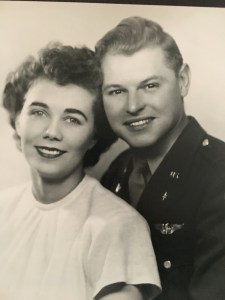
Naomi Dees and Harry on their wedding day in Easton, Pennsylvania

April 1: He and Naomi are married at St. Mark’s United Church of Christ in Easton. Harry is 25, Naomi, 22.

May 2: Aviation Cadet Schleicher starts training for aircraft observer (bombardier) at Midland Army Air Field in Texas.

May 8: War in Europe ends with defeat of Nazi Germany.

July 23: Harry, at Army Air Forces Bombardier School in Big Spring, Texas, is found physically qualified for flying.

September 2: Japan surrenders, bringing World War II to an end.

October 16: Harry is honorably discharged as an aviation cadet at Midland to accept a commission as second lieutenant in Air Corps. His enlistment record describes him as having brown hair, brown eyes and a ruddy complexion. He is 5 feet, 7½ inches tall. He completed two years and 24 days of service. His character is “excellent.”

October 17: He completes training for aircraft observer (bombardier) at Midland Army Air Field and becomes an officer with rank of second lieutenant. He begins training U.S. cadets, officer returnees and Chinese students in use of Norden bombsight.

December 21: Harry is released from assignment with Squadron B of Army Air Forces Central School for Bombing at Midland. A summary of his flying time shows he racked up 55 hours as a bombardier and 159 as an aviation student, for a total of 214 flying hours. His 19 flights as a bombardier were in the twin-engine AT-11 Kansan.

1946

January 8: Second Lt. Schleicher reports to Randolph Field near San Antonio, Texas, for start of processing to leave Army.

January 9: He’s appointed as a first lieutenant in Air Corps Reserve.

January 18: He is discharged at Randolph Field after four months as a second lieutenant with a military occupational specialty of bombardier instructor. A summary says he “successfully completed extensive course in bombardiering in AAF cadet schools. Had four months’ experience in instructing student bombardiers in basic and tactical use of Norden bombsight.” Schools he attended were pre-flight, 2½ months at Santa Ana, California; primary, 2½ month at Visalia, California; primary, 1 month at Tulare, California; basic, 2½ months at Merced, California; advanced bombardier, five months at Big Spring, Texas; advanced bombardier, one-half month at Midland, Texas. He’s authorized to receive American Campaign Medal and World War II Victory Medal.

1947

September 18: U.S. Air Force becomes a separate military service with implementation of National Security Act of 1947.

1948

April: Harry and Naomi’s daughter Anne is born.

1950

February 20: Harry applies to Commonwealth of Pennsylvania for World War II compensation, available to honorably discharged veterans or those still in service. He ends up getting $280 for 28 months of stateside service.

1951

April: Daughter Mary is born.

1952

January 9: In an Air Force Reserve questionnaire, Harry describes his work at Ingersoll-Rand as “chemical analysis, methods development, recommendations, and a minimum of research.” He’s a musician – he plays piano, violin, saxophone and clarinet – and a music teacher in his spare time. He completed two years at Lafayette College and the equivalent of two years at Texas Tech. He can read and write German. He belongs to Lehigh Valley Engineering Club and American Chemical Society.

October 29: He is appointed as a reserve officer in Air Force for an indefinite term. His rank is first lieutenant.

1954

October 17: He tours Westover Air Force Base in Massachusetts with 18 other members of Flight B, 9544th Volunteer Air Reserve Training Unit Squadron. They are among 41 Lehigh Valley reservists on trip as part of their training. A highlight is seeing one of the new C-124 Globemaster cargo planes, which can carry 200 men and their equipment.

1955

February 8: Harry is promoted to captain. He’s invited to a ceremony later in the month.

February 19: He gets his promotion orders and congratulations at official opening ceremonies of 2605th Air Reserve Center, Continental Air Command, in Wilkes-Barre, Pennsylvania. He’s among 42 reserve officers promoted.

1956

January 19: Wilkes-Barre Air Reserve Center announces change of permanent residence of Capt. Schleicher, of 9544th Air Reserve Squadron, 9101st Air Reserve Group in Allentown. Change is from Easton to Bethlehem Township.

August 10: Harry graduates from reserve officer orientation course run by Air Command and Staff College of Air University at Maxwell Air Force Base, Alabama. He’s a member of Squadron Officer School Class 56.

1962

February 7: Harry is assigned to inactive status.

April 4: He retires from Air Force Reserve as a captain. He is 42.

May 1: He’s transferred to Retired Reserve, having completed “a minimum of eight years of honorable service in an active status, including six months on active duty in time of war or national emergency.”

Besides the pile of Harry’s documents, our house has other reminders of his flyboy past. A radio-controlled plane Harry built, a T-28 Trojan military trainer with a wing span of almost a yard, hangs on a wall in our basement.

The plastic-model B-36 bomber hangs from the ceiling in my home office, a reminder of Harry’s deep interest in military aviation and how he wanted to share it with me.

Finding a century-old tale of a tragic soldier

Sgt. Boyle clips from Allentown Morning Call (left) and Allentown Democrat

Clips of Page 1 stories from the Allentown Morning Call (left) and the Allentown Democrat on April 11, 1918, the day after Sgt. James J. Boyle’s deadly rampage.

It’s amazing how a story idea can hit you when you aren’t looking for one.

That’s what happened to me last year while I was paging through a Sunday edition of The Morning Call.

The paper has a terrific feature that shows images of Morning Call front pages from 100 years ago, 50 years ago and 25 years ago. I like to see how the news of the day was handled.

On this particular Sunday, a two-column headline atop the Allentown Morning Call of April 11, 1918, caught my eye.

SERGT. JAS. BOYLE OF THIS CITY
RAN AMUCK AT FORT WRIGHT;
TWO KILLED AND FOUR WOUNDED

What happened, exactly? Where was Fort Wright? I couldn’t read the text, because the photo reproduction of the page was too small. But I subscribe to Newspapers.com, and that’s where I learned about Sgt. James J. Boyle’s dark deed at a fort off the Connecticut coast. He was posted there with the Coast Artillery Corps, getting ready to go to France as World War I raged. In “a crazed state of mind,” he went through a barracks shooting other soldiers, then killed himself.

Papers across the country carried the story, but nothing had been written about Boyle and his rampage since April 1918. I wanted to change that.

Old newspaper clippings wouldn’t be enough. I needed Army records, especially a report of investigation, assuming there had been one. It turned out that the National Archives at St. Louis has paperwork on Boyle, but not his official military personnel file, which an archivist said might have been destroyed in the massive 1973 fire at the National Personnel Records Center.

The National Archives does have Boyle’s burial case file, which documents the disposition of his remains and briefly mentions how he died. It has a VA master index card for him, showing such details as date of birth, service number and unit information. And it has his deceased veteran claim file, which tracks the benefits Boyle received in and out of service, and the benefits his family received after his death. This file also has the key item – a report about the incident.

I was thrilled.

The material totaled 216 pages and was rich with information. But when I got to the middle of the stack and saw the two-page typewritten report of investigation, I was sorely disappointed. The first photocopied page was almost completely unreadable; the other I could just barely make out. A call to the archivist resolved the problem. That afternoon, he emailed me two scans of the illegible page, one of which he worked on to sharpen the image, the other untouched. Calling these up on my screen, I could zoom in on the text and make out the words.

The report by four Army officers was critical to my story. It gave an account of Boyle’s behavior before the shootings, a moment-by-moment narrative of his spree; and the Army’s conclusion that he was physically ill and insane at the time. It put the toll at five dead, including Boyle, and two wounded. It noted that one of Boyle’s victims didn’t die from gunfire, as newspapers reported, but from trying to avoid being shot – he jumped from a second-floor porch and fractured his skull on the steps below.

IMG_3655

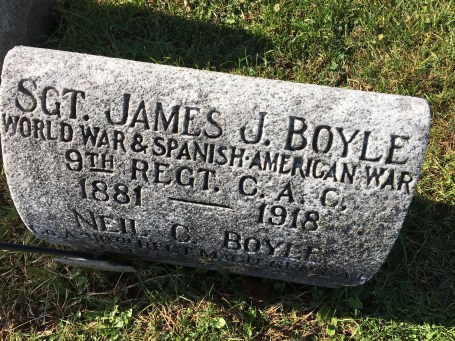
Boyle’s gravestone in the Immaculate Conception Catholic Church cemetery, Allentown. He was in the 9th Company, not the 9th Regiment, Coast Artillery Corps.

One blustery cold Saturday morning, I stood at Boyle’s grave in an Allentown churchyard. Later, a visit to the U.S. Army Heritage and Education Center in Carlisle gave me background information on the units he served in: the 6th Field Artillery Regiment, the 311th Machine Gun Battalion and the Coast Artillery Corps.

The Morning Call posted my story online on December 29 and ran it in the Sunday paper the next day. Here’s the link: https://bit.ly/2sDnyiY

I’m glad I could tell the story of Sgt. Boyle’s life and death. To a great extent, I was lucky. If the newspaper hadn’t reproduced the April 11, 1918, front page, and if I hadn’t looked at it closely, I might never have known about this tragic soldier.


They sacrificed their dreams

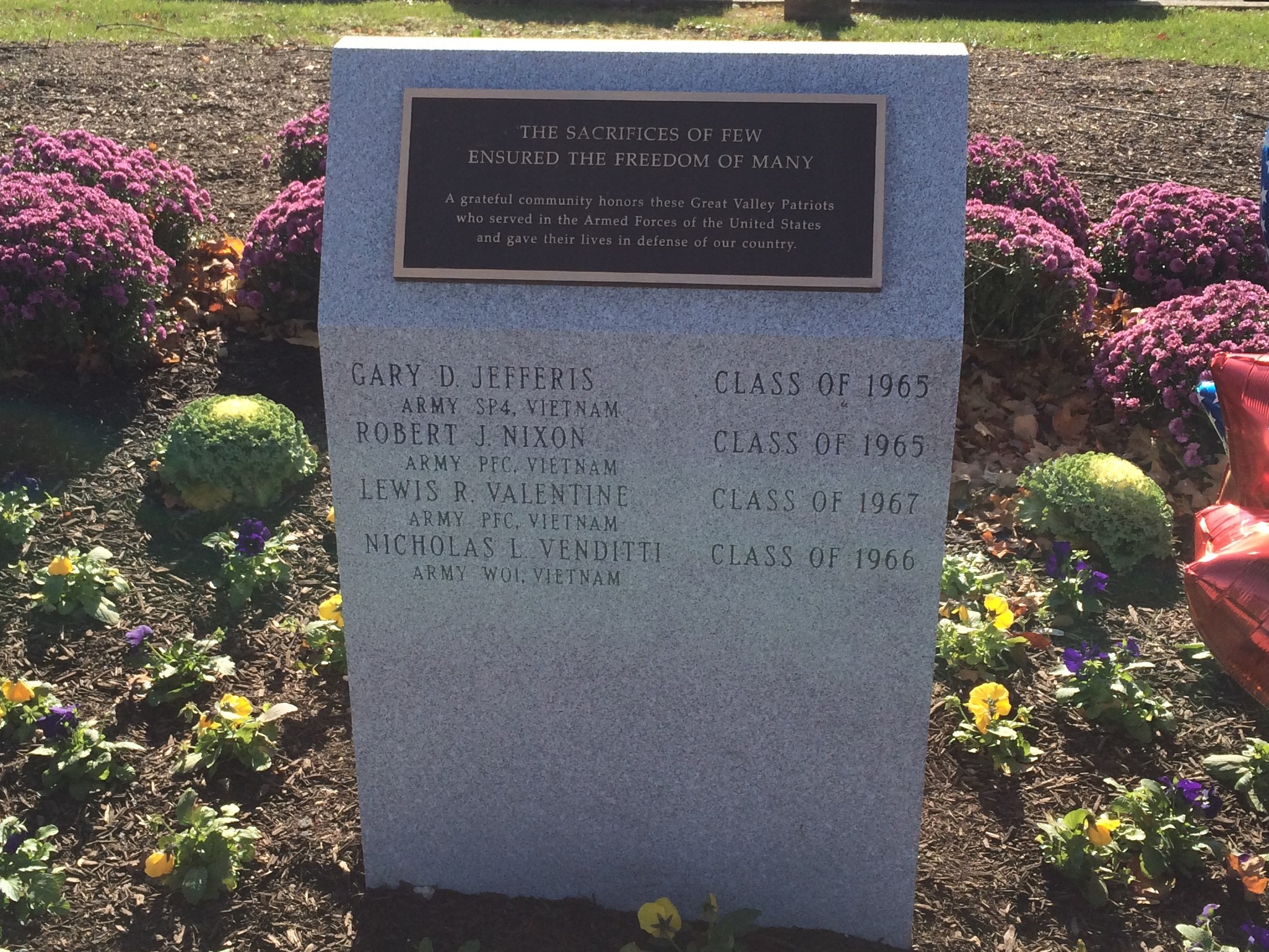
More than a hundred people came to Great Valley High School in Malvern, Pennsylvania, on November 11, Veterans Day, for the dedication of a memorial to the school’s war dead. It was an event that had special meaning for me.

All four honorees graduated in the mid-1960s and died in the Vietnam War. Their names are on the memorial: Gary D. Jefferis, Robert J. Nixon, Lewis R. Valentine and Nicholas L. Venditti, who was my cousin and the subject of my book Tragedy at Chu Lai https://tragedyatchulai.com/.

I was unable to attend the ceremony, but later John Herr of the memorial committee sent me photos, and Brian Peterman, a 1968 graduate and retired Coast Guard vice admiral https://www.commandcg.com/dpeterman.html, emailed me the text of his speech. It brought tears to my eyes. With his permission, I’m posting it here:

Great Valley Memorial Dedication

On this Veterans Day 2018, I’d like to start by thanking all the veterans present for your service and sacrifice. The focus of today, however, is to honor four Great Valley graduates and veterans who cannot stand with us to be honored:

Robert Nixon
Gary Jefferis
Nick Venditti
Lewis Valentine

Let’s look back in time to the early 1960s. These four men were among the first to attend the new Great Valley High School. It was a turbulent time in our nation’s history, fighting an unpopular war. The Patriot was chosen as the new school’s mascot, a square-jawed, steely-eyed Continental soldier carrying a musket and ready to go into battle. After these four men graduated, their country called them to serve and they answered that call, perhaps inspired by their high school mascot.

These patriots made the ultimate sacrifice in service to their nation, their community and to us. They never had the opportunity to make lifetime achievements that might have earned them a place as a distinguished alumnus because they died so young. But if the spirit of the Great Valley Patriot is the measure of what a distinguished alumnus should be, then these four Patriots are by far the elite of distinguished alumni.

I’d like to thank the Great Valley Foundation, the Great Valley Alumni Association, the Great Valley School District and all the people who donated their time, talent and treasure to erect this fitting memorial to the men who are most worthy of recognition as elite Patriots.

To the families of our fallen heroes, there are no words to adequately express our deep appreciation for the sacrifice you made. On behalf of a grateful nation and community, we place this monument here today so that the sacrifice made by your loved one will never be forgotten.

And to the students of Great Valley High School, this monument is also for you. It is a reminder that the freedoms you enjoy come at a great cost. These four Patriots and many other heroes have given their lives so that you can enjoy these freedoms. Cherish them and use them responsibly. These men walked the same halls of Great Valley High School as you do now, and they had the same dreams of a future of success and family. They sacrificed those dreams for you.

You use the Great Valley Patriot as a mascot to inspire enthusiasm for your sports and academic teams. I suggest you think of the Patriot as an inspiration for even more and ask yourselves how you can serve your nation and community. Come out here often and be reminded of the sacrifice made by these Great Valley Patriots and continue to honor these heroes just as we are doing today.

A man never dies until he is forgotten. That will never happen here.

Great Valley High School to honor its war dead

For many who went to war and didn’t come back, high school had been their last stop before the military – four years of fun and learning. It’s fitting, then, that some schools put up permanent reminders of their sacrifice.

Great Valley High School in Malvern, Pennsylvania, will be doing just that, erecting a veterans memorial on campus. One of the young men it will honor is my cousin Nicholas Venditti, Class of ’66, the subject of my book Tragedy at Chu Lai https://tragedyatchulai.com/

Three other alumni will be honored. All of them – like Nicky – were killed in the Vietnam War. They were Robert Nixon and Gary Jefferis, both from the Class of ’65, and Lewis Valentine, Class of ’67. There were no alumni deaths from World Wars I and II and the Korean War because the school was new, opening in 1962. No graduates were found to have died in the U.S. wars that followed Vietnam.

Until now, the high school only had an undated plaque bearing the names of Jefferis, Nixon, Valentine and Venditti. It was presented by the Interact Club, a student organization with ties to the Kiwanis Club. While working on my book in the 1990s, I found the plaque in a glass display case in the school’s main hallway.

The new veterans memorial is the work of the Alumni Association and the Foundation at Great Valley, along with the school district. A Go Fund Me campaign,
https://www.gofundme.com/GVVeteransmemorial, has raised $10,000 for the project. A dedication will be held at 2 p.m. Sunday, November 11, Veterans Day, on the school grounds.

Why is this memorial important?

Each family, each community that loses a loved one in a war is changed forever. That is proof that Nicky Venditti’s life mattered, Robert Nixon’s life mattered, Gary Jefferis’ life mattered, Lewis Valentine’s life mattered.

The Great Valley Veterans Memorial will help remind us of that.

D-Day veteran made all the right moves

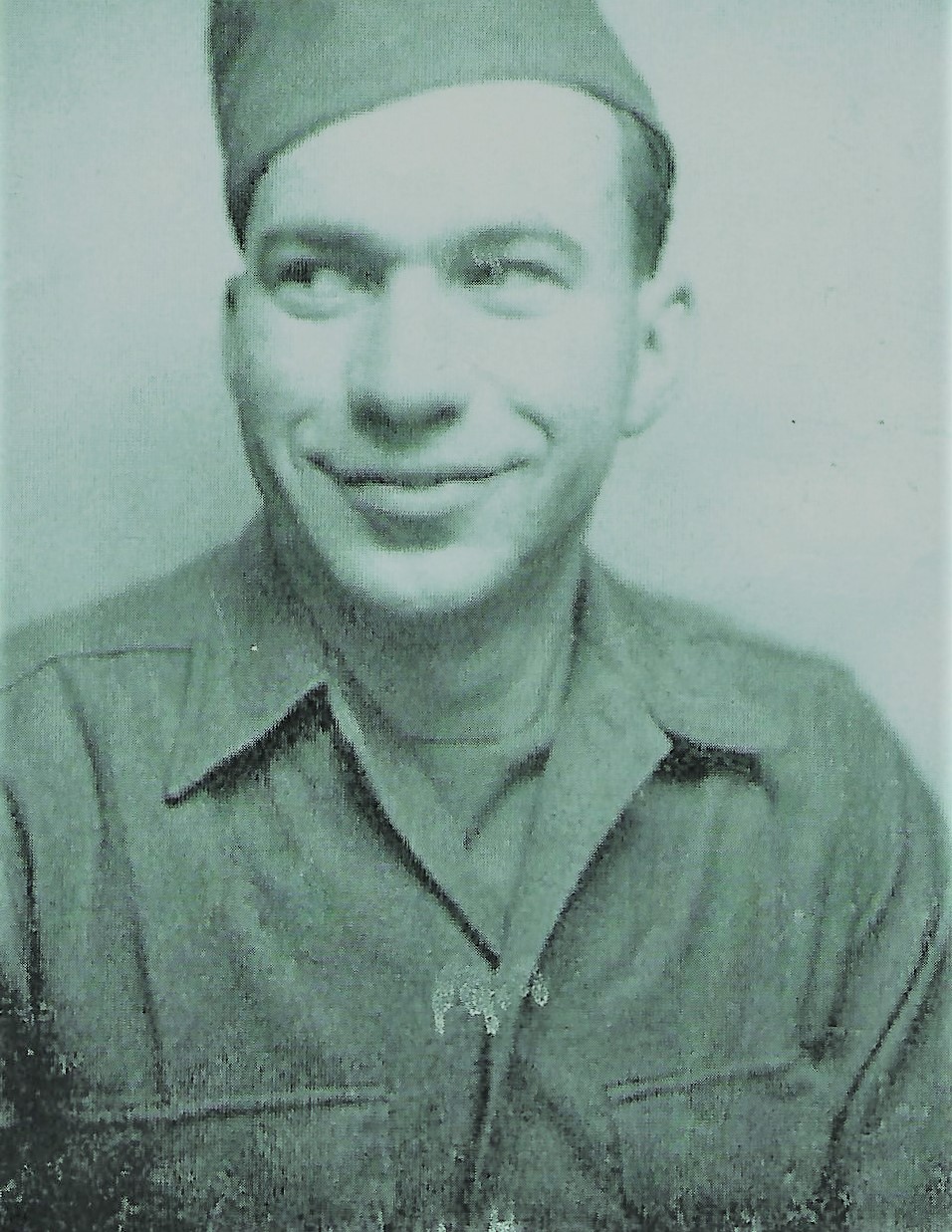
Dan Curatola in France, 1945.

Dan Curatola of Bethlehem, Pa., had this picture taken in a coin-operated booth in Verdun, France, in May 1945.

You could not beat Dan Curatola at checkers. I tried over and over again, with no luck. His nimble brain was always ahead of the game, anticipating every move as he closed in for the kill. He was focused, relentless. It was amazing to see.

He was 89 when we played, and said he was the checkers champion in Bethlehem, Pa., his hometown, before the U.S. got into World War II. His next move was to the Army’s 1st Infantry Division, which took him to North Africa, Sicily and France. He had a facility for language – he spoke Italian, quickly picked up French.
On D-Day, June 6, 1944, he was in the first wave at Omaha Beach. Think of the beach scene in Saving Private Ryan and you have an idea what he went through. Two days later he was wounded and almost died.

Dan had two Bronze Stars for heroism and a Purple Heart. I interviewed him for a story marking Memorial Day 2009. It ran in two parts in The Morning Call and also appears in my book War Stories in Their Own Words, http://store.mcall.com/war-stories.html.

He told me that he could never forget the war and men dying. It was burned in his consciousness, he said.

Dan Curatola and David Venditta in June 2009

June 2009: Dan Curatola and I stand in front of an Army jeep at the annual D-Day remembrance picnic in Nazareth Boro Park.

Dan and I stayed friends. Besides playing checkers, we went to luncheon meetings of the Lehigh Valley Chapter, Veterans of the Battle of the Bulge in Walnutport, where he once shook hands with a distinguished visitor, Mario Andretti. (Dan was a member of the Bulge group because, after recovering from his wounds, he returned to the war zone for limited duty during the German offensive.) He was honored with other local D-Day vets at VBOB’s annual picnic at Nazareth Boro Park commemorating the Normandy invasion.

One day when I was driving him to one of the VBOB lunches, he sang for me. It was a song he had heard only once, in 1944 in Kidderminster, England, in a hospital ward packed with other wounded soldiers. A U.S. Army nurse came into the ward with a guitar to entertain the men, sat down and sang a tune she herself had written. Dan not only remembered the music, he remembered the lyrics. It was all the more incredible in light of the condition he was in as he lay in the ward – shrapnel had almost torn off his left arm, he had shrapnel in his back and right leg, and a bullet in his side.

Dan played pinochle and enjoyed Lehigh University wrestling. As a boy, he went to Yankees games in New York and saw Joe DiMaggio play. He was an attentive fan, always keeping a meticulous scorecard. When I took him to a Lehigh Valley IronPigs game, we sat in the right-field bleachers and he dutifully scribbled on a scorecard, recording each out. I had a fright when a rocket-like line-drive foul ball slammed into an empty seat directly in front of us. I’d stood up and put out my hands to deflect it, if necessary, determined not to let the ball hit Dan. I couldn’t let a war hero die from a foul ball at a minor-league baseball game.

In the fall of 2010, Dan and I went on a bus trip sponsored by the Lehigh Valley Veterans History Project to see the National World War II Memorial in Washington, D.C. When we got back, the Sands casino in Bethlehem treated our entire group to dinner. As gratifying as the trip was, I could tell that Dan’s once-steely mind was slipping. He had bouts of confusion.

The following spring, Dan was admitted to the nursing home at the VA Medical Center in Wilkes-Barre. He would never return to his home in Bethlehem, where he’d lived alone.

He died last month, on January 29, at age 98.

Months after he was moved into the VA hospital, I went to visit him but didn’t stay long. I wasn’t sure he recognized me. He did seem to remember his role on D-Day, when I mentioned to others in the room that he was in the first wave ashore at Omaha Beach.

“It’s something you never forget,” he said, looking at me straight in the eye, emphasizing each word.

Death of a general, and how I knew her

From before I met Anna Mae Hays, I had been writing about war veterans and working on a book about my cousin who died in Vietnam. People I met in the process connected me to Hays, who grew up in Allentown, Pa., where I live, and was the first woman in the U.S. military to become a general.

I’d like to tell you about this, because it shows how friends and acquaintances can weave in and out of our lives, sometimes to surprising and wonderful effect.

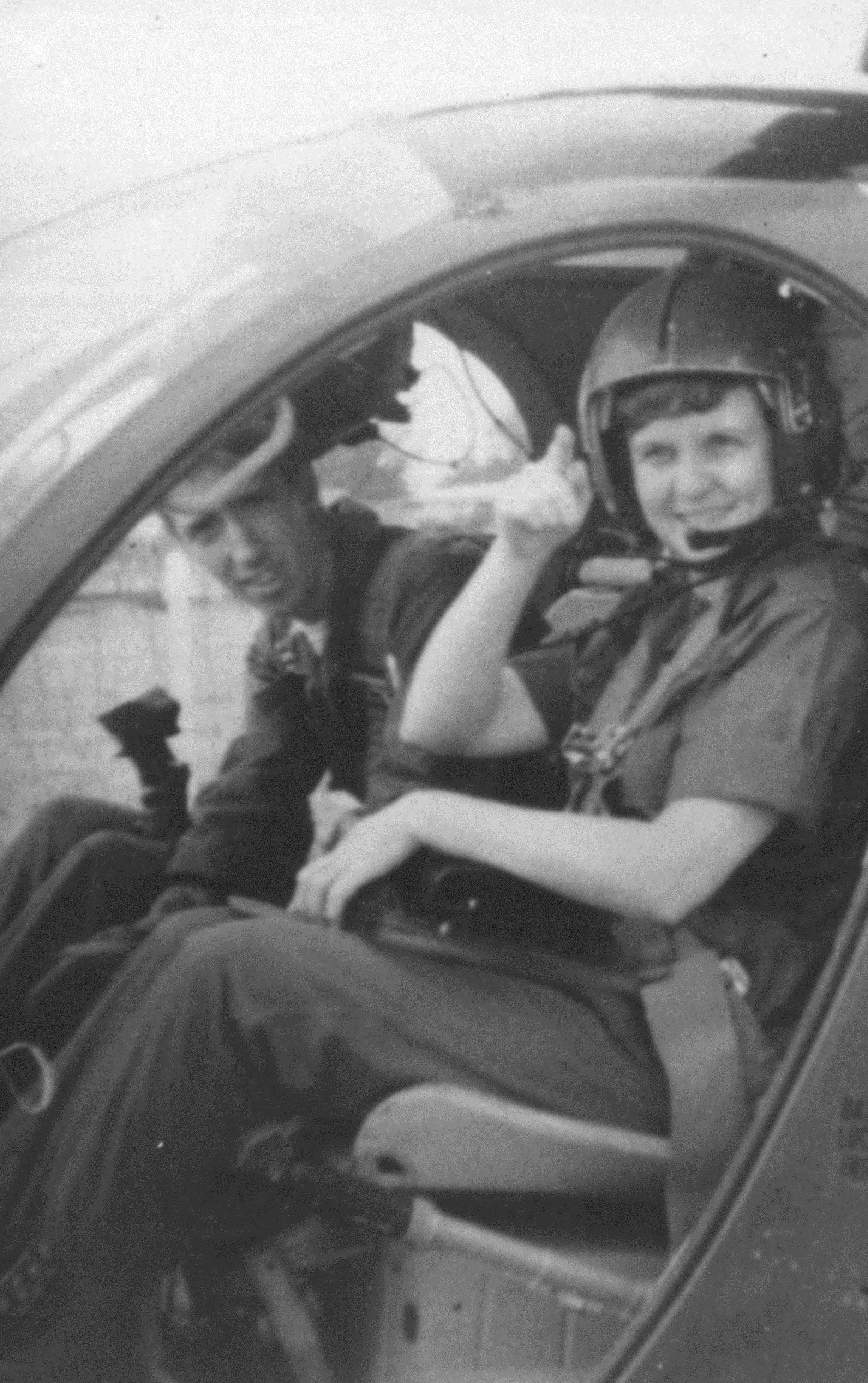
Anna Mae Hays in Vietnam

Anna Mae Hays as an Army colonel and chief of the Army Nurse Corps, on a helicopter trip to visit the 45th Surgical Hospital near Tay Ninh, Vietnam, in 1968. This photo is from the Lehigh County Historical Society. Hays, who grew up in Allentown, Pa., was promoted to brigadier general in 1970 and retired the next year.

Hays died January 7 in Washington, D.C., at age 97. She had served the country overseas in World War II and the Korean War, and led the Army Nurse Corps during the Vietnam War. After chronicling her life in The Morning Call, http://bit.ly/2CEa4qu, I heard from two friends I’ve been very fortunate to know.

“She certainly was a remarkable woman,” wrote Lynn Bedics, herself a former Army nurse, who went on to become the nurse manager at the Allentown VA Outpatient Clinic and is now retired. “I feel privileged to have met her when she was the speaker [to promote] the Korea-Vietnam Memorial.”

The memorial is on the campus of Lehigh Carbon Community College in Schnecksville, near Allentown. Its U.S. Armed Forces Plaza was dedicated in 2005.

I’d met Lynn as a result of a War Stories project I edited at The Morning Call. Reporter Ron Devlin was interviewing vets for our Veterans Day 1998 special section. I asked him to include a nurse. He found Lynn and told me where and when she’d served – in 1969 and at the same Army hospital in Vietnam where my cousin Nicky Venditti died after a grenade accident. Lynn gave Devlin her maiden name. It matched a signature I found in clinical records of Nicky’s care.

So, Lynn had tended to Nicky in his last days. On top of this incredible coincidence, she lives in my neighborhood. Her account of her Army service in Vietnam takes up a chapter in my book Tragedy at Chu Lai, http://tragedyatchulai.com/

The other message I got was from Dick Musselman of the Lehigh Valley Veterans History Project. He met Hays, a retired brigadier general who had lived in Arlington, Va., since 1964, on one of the group’s bus trips to Washington. The trips allow World War II vets to see the National World War II Memorial at no cost.

“We had made arrangements to have our lunch catered by a D.C. veterans organization at the Women’s Memorial, which is next to Arlington Cemetery,” the Navy vet wrote, using the common name for the Women in Military Service for America Memorial. “She joined us as our guest and interacted with many of the veterans. She was exceedingly pleasant, with great poise and genuine compassion for every one of those vets.”

Dick and I share a passion for getting war veterans to tell their stories so others will know their sacrifice and courage. We got to be friends at the monthly meetings of the Lehigh Valley Chapter, Veterans of the Battle of the Bulge, where he tipped me off to vets who had compelling stories. Regrettably, because of another commitment, I haven’t been to one of the lunches in more than a year.

Story about Martin F. Schaffer's death

The Morning Call’s story about leading Lehigh Valley veteran Martin F. Schaffer’s Jan. 2, 2002, death near Fort Dix. Retired Brig. Gen. Anna Mae Hays attended Schaffer’s funeral.

As far as my own contact with General Hays, it was sparse. I met her in 2002 at the funeral of a leading Lehigh Valley veteran, Martin F. Schaffer. The World War II and Korean War submariner was hit and killed by a car while crossing a street near Fort Dix, N.J., after buying a cup of coffee at a convenience store. He was 82.

Marty had founded the Lehigh Valley Chapter of the Submarine Veterans of World War II and led the United Veterans of Wars, Allentown. He steered me to local vets he thought would be terrific interviews, sending me postcards with their names. Among them were B-17 pilot and POW Earl “Lee” Leaser and Robert Holden, who was on the sub that rescued downed Navy pilot George H.W. Bush.

At Marty’s funeral, Gene Salay came up to me and said General Hays was there and would I like to meet her. “Yes, of course,” I said, and he introduced us.

Gene was a former, longtime director of Lehigh County Veterans Affairs. I’d known him for seven years, ever since I set out to learn what happened to my cousin, a 20-year-old Army helicopter pilot from Malvern, Pa., who survived only 11 days in Vietnam. Gene was the first person I called about how to get Army records on the accident that left Nicky mortally wounded. That was the start of our friendship.

Gene Salay in Korea in 1953

Army Pfc. Gene Salay with a South Korean interpreter in July 1953 near the North Korean border. The interpreter, Kim Yung Jo, was killed soon afterward in the Battle of the Kumsong River Salient. Salay was seriously wounded in the fighting and captured by the Chinese.

A Purple Heart veteran and POW of the Korean War, Gene had a troubling story of his own that kept him in counseling. He wouldn’t tell it, despite a few years of my nudging. I knew only that he had been shot and almost died in a battle near the 38th parallel just before the armistice, and was held captive by the Chinese.

In 2003, he changed his mind about an interview. The story ran in the newspaper as part of my series, War Stories in Their Own Words, and is in my book of the same title, published by The Morning Call, http://store.mcall.com/war-stories.html.

Part of my interview with Gene, where he describes the July 1953 battle near Kumhwa in which he was seriously wounded and captured, was used by journalist Barbara Demick in her prize-winning book Nothing to Envy: Ordinary Lives in North Korea.

Gene was one of the nicest guys I’ve ever known. He died in 2010, with a bullet from 1953 still lodged near his heart.

His introducing me to General Hays at Marty Schaffer’s funeral was the only time I ever saw her. But she knew who I was and that I wrote the War Stories. In October 2013, she spoke with me by phone from her apartment in Arlington — an interview that became the backbone of my story on her death.

There’s one other thing about General Hays that hits home. She is in my book about Nicky, and it’s by virtue of a statistic she cited concerning the care given wounded U.S. troops in Vietnam. They were likely to survive, she once said, because of the work by combat medics and field-hospital staff. Only 1.2 percent of injured Americans who lived long enough to reach a hospital in Vietnam died after getting there.

Nicky’s misfortune was to be among the 1.2 percent.

Letters home from two doughboys in the Great War

James H. Kendrick

Sgt. James R. Kendrick of Company B, 14th Engineers, in The Tennessean newspaper of Nashville on December 8, 1918. My great-uncle George F. Cunningham was in the same outfit. I found this clip on Newspapers.com.

Frank Riggie wished he were with his brother Joe on the Western Front, facing the German army. He said so in a letter.

Joe thought Frank was nuts.

“You do not realize what you are saying when you announce a desire to be with us,” wrote Joe, a first sergeant with Company C, 14th Engineers, in the fall of 1917. “Consider yourself fortunate that you are in Vermont instead of France. The sound of heavy gunfire is continuous, and, believe me, when you hear the first shell screech overhead you commence to realize that war is a rough game. We are all looking forward to the time when our work will have been completed and we start back to the good old U.S.A., but we will stick until the curtain drops.”

The letter home is one of two from doughboys of the 14th Engineers I found on a research website. It was printed in the Riggie brothers’ hometown newspaper, the Essex County Herald of Guildhall, Vermont, on December 14, 1917.

I latched onto the letters because my great-uncle George F. Cunningham served in that U.S. Army regiment during the First World War, helping to build, run and maintain narrow-gauge railroads. George, a private first class from West Chester, Pennsylvania, was the subject of my last blog. He joined Company B as a replacement in March 1918 amid a massive German offensive and served in France until the next year, months after the armistice. He didn’t leave behind any record of his experience that I know of, so I wanted to see if others in his regiment were more open about what they saw, heard and felt.

Back in the old days, letters from hometown boys fighting overseas appeared in the local press. That’s what I was mining Newspapers.com for, and I got lucky with Joe Riggie’s account and one from a soldier who was in my great-uncle’s company. They give a glimpse of the men and the times.

Riggie’s letter, dated November 13, 1917, was headlined Over There: An Interesting Account of What the Railway Engineers are Doing “Somewhere in France”. The 14th Engineers had come to the war just three months earlier and were assigned to Britain’s 6th Army Corps. Joe opened by thanking Frank and his wife, Iva, for a gift they’d sent him.

“Your package containing cigars, etc., reached me October 30th, and this is the first opportunity I have had to write and thank you. You have no idea what a treat those smokes were, and such good ones. … American smokes of every kind are not obtainable here, and the issue of English tobacco is punk, mostly mixtures, and resembles and tastes like curled hair.

“Our only pastime is smoking and reading, as we are located in a very desolate and barren section of France. Of course, there is plenty going on in a military way, action galore, but absolutely nothing for recreation. Lights are not allowed at night any more than necessary, as they expose us to danger from enemy aeroplanes, but we have candles that we can use until 9:30 p.m. Am quartered in a low hut (shaped like a half barrel cut lengthwise) and have been very busy with the carpenter’s tools manufacturing my office furniture. Just getting settled now and it is somewhat better than doing business in a tent, especially when the weather is such as it has been here during the past six weeks. Rains nearly every day and the mud is terrible.

“The people at home little realize what a tremendous operation this war means, and those who imagine that there is pleasure with any of the active organizations in this country should join the colors immediately. I am perfectly contented, however, and in the very best of health. …

“Not very cold here as yet, but foggy and damp. We are operating narrow-gauge lines at present, and you should see our boys handle the dinky outfits. Perhaps you imagine that the trains consist of the locomotive, cars and caboose of the ordinary makeup at home – no such trains here. To be sure, there is the engine, but no caboose or coach for the crew, and the cars are like large dry-goods boxes, no cover or running board. The shells, if large enough, are loaded like pulpwood, as well as all other kinds of explosives. …

“While we do not consider ourselves in any particular danger, it would amaze you people at home if you only knew how little a life is worth in the war zone. We have been exceedingly fortunate, though, and none of the boys in my company have cashed in. …

“We move so often that it is hard to find time to write a decent letter, [but we] have not moved for over six weeks, except from tent to tent and hut to hut. About time to set us in motion again. …

“No one knows when we will return, but [we] do not expect to be here less than two years. Write often as you can and give me all the news because letters are appreciated more than money. By the way, we are paid in French money every month at the rate of 5 francs 10 centimes … . It takes 100 centimes to make a franc, and 10 centimes is about the same as two cents in American money. Very easy money to get accustomed to, and I like it much better than English money.”

The other letter is from James R. Kendrick, a sergeant in Company B, who wrote to The Tennessean less than a month after the war’s end. It ran in the Nashville newspaper on December 8, 1918, under the headline Nashville Soldier Wants to Get Home. Apparently there was a girl waiting for him there.

“I landed in January of this year,” Kendrick wrote. “After arriving over here, I was placed in the 14th Engineers, a railway operating regiment … which was in the first bunch of Americans to land in France. We were lucky enough to be in the big drive at Cambrai March 21, as we were with the British at that time, and believe me, we had plenty of experience of real war, and we were again lucky to be the first troops to pull in to Chateau-Thierry after Fritz was driven out and followed the boys right up to Fere-en-Tardenois. …

“I hope to see dear old Nashville next year some time. Would like to see old Broadway this afternoon, after working for the Bearden Buggy Company for a couple of years. It seemed like home to me, although I happen to hail from Birmingham, Ala., but my heart is in Nashville on Russell Street, where the grandest little woman in the world is. You can tell the world that Tennessee can’t be beat for girls.”

After reading these letters, I couldn’t help but wonder what became of Joe Riggie and James Kendrick, who had served our country “over there.”