Recruiting buglers for military funerals

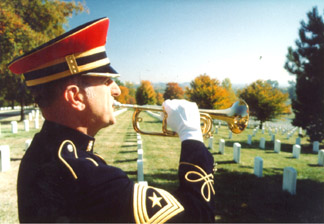
A bugler at Arlington National Cemetery

A Pennsylvania lawmaker’s bill requiring schools to train trumpet- and bugle-playing students to play taps could help provide much-needed buglers for military funerals. It offers an opportunity to go a step further.

Rep. Bryan Lentz, a Delaware County Democrat, last week introduced the legislation in the state House. It’s the second go-around for Lentz: A similar measure passed the House unanimously in 2008. 

“Everybody that served their country deserves military honors, and military honors include the playing of taps,” he told The Morning Call. “I want to make sure there are people available who know how to play it.”

We have plenty of war veterans to honor when they die.

World War II vets, now in their mid-80s and beyond, are dying every day. Of 16 million who served in the armed forces during the war, only 2.5 million survive. There are Korean War veterans, in their 80s too, and Vietnam veterans, the youngest of whom are in their late 50s. There are Persian Gulf War vets from 1991 and now, the veterans of the Iraq and Afghanistan wars.

All deserve a proper salute at their gravesides, and that means a bugler.

Recorded versions of taps are used as substitutes, and some argue that mourners can’t tell the difference, but let’s face it: Push-button renderings of taps don’t have the emotional impact of the real thing. 

At the funerals for World War II vets, the bugler and honor guard giving the rifle salute have often been their colleagues. Most are too old and frail now to carry on that duty.

Lentz says teaching taps would “assure that our brave soldiers will be honored with a version of taps that is performed by trained and talented musicians for years to come.”

It’s a fine idea and deserves to become law.

If that happens, veterans groups such as the VFW and American Legion should seize the opportunity at the local level. They could work with schools to give the student buglers opportunities to play at military funerals. Sure, a great many funerals take place on school days, but maybe schools could allow a student bugler to attend one or more, and the VFW or American Legion could provide transportation. Plus, there’s no reason a trained student bugler couldn’t play on Memorial Day, when we honor the war dead.

So teach high school trumpeters to play taps and let them play at military funerals. The benefit would be two-fold: It would give young people an appreciation for veterans, and ensure the vets get a burial befitting their service to the country. 
 

New hero emerges from a war of deceptions

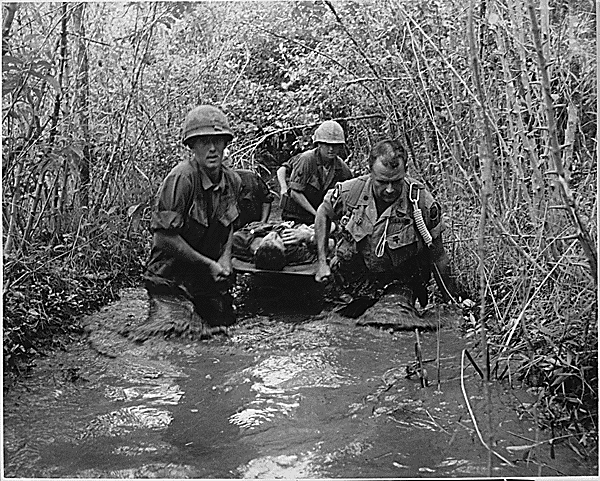
Soldiers carry a wounded comrade through a swamp in Vietnam, 1969.

The White House announcement last week that a Pennsylvania serviceman killed in the Vietnam War will get the Medal of Honor points to how sneakily the U.S. government conducted the war.

Air Force Chief Master Sgt. Richard L. Etchberger of Hamburg was nominated for the military’s highest award for bravery after rescuing three wounded comrades in March 1968. As CNN reported, President Lyndon B. Johnson squelched the nomination because Etchberger’s heroics happened at a secret base in neutral Laos. Johnson didn’t want to get into political hot water over having troops in a country where the U.S. wasn’t supposed to have any.

Sound familiar? Two years later, President Richard M. Nixon set off a firestorm of antiwar protests across America when he sent U.S. ground forces into Cambodia to attack North Vietnamese and Viet Cong bases there. Many Americans saw Nixon’s gambit for what it was: a fearful widening of an already unpopular war, done on the sly. He had ordered the May 1970 Cambodia invasion on his own, without consulting Congress.

Some protests of the incursion turned deadly. National Guardsmen fired into a group of demonstrators at Kent State University in Ohio, killing four students. The nation was coming unhinged, but tensions eased somewhat when Nixon pulled the troops out of Cambodia that summer and said he would continue the withdrawals from Vietnam begun the year before.

The Vietnam troop pullouts were peculiar in that replacements were going in at the same time. My cousin Nicky Venditti, a 20-year-old Army helicopter pilot, was one of them. He went to Vietnam in the summer of ’69 after the withdrawals had started and was dead in 11 days. http://www.davidvenditta.com/

It’s good and proper that Washington will honor Etchberger with a long-overdue Medal of Honor. As his son Cory told the Reading Eagle, “It has been a long journey, but it is very heartening to know that Dad’s actions will now be finally fully recognized.”

That recognition should also bring a heightened awareness of what happened in the Vietnam War, especially now that we are becoming more heavily involved in an eerily similar military adventure in Afghanistan.

One surefire way to find war stories

101st Airborne troops move out of Bastogne, Belgium, on Dec. 31, 1944, during the Battle of the Bulge.

A great way to meet war veterans is to go where they gather.

For years I’ve been attending lunch meetings of the Lehigh Valley Chapter of the Veterans of the Battle of the Bulge, who meet once a month at the Terrace restaurant in Walnutport. And in 2009 I went to my first meeting of the Lehigh Valley Chapter of the U.S. Submarine Veterans of World War II, who meet quarterly at the City View Diner in Whitehall.

A dozen members of the Bulge group have become subjects of my Morning Call series War Stories: In Their Own Words, including Eddie Sakasitz, who served in an anti-tank battalion of the German army. Eddie isn’t a Bulge vet; he served in the Balkans, on the Russian front and in Italy, where he was badly wounded. But he was invited to join the group after his story ran early in 2007. http://www.mcall.com/news/all-5sakasitz1mar04,0,1329029.story Since then, he and his wife, Catherine, have been regular attendees.

The Bulge vets have been meeting since the 1990s and always draw a large group – including spouses and other family members and interested folks like me – for a hearty lunch and a program featuring a speaker.

A total of 87 people attended the August meeting and heard Auschwitz survivor Severin Fayerman. I sat at a table with Dan Curatola, Mark Kistler and Marion Arner Jones. Dan is a 1st Infantry Division veteran of the North Africa, Sicily and Normandy landings, whose D-Day story I did for Memorial Day 2009;  http://www.mcall.com/news/all-a1_5curatola1.6866562may25,0,4282737.story Mark was with the 4th Cavalry Division; and Marion was an Army nurse with the 34th Evacuation Hospital. Her story ran on Veterans Day 1999. http://www.mcall.com/news/warstories/all-marianjones,0,4225670.story

None of them knew the others before the lunch. As they chatted, it turned out that Mark’s unit was on the flank of Dan’s unit in Normandy, and both Mark and Dan were in the Battle of the Bulge with Marion.

Hank Kudzik invited me to a submarine vets lunch in the fall of 2009 while I was interviewing him for a story that ran in April. http://www.mcall.com/news/local/all-5kudzik.7185625apr05,0,7508994.story One of the former sailors I saw there was Bob Holden, who was aboard the USS Finback when it rescued future President George H.W. Bush, a Navy pilot whose torpedo-bomber had been shot down. I did Bob’s story for Veterans Day 1999. http://www.mcall.com/news/warstories/all-robertholden,0,2164204.story

The sub vets’ gatherings are a time for camaraderie and remembrance. They draw a few dozen members and their wives or other family members.

The Battle of the Bulge group has its next meeting Sept. 21, and the scheduled speaker is a generation younger than the veterans, but always eager to spend time with them because of what they’ve experienced and the stories they can tell. I’ll be standing before them, telling them about my interviews with vets for The Morning Call.   

Iraq, and now the folly of Afghanistan

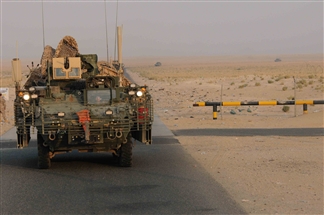
U.S. troops leaving Iraq

U.S. Army soldiers of the 4th Stryker Brigade Combat Team, 2nd Infantry Division cross from Iraq into Kuwait on Aug. 15, 2010.


The pullout of the last U.S. combat brigade from Iraq must come as a huge relief to the moms and dads, sisters and brothers, spouses and friends of those in military service. 

Look back on the Iraq war and see the toll on service men and women from the Lehigh Valley and surrounding areas. There was Army Capt. Scott Seifert of Williams Township, who died in Kuwait a few days after the war began in March 2003 in a grenade attack by another American soldier. 

Like my cousin Nicky Venditti, Seifert was an example of how there are all kinds of ways to die in a war that have nothing to do with the enemy. Nicky was mortally wounded his first week in Vietnam, in July 1969, by an Army instructor who unwittingly set off a grenade in a classroom. http://www.davidvenditta.com/ 

In Iraq, Army Sgt. Andrew J. Baddick of Jim Thorpe drowned when he tried to rescue another soldier whose vehicle had gone into a canal near Abu Ghraib Prison. Marine Cpl. Kyle J. Grimes of Bethlehem died when the CH-53E helicopter he was in crashed near Ar Rutbah.  Roadside bombs got Parkland High School grad Matthew J. Koch, an Army specialist; Marine Pfc. Joshua P. Klinger of Williams; Army Pvt. Travis C. Zimmerman of New Berlinville; Army Spc. Luis O. Rodriguez-Contrera of Allentown, and Army Sgt. Ashly L. Moyer of Emmaus. 

Army Capt. Mark T. Resh, a Northwestern Lehigh High School grad, died when his helicopter was shot down; he received the Silver Star for gallantry. Marine Lance Cpl. Brandon J. Van Parys of New Tripoli was killed at Al Anbar. 

They are among the two dozen people from the Lehigh Valley region http://www.legacy.com/mcall/soldier/home.aspx and more than 4,400 across the country who died in the seven years of the Iraq war, begun to rid the country of “weapons of mass destruction” we were falsely led to believe existed. 

It’s not clear yet whether their sacrifice was worth it. 

Now all eyes are on Afghanistan, where we’ve been fighting for nine years and President Barack Obama is sending tens of thousands more troops. American deaths so far have totaled more than 1,100, and July was the bloodiest month for U.S. troops, with 66 dead.  According to a new Associated Press-GfK poll, nearly six in 10 Americans oppose the war. http://surveys.ap.org/data%5CGfK%5CAP-GfK%20Poll%20August%20Topline%20Final%20081810%20IRX-AFX.pdf 

Count me among them. 

Just as in Vietnam, Washington is throwing away lives and treasure to prop up a corrupt, incompetent government. Our enemies in that lawless part of the world will operate regardless of whether we have troops there, and that’s not meant as a slight to our dedicated, highly trained armed forces. 

It’s the reality that our involvement in Afghanistan is a waste, just as it was for the former Soviet Union. No good can come from it.

Lost remains and a letter from 1919

The Pentagon website has news releases reporting changes in command, call-ups of reserve forces, the deaths of service men and women in the Iraq and Afghanistan wars. 

Occasionally you’ll see a release announcing that the remains of soldiers, sailors and airmen missing in action in previous wars have been identified. These are always extraordinary – recently I’ve seen listings about MIAs from World War II and the Korean War. But one I saw earlier this summer has stuck in my mind. The release, though written in the spare prose you’d expect from the Department of Defense, had a penetrating fragment of humanity.   

The release from June 22 was titled, “Marine missing in action from World War I identified.”   http://www.defense.gov/releases/release.aspx?releaseid=13627 

Your first reaction might be: How can they still identify someone killed in a war more than a hundred years ago? So of course you want to read on. But there’s more to this story than the forensics and circumstantial evidence that led to the identification of 1st Sgt. George H. Humphrey of Utica, N.Y. 

Humphrey died in France on Sept. 15, 1918, two months before the Armistice. He was fighting in the first U.S.-led offensive of the First World War under Gen. John J. Pershing’s command. The battle was the St. Mihiel Offensive, which had a couple of firsts for the Americans – the use of tanks and the term “D-Day,” according to the Pentagon. 

Humphrey was with the 6th Marine Regiment attached to the Army’s 2nd Infantry Division. A German machine-gun bullet got him in the head, killing him instantly. He was 29. His buddies buried him the next day. 

The part of the story that has stayed with me is this: More than a year later, in October 1919, a Marine who saw the sergeant die sent a letter to Humphrey’s brother. He wrote about the attack near the village of Rembercourt and sent a map he’d drawn showing where Humphrey was buried, as he remembered it. 

It was a heartfelt gesture and must have given the grieving Humphrey family some consolation, knowing that perhaps they could bring their George home someday. 

What a cruel disappointment it must have been when they learned that the Army had searched the battlefield and couldn’t find his remains. 

Sadly, Sgt. Humphrey’s immediate family would not live to know where he lay. 

And 90 years went by. 

In September 2009, the Pentagon says, some French people hunting for war relics “found artifacts near Rembercourt-sur-Mad they believed to be those of a World War I American soldier.” A month later, the U.S. military dug up the area and found human remains and a marksman’s badge bearing Humphrey’s name. Dental comparisons helped identify the remains. 

On June 23, Humphrey was buried in Arlington National Cemetery with full military honors. A photo was taken at the gravesite, showing Marine Brig. Gen. Walter Miller presenting the American flag to relatives, who did not want to be named. http://www.daylife.com/topic/John_J._Pershing

Here’s the link to a July 5 story about Humphrey that ran in the Beaver Dam Daily Citizen in Wisconsin, where he grew up:  http://www.wiscnews.com/bdc/news/local/article_720ee888-88b8-11df-b2e3-001cc4c002e0.html. The story includes the text of the letter sent to Humphrey’s brother. 

Presumably, the letter has stayed with the family all these years. 

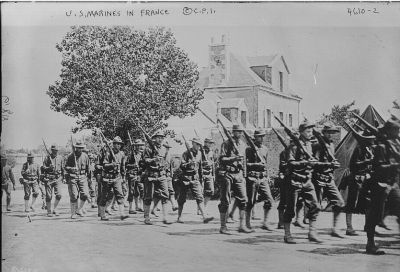
Marines in France

U.S. Marines in France during World War I


 I’m guessing that’s because it’s timeless.

The magic of making connections

 War stories have a way of bringing people together. Many times in the 11 years I’ve been writing the “in their own words” series for The Morning Call, people have gotten connected as a result – long-separated friends, historians who want to speak with the veteran I interviewed, people who knew someone the vet had served with. 

I’ve had three such experiences this summer, two in the last week alone.

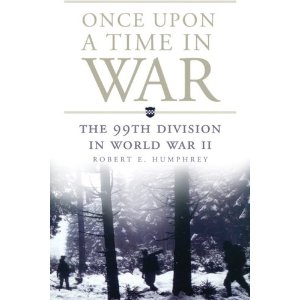
After my Memorial Day story about Dick Richards of Williams Township, a soldier whose lower jaw was blown off several days after he crossed the Remagen bridge into Germany’s heartland in 1945, I got an e-mail from Sacramento State professor Bob Humphrey, who had read the story online. Humphrey had written a book about Dick’s outfit, Once Upon a Time in War: The 99th Division in World War II http://www.amazon.com/Once-Upon-Time-War-Commanders/dp/0806139463/ref=sr_1_1?s=books&ie=UTF8&qid=1281326028&sr=1-1. The book mentions Dick and what happened to him near Steinshardt, Germany, as told by another soldier in Company C of the 395th Infantry Regiment. That soldier, Oakley Honey, is also in Dick’s story in The Morning Call,   http://www.mcall.com/news/warstories/all-dickrichards,0,5782458.story. Bob had interviewed him for his book.

“I never knew he survived that terrible wound. I didn’t realize the hell he went through afterwards,” Bob said, referring to Dick’s desperate run to safety and the more than two years he was hospitalized while doctors made him a new jaw. So Bob wrote an update on Dick for the 99th Division newsletter, which Dick receives. Bob also sent Dick, who turned 94 a few weeks ago, a signed copy of his book.

In Easton, Battle of the Bulge vet Jack Davis spent Aug. 1 with visitors from central Pennsylvania, Ray Brugler and his girlfriend, Marsha. They had come to learn more about Ray’s uncle, Russell Brugler of Lewistown, Pa., who was machine-gunned to death in front of Jack on Jan. 28, 1945, in Pascheid, Germany.

Ray had been going through a relative’s things and found a copy of my interview with Jack, which ran in The Morning Call on Christmas Eve 2006,  http://www.mcall.com/news/all-5bulgedec24,0,1718578.story. In the story, Jack describes Russell, a machine-gunner in his late 20s who had been wounded twice before he was killed, as a man who thought war was fun. Right after Russell made a comment to that effect, Jack says, “The Germans were shooting a machine gun against our machine gun. Brugler was riddled.”

With an audio recorder running, Ray asked Jack about his uncle (“He was fearless,” Jack said) and about the circumstances of his death (“He stood up and went ahead a few yards, and that’s when he was hit.”)  Ray and Marsha also asked about Jack’s other combat experiences with D Company, 10th Infantry Regiment, 5th Infantry Division.

“They were very, very pleased with our conversation,” said Jack, 86. “They ate it up.”

Last week, a few days after my story on 84-year-old Don Mack, who survived five days in the shark-infested Philippine Sea after the USS Indianapolis was sunk on July 30, 1945, I got a call from Herbert Rehrig of Saucon Valley. Herb graduated from Wilson High School in 1941, two years ahead of Don, and was wounded in Europe while serving in the Army. He said that when they were young, he and Don played football together in back of Mack Printing, Don’s family’s business.

Herb, who is 87, wanted me to pass this message on to his old friend now in the Poconos: “I’m still alive.”

I’m always amazed at the connections that are made when veterans tell me their stories, which are posted permanently on The Morning Call’s website at  http://www.mcall.com/news/local/warstories/. Bringing people together isn’t the purpose of publishing these accounts, but it’s a gratifying side effect.

One great way to salute a WWII veteran

Field of Stars, World War II Memorial, Washington, D.C.

Field of Stars at WWII Memorial


Here’s a way to honor the World War II veteran in your family: Get his or her name on the permanent registry of the National World War II Memorial in Washington, D.C., for all to see. You can do it online or by snail mail for free, or $10 if you want to include a photo. 

I’ve posted my dad, my father-in-law and two uncles on the website, and I have several more uncles to include. (You don’t have to be a relative, by the way.) It’s easy. To start, go to the National WWII Memorial site,   http://www.wwiimemorial.com/

In the middle of the home page, you’ll see “World War II Registry” and the message: “To search the electronic World War II Registry of Americans who contributed to the war effort, or add the name of a loved one, click here.” So click. 

On the Registry page, click on “Register an Honoree.” You’ll have an option to register by mail by printing out a form or to register electronically. If you’re doing the latter, you’ll be prompted to fill out your name, address and e-mail address so your entry can be processed. This is a one-time deal. Once you are signed up and have an account number, you don’t have to repeat the set-up. 

The site will prompt you for the name of your honoree, his or her hometown, rank and branch of service. But you’re not limited to that information. In fact, to really do it up right, get your relative’s service paperwork – a discharge certificate or DD-214, a summary of service at discharge. If your relative isn’t living and you don’t know where to find the paperwork, ask around in your family. 

For my dad and relatives, I used the info from their discharge papers to give a complete picture – in my dad’s case, his rank in the Coast Guard, when and where he enlisted, where he trained, where he was assigned, the ships he served on, the medals he received and when he was discharged. 

After you enter the info, you have to wait a few days while it’s reviewed. (You’ll see that your name, as the source, and your relationship to the honoree is listed on the page.) Then you’ll get an e-mail and an option to upload a photo, which you can do for $10. Again, you have to wait a few days. 

Here’s the entry on my dad: http://www.wwiimemorial.com/registry/search/pframe.asp?HonoreeID=2174327&popcount=1&tcount=1 

As you can see, it’s a handsome and dignified presentation. 

You can always go back and edit the material, if you want to add or take out information. To just look at an entry, click “Search the Registry” and fill out the prompt. If you click on the “Advanced Search” tab, you can look up the postings on everyone from your relative’s hometown. 

This celebration of service is a fitting tribute to any family member or friend who had a role in the most momentous war in history.

A gift of thanks to World War II veterans

View of WWII Memorial from Washington Monument


A group that’s doing important work in preserving veterans’ stories is the Lehigh Valley Veterans History Project Roundtable. “Our primary mission is to collect, document and preserve the personal experiences of U.S. wartime veterans and home front workers who served in support of them,” according to its website, http://www.lvveteranshistory.org/

 Since 2007, the roundtable has been doing just that. In monthly meetings at the Lehigh County Senior Center in Allentown, its members have hosted veterans who talk about what they have seen and done in war. 

 The roundtable’s volunteers also have gone to veterans’ homes and video-recorded the vets’ remembrances for the Veterans History Project of the American Folklife Center, Library of Congress, http://www.loc.gov/vets/. That project, begun in 2000, forges ahead “so that future generations may hear directly from veterans and better understand the realities of war.” 

 I’m on board with that. It’s what my 11-year-old series in The Morning Call, War Stories: In Their Own Words, is about. (All of the personal accounts are at www.mcall.com/warstories.) 

 Now, the Veterans History Project Roundtable is going a step further on behalf of the men and women who have served our country in the armed forces. 

 The roundtable has something special planned for local World War II veterans this fall. These vets are among 2.3 million survivors who are dying at the rate of 850 a day, according to the U.S. Department of Veterans Affairs,   http://www1.va.gov/VETDATA/Pocket-Card/4X6_spring10_sharepoint.pdf 

 Here’s a recently e-mailed press release from my friend Dick Musselman, himself a veteran and one of the roundtable’s leaders:  

 “Could you imagine winning the Super Bowl, then having to wait almost 60 years to get the trophy—or sadly, passing away before ever being recognized as a champion? Or even worse, could you picture being fortunate to live long enough to finally receive the proper recognition you deserve, only to find yourself without the means to travel to the site of your big presentation? 

 “That is the plight that many of our still-living local World War II veterans are experiencing today. 

 “It’s hard to fathom, but many of our local heroes have never had the opportunity to visit the World War II Memorial in Washington, D.C.—a memorial which honors the men and women who so valiantly served their country in the greatest calamity the world has ever known. http://www.wwiimemorial.com/ 

 “Because the memorial (which finally opened in 2004) took almost 60 years to complete, many of this Greatest Generation have never had the opportunity to experience it. But with your help, those brave individuals who fought on foreign shores so that future generations would experience the freedom and liberties we enjoy today can finally visit the memorial erected to honor their service. 

 “On Saturday, Oct. 23, 2010, the members of the Lehigh Valley Veterans History Project Roundtable will be offering an all-expense paid trip to Washington to visit the WWII Memorial and Arlington National Cemetery. An Easton Coach bus will leave Allentown at approximately 7 a.m. with 54 local veterans aboard. A box lunch will be provided as we spend time at the historic Fort Myers, which is adjacent to Arlington Cemetery. The bus will stop for dinner on the way back to Allentown, which is expected to arrive at approximately 8 p.m. Medical personnel will also be on board to attend to any unforeseen medical issues. This trip will be handicapped-accessible.” 

 Dick goes on to say the Lehigh Valley Veterans History Project Roundtable is accepting donations to support the trip. “This is your chance to say ‘thank you’ and to honor some of the local veterans living among us,” he writes. Checks made out to The LVVHPRT can be sent to another roundtable leader, Mike Sewards, at 204 S. 17th St., Allentown, PA 18104. (The Lehigh Valley Veterans History Project Roundtable is a Pennsylvania-registered nonprofit organization.) 

 The trip is a terrific idea, and I felt honored when Mike and Dick invited me to go along. Of course, I accepted. I want to be with these proud local vets when they stand at their place of honor.

Two soldiers: Jesse Reed and my cousin Nicky

When Jesse Reed joined the Army in 2008, he told his worried mother, “This is what I was meant to do. Don’t worry, Mom, I’ve finally found my place in life.”

He was like so many others who have signed up for military service, particularly in wartime. They have the pride of serving their country, of having made the grade after rigorous training. They have a sense of purpose and accomplishment. They believe in their work.

My cousin Nicky Venditti felt that way when he became a hotshot Army helicopter pilot during the height of an Asian war four decades ago. What’s more, he looked forward to a future as a commercial pilot once he left the Army. And he had a girl back home in Malvern, Pennsylvania, waiting to marry him.

All he had to do was survive one year in Vietnam.  

Sacrifices small and large come with any job in the armed forces. For those in Iraq and Afghanistan, danger is always close by – in Afghanistan, where we now have more troops than in Iraq, nearly 8,000 Americans have been killed or wounded since 2001. (You can see the numbers on the Pentagon’s daily update at http://www.defense.gov/news/casualty.pdf. )

Among the 865 combat deaths in and around Afghanistan as of July 16 was Specialist Jesse Reed of Orefield, Pennsylvania. He and three other members of his unit – the 27th Engineer Battalion (Combat Airborne), 20th Engineer Brigade (Combat) — were killed July 14 in Zabul province by a roadside bomb. Jesse was 26 years old and left behind a pregnant wife and a 10-month-old son.

He had been with his buddy, Specialist Adam Keys, a fellow graduate of Whitehall High School. Adam was seriously hurt in the bombing. Assuming he knows his friend is gone, his pain must be a thousand times worse. (For Morning Call reporter Matt Assad’s moving story on Jesse, go to http://www.mcall.com/news/breaking/mc-afghanistan-whitehall-soldier-kill20100715,0,5000356.story.

As always when a young life is cut short, the questions turn from why to what if. What if Jesse had survived his tour in Central Asia and come home, with a family and the rest of his life ahead of him? What would his contributions have been if his future had not been denied? How many ways will he be missed?

From what I’ve read about Jesse, he left a wonderful mark on friends and family that time won’t erase. They will grieve and miss him sorely, but at least for a while, he was with them, and they will remember him for that.

I know the feeling.

My cousin Nicky did not survive his one-year tour in Vietnam. He didn’t come home to his fiancée and a job flying helicopters for a living.  Rather, he was dead in only 11 days. His story is the subject of my book, Quiet Man Rising: A Soldier’s Life and Death in Vietnam. (www.davidvenditta.com)

Nicky was 20 years old when he died at the Americal Division base at Chu Lai on July 15, 1969. As with Jesse, an explosion shattered the promise of his life.

I still wonder, after all these years: If Nicky had made it home, how would he be doing today? He was a playful rascal, with lots of energy and a good heart. How many more people would have come to know and like him?

What have my family and his friends lost out on, because he’s not around?

A final salute to a Korean War veteran

 The Korean Church of the Lehigh Valley was planning to mark the 50th anniversary of the start of the Korean War with a service to thank veterans who had fought in it, and I knew just who I wanted to invite.

Gene Salay had been director of veterans affairs for Lehigh County for fourteen years and was a Korean War veteran who took a bullet near the heart during hand-to-hand fighting and was captured and held prisoner by the Chinese.

As an assignment editor at The Morning Call newspaper in Allentown, Pennsylvania, I had some brief contact with Gene in the early 1990s. But the first time we spoke more than casually was in 1995, after one of my co-workers suggested the longtime veterans advocate might be able to help me find information about my cousin Nicky Venditti.

Nicky was an Army helicopter pilot from Malvern, Pennsylvania, who was wounded on only his sixth day in Vietnam and died at an evacuation hospital several days later, on July 15, 1969. My quest to know about Nicky’s life and death – which ultimately led to my book, Quiet Man Rising: A Soldier’s Life and Death in Vietnam — had only just begun, and I didn’t know where to turn for Army documents. I called Gene, and he told me about the various government sources I could tap. Thanks to his guidance, I got a good start on a project that would take me more than a dozen years to complete.

After my series War Stories: In Their Own Words began in The Morning Call in 1999, I asked Gene from time to time if he would tell me about his Korean War experiences. His answer was always a polite but firm “no.” In the meantime, he steered me to veterans who did tell me their stories: Bob Serafin, who served in both World War II and the Vietnam War; Bataan Death March survivor Joe Poster; and a Catholic priest, the Rev. Ed McElduff, a Navy veteran and Purple Heart recipient who was aboard an LST (landing ship tank) that hit two mines on D-Day.

Early in 2003, I asked Gene again if he would tell me his story, this time saying it would be appropriate for the upcoming 50th anniversary of the end of the war. He said he had only discussed his war experiences with Department of Veterans Affairs mental health practitioners. But after talking it over with his wife, Ellie, he finally agreed to be interviewed.

The story ran on Page 1 Sunday, July 27, 2003, the half-century anniversary of the end of the war, under the headline “So this is what it feels like to die,” which is what Gene thought in the moments after he was shot. (You can read it at http://www.mcall.com/news/warstories/all-genesalay,0,6228449.story.) He was bombarded with responses from readers who were profoundly moved by his remembrances and thanked him for his service to the country. Local historian Ed Root said Gene’s account of what happened to him in the 1953 Battle of the Kumsong River Salient and during his captivity was “moving, frightening and uplifting.”

Gene was relieved and glad he had gone ahead with the story. “It’s as though a weight has been lifted from me,” he wrote a few days after publication.

 Over the years, Gene and I stayed friends. My wife, Mary, and I went out to dinner with him and Ellie. Gene and I chatted over numerous lunches. He’d always greet me with a “hey, buddy.” He gave me tokens of his friendship – bookends shaped like steel I-beams and forged at Bethlehem Steel, where Gene had worked, and a leather-bound first edition of Tom Brokaw’s A Long Way Home, signed by the author. But until the week before the Korean church’s salute to the Lehigh Valley’s Korean War vets, I hadn’t tried to contact Gene in months, though I knew his health was failing.

Now I phoned and his wife answered. “Hi Ellie, I’m calling to see if Gene is going to the Korean church ceremony and if he’d like a ride. It’s been so long since I’ve seen him.”

“Well, David,” Ellie said, “Gene died yesterday.”

He had died at home June 24 at age 78.

Three days later, I went to the beautiful, heartfelt ceremony at the church in Whitehall, Pennsylvania, where the Koreans personally thanked the Americans who had come to their country’s aid. They were men like Walter Redlich of the 2nd Infantry Division, who had fought on Heartbreak Ridge, and Joe Pulley, who had served with a Marine antiaircraft battery at Pusan.

My buddy Gene was there, too.

He was with me, in heart and mind.