A Vietnam helicopter pilot comes home

The Pentagon website occasionally has news releases announcing that remains of soldiers, sailors and airmen missing from America’s wars of the 20th century have been recovered and identified.

One in particular from the Vietnam War struck me – Army Chief Warrant Officer George A. Howes of Knox, Ind., an Army helicopter pilot who had been based at Chu Lai, South Vietnam, and went missing on Jan. 10, 1970.

My cousin Nicky Venditti was also an Army warrant officer and helicopter
pilot based at Chu Lai. He died there six months earlier, on July 15, 1969.

The Pentagon said Howes and three crew members were returning to the Chu Lai base aboard a UH-1C Huey helicopter, encountered bad weather and went down over Quang Nam Province. There was no sign of the crew.

In 1989, Vietnam turned over boxes of bones. Years of investigations followed. In 2006, remains of three of the four men were identified and buried. Later, new technology led to Howes’ identification. He was buried last month in Arlington National Cemetery.

Nicky, of Malvern, Pa., died just 11 days after his arrival in South Vietnam.
He was with the 16th Combat Aviation Group, attached to the Americal
Division. An instructor’s grenade went off during his orientation at Chu Lai,
fatally wounding him and fellow pilot Billy Vachon of Portland,Maine.

Recovery efforts like the one that brought Howes home serve as a link across time, a reminder of loss. Though he, Nicky and Billy did not die at the hands of the enemy, their sacrifice was no less than that of those who fell to hostile fire.
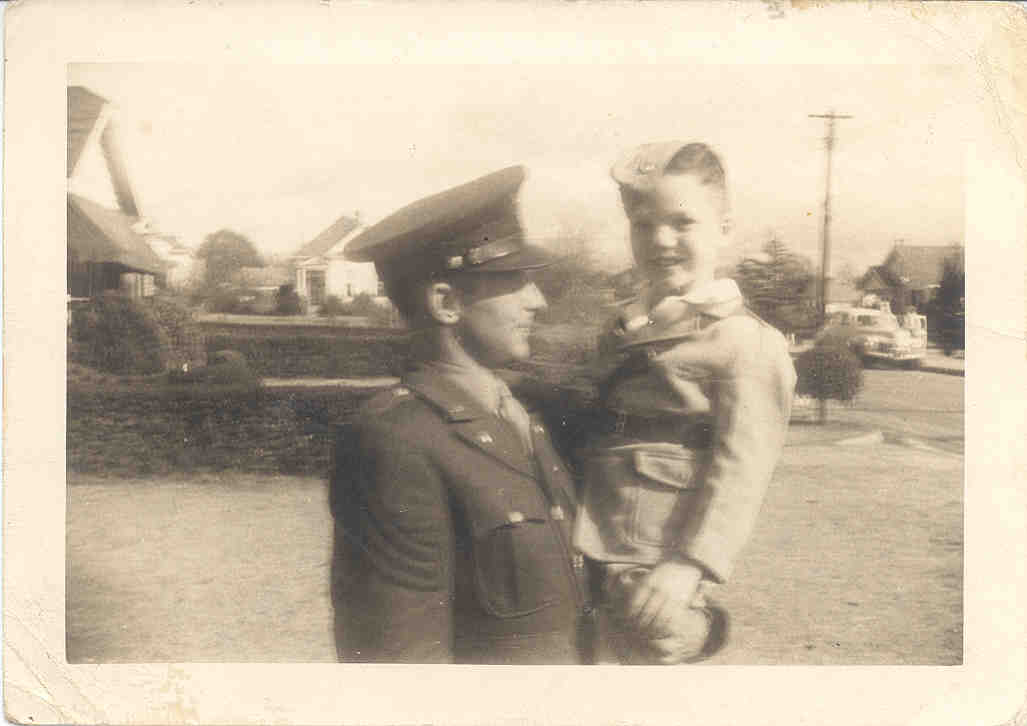


Do you know this WWII serviceman?

Carl, the mystery flier, holds Tommy Ragsdale

Carl, the mystery flier, holds Tommy Ragsdale.

A request came in to The Morning Call a few weeks ago to print a World War II photo from Montgomery,Ala., and I got to handle it.

In the photo taken sometime between 1943 and 1945, Tommy Ragsdale is a toddler on the arm of an Army Air Forces flier from Allentown, Pa. The scene is Tommy’s neighborhood in Montgomery, home of Maxwell Air Force Base.

Tommy wants to get in touch with the flier or his relatives. The trouble is, he knows the man only by his first name, Carl. So he was asking the newspaper in the flier’s hometown to publish the photo in hopes someone might recognize Carl, who roomed with Tommy’s family in the early 1940s.

“During World War II, the availability of housing was so tight in Montgomery, many of the Air Force members and their wives roomed in homes all over Montgomery,” Tommy said in an email. “Many probably remember their family inviting the service people in.”

Tommy said Carl had Christmas dinner with his family, went home to Allentown
and sent back this picture.

We decided to post the photo and information on The Morning Call’s website. It got a lot of views last week, but not – so far as I know – from anyone who could identify Carl. I’m posting the image with this blog, and you can still see it on the
newspaper’s site at:  http://www.mcall.com/news/local/allentown/mc-air-force-pilot-connection-20110818,0,4090864.story

If you can shed any light on this, email Tommy at: trags1414@bellsouth.net

I’m guessing Tommy is one of many folks trying to reconnect with people they crossed paths with almost seven decades ago, when young Americans traversed the country on their road to war.

“This Normandy Cemetery should be my address”

World War II veteran Bob Kauffman of Emmaus recently returned from his 13th visit to Europe. He’s always found these trips to his old battlefields rewarding, but this time something happened that especially gratified him.

He had gone to Normandy, where he was wounded in 1944, and as he’s always done, he visited the Normandy Cemetery. He was accompanied by his sister’s grandson, Eric Fleming, who wanted to see the places where Bob had served with the 36th Armored Infantry Regiment, 3rd Armored Division.

Eric wanted to shoot video of Bob sitting on the stone wall overlooking Omaha
Beach, but gave up after two tries because of interruptions from passers-by. Cemetery staff members who recognized Bob asked him to stay and join in the lowering of the flag, a ceremony he had been part of last year. He accepted the offer.

Meanwhile, Eric spoke with one of the cemetery’s directors and arranged to have
Bob make a speech immediately afterward.

With the waves breaking in the background, Bob told about 50 people how those waves represented the tears of a nation weeping for its young, how they’re God’s eternal reminder of the enormity of the price paid for our freedom. “This Normandy Cemetery should be my address,” he said.

Tears and handshakes and many “thank yous” followed.

A student on the Normandy Allies International Experience shot video of Bob’s speech and posted it on YouTube. Here’s the link: http://www.youtube.com/watch?v=GDbdNbmteHY

Dwight Anderson, director of visitor services at the Normandy American Cemetery, wrote to tell Bob that Max Cleland, a disabled and highly decorated Vietnam War veteran and former U.S. senator from Georgia who is now secretary of the American Battle Monuments Commission, had seen the video and wanted to contact him.

“What happened at the Normandy Cemetery was just plain incredible,” Bob emailed me. “Just to be recognized by Max Cleland was beyond my comprehension.”

Bob wrote a book about being a teenage soldier, The Replacement. He also wrote an account that ran in three parts in The Morning Call’s “War Stories: In Their Own Words” series in 2004. Here are the links:
http://www.mcall.com/news/all-robertkauffman1,0,1872991.story
http://www.mcall.com/news/all-robertkauffman2,0,1938528.story
http://www.mcall.com/news/all-robertkauffman3,0,2004065.story


“We keep them in our hearts”

If you had wandered into Allentown’s West Park at mid-morning Sunday, you would have come across a small knot of people in leafy Veterans Grove, where the war monuments stand.

It was the annual Purple Heart Day Service of the Military Order of the Purple Heart, Lehigh Valley Chapter 190. Fifteen visitors and 10 combat-wounded veterans of World War II through the Vietnam War faced a monument and tree dedicated on Aug. 7, 1990, to the group’s “departed patriots.” Aug. 7 is the date in 1782 when Gen. George Washington created a “badge of military merit” – the ancestor of the Purple Heart — for enlisted soldiers who had performed bravely in the Revolution.

The West Park ceremony came a day after a helicopter crash in Afghanistan killed 30 Americans and eight Afghans. Purple Heart Commander Mike
Mescavage
noted what amounted to the single deadliest loss for U.S. troops since the war in Afghanistan began a decade ago.

Mike introduced me and invited me to say a few words. I said it was disappointing that so few people showed up to pay tribute to the wounded vets. We owe them everything, I said, and can never do too much for them.

Chuck Jackson, a Vietnam War vet, tolled a bell for each of the chapter’s members who died in the last year – Frank G. Dergosits, Jayme R. Gangaway, Russel C. Stocker and Graydon H. Woods. Graydon, known as Woody, was the subject of my Veterans Day 2009 war story in The Morning Call, http://www.mcall.com/news/all-graydon-woods,0,5730339.story.

Joe Motil, another of my war story subjects, http://www.mcall.com/news/all-joseph-motil,0,5517570.story, and Sam Wentzel placed a wreath at
the monument. Joe, who is 93, then joined an honor guard that fired a
three-volley salute, which was followed by the playing of taps.

Two women standing together were among the onlookers on this muggy morning – Bess Peters and her daughter, Linda Peters.  Bess’ husband, Robert, died in 2007 at age 87. He was wounded while serving with the Army in Europe during World War II, and got a Bronze Star as well as a Purple Heart.

“We come to all the veteran events,” Linda said. “So many people forget them. We kind of keep them in our hearts.”


Doughboys image: the cooks of Company I

George Cunningham and Company I cooks

George F. Cunningham (with hat) of the 14th Engineers poses with Company I cooks.

I’ve written before about Pfc. George F. Cunningham, a member of Company B, 14th Engineers in France during the First World War. He was my great-uncle by marriage.

A few weekends ago at a family reunion, I met one of his direct descendants, Peggy Parker. George was her paternal grandfather. We got to talking and decided to exchange what we have on him.

I sent Peggy my inch-thick file on George from the Department of Veterans Affairs, and she sent me paperwork that wasn’t in that file – a handwritten, one-page document headed “To All Whom It May Concern” and containing discharge info. It’s dated May 6, 1919, signed by a Maj. James J. Tyson at Camp Dix, N.J.

She also sent me photos, and that’s what really caught my eye. Until I got them, I only had the one postcard shot of George. Now I have several more of him. In one he’s holding a rifle. Another shows him and other soldiers sitting on steps of a barracks.

The one I’ve posted with this blog is my favorite. It’s not clear when or where it was taken, but it shows George posing with the cooks from Company I.

The camera captured one moment in time. What was it about? A special occasion? Or  just someone who said, “Hey George, let me get a picture of all you guys together”? And who was the photographer?

All of these men in the photo have been pushing up daisies for a long, long time. I look at each face and wonder how it all turned out for that man, and that man, and that man.

Could any of them have imagined that almost a hundred years later, we’d have our eyes on them?

A slip of paper, a mystery in an old war book

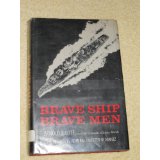
"Brave Ship, Brave Men"

"Brave Ship, Brave Men," by Arnold S. Lott, 1964

When you open a  book, it’s possible to get more than you bargained for.

I’m not talking about whether it’s a terrific read or not. We tend to pick up books our friends recommend or that we’ve seen good reviews on, so we usually have an idea about the content and aren’t disappointed.

I mean opening a book and finding something inside other than the printed word, something that isn’t supposed to be in between the covers, a snippet of intrigue.

It happened to me in the past year when my friend and neighbor George Myers, who shares my interest in war stories, gave me a nonfiction World War II book he had been thrilled to read, Brave Ship, Brave Men.

Written by a retired Navy lieutenant commander and WWII veteran, Arnold S. Lott, and published in 1964, it’s the story of the men aboard the USS Aaron Ward, which fought Japanese kamikaze pilots on May 3, 1945, while on picket station off Okinawa. www.ussaaronward.com It’s a beautifully written, riveting account, and I’d recommend it to anyone who wants to know about American sea duty in the war.

The hardcover edition George gave me has a torn cover that’s taped together in places, and the pages are a bit yellowed, but other than that it’s in fine shape. A small piece of paper was tucked in the middle of its 272 pages. It’s an old sales slip from a bookstore in Atlanta called Davison’s of Dixie, punched with the date Sept. 24, 1965.

I didn’t think anything of it and left the slip inside, just as George had done when he got the book in an eBay purchase three years ago.

But I took another look at the receipt when a name caught my eye at the back of the book, where there is a complete list of the officers and enlisted men who were aboard the  destroyer the day of the kamikaze attacks. The slip is made out in now-faded blue ink to Mrs. T.L. Wallace of the 700 block of Avery Street in Decatur, Ga.

The fifth name on the list of officers is Lt. T.L. Wallace, the Aaron Ward’s navigator.

Mrs. Wallace had bought the book brand new – for $4.12, on a charge — the first year it was out. Did she buy it as a gift for her husband, or for herself?  Maybe she wanted to read it so she could know what he experienced in the war. I don’t know the answer, because I couldn’t find any information on either of them in a quick records check. I’m guessing they are both gone, like the author, Lott, who died in 1992 at age 80.

If you know about the Wallaces, I’d like to hear from you.

OK, so this isn’t a  big deal. It’s just that when I hold the book, I think of Lt. Wallace holding it and reliving what had been an extraordinary event, or Mrs. Wallace reading about her husband, stunned at what he had gone through – but proud of him.

“Unbroken” and the light in vets’ faces

Louis Zamperini

Louis Zamperini

I read Laura Hillenbrand’s Seabiscuit years ago and hung on every word. I’d be sipping coffee in an Allentown café, tears streaming down my cheeks.

Tonight I finished reading her 2010 book, Unbroken: A World War II Story of Survival, Resilience, and Redemption. It took me weeks, in part because again I hung on every word.

If you haven’t heard about it, Unbroken is the extraordinary true story of Olympic athlete and Army Air Forces bombardier Louis Zamperini, who became a prisoner of the Japanese and endured unimaginable cruelty. Put it on your must-read list.

A lot has been written about this book, glowingly. I just want to mention a particularly poignant moment in the epilogue that resonates for me. It’s not about Zamperini but his buddy Allen Phillips, a B-24 pilot who — with Zamperini — struggled through the ordeal of crashing in the Pacific, being lost at sea for many weeks and suffering as a POW.

Zamperini’s story was celebrated after the war, and Phillips was in his shadow. Near the end of his life, during a nursing home event to honor him, Phillips talked about his experiences in the Pacific, and the people who gathered around to hear him were in awe. His face lit up.

I know what that’s about. I’ve seen the light come to the faces of World War II veterans I interview for my Morning Call series, War Stories: In Their Own Words.

It’s what happens when they know that someone is listening.

“I’m no hero, I’m just a guy”

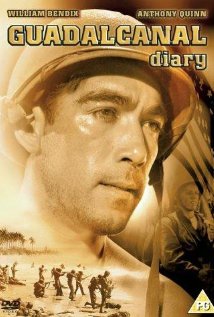
"Guadalcanal Diary," 1943

Anthony Quinn as a Marine in "Guadalcanal Diary," 1943

I’m a sucker for the speeches in Hollywood’s World War II propaganda flicks. Dane Clark makes a good one as merchant mariner Johnnie Pulaski in 1943’s Action in the North Atlantic, but my favorite is actor William Bendix’s “I’m just a guy” speech in Guadalcanal Diary, from the same year.

One night several years ago I got home from work, switched on Turner Classic Movies on the kitchen TV and yahoo! There was Bendix and his whole gang of Marine pals – Preston Foster, Lloyd Nolan, Richard Conte, Anthony Quinn, to name a few – slugging it out on the island with the Japanese.

Bendix’s speech was coming up, so I ran to get my microcassette recorder and held it ready by the TV’s speaker. When the scene started, I turned on the recorder. Later, I transcribed it and I’ve been carrying a copy in my briefcase ever since. Occasionally I show it to folks, who for some reason don’t appreciate it as much as I do. So now I have the idea of sharing it with you. Here goes:

THE SCENE: A bunker on Guadalcanal during a heavy Japanese bombardment.

THE PLAYERS: Bendix is Cpl. “Taxi” Potts, Foster is Father Donnelly and Nolan is Sgt. Hook Malone.

POTTS: Father, you got any objections if I say what I’m thinkin’?

DONNELLY: Go right ahead, son, don’t mind me.

POTTS: Well, I don’t know about these other guys, but … I’m tellin’ you this thing is over my head. It’s gonna take somebody bigger than me to handle it. I ain’t much at this prayin’ business. My old man, he’d always take care of that.

MALONE: Yeah, my old lady was like that, too.

POTTS: Well, I don’t know that I mean that kind of prayin’. You know, the Lord’s Prayer and things like that.

MALONE: I know what you’re talkin’ about, Taxi. I used to pray that way when I was a kid. Y’know, please gimme this, gimme that, please let the Yanks win. I never been in a spot like this before in my life.

(Pause)

POTTS: I’m no hero, I’m just a guy. I come out here because somebody had to come. I don’t want no medals, I just wanna get this thing over with and go back home. I’m just like everybody else, and I’m tellin’ you I don’t like it. Except maybe I guess there’s nothin’ I can do about it. I can’t tell them bums to head somewhere else. Like I said before, it’s up to somebody bigger than me, bigger than anybody. What I mean is I … I guess it’s up to God. But I’m not kiddin’ when I say I sure hope he knows how I feel. I’m not gonna say I’m sorry for everything I’ve done. Maybe I am and maybe I’m not. When you’re scared like this, the first thing you do is start tryin’ to square things. If I get out of this alive, I’ll probably go out and do the same things all over again, so what’s the use of kiddin’ myself? The only thing I know is I … I didn’t ask to get into this spot. If we get it – and it sure looks that way now – well then I only hope he figures we done the best we could and lets it go at that. Maybe this is a funny kind of prayin’ to you guys, but … it’s what I’m thinkin’ and prayin’.

(Pause)

DONNELLY: Amen.

Books for the Revolutionary War reader

This being the Fourth of July, I’d like to run through my favorite books about the Revolution. Here goes:

The First Salute by Barbara W. Tuchman, 1989. You really get a picture of how inept the Brits were, and how much we owe to the Dutch and the French. It culminates with Washington confronting Cornwallis at Yorktown.

Washington: The Indispensable Man by James Thomas Flexner, 1969. I was assigned to read this in college and found myself reciting parts of it aloud. Flexner brings Washington alive.

Decisive Day: The Battle for Bunker Hill by Richard M. Ketchum, 1962. This is a terrific narrative of a critical stand-off with the Brits.

The Winter Soldiers: The Battles for Trenton and Princeton by Richard M. Ketchum, 1973. After reading this, I drove to Washington Crossing to stand on the riverbank where our rag-tag army gathered.

John Adams by David McCullough, 2001.  I loved this awesome biography of the hard-driving founding father.

1776  by David McCullough, 2005. McCullough does it again. The book jacket aptly describes this as a stirring narrative. I couldn’t put it down.

The Battle of Paoli by Thomas J. McGuire, 2000.  I have a particular interest in
this, because I grew up near Malvern,  Pa., where the battle was fought.
We got slaughtered there, but it rallied more soldiers to the cause.


Aging warriors remember relatives in the Great War

The salute came from the Greatest Generation to the generation that came before it, and it was both sobering and uplifting.

At the Lehigh Valley Veterans of the Battle of the Bulge meeting last week, World
War II veterans and their wives saluted their relatives who were the doughboys
of World War I.

Lionel Adda had an uncle, Lionello Adda, who was a machine gunner in the Italian army and fought on the Trentino Front in northern Italy.  Don Burdick’s brother-in-law, Thomas Collins, was gassed and wounded by machine-gun fire, and died Nov. 12, 1918, the day after the armistice. Mark Kistler’s uncle, Laird E.A. Kern, was an infantry private killed the day the armistice was signed.

The Bulge vets got a fact sheet on the Great War, showing there were 53,513 battlefield deaths and 204,002 wounded from among 2.17 million doughboys overseas.

For me, the most enjoyable part of the luncheon meeting, held for the first time at the Northampton Memorial Community Center – the Bulge vets’ new home – was hearing these folks in their late 80s and beyond sing two rousing songs from the World War I era, Irving Berlin’s Oh, How I Hate To Get Up in the Morning
and George M. Cohan’s Over There, which has as part of one verse.

Pack your little kit, show your grit, do your bit,
Yankees to the ranks from the towns and the tanks
Make your mother proud of you and the old red white and blue.

The doughboys would do that, and their sons – among them the
Bulge vets who gathered in Northampton – would do it in the war that followed.