Mystery photos turn up on an Emmaus roadside

Mystery men

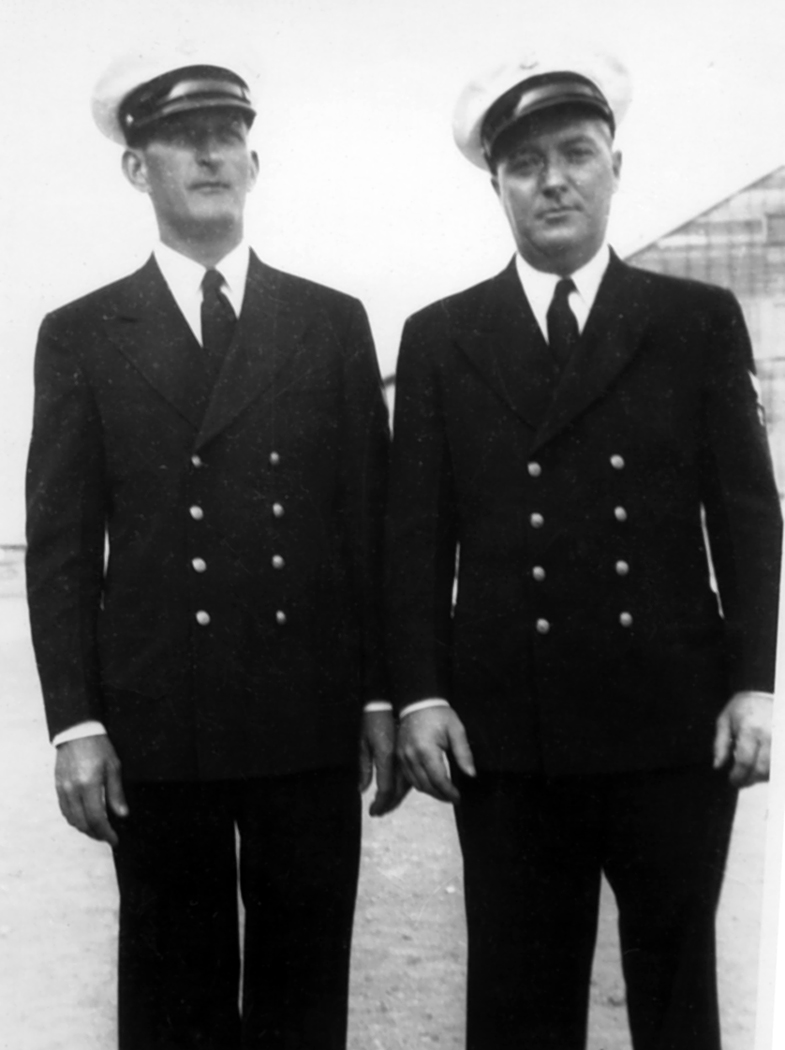
Unidentified men in 1940s-era photo. The man on the right is also in the picture below, taken years later.

The oversize brown envelope sent to The Morning Call last Nov. 30 was passed along to me. A couple of pictures tucked inside showed men in uniform.

Someone had found the envelope and photos near the Pickles restaurant along Chestnut Street in Emmaus, on the side of the road. A note from the finder has his or her local phone number but no name – the envelope was mailed to The Call from Hellertown. I called and left a message a week ago, saying I had the envelope and wanted to talk to whoever found it, but no one got back to me.

The four photos are a mystery. No one in the pictures is identified. There’s no indication of when or where they were taken.

The worn envelope is labeled “News Photos from Call-Chronicle Newspapers, Inc., Allentown, Penna.,” in the upper left and in the lower left: “Photographs: Do Not Fold.” The reference to the Call-Chronicle meant the envelope predated 1980, the year the Evening Chronicle folded.

But no photographer’s name appears on any of the prints. They in fact look like family photos, not pictures taken for a newspaper.

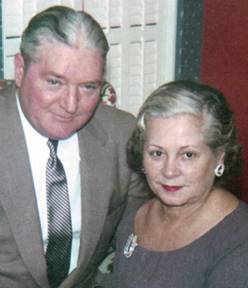
Unidentified couple

Unidentified couple

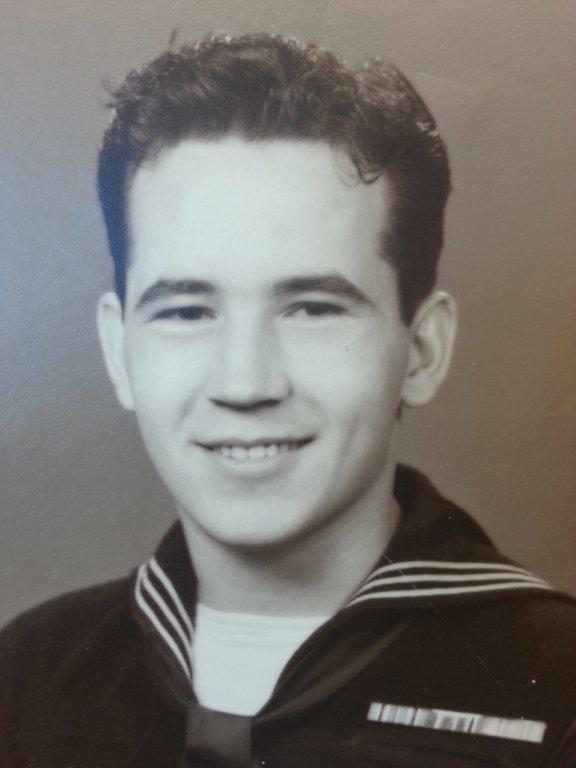
Three of the four photos appear to have been taken during the World War II era. A print 4 by 6 inches shows two officers in Navy, Coast Guard or Merchant Marine uniforms (shown above). The man standing on the right is the subject of a second 4×6 photo, which appears to have been taken at another time because his jacket has a name tag. (We blew up the image but couldn’t make out the name). He also appears with a woman, probably his wife, in a 7- by 9-inch color print (shown on the left) that was made years later. A fourth photo, 3 by 3 inches, shows an elderly woman posing in 1940s dress in what looks like a park.

Who are these people? Why were the four photos in a single envelope, the property of Call-Chronicle Newspapers, which dropped the Chronicle 33 years ago? And how did it end up on a roadside in the 3900 block of Chestnut Street in Emmaus?


Hellertown soldier lit up camp with a circus act

Harold Sutton eats a light bulb

Harold Sutton with a meal of light bulbs

I’ve seen and heard some crazy things in my years of interviewing war veterans, but nothing like what I got in the mail six months ago.

Hank Skabowski of Trumbauersville had called me before sending the clipping. It was a story that appeared Feb. 23, 1945, in the Camp Howze Howitzer, the weekly newspaper at the World War II infantry training camp near Gainesville, Texas.

The subject of the story was a trainee from Hellertown, Harold Sutton. He was written about because he had a unique talent.

He ate glass.

Hank had the clipping because he, too, was an infantry trainee at Camp Howze. He was from Wilkes-Barre, so when he saw the quirky story about a fellow eastern Pennsylvanian, he cut it out — and he’s kept it all these years.

He called me because he thought Sutton, if still alive, or his relatives might enjoy having the article, and he needed help finding them.

A photo shows Pfc. Harold Sutton feasting on a light bulb, with a dish of bulbs in front of him.

The story says Sutton, a trainee with Company D, 55th Battalion, was known to his buddies as Razor. “Sutton amazes them by crunching and swallowing razor blades, light bulbs, Coke bottles, and glasses.” He also was a sword swallower.

“Contrary to any first opinion, his strange appetite did not develop as a revolt against Army chow, for Sutton has been munching mugs and gulping glasses for the past 10 years while performing before gaping audiences of circuses, carnivals and medicine shows in the East.”

The story goes on to say Sutton learned to eat glass from his circus-performing uncle and ate his first light bulb when he was 12.

“I’ve only made one mistake in my many performances before civilian and military spectators,” he told his interviewer. “And that was during a show for officers in Puerto Rico. I must have been in too much of a hurry because I cut my lower lip pretty badly while nibbling on a beer bottle.”

Sutton claimed he had never suffered any ill effects from his glass diet, and that doctors had found no unusual physical conditions or internal injuries.

The story ended with a question:

“Would anyone care to invite Sutton to meet that wise bartender with whom you’ve always wanted to even a score?”

Hank, who was at Camp Howze after transferring from the Signal Corps to the infantry, told me he never met Sutton. Hank went to Europe with the 267th Field Artillery Battalion, arriving in early April 1945, a few weeks before V-E Day. He helped run a POW camp for captured German soldiers in Auerbach, Germany.

After the war, Hank became a Pennsylvania state trooper and moved to Bucks County in 1950. He and I talked last June, and recently I got around to seeing what I could find out about Sutton.

Very little. Nothing on a public records search. Nothing I could readily find on the Internet.

But The Morning Call has a clip file on a Harold R. Sutton with one yellowed clipping, a four-sentence article that ran on March 10, 1972.

According to the story, the 51-year-old collapsed and died the afternoon of March 9 while walking along Union Street, just east of Richlandtown. He had been living at the Crossroads Hotel, Hellertown.

State police at Quakertown said there was no foul play. The coroner said Sutton died of natural causes.


‘The waters of the North Atlantic are deceptive’

Norman Jessen

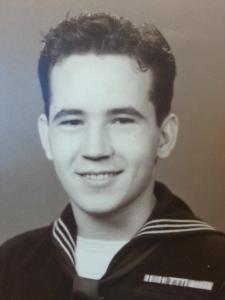
Norman Jessen of the USS Sheboygan

My mom said Dad used to write to a guy in California he had served with on a Coast Guard patrol frigate during World War II. But I’ve never had any contact with anyone who was a shipmate of my dad’s on either the USS Sheboygan or the USS Abilene.

Until now, eight years after my dad died.

I’d blogged about his work as a radio operator in the North Atlantic. Here’s the link: https://warstoriesandveteranshistories.wordpress.com/2011/11/27/752/ One day a few weeks ago I got an email from Neil Jessen, who’d read my posting and said his dad had been on the Sheboygan and would I like to be in touch with him. Absolutely yes!

Soon afterward I got an email from Norman Jessen, who’s 85 and lives in Anaheim, Calif. He wasn’t my dad’s West Coast pen pal because they didn’t know each other. Still, he paints more of a picture than I ever got, because I’d never asked Dad about his experiences.

Norman was kind enough to offer information, and answer my questions, in a series of emails that I’ve spliced together. Here goes:

“My name is Norman Jessen, born and raised in Council Bluffs, Iowa, a senior in high school, when, at age 17, with parental permission, on May 14, 1945, I joined the USCG at their Omaha station, I took my boot camp at Curtis Bay, New York City and engineering studies at Baltimore.  We were in training for the invasion of Japan when the war ended.

“I was then assigned to USS Sheboygan, Patrol Frigate 57, at its home port in Boston to perform basic functions of air-sea rescue and as a North Atlantic weather station.

“I presume that Carmine Venditta and I served on the Sheboygan at the same time during 1945-46.  I am sure we would have had a nodding, “Hiya”-type acquaintance, but I don’t recognize your father’s name or face. We had no work relationship as he was a Radioman 2/C and I was a Fireman 1/C so he worked topside and I below decks in the engine rooms. Our home base was Boston, not Argentia, Newfoundland, although our ship stopped at Argentia on frequent trips to/from our patrol assignments near Greenland.  We did once serve a station near Bermuda. Our patrol assignment was usually 3-4 weeks at sea on duty station, return to Boston several weeks and then go again to our North Atlantic station.  We were often in area of icebergs, floating ice, iced decks, and storm weather.

“Firemen in the Engineering Department aboard ship were given training in both engine room operations and boiler room operations. Later, assignments were made to one or the other according to skill. I had prior civilian experience with boilers, so I was assigned to operate one of several boilers. The boilers were oil-fired and produced super-heated steam via steam lines to the engine. Our job was to regulate the amount of oil required to produce steam according to need. We watched dials, received signals and made manual changes to the amount of oil injected into the boiler furnace. The injector was like a 2 ft. hollow steel pipe with a spray head. With a ‘Full Speed’ signal, we removed a slow-speed injector and installed a full-speed injector into the boiler. The installation had to be completed in seconds to provide speed and avoid smoke discharge out the stack. Steam was also used to operate other machinery. At sea, two firemen were assigned to each boiler 24/7. Watch assignments were 4 hours on and 4 hours off. No days off at sea.

“The waters of the North Atlantic are deceptive; as smooth as glass one day, with dolphins leaping and racing alongside the bow of the ship, the next day massive waves towering above the ship structure.  The ship would rise to the crest of a massive wave, teeter there, and dive into the following wave where the bow would plow its way in, stagger, shudder, and break through in time to repeat the effort.  In the mess hall, your dish, food, pots, salt & pepper on the table would slide back and forth. To sleep, you spread out in your sack, on your stomach, and try your best to grip the iron structure while sleeping. We hoped not to roll out.

“Your dad must have agonized with his motion sickness because in leaving port, there was no turning back for about a month. We had one new seaman assigned for his first sea duty who was seasick, confined to his sack, and attended by our ship’s MD for a solid month before we returned to home base. Luckily, I only felt queasy on leaving the Bay, when the ship started its first rock & roll, but the feeling for me would soon pass.

“The Sheboygan was armed with a 3” cannon & Hedgehog mortar launchers forward, several twin 40s AA  amidships, and for submarines, 2 rolling tracks & several depth charge Y shape projectors at the stern. I had the misfortune, at a practice GQ, to be standing directly above, almost looking down the barrel when they fired a Y depth charge projector and its dummy load.  My ears rang tunes for a week.

“Our civilian weathermen would daily set free a huge balloon from our ship deck, with attached electronic weather devices to record wind, temperature, etc. The balloon transmitted weather data to our ship and we transmitted it back to Boston.

“I think the crew all enjoyed our patrol assignment to Bermuda waters because of the balmy, warm weather.  The crew was permitted to swim from the ship while an officer, operating a motorboat, acted as lifeguard. Daredevils would swan-dive from the upper structures. On other days, we fished for sharks.  I formed a big steel hook in our machine shop, attached a chunk of meat waste, chain, heavy rope, and with it tied to the ships railing, permitted it to troll behind the ship. When I returned from watch, all was gone but a length of rope floating atop the water. That was a big shark.

“Unfortunately, I did not find your dad’s name in my company roster, but I would wager he was standing at attention with his company of men, in formation in the street fronting his barracks, (as I was in my company – the whole base was assembled) when the company commander broadcast over the loudspeakers that the USA dropped an ATOMIC BOMB on Japan. When dismissed from ranks, we asked one another, “What the hell is an atomic bomb?”  Shortly thereafter, I was fortunate to join the thousands celebrating VJ Day in Times Square; a kissing, dancing, singing, mass of people in profound joy.

“I am sure your dad and I shared relief that WWII ended, that we never fired a shot in anger. The majority of landing craft were operated by USCG and if our craft was disabled or inoperable, orders were to attach ourselves with the Marine troops in the battle. During training, we were told officially that few of us would survive the invasion of Japan.

“After my honorable discharge, I returned to graduate from high school, attended Drake University in Des Moines and Omaha University, worked as an insurance investigator, a tire salesman for Firestone,  an insurance adjuster for several firms, and claim manager for several other California insurance carriers until retirement from Allstate Insurance Co. I am still married 62 years, and father of three sons — also a grandfather and great-grandfather to a bunch of young people.”

Returning to Argentia, in words and pictures

The call came about two weeks ago from a man who heard me give a talk before the Lehigh Valley Military Affairs Council last summer.

As I always do in those appearances, I mentioned that my dad was in the Coast Guard during World War II and had gotten posted to Argentia, thinking he was going to Argentina. But Argentia is a port in Newfoundland, not someplace warm like South America.

Dad had been a radio operator on the patrol frigates Abilene and Sheboygan. He died in 2004.

Dave Binder, a Navy veteran who served two tours in Vietnam and who happens to live in my neighborhood, called to say he had a book for me, Argentia: Sentinel of the North Atlantic, and dropped it off at my house that night.

The oversize, hardcover book had been passed on to Binder by a longtime friend, a Navy veteran who had been Binder’s scoutmaster in Allentown.

In the front, that man, Joseph Smurda Jr., had written: “This book was bought at Argentia, Newfoundland on Dec. 7, 1946, while on a three-day stay for recreation on the base after coming back from the Arctic Circle on the way to the States. We arrived on Dec. 6 at 1300 and left Dec. 9 at 1330, 1946.”

Smurda would have been 17 then. He died in 2006. His obituary said little more than that he had been assistant to the chairman of Mack Trucks, where he had worked for 30 years, and that he had served in the Navy. There was no mention of his work in the Boy Scouts as a leader in sea scouting.

A dedication says the volume is primarily for “those officers and men of the allied countries who gave their lives in the protection and preservation of the shores in and around the Argentia area, and all other personnel who were based on the Avalon Peninsula, who so unstintingly, frequently under most trying conditions, contributed to the safe conduct of ships, supplies and personnel, so necessary to the successful completion of the European war.”

The book has many official Navy photographs showing where my dad had stopped on frequent trips to and from patrol assignments near Greenland – Naval Operating Base 103 at Argentia.

It also has a chronology with entries such as this one for September 1945: “Two German submarines captured in Europe stop at Argentia en route to the States. U-Boats, sailed on the surface by prize crews, put in for fuel, repairs, provisions and stores.”

The book is a treasure, among countless ones published at the end of World War II as a remembrance – a great service for the veterans and a nod to posterity.

I’m grateful to Binder for this gift. It brings me a little closer to my dad.


Old warriors, still going strong, get a celebrity visit

We’re losing the World War II generation, but some of the folks from that era are not only holding on but still vigorous.

I sat at a table with two of them last week during the holiday party for members of the Lehigh Valley Chapter of the Veterans of the Battle of the Bulge. They were 94-year-old Lou Vargo and 97-year-old Minotte Chatfield – both still animated and upbeat.

Eddie Sakasitz, 92, was at a nearby table with his wife, Catherine. They missed a few of the recent monthly meetings because he was hospitalized for weeks and is having trouble walking. But other than that, Eddie is still spirited.

He is a WWII veteran but wasn’t in the Bulge. Nor did he serve on the Allies’ side.

Eddie served in the German army, the Wehrmacht, and was machine-gunned in the legs in Italy. It’s amazing that he’s only now having serious trouble with them.

He and Catherine have been regular attendees since 2007, when the Bulge vets invited him after seeing his account in my series “War Stories: In Their Own Words” in The Morning Call.

At the holiday party, group President Morris Metz had intended for his fellow  vets to talk about where they were and what happened to them on Dec. 16, 1944, the day the Germans started their offensive in the Ardennes.

But a surprise visitor arrived during the luncheon in the Best Western outside Bethlehem – legendary racing driver Mario Andretti of Nazareth.

He was there to go from table to table and shake the hand of every vet, just as he did in the fall of 2010 when the group was meeting at the old Terrace restaurant in Walnutport.

Mario has a special fondness for the veterans, having been a child in Italy during the war.

Morris apologized that the program didn’t go off as planned, but with Mario on the floor, no one seemed to mind.

Two young men from the Class of ’37

Bob Kroner

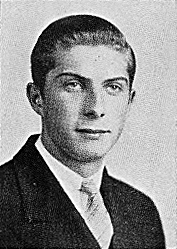
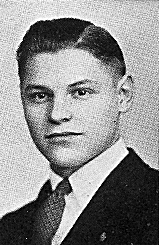
Bob Kroner as a graduating senior, Easton High School Class of 1937

Improbable connections with other people are so commonplace, they shouldn’t surprise us.

Still, they do.

After my first meeting with Bob Kroner, I mentioned to my wife that the Pearl Harbor attack survivor was a 1937 graduate of Easton High School.

“That’s when my dad graduated from Easton High,” Mary said.

Some coincidence! Could they have known each other?

Mary’s dad, Harry Schleicher, had also served in World War II, but in the Army Air Forces stateside. He died in 1999.

Bob, now 93, had been in the Army Signal Corps in Hawaii and later in Europe.

When I met with Bob again at his early 19th century home outside Bethlehem, I told him about the connection.

He said he recognized Harry’s name but didn’t remember him. His wife, Geraldine, scurried to get Bob’s yearbook but couldn’t immediately find it.

Later, I told my mother-in-law, Naomi, how Bob and Harry were linked. Over the weekend she came up with Harry’s yearbook, the Rechauffe, which means a rehash or something made up of old material.

Sure enough, Bob and Harry are pictured among Easton High’s 384 graduates of 1937.

Next to Bob’s portrait, the text reads: “Robert is rather shy when you first meet him, but, after you have gained his friendship, he is one of those rare people who will always stand by you.”

Harry Schleicher

Harry Schleicher in Easton High’s 1937 yearbook

Pages later, Harry is described as “one of the most active musicians of the class. He plays the violin well and also is proficient with the clarinet and the saxophone.”

Bob went on to join the Army in 1940 and was a staff sergeant in the Signal Corps at Hickam Field when the Japanese attacked. Later, he became an officer and served in Gen. George S. Patton’s 3rd Army headquarters in Europe.

Harry joined the Army Air Forces in 1943 and was a bombardier instructor at Midland, Texas, where he taught the use of the Norden bombsight. He also was commissioned an officer.

Bob and Harry had one other connection.

The large American flag that Morning Call photographer Harry Fisher used as the backdrop for his portrait of Bob was the one that had draped Harry Schleicher’s coffin.

You can read Bob Kroner’s account of the Pearl Harbor attack at http://articles.mcall.com/2012-12-07/news/mc-pearl-harbor-war-story-kroner-20121206_1_dit-hickam-field-pearl-harbor

Pearl Harbor first-person accounts

What will probably be my last interview with a local survivor of the Pearl Harbor attack will run in The Morning Call on Friday, Pearl Harbor Remembrance Day.

It will be an “in their own words” account by a 93-year-old Army veteran who served in the Signal Corps and was at Hickam Field when the Japanese attacked Oahu on Dec. 7, 1941.

I don’t know of any other Pearl Harbor survivors in the Lehigh Valley whose stories I haven’t done. The list I once had is exhausted.

The first interview was in 1999 with Jim Murdy of Allentown. He was an electrician aboard the light cruiser Helena, which was torpedoed in the harbor’s repair dock. Jim is now in his mid 90s. His story is in my book War Stories: In Their Own Words.

Next came John Minnich of Richmond Township, Berks County. He was an Army Air Forces truck driver at Wheeler Field, the fighter base on Oahu. His heart gave out and he died several days after my final interview with him. But with the blessing of his family, his story ran Dec. 7, 2001.

In 2002, I interviewed Paul Moyer, then of Richland Township, Bucks County. He was a 19-year-old Army private first class in the 21st Infantry Regiment at Schofield Barracks when the Japanese attacked. Paul now lives in Pottstown.

Joe Moore was 23 and a master gunner with the 98th Coast Artillery Regiment (Antiaircraft) at Upper Schofield Barracks on Dec. 7, 1941. He lives in Allentown and goes to my church, Calvary Moravian. I saw him at the service Sunday. His story ran Dec. 7, 2005.

Dick Schimmel of Allentown was a plotter and switchboard operator in the Army’s Aircraft Warning Service at the Fort Shafter information center, which took calls from the island’s radar sites. My interview with Dick ran Dec. 7, 2007. I wrote about him again last year, along with his radar buddies Joe Lockard and Bob McKenney. Dick plans to attend Pennsylvania’s Pearl Harbor ceremony Friday in Harrisburg. Joe, who lived near Harrisburg, died Nov. 2 at 90. Bob is in Phoebe Home in Allentown.

For Pearl Harbor Day 2008, I had a story on Warren Peters of Catasauqua, who served in Battery A of the Army’s 15th Coast Artillery at Fort Weaver, at the western entrance to Pearl Harbor. He died Sept. 29, 2011.

Alfred Taglang was my subject on Dec. 7, 2009. He was with the 876th Antiaircraft Gun Battery at Fort Kamehameha, near Hickam Field. Al died June 12, 2011, in an east Allentown nursing home.

In 2010, I interviewed Burdell Hontz, who worked in the message center of a B-17 bomber unit, the 11th Bombardment Group, at Hickam Field. He was a 19-year-old corporal. He lives in Bangor.

You can find all of these stories at http://www.mcall.com/news/all-warstories,0,2438477.storygallery

Additionally, I wrote a story about Clifford Ryerson of Tannersville for the Pearl Harbor anniversary in 2006. That piece was not in the “in their own words” format. Clifford was navigator on the minesweeper Tern. He died May 4, 2009.

Following our hearts and searching the past

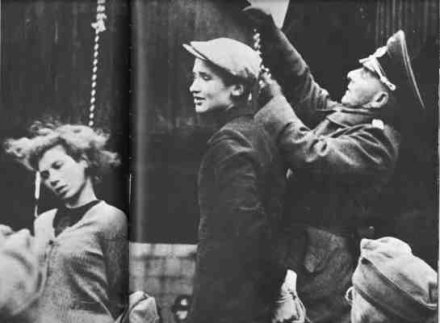
Masha Bruskina and Volodia Shcherbatsevich are hanged in Minsk in 1941.

Masha Bruskina and Volodia Shcherbatsevich are hanged in Minsk in 1941.

Daniel Weiss, president of Lafayette College, told a riveting story last week when the Lehigh Valley’s Battle of the Bulge veterans met outside Bethlehem. It reminded me of my own years-long journey to get at the truth of what happened to my cousin Nicky in the Vietnam War.

While vacationing with his wife back in the mid-1990s, Weiss said, they went to a museum in France and he became struck by a large reproduction of a powerful, disturbing World War II image. The photo shows the Nazis’ public hangings of a teenage boy and girl in the Soviet city of Minsk on Oct. 26, 1941. The pair belonged to the anti-fascist resistance. The caption said the boy was Volodia Shcherbatsevich, but the girl was listed as unknown.

Weiss committed himself to giving the 17-year-old girl the recognition she deserved, and teamed up with Holocaust survivor and scholar Nechama Tec. He told how their work met with harsh resistance from the Russians but ultimately led to justice for the girl, Masha Bruskina. Two Russian journalists had proved her identity in 1968, but their work was suppressed, they were viciously hounded and their careers ruined. It turned out the Russians didn’t want Masha celebrated as a hero because she was Jewish.

In 1994, I had a moment similar to what Weiss experienced when he saw the gruesome picture on the museum wall. But the shock I received didn’t come from a photo; it came from a data sheet I got from the Friends of the Vietnam Veterans Memorial.

The now-defunct Friends had come up with a database that had information on each of the 58,000 Americans killed in the war. I hadn’t given Nicky much thought over the years. He was a 20-year-old Army helicopter pilot when he went to Vietnam in 1969 and was dead in 11 days. But I’d hardly known him – he said hi to me once at a picnic when I was a little kid.

The story that had always gone around about how Nicky died was that he was standing with a bunch of other guys waiting for a transport when an enemy rocket hit. He lost a leg, lingered for several days and died on the base in Vietnam.

But the data sheet had something that stunned me. It said Nicky’s death was non-hostile, an accident.

What? What kind of accident?

The Army casualty office, and my own research over the years, filled in the blanks. When Nicky arrived in Vietnam, at the Americal Division base at Chu Lai, his first week was orientation. As part of that, he attended a classroom lecture on grenade safety. The instructor told the guys in the class that when the grenade’s released, you have five seconds. What are you going to do? And then he deliberately fumbled the grenade onto the floor.

On every other day, the grenade was inert and nothing happened. It was a stunt to see how the replacements would react. But this grenade, for reasons that the Army never determined, was live. It rolled under the table up front where Nicky sat with three other warrant officers and detonated. Nicky lost his left leg below the knee and died five days later at the evac hospital on the Chu Lai base.

My search to learn as much as I could about what happened to Nicky took me to Vietnam to follow his path, to guys who had survived the blast, and ultimately brought me face to face with the instructor who tossed the grenade. He believes the explosion was not an accident but sabotage. Someone, he says, switched his grenades. We will never know for sure.

In his presentation to the Veterans of the Battle of the Bulge, Weiss said he learned of an amazing link to Masha Bruskina right in his own backyard, the Easton campus he runs: A student at Lafayette was a direct descendant of Masha’s schoolteacher in Minsk.

I can identify with that kind of thrilling, extraordinary coincidence: The Army nurse who tended to Nicky as he lay dying lives in my neighborhood here in Allentown. She’s the former nurse manager of the VA Outpatient Clinic, Lynn Bedics.


A celebrated Pearl Harbor radar man is gone

Last fall when I was looking for a Pearl Harbor survivor to interview for the 70th anniversary of the Japanese attack, I met with 90-year-old Bob McKenney at Phoebe Home in Allentown. His daughter Ann Schnur, who had put me on to him, was there as well that day, Oct. 11, 2011.

Bob’s memory was poor, but from talking with him and Ann, I learned that he had been in an Army radar unit on Oahu and knew both Dick Schimmel and Joe Lockard. I had done Dick’s story in my war “War Stories: In Their Own Words” series in 2007, and he lived just a few miles from the nursing home.

Joe, I knew, lived near Harrisburg. He was the celebrity among the three, because his role on Dec. 7, 1941, put him in the history books.

He and another soldier manned a remote radar station on the northern tip of Oahu that picked up a large cluster of planes fast approaching – the Japanese. The two soldiers called the sighting in to the Fort Shafter information center, and Joe spoke forcefully by phone with an officer who dismissed the report, saying, “Don’t worry about it.”

Joe subsequently received the Distinguished Service Cross, testified at Pearl Harbor inquiries and was portrayed in the 1970 film Tora! Tora! Tora!      

He and Bob had been at the Kawailoa camp near the Opana mobile radar site; Dick had been at Fort Shafter. They hadn’t been together since 1941. Wouldn’t it be great, I thought, if I could get all three together for the first time in 70 years? The meeting place would have to be Phoebe Home because of Bob’s limited mobility – he was in a wheelchair.

The question was: Could I get Joe to come to Allentown?

I called him and he was game, but he said he’d need a ride to and from Allentown. Immediately I volunteered to pick him up and take him home afterward, about an hour-and-a-half drive each way.

The meeting happened as planned on Nov. 1, 2011. I came to Joe’s home in Lower Paxton Township and had my digital recorder running all the way to Allentown. He and I chatted nonstop. His eyesight was bad, and he used a cane, but his mind was still sharp. In Allentown, I treated him to lunch at Wert’s Café, where we sat at the busy counter and had the soup and half-a-sandwich lunch special, which he said was just right for him.

We drove on to Dick’s house in west Allentown, but Dick didn’t answer the door. Oh, no, what’s happened? I called his number on my smartphone and he answered. He had nodded off and would be right out.

At Phoebe Home, all three men sat together in front of me and a pair of photographers from The Morning Call, Harry Fisher and April Bartholomew, plus digital technician Gene Ordway. They shot stills and video as the old guys reminisced. Later, when I took Joe home, he showed me around his house, where he lived alone. It was cluttered with books — he was fascinated by ancient history – and poems he’d written.

My story ran in The Morning Call on Dec. 4, the Sunday before the Pearl Harbor anniversary. Harry’s photo of the old radar men and my story were picked up by The Associated Press and ran in papers across the country. Here it is: http://articles.mcall.com/2011-12-03/news/mc-pearl-harbor-radar-vets-reunited-20111203_1_radar-unit-pearl-harbor-joseph-lockard

I sent Joe half a dozen copies and called him later in December to see how he was doing. “Well, I’m still here,” he said.

Last June, I saw Dick at the World War II Weekend at Reading Regional Airport and he said Joe was usually there in the hangar with the exhibitors, where I was selling my War Stories book. But Joe didn’t come this year. I called him the next week and opened with, “How are you doing?”

“Well, I’m still here,” he said.

I’m sorry to say he’s not anymore.

Joe died Nov. 2, almost exactly a year after I’d brought him to Allentown for the reunion with Dick and Bob. He’d had a short illness. He was 90.

It came as a shock, his death happening so quickly. But when I got over the assault of sadness, I was glad about one thing: that I’d gotten him and his two old buddies together before the end came.


An almost fatal night at the ballpark

It seemed like a neat idea to take Dan Curatola to an IronPigs game.

Dan is a World War II veteran. Army, 1st Infantry Division, hit Omaha Beach on D-Day in the first wave. I had interviewed him for a two-part story that ran in The Morning Call in 2009.

He’s also a big sports fan. When he was a boy, he went to Yankees games, saw DiMaggio play, kept scorecards of every game.

Sixth inning at Coca-Cola Park, a batter hit a line drive foul. We were in the upper right field bleachers.

It was a scorcher headed our way. An instant later: It’s really headed our way. Then: It’s homing in on us!

I felt a bolt of dread.

This old man beside me had survived the fighting in North Africa and on Sicily and on bloody Omaha, but he was not going to survive a minor league baseball game in Allentown. The ball was coming straight for his head and would hit him and kill him.

I stood up and put my hands out, hoping to at least deflect it.

Dan did not get clobbered.

The ball crashed into an empty seat directly in front of us.

“What was that?” Dan said.

He had heard it hit but hadn’t seen it coming, because his eyesight was bad in the twilight.

 From a speech I gave last week in Allentown at a social event given by the Lehigh County District Attorney’s Veterans’ Mentor Program, which pairs veterans who are defendants in the criminal justice system with veterans in the community who serve as volunteer mentors.