Tag Archives: World War II

‘We were full of piss and vinegar, and no brains’

Mathias Francis Gutman: 1925-2024

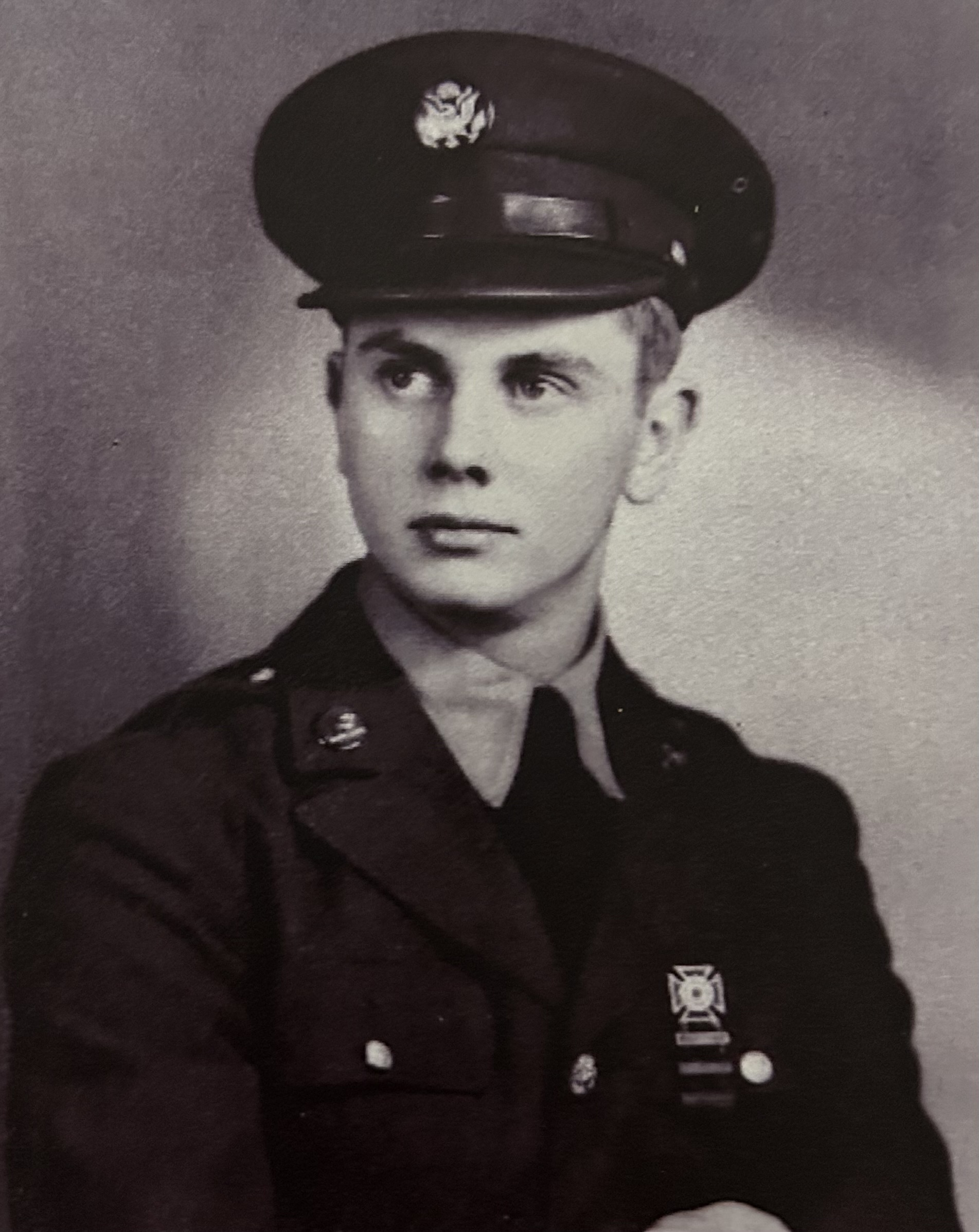
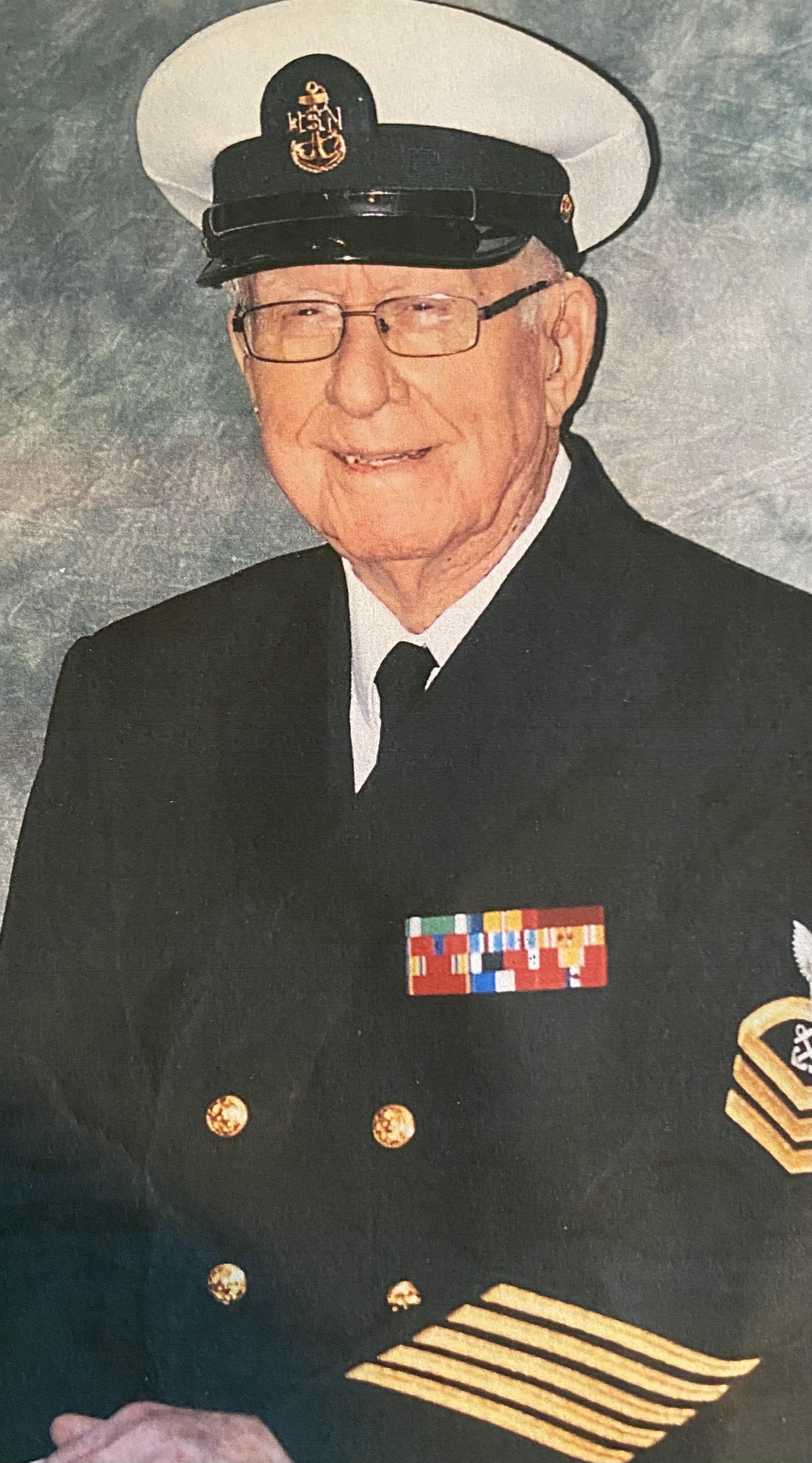
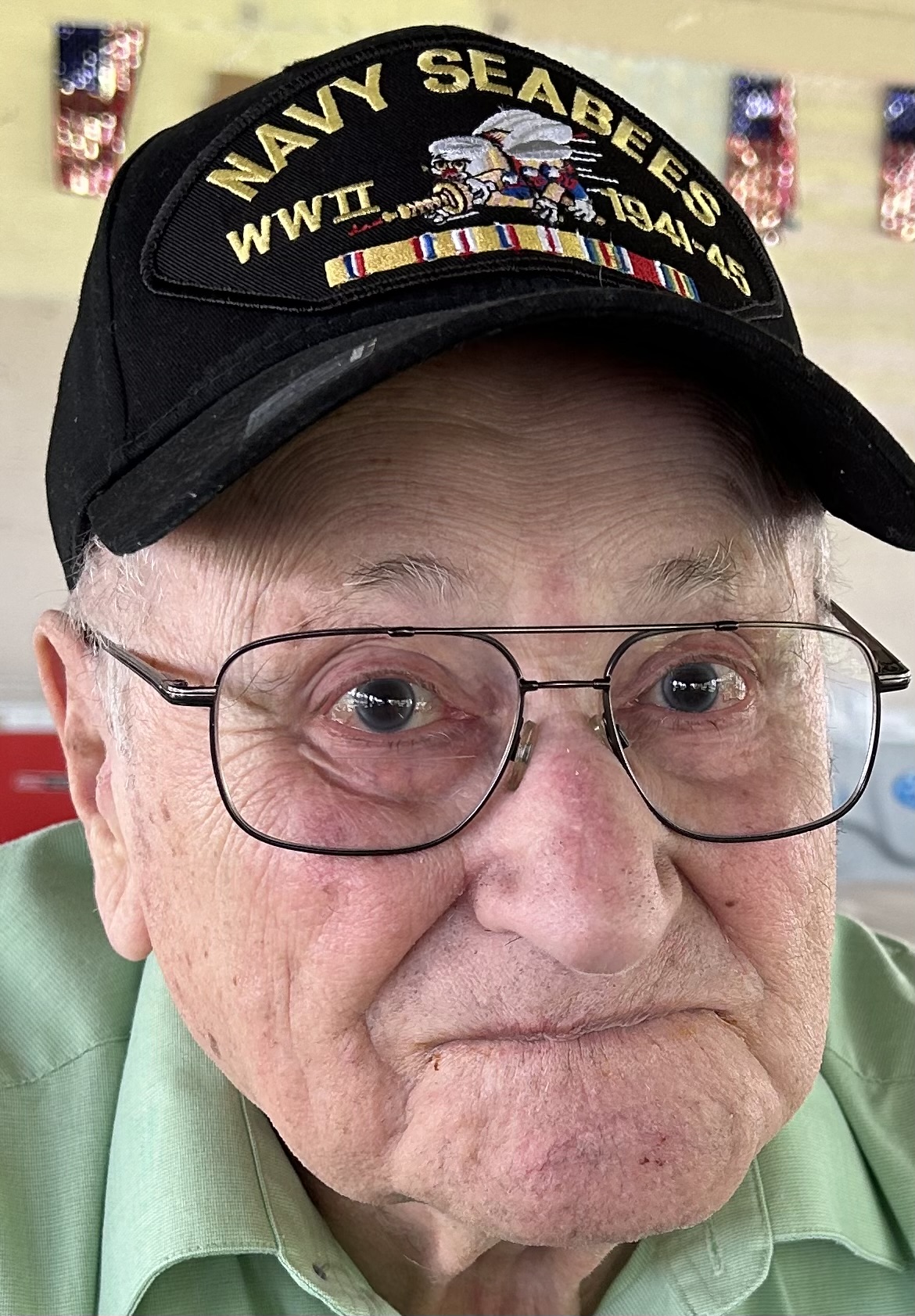
World War II veteran Matt Gutman died last Thursday, November 7, at his apartment in Allentown, Pennsylvania. He was 99. I wrote a story about his passing for my old employer, The Morning Call. For you, I’m sharing a partial transcript of my August 18, 2022, interview with him. Here, he tells about joining the Navy in 1943 and heading for the fight against Japan.

I didn’t want to be trapped in the Army or Marines.

When I was in junior high school, my brother who was in the Navy gave me one of these sea caps, and I used to wear it to school. I sort of liked the Navy because, first of all, I wanted to have good, warm chow and a bunk to sleep in, not a mud hole. … And that’s why I chose the Navy.

I enlisted at the Navy recruiting station in Allentown. … I wanted to go into the Seabees originally, [so] I talked to the chief Seabee, and he says, “What’s your occupation? What did you do?” I said, “No, I just come out of high school. I had basic electric.” He said, “Look, son, go next door. Talk to the Navy recruiter. We can’t be teaching you. We want people that are already trained.” So then I went next door to the chief of the Navy, and he enlisted me.

Then I went to Sampson, New York, for seven weeks of basic training. There was 106 of us. We trained together, marched together, ate together, everything together as a unit, and then, of course, graduated and then were given a seven-day leave to go and visit our parents, our friends. After seven days, we had to report back to Sampson for fleet assignment.

Gutman left Allentown High School in 1943 to sign up, and served in the Naval Amphibious Forces.

They sent me with a group of others by train down to Camp Bradford, Virginia, for amphibious training. First of all, I didn’t know what it would entail. … I knew it was land and sea. This was something new. When we got down there, they showed us all the different types of ships they used for invading an island, went over every one of them. They also told us about what to expect on those ships, and they told us these ships were made only to invade an island. That’s why they called them amphibious. They carried troops and tanks to invade an island.
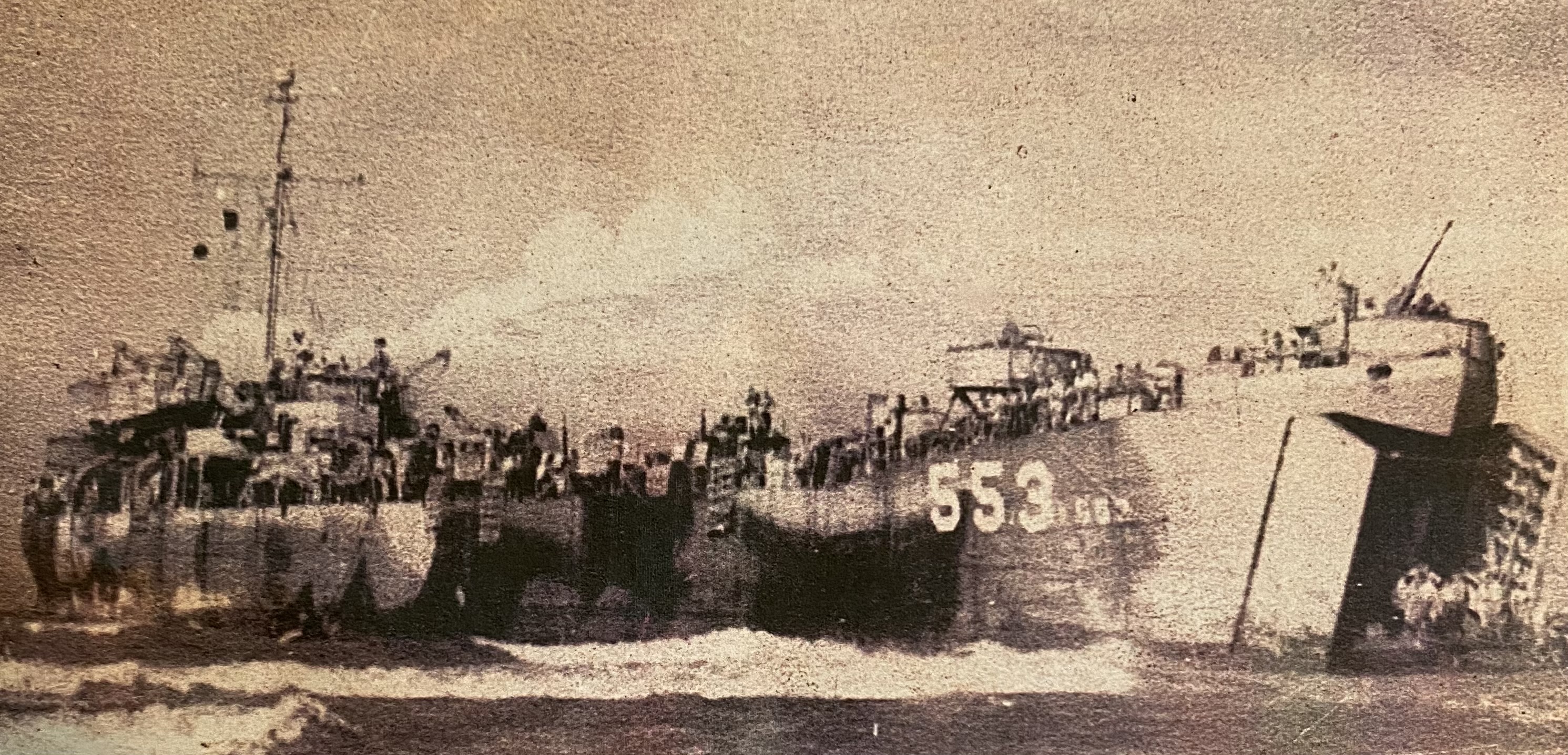
That was the main purpose of the ship that I was assigned on. It was called a landing ship, tank, an LST, and they were all numbered. They never had no names. Mine was 553. I was with it all through the war. It was camouflaged brown and green. You know why? Because when we boarded that ship in Evansville, Indiana, where it was built, we seen that ship was all in tropical colors. Tropical! We knew right then and there that ship was going to be assigned to the Pacific Theater, not European, because once that ship beaches, it blends with the foliage on that island.

They taught me how to operate the Higgins boat, and I was in charge of the Higgins boat on our ship when we made the landings. I was a seaman first class then. I don’t know why I was picked, but they came and asked me if I’d like to do that, and I said, “Why not? I’m in the Navy, I’ll do what I can.” And I operated that landing craft all through my landings in the Pacific. …

Gutman’s LST, a landing ship, tank

After they trained me, I went to San Pedro [in Los Angeles] and Hawaii, I used that boat a lot to take people to shore, back and forth. So I was trained all along with it, you know what I mean? It only had one propeller. You had to watch the wind and currents. Well anyway, they trained me pretty well.

We only had two Higgins boats on our ship, one to starboard and one on the port side. I had the one on the port side. [As coxswain] I was in the stern. I always had to watch where I was going. These Marines and Army men we had in there, they’re all hunkered down. I had to see where I’m going, you know. I had to stand because I wanted to see where I was going, because the bow doors were up pretty high. It had a diesel engine, very noisy, and it always smelled awful. But we were young guys, we could take it. We were all young, full of piss and vinegar, and no brains.

Getting smooched by The Magnolia Sadies, a vintage dance troupe, on May 8 at a V-E Day picnic honoring World War II veterans in Macungie Memorial Park

They shipped a crew of us to Evansville, Indiana, where we picked up our ship. It was built there, right alongside the Ohio River. We boarded that ship in April 1944. The skipper took her down the Ohio River, the Mississippi River to New Orleans. That’s when the ship was commissioned. We stayed in New Orleans for four days, taking on supplies – water, fuel. Then we headed back down the Mississippi to the Gulf of Mexico.

While in the gulf, the skipper put the ship through what is called a shakedown cruise. A shakedown cruise consists of testing all the components of that ship – the navigation equipment, all the guns were working properly, checking out the fire system we had, the fire hoses, check everything to see that that ship was ready for combat. From there we went to Panama City, Florida, where they taught us how to distinguish all types of shipboard fires we might encounter in combat. We were there about four days.

From there, we went to Gulfport, Mississippi. We were there to pick up creosote pilings. They were large logs, about 18 foot long and 2 foot wide. We wondered, what the hell is this gonna be? They loaded them on our tank deck. We went through the gulf and the Panama Canal with about seven other LST’s. And we we went up along the coast to San Diego, 108 men and eight officers. … We enjoyed liberty there. We were there maybe three or four days. We took on more supplies. We also took on a contingent of Seabees.

We left San Diego with a fleet of ships going due west. The skipper was on the P.A. system and he said, “We are now heading for Pearl Harbor.”

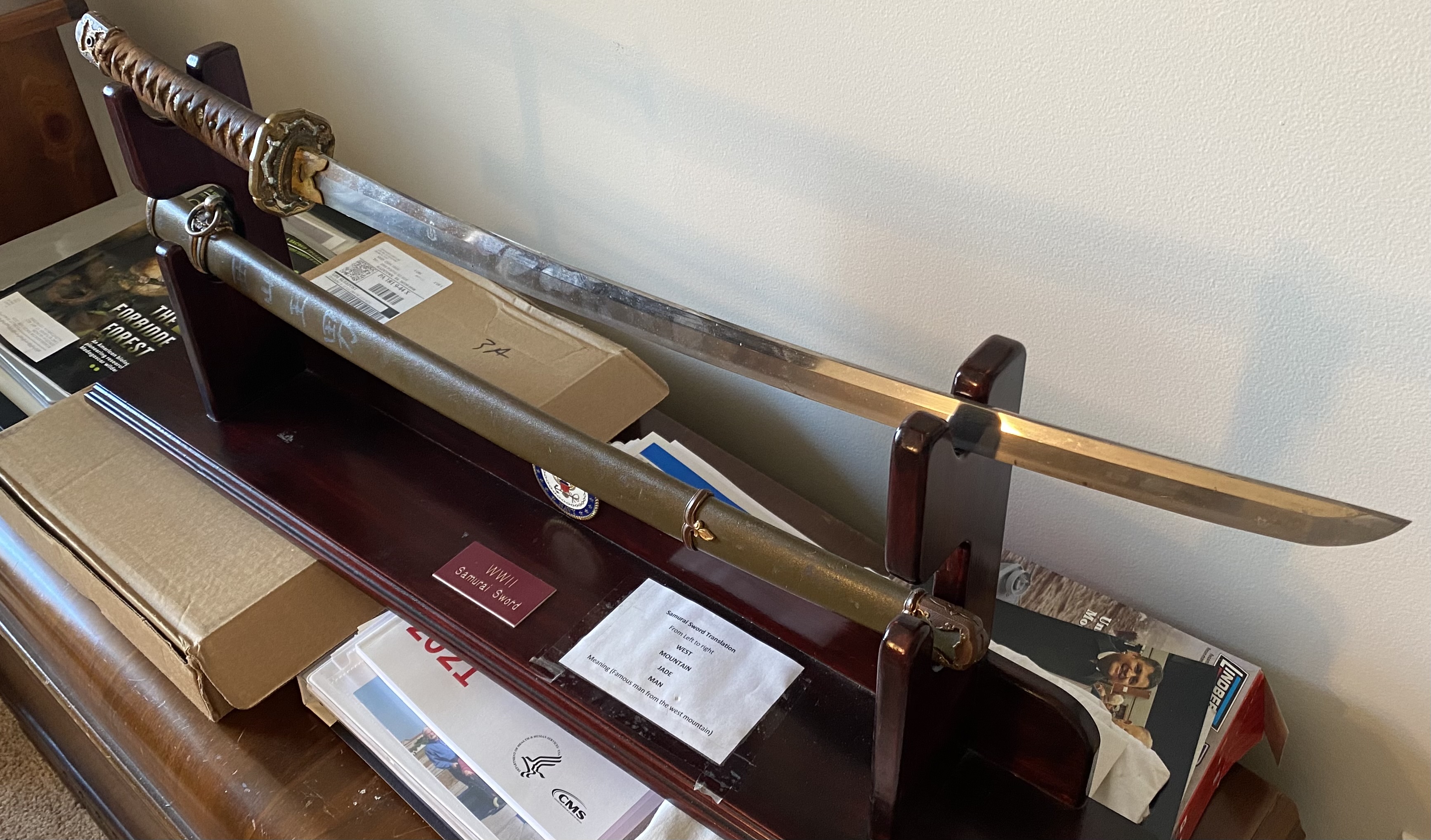
A sword and scabbard Gutman took from a Japanese officer after the surrender. ‘Sir, you will not need this any longer,’ he told the man while helping to disarm enemy troops on a Pacific island.

When we entered Pearl Harbor, we could still see a lot of the destruction that took place when they [the Japanese] bombed that harbor. We then found out that these creosote pilings, along with the Seabees, were brought there to repair the docks and ships that were destroyed in the bombings. We were there maybe about a week. We enjoyed liberty. A lot of guys got drunk, got pie-eyed. I think I had a couple of beers. We had a lot of fun. I guess the skipper wanted us to have fun.

We knew from there, God only knows where we’re gonna go.

In September 1944, Gutman landed Marines on Peleliu in his Higgins boat under fire. He went on to take troops ashore at four sites in the Philippines and at Okinawa. At war’s end, he and some others on his LST volunteered to sweep pressure mines that U.S. planes had dropped in Japanese harbors. For “the personal danger involved,” he was awarded a Navy Commendation Medal. Back home, he had active duty in the Reserve as an instructor and recruiter, retiring in 1967 as a chief petty officer.

He was more than a distinguished veteran and the subject of several stories I wrote for the newspaper over the past few years. He was my friend.

Rise of a WWII airman: the John Hudock story

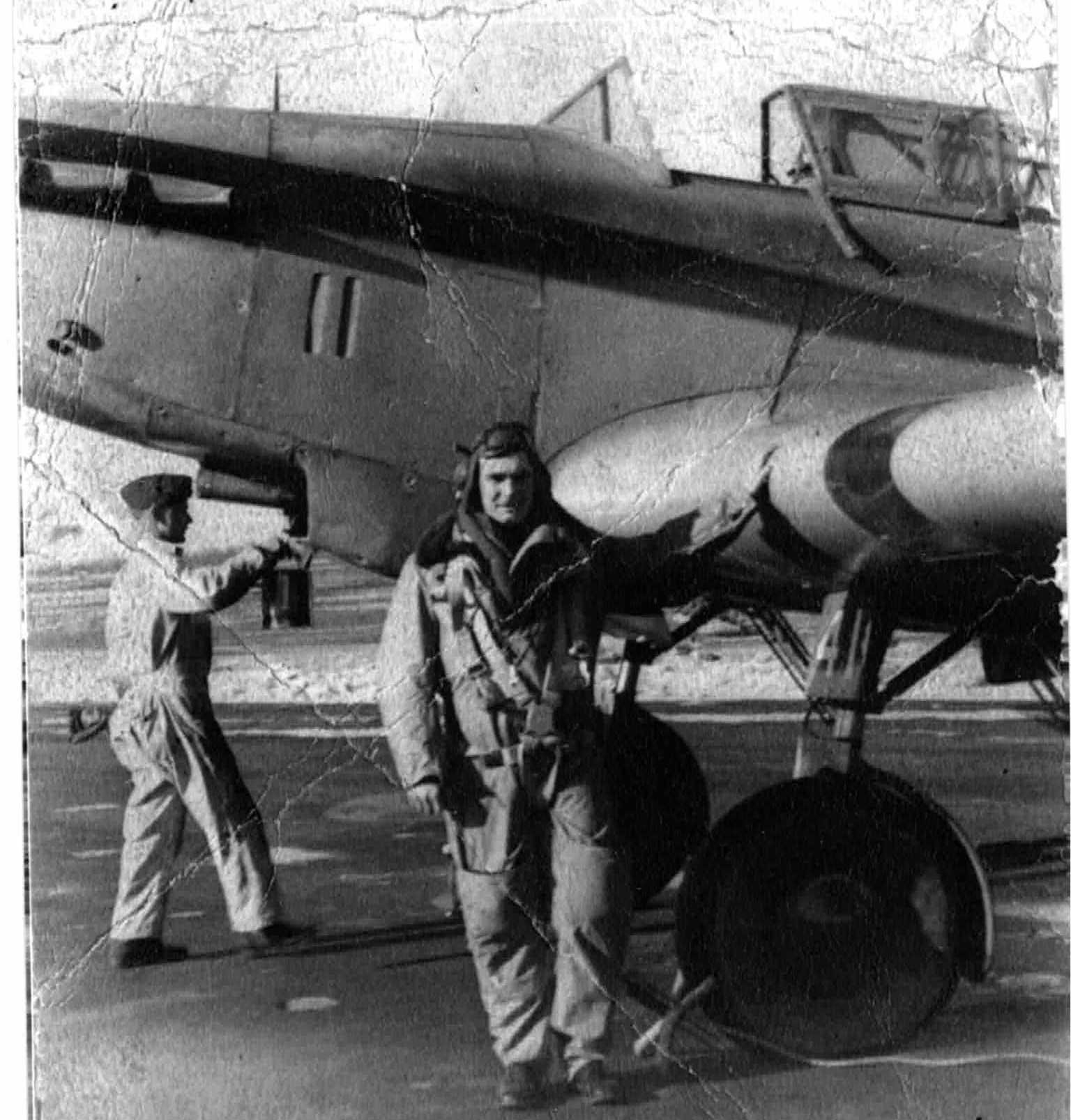
John G. Hudock in front of a Fairey Battle bomber while training in Canada, 1940
(Corinne Hudock Cazer)

Sometimes it can take years to have a story cover all of the bases.

Since 2000, I’ve been writing about a young pilot from Allentown, Pennsylvania, who was killed while serving with the Royal Canadian Air Force in World War II.

Robert H. Riedy, 20, died on a training flight in England in 1942. My most recent piece about him was a two-part blog in January after his medals were returned to his hometown.

I didn’t know of any other flyers from Allentown who fought under the Canadian flag and lost their lives, and didn’t look into it. But last fall I learned that Riedy was only part of the story I had been telling. He was not alone.

Chris Dickon, an author and former reporter who won awards as a public radio and television producer, put me on to John G. Hudock.

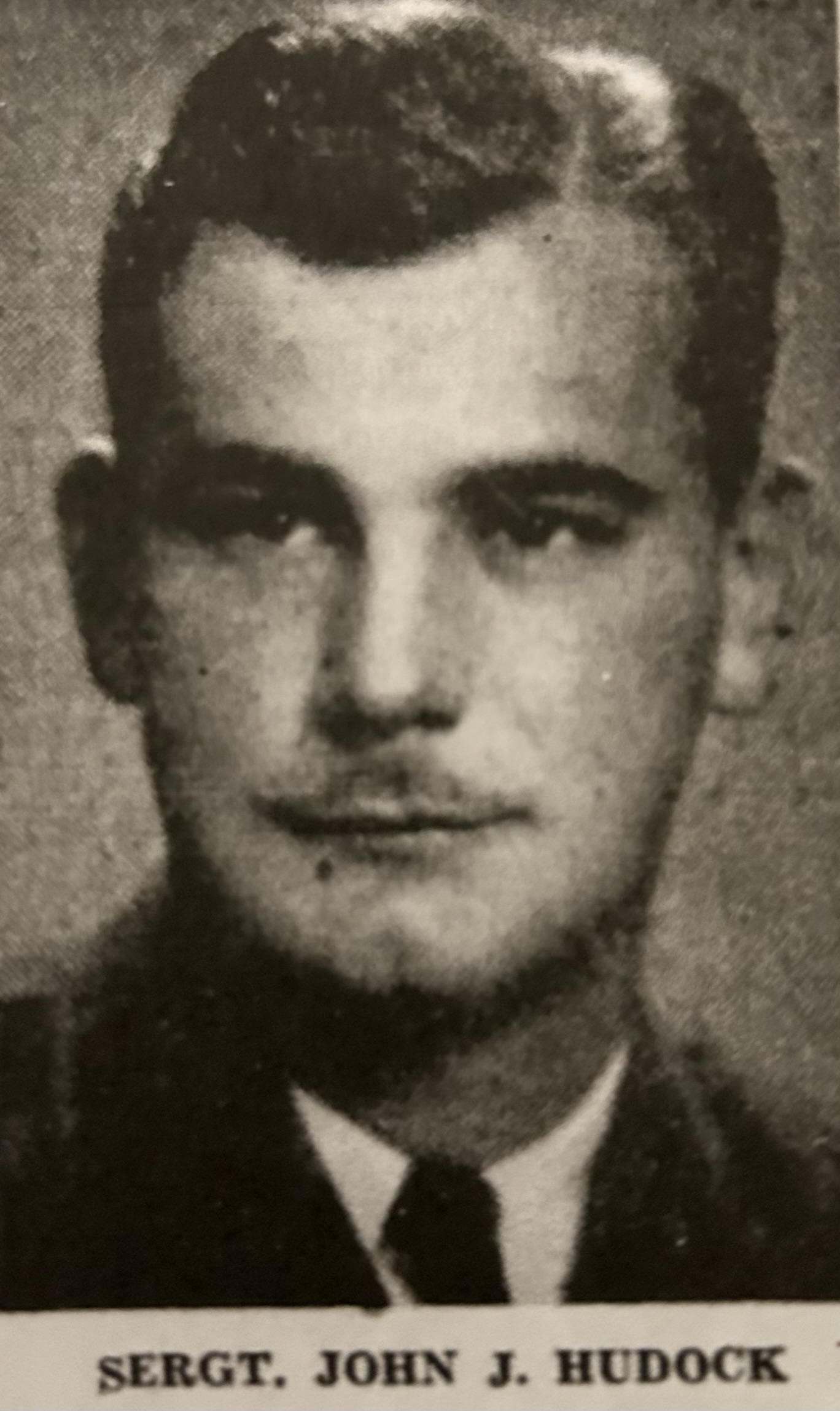
An Allentown High School graduate, Hudock was the navigator on a bomber that crashed in the North Sea, cause unknown, after a night mission to Hamburg in 1942. His body was never recovered.

I decided to write about him for my former employer, The Morning Call of Allentown. It was a good fit because the paper followed his service during the war and published several letters he sent home. They included breathless accounts of having tea with England’s king and queen, and of a harrowing raid on Nazi Germany.

Much of what I learned about Hudock came from his 72-page RCAF personnel file maintained online by the Government of Canada. I had help from Ancestry.com, Newspapers.com, the U.K. National Archives, researcher Kenneth Woolley III at the Allentown Public Library, and two Hudock nieces in upstate New York.

Along the way, I found out the war claimed a third RCAF flyer from Allentown, 21-year-old George G.J. Hower.

Hudock is on his mother Mary’s lap in this family portrait circa 1920. Others are (back row, from left) Emma, Mary and Anna; (front row) George, their father John, Joseph (seated in front) and Steve (behind Joseph). A son, John, died as a child in 1916 from a ruptured appendix. Another son, Charles, was not yet born when this picture was taken.
(Corinne Hudock Cazer)

My story on Hudock ran in The Morning Call last week in two parts. (If you’re not a subscriber, you can read it online for $1.) To pull it together, I created a timeline of his life and service.

Timelines are a handy way of nailing the narrative. And you can have more detail than you’d put in an article for general readership. That’s the case with this one I did for Hudock:

1918

May 19: John George Hudock is born in the coal town of Lansford, Pennsylvania, the eighth of nine children of Slovakian immigrants John and Mary Hudock.

1923

The Hudocks move about 40 miles south to Allentown, into a brick row house on Ridge Avenue near Gordon Street and the Lehigh River. They worship at St. John the Baptist Slovak Catholic Church on Front Street.

1924

John Hudock starts attending St. John’s grammar school.

1931

September 3: His father, John C. Hudock, dies at 66. He is buried at St. John the Baptist Church Cemetery.

1932

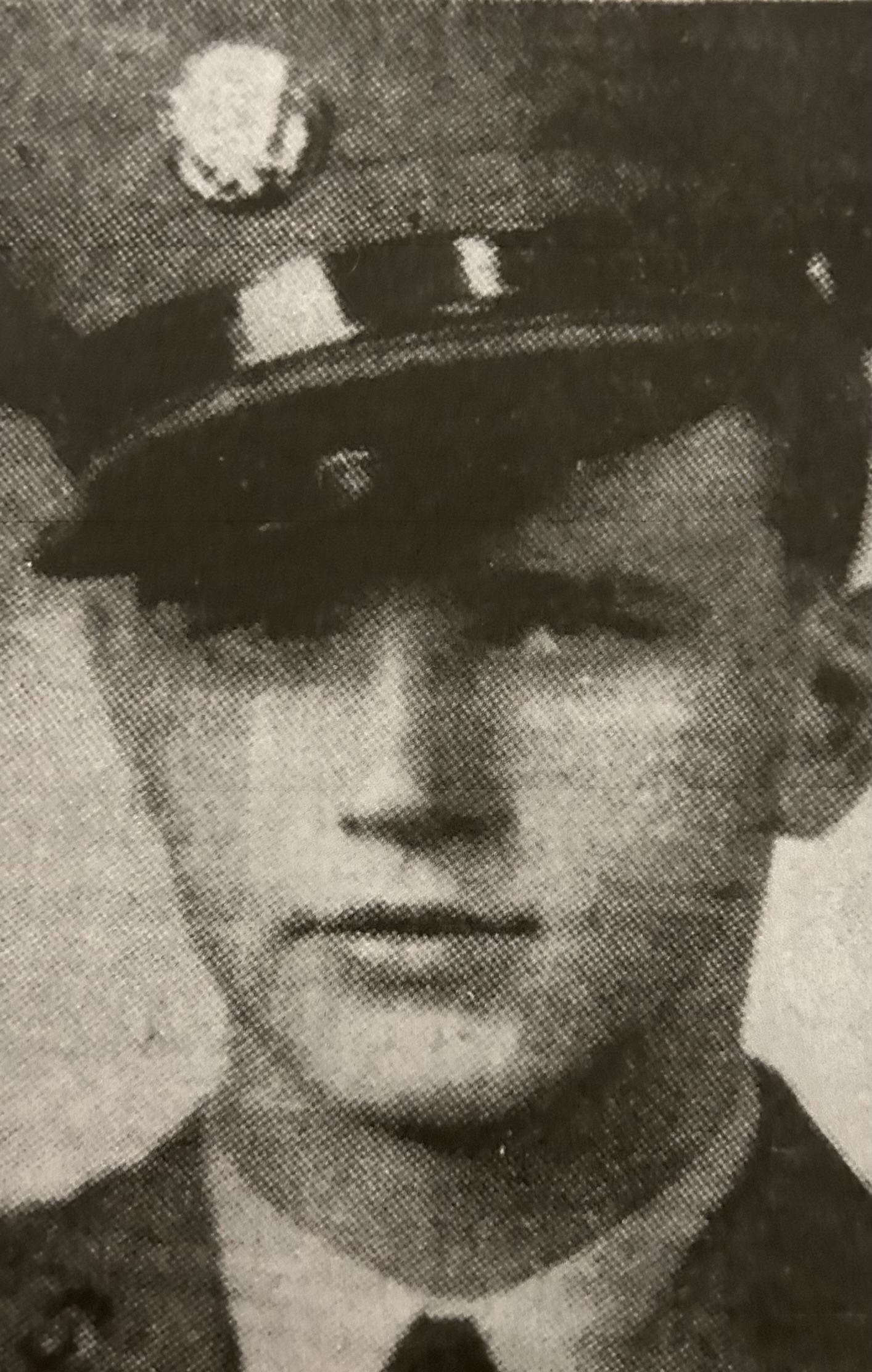
Hudock’s graduation portrait in Allentown High School’s 1936 yearbook, the Comus

Hudock attends Central Junior High.

1933

He starts at Allentown High School, where he’s in the commercial curriculum and plays football for three years.

1936

June 23: Hudock graduates from Allentown High.

1936-38

He works as a lifeguard, chauffeur and for his brother George as a plumber’s helper.

1937

He has an operation on his left knee that leaves a scar.

Hudock played tackle on the Allentown High School football team. In this photo from the 1936 yearbook, the Comus, he is crouching second from right.

1938

Hudock works as a stenographer/secretary at explosives maker Trojan Powder, leaves because of “broken engagement.” He moves to New York City.

1938-39

He lives in the 5000 block of Broadway in Bronx and manages the oyster bar at the Midston House club hotel at 38th Street and Madison Avenue in Manhattan.

1939

He leaves Midston House because of an opportunity to “own business,” becomes a concessionaire at Van Cortlandt Pharmacy in Bronx.

September 1: World War II begins with the German invasion of Poland.

1940

May 10: Nazis invade France, Belgium, Luxembourg and the Netherlands.

May 22: At age 22, Hudock enlists in the Royal Canadian Air Force at Recruitment Centre in Ottawa. He is 6 feet tall, weighs 177 pounds.

June 20: He gets “movement order” by rail from Ottawa to No. 1 Manning Depot, Toronto. He’s in RCAF under the British Commonwealth Air Training Plan.

June 30: He reports to No. 2 Initial Training School at Regina, Saskatchewan.

July 10 to October 31: Battle of Britain

August 15: Hudock advances in rank from aircraftman to leading aircraftman (LAC).

August 18: He starts at No. 1 Air Observer School at Malton, Ontario.

Hudock (right, holding bottle) parties with other airmen. It’s not clear whether this photo was taken in Canada or England.
(Corinne Hudock Cazer)

November 10: He reports to No. 1 Bombing and Gunnery School in Jarvis, Ontario.

December 21: Promoted to sergeant, he reports to No. 1 Air Navigation School in Rivers, Manitoba, for advanced training.

1941

January 20: He completes advanced training in Manitoba.

January 28 to mid-February: On leave, he visits family and friends in Allentown.

February 20: He reports to Embarkation Station Debert in Nova Scotia, and will ship out to England from Halifax.

March 11: His overseas service begins.

March 24: In England, he’s at No. 3 Personnel Reception Centre, Uxbridge.

March: He has tea with King George VI and Queen Elizabeth at Windsor Castle with 23 others from his “flight,” a squadron subdivision. The king offers him a cigarette and lights it for him. Princesses Elizabeth and Margaret Rose ask him many questions about New York City.

April 7: Attached to Britain’s Royal Air Force, he arrives at No. 11 Operational Training Unit, part of No. 6 Group Bomber Command, at RAF Bassingbourn for night bomber aircrew training.

Vickers Wellington Mk III

April 15: The Morning Call prints Hudock’s letter to his mother about having tea with the king and queen.

June 29: He’s assigned to No. 9 Squadron at RAF Honington, Suffolk, on Vickers Wellington bombers.

August 14: The Morning Call in Allentown prints a letter from Hudock recounting an air raid on Germany, his 10th combat mission.

September 1: Hudock is promoted to flight sergeant, a step up from sergeant.

September 18: He’s admitted to a Gloucester hospital. His fiancée, Doris Connolly of Toronto, later tells the Toronto Star he had a flying accident.

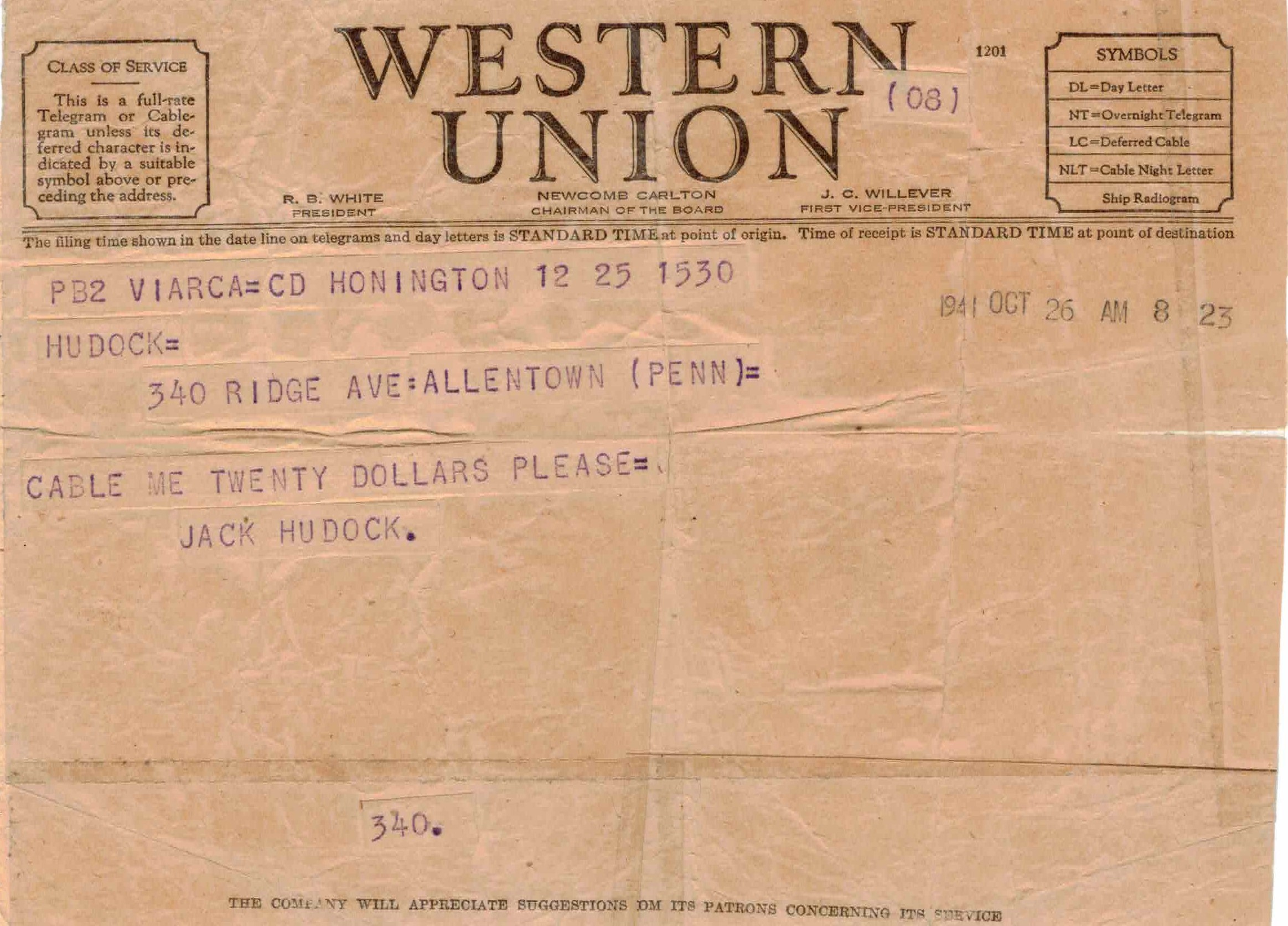
While at the RAF Honington bomber station in Suffolk, Hudock asks his family for $20 in an October 26, 1941, telegram.
(Corinne Hudock Cazer)

October 16: Hudock returns to duty.

October 17: Over BBC’s American Eagle radio program in London, he tells his family he’d been injured and is now out of the hospital, asks them to send cigarettes.

1942

February 24: In its “RCAF Notes” column, the Toronto Star reports Hudock’s promotion to flight sergeant and says he was injured in a flying accident. The paper’s source was “his fiancé, Miss D. Connolly of Toronto.”

March: Hudock is on the BBC program again, but reception in Allentown is poor and he can’t be heard distinctly.

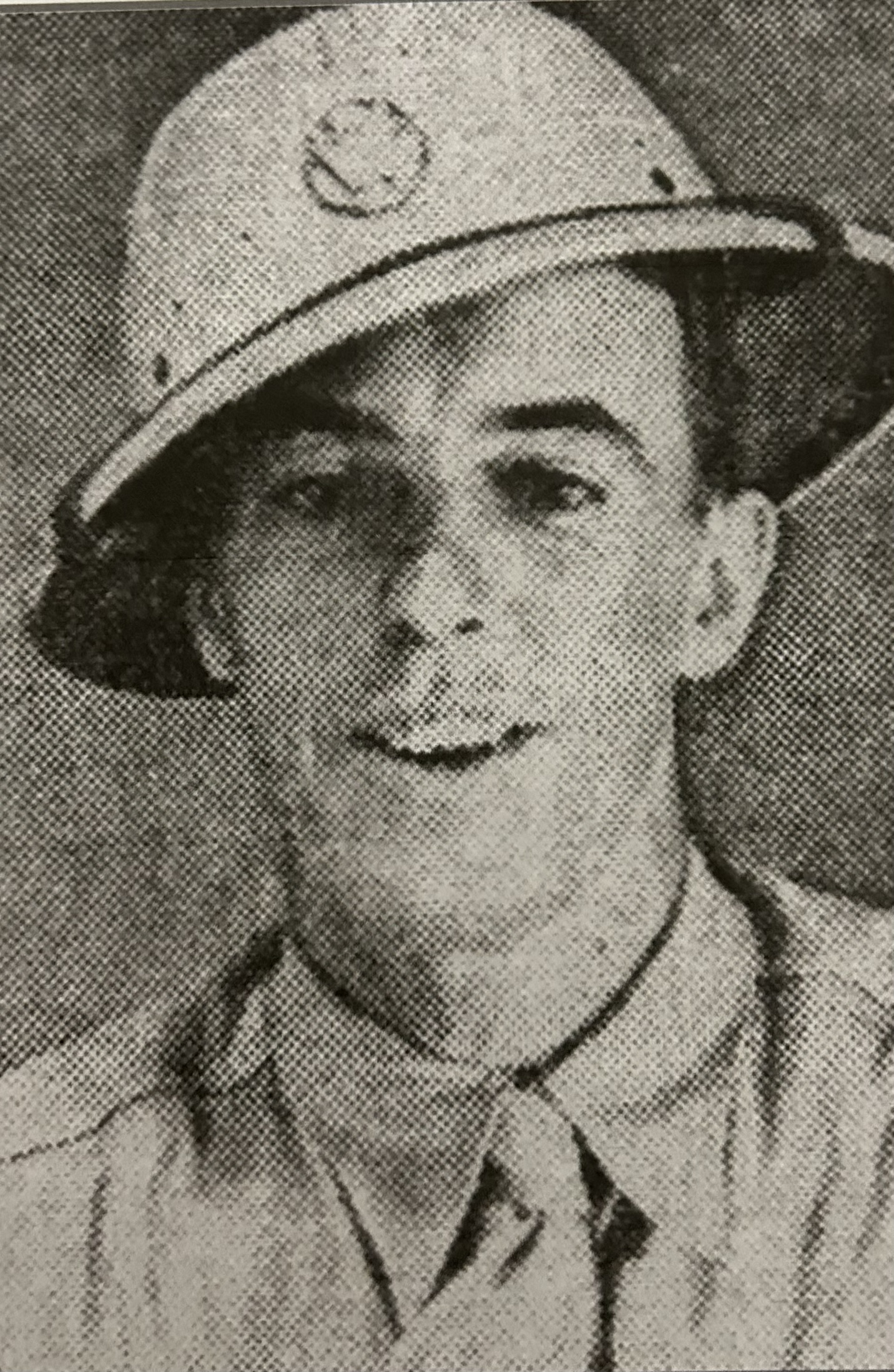
Riedy

March 18: Robert H. Riedy, a 1938 Allentown High School graduate and RCAF pilot, is killed when his Wellington crashes moments after takeoff on a practice flight at Mount Farm in Oxfordshire.

Hower

March 23: George G.J. Hower of Allentown dies in a mid-air collision during an RCAF gunnery exercise involving Fairey Battle bombers at Dafoe, Saskatchewan. He was training to be a wireless operator/gunner.

May 13: Hudock is commissioned a pilot/officer. (The rank doesn’t mean he was trained to fly a plane.)

June 29: He’s promoted to flight lieutenant and posted to No. 156 Squadron at RAF Alconbury, 65 miles north of London.

July 4: Mary Hudock is greeted by her son on the American Eagle radio program, the third time he’s on it. “I’ve just finished one lot of operations and I hope I’ll soon get a rest,” he says.

July 28: Hudock is the navigator aboard a Wellington Mk III, serial number BJ840, that takes off from Alconbury at 11:01 p.m. as part of a 256-plane bombing raid targeting Hamburg.  His Wellington has a crew of six and carries a 4,000-pound bomb.

July 29: Hudock’s plane fails to return to base.

July 30: Mary Hudock leaves Allentown for a short vacation in New York City.

July 31: The family learns Flight Lieutenant Hudock, 24, is “missing in air operations.”

August 1: Canada’s Air Council, the RCAF’s governing body, says in a letter to Mary Hudock that on July 28-29, her son was the navigator on a Wellington “which carried out an attack on Hamburg on that night. The last wireless message received from the aircraft was at 3:10 a.m. when it was on the return journey and was from a position calculated to have been approximately 50 miles north of the Frisian Islands [in the North Sea].”

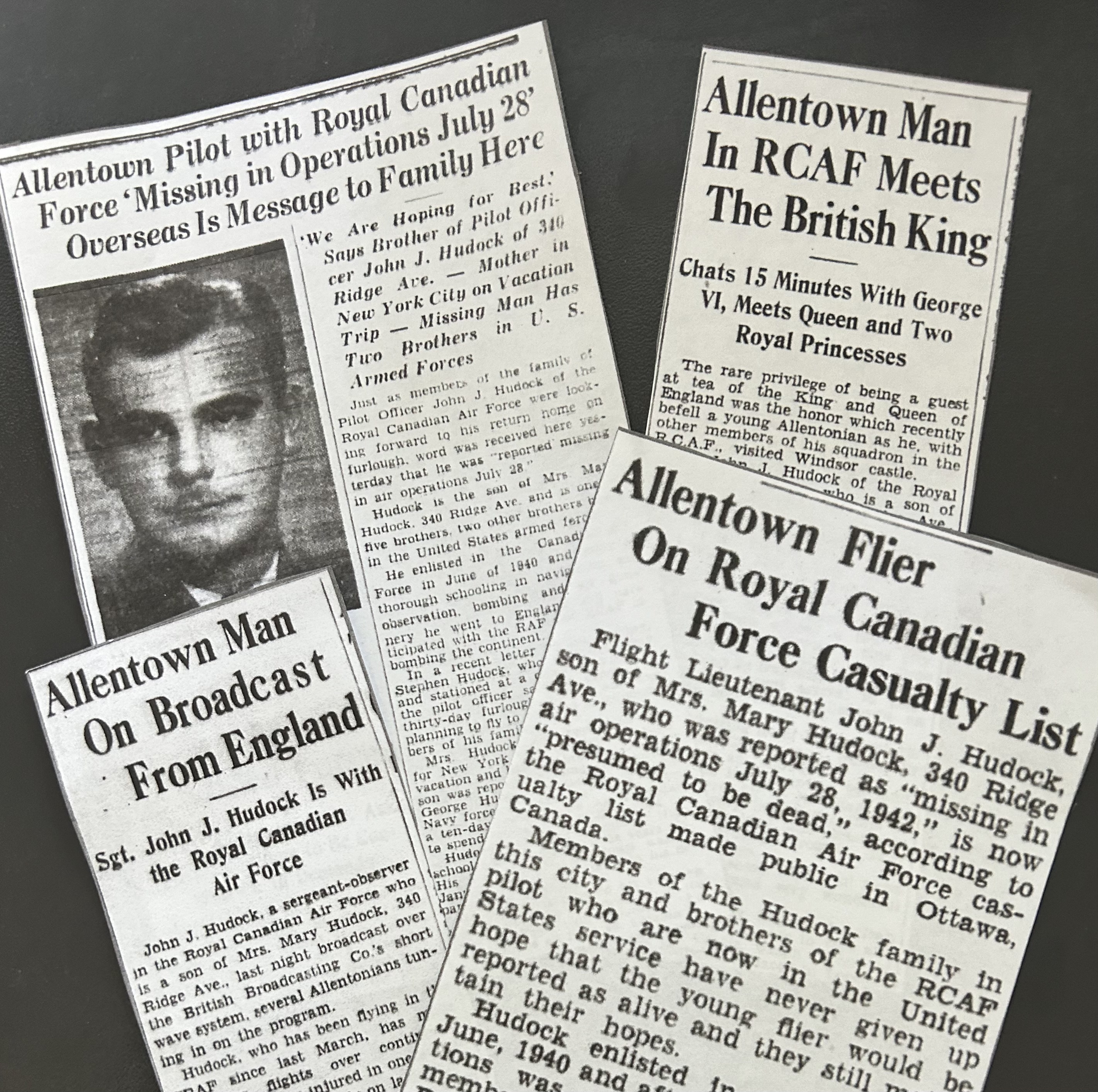
Hudock clips from The Morning Call

August 16: An airman whose body had washed ashore is buried in Kirkeby (St. Clemens) Churchyard on the Danish island of Romo, off the west coast of the Jutland peninsula. He is later identified as Flight Sergeant John T. Bray of the Royal Australian Air Force, the Wellington’s co-pilot.

Hudock and four others from the bomber – Wing Commander Herbert L. Price, the pilot and recipient of a Distinguished Flying Cross; Sergeant John Duthie, the wireless operator; and Sergeants William D. Evans and Michael W. Walsh, the gunners – are still missing. Their plane had crashed in the North Sea off Denmark, cause unknown.

1943

Hudock (above) and screen idol Errol Flynn. Hudock’s nieces Carol Cirincione and Corinne Cazer happily cite the resemblance.

February 21: In a letter to the RCAF, Mary Hudock says she “will not give up hope … until some definite word of his being dead is received.”

March 27: An RCAF telegram informs Mary Hudock that her son is presumed dead.

April 3: The Morning Call reports Hudock is “presumed to be dead,” citing RCAF casualty list made public in Ottawa.

April 10: A Requiem Mass for Hudock is celebrated in St. John the Baptist Church in Allentown.

1946

May 14: An RCAF records officer sends Operational Wings and Certificate to Mary Hudock “in recognition of the gallant services rendered by your son, Flight Lieutenant J. Hudock.”

1952

The grave of Hudock’s parents, Mary and John, in the cemetery at St. John the Baptist Slovak Catholic Church, Allentown. The stone has their name as Hudak.

June 6: RCAF casualties officer writes to Mary Hudock, saying “it must be regretfully accepted and officially recorded that [Hudock] does not have a known grave.”

1957

March 10: Mary Hudock dies in Allentown at 71. She is buried beside her husband in St. John the Baptist Church Cemetery.

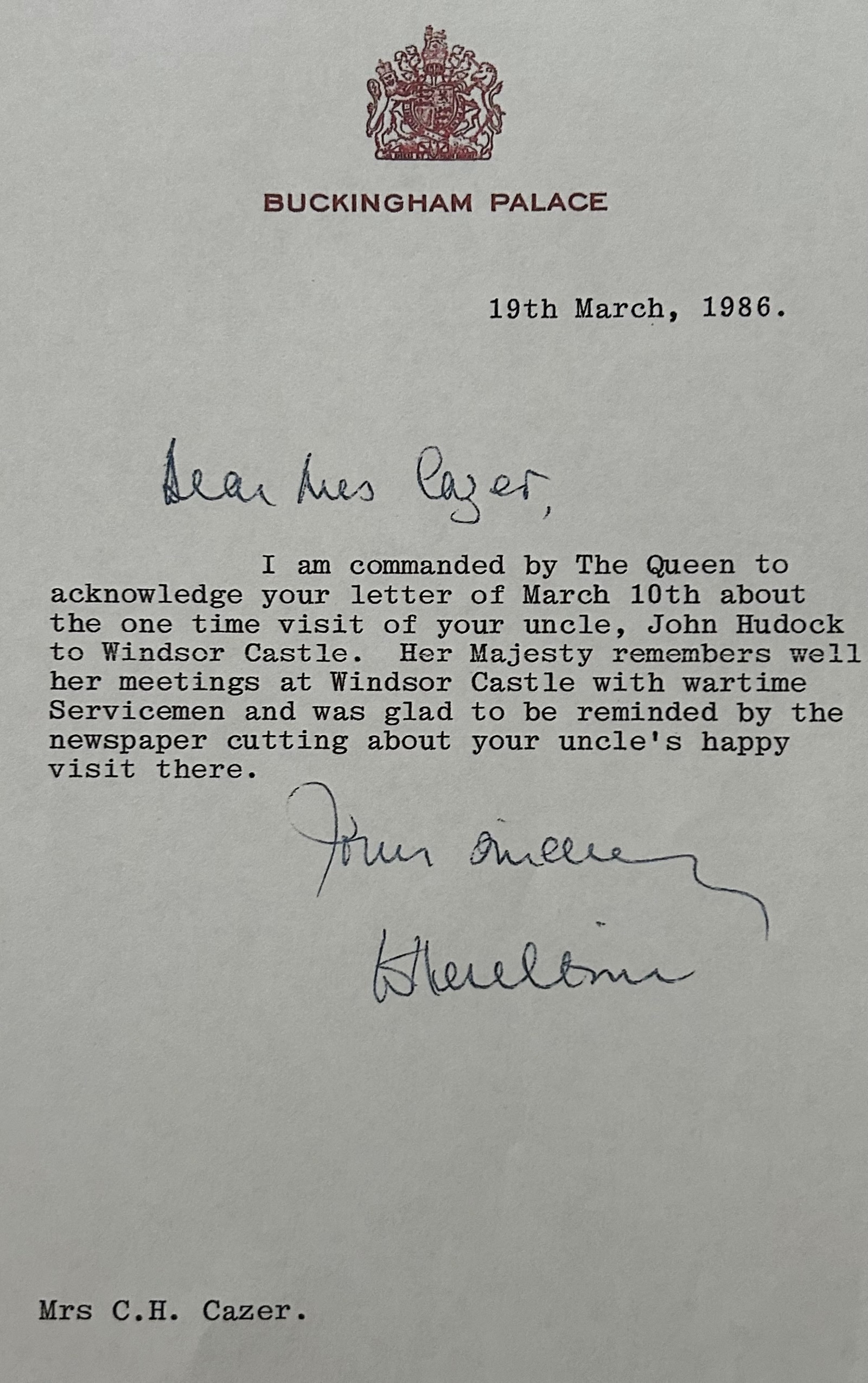
Buckingham Palace responds to Corinne Cazer’s letter about her Uncle John.
(Corinne Hudock Cazer)

1986

March 10: Hudock’s niece Corinne Cazer writes to Queen Elizabeth II, enclosing a Morning Call clip about Hudock’s visit to Windsor Castle in 1941 and asking if she remembered meeting him.

March 19: Buckingham Palace replies: “Her Majesty remembers well her meetings at Windsor Castle with wartime servicemen and was glad to be reminded by the newspaper cutting about your uncle’s happy visit there.”

Photos a Normandy-bound ex-seaman holds dear

Matt Gutman (third from left) and pals from the LST-553 on a Japanese boat on Leyte Island at the end of World War II. They were assigned to disarm enemy troops there and on two other islands. ‘We had the Japanese break up all their rifles and load everything onto their large, wooden boats.’ The stash was taken out to sea and dumped.

A 99-year-old World War II veteran here in Allentown, Pennsylvania, is among vets going to France this week for the 80th anniversary of D-Day.

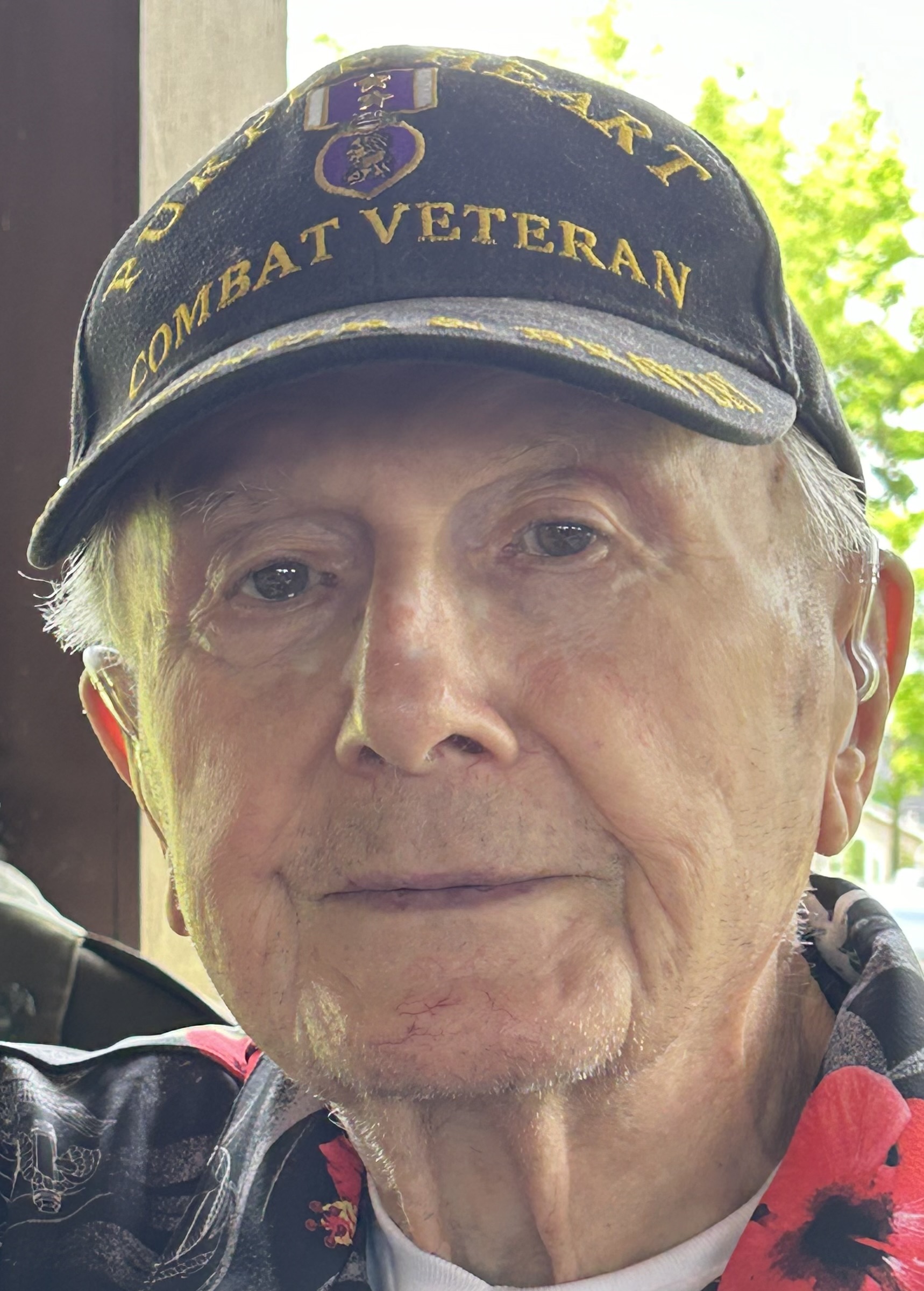
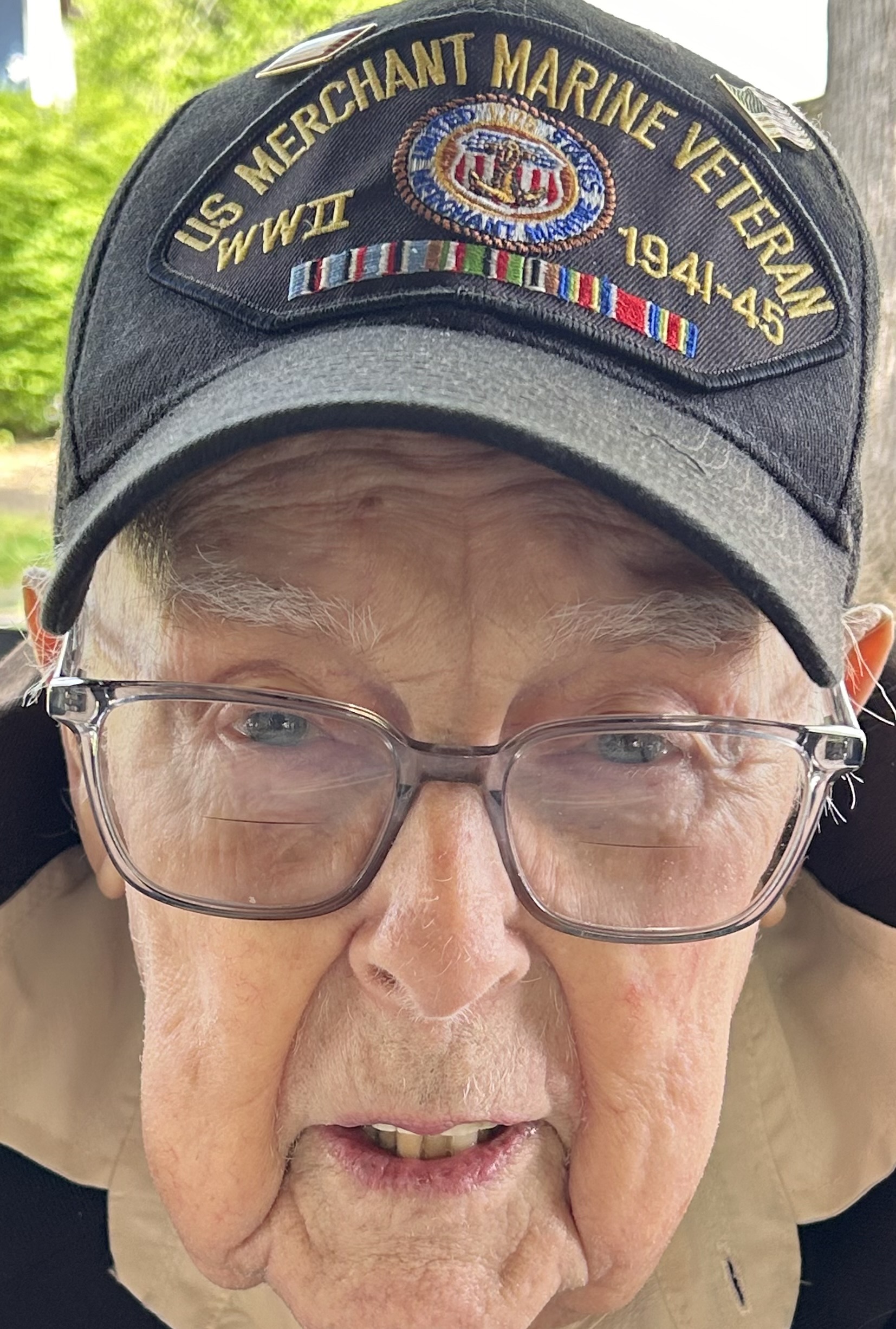
Matt Gutman is well-known in the Lehigh Valley veterans community. He rides in parades and speaks in schools and elsewhere about his service in the Navy.

I’ve known him for years. As a volunteer Veterans Affairs driver, I once gave him a ride to the VA hospital sixty miles away in Wilkes-Barre. I’ve taken him to picnics held to honor vets. Two years ago, I interviewed him for an “in their own words” war story in The Morning Call and wrote a blog about the first time he crossed the Equator.

On Friday, the newspaper ran my story about his upcoming journey to the beaches where the Allies landed June 6, 1944, against a hail of German gunfire.

Matt will be one of eight vets the Tennessee nonprofit Forever Young Veterans is taking to Normandy for seven days, all expenses paid. He’s the only one who didn’t fight in Europe, but in the Pacific, where he had a berth on a landing ship, tank, the LST-553. As the coxswain on one of its two Higgins boats – the same type of landing craft used in the Normandy invasion — he ferried troops to Japanese-held islands. Forever Young wanted him along to represent the Pacific Theater. Matt said he’s excited about what he’ll learn. It’s his first trip to France.

Each of the vets is going with a companion. Matt’s will be his eldest son, Mike, who lives in Florida and was the Air Force crew chief of an F-4E Phantom jet in the Vietnam War.

Before my story about the trip ran last week, my wife and I visited Matt. We chatted in his apartment, where I was struck by two photos on the wall – images I must have overlooked in previous visits. Matt told us about them and gave me the OK to use both in this blog.

A Gutman family portrait that Matt thinks was taken in 1936 shows (back row, from left) Louis, who was in the Army; Christina; Edmund; Veronica; Joseph, in the Navy; and (front, from left) their father, Mathias, a blacksmith employed at the Allentown Iron Works; Matt; Francis; and their mother, the former Veronica Gomboz.

One is a family portrait Matt believes was taken in 1936, when he was 11. The other is a candid shot showing him and six other LST-553 crew members standing on a Japanese boat on Leyte Island in the Philippines. It was 1945, the war was over, and they were assigned to disarm Japanese troops – a job that brought Matt a prized possession, an officer’s sword.

The photos reflect the American story. Matt’s parents were immigrants from Yugoslavia, the part that is now Slovenia. His father was a blacksmith. Matt and his pals on the LST were young men who, like millions of others, took up the fight when their country called.

When I asked about his siblings in the family portrait, Matt shook his head. Everyone but him is gone. Among the sailors, it’s likely he is the only one still living. He keeps these two pictures on the wall among others he values. For an old salt, they’re a reminder of home and far away, of peacetime and war, of family and friends he had long ago.

 ‘Uncle Earl, you have never been forgotten’

Private Earl Seibert came home yesterday, May 25, 2024. He’d been gone for a long time.

A burial detail removes Private Earl Seibert’s casket from a carriage May 25 at Grandview Cemetery outside Allentown.

The mechanic from Allentown, Pennsylvania, died 82 years ago in a Japanese POW camp in the Philippines. He was buried there in a common grave.

His family knew he was missing and presumed dead. Not until World War II ended did they learn he had succumbed to diphtheria in 1942 at Cabanatuan Camp 1 on Luzon. He was 23. Early this year, the Defense Department announced his remains had been identified.

Seibert arrived at Philadelphia International Airport for a “dignified transfer” on May 21. Yesterday, the military and a throng of mourners paid tribute to him at Jordan United Church of Christ and Grandview Cemetery outside Allentown. I wrote about him in February, so I had a special interest in being there.

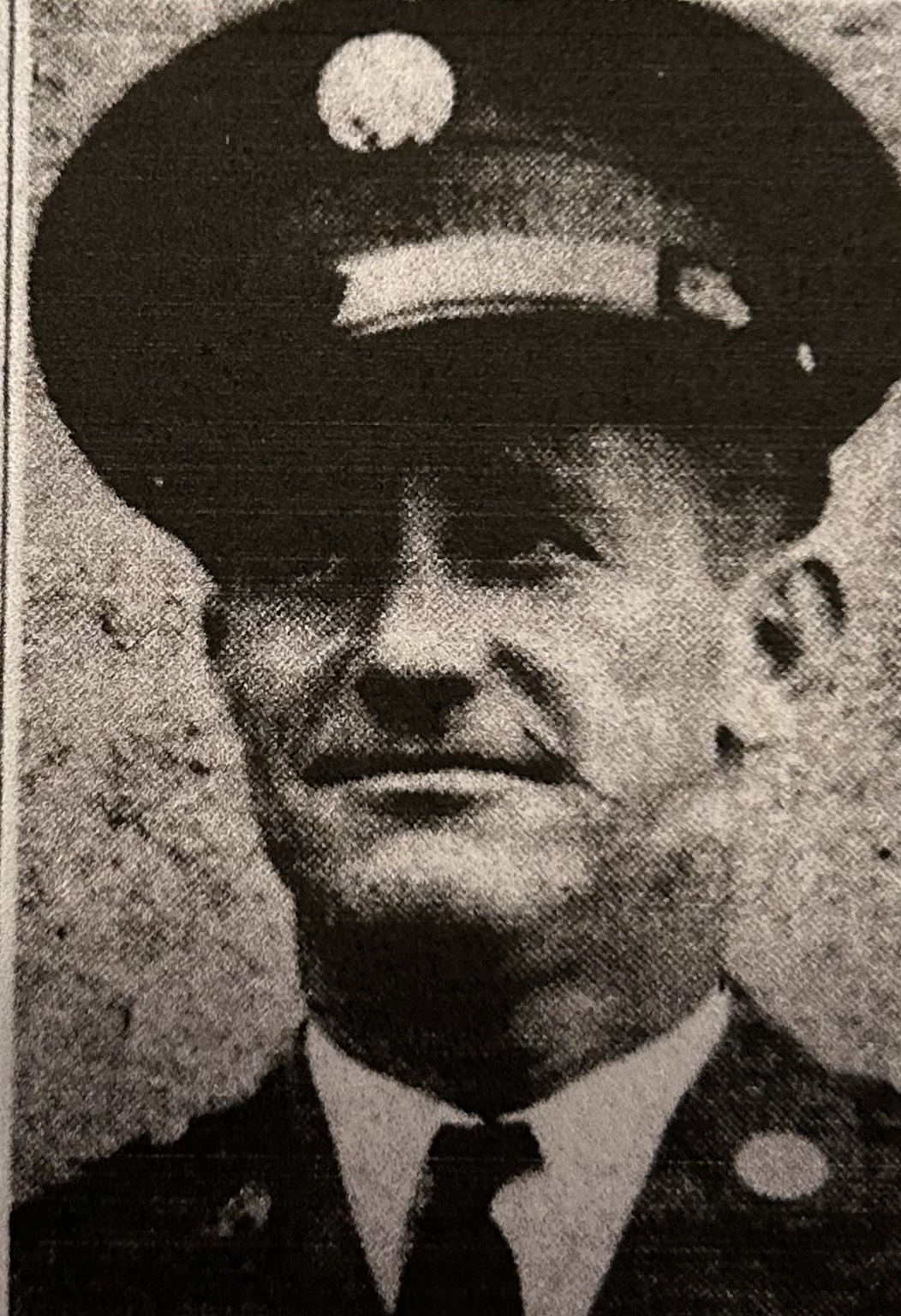
Private Earl Seibert of Headquarters Company, 803rd Engineer Aviation Battalion, attached to the Far East Air Force in the Philippines

In the fall of 1941, Seibert and six hometown buddies shipped out to Luzon with the Army’s 803rd Engineer Aviation Battalion to work on airfields. They were at Clark Field when the Japanese attacked Pearl Harbor and the Philippines. With the surrender in April 1942, they were among thousands of U.S. and Filipino troops taken on the Bataan Death March and held in squalid camps. Only three of the seven survived.

At the church service, Seibert’s niece Ginnie-Lee Henry shared a letter she wrote that begins “Dear Uncle Earl.” She told him that his father learned from the War Department in 1951 that his remains could not be recovered.

Both his parents and his sister – Henry’s mother – and then Henry herself “started to investigate what had happened to you.” It took many years. Henry found that when the prisoners couldn’t work or got sick, they were placed in housing the Americans called Barracks 0, so called because men had a zero chance of coming out alive.

“It is believed you were placed into Barracks 0 in the beginning of July 1942. Your personal belongings were taken by the Japanese guards, including your identification tag as a souvenir. The Army believes you died at 4 a.m. on July 27, 1942, having your death recorded on a condensed milk can label by another POW. You were one of twenty who died that day.”

Seibert’s cousin Tommy Sweeney, a private in the 20th Air Base Group, also was captured on Bataan. He died at the Cabanatuan camp June 23, 1942, of Vincent’s angina .

This carriage pulled by Percheron draft horses took Seibert’s casket from Jordan United Church of Christ to Grandview Cemetery.

The POWs were exhumed at war’s end and reburied in the Manila American Cemetery, where the “unknowns” lay in a common grave. Six years ago, Henry and other family members provided their DNA to the Defense POW/MIA Accounting Agency. Last summer, it identified one set of remains as those of Seibert.

At the church yesterday, a half-open casket contained Seibert’s remains, enfolded in an Army uniform. His medals were on display, including a Bronze Star for his role in the defense of Bataan and two Purple Hearts, one because he was wounded January 16, 1942, and the other because he died at the hands of the enemy.

The Missing Man Table with a single chair was on display. On top of it was a folded American flag, a Bible, a candle, an inverted glass, a red rose in a vase tied with a yellow ribbon, a slice of lemon and some salt. The lemon is a reminder of a POW/MIA’s bitter fate. The salt symbolizes the family’s tears.

The flag is lifted from Seibert’s casket to be folded and presented to his niece Ginnie-Lee Henry.

In times of sadness, there is comfort in ritual. I felt it.

Under the noontime sun, the casket rode to the cemetery two-and-a-half miles away in a horse-drawn carriage, to the clip-clop cadence of two Percherons’ hooves. A bugler played Taps. Riflemen fired three volleys in salute. We recited the 23rd Psalm aloud. With solemn respect, two soldiers lifted the American flag off the casket and folded it precisely. Another presented it to Henry as she sobbed. Three shell casings from the rifle salute were handed to her, symbolic of duty, honor, country.

“Welcome home, Uncle Earl,” Henry had written in her letter to him. “We remembered you. So did many others, too.”

WWII vets saluted at V-E Day remembrance

The Magnolia Sadies, a vintage dance troupe, smooch Navy veteran Matt Gutman, 99, on May 8 in Macungie.

Pennsylvania is home to about 7,000 World War II veterans, all in their 90s or older. Eleven of them were honored yesterday, May 8, with a picnic that included 1940s singing and dancing at Macungie Memorial Park near Allentown.

I knew a few of the men and spoke with all of them, and came away grateful for their sacrifice and courage.

The occasion was the seventy-ninth anniversary of Nazi Germany’s surrender, called V-E Day for “victory in Europe.” Japan’s surrender four months later, on September 2, 1945, ended the war and was called V-J Day, for “victory over Japan.”

Here are the men, great patriots all, who attended the event presented by the Lehigh Valley Chapter of the Battle of the Bulge Association:

ARMY

Ridyard

Herb Ridyard, 98, of Elizabethtown, with the 94th Infantry Division in the Battle of the Bulge

Bokeko

Angelo Bokeko, 101, of Lower Macungie, with the 13th Armored Division in Europe and a recipient of two Bronze Stars       

MARINE CORPS

LaSota

Walter LaSota, 98, of Reading, a rifleman with the 6th Marine Division who earned two Purple Hearts on Okinawa

MERCHANT MARINE

Balabanow

Bill Balabanow, 98, of Lancaster, a radio operator on cargo ships who had thirty-three years of sea duty

Cinfici

Lou Cinfici, 95, of Reading, an engineman on a seagoing tugboat who later served in the Navy in the Korean and Vietnam wars

NAVY

Conrad

Ed Conrad, 97, of Fleetwood, a Seabee on Okinawa

Czechowski

Ed Czechowski, 99, of Reading, a gunner on the destroyer Saufley in the Pacific

Gutman

Matt Gutman, 99, of Allentown, a Higgins boat coxswain on a landing ship, tank (LST) in the Pacific

Ongaro

John Ongaro, 98, of Allentown, a crewman on an Atlantic freighter

Pearce

Bob Pearce, 101, of Emmaus, an aviation weather specialist in the Philippines

Stabley

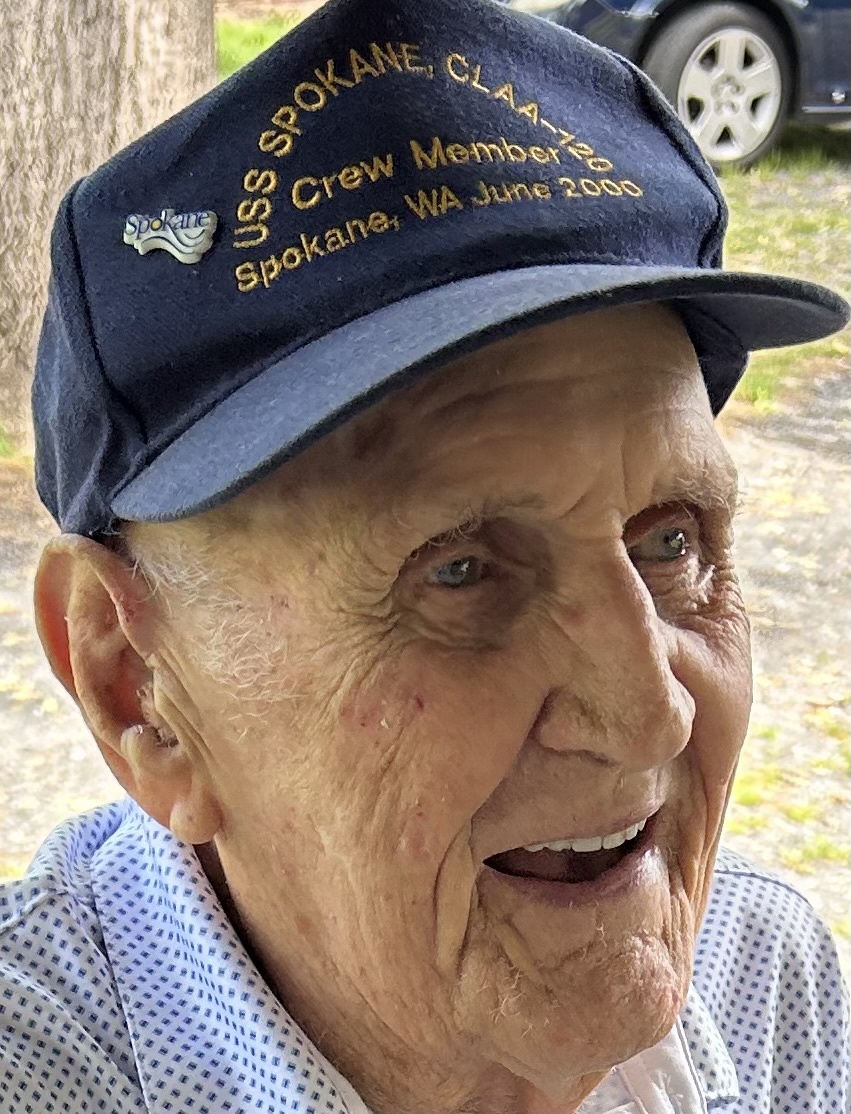
Jere Stabley, 97, of Lancaster, a baker on the light cruiser Spokane

Gutman, whom I interviewed for The Morning Call in 2022, and Balabanow are bound for Normandy next month for ceremonies marking the eightieth anniversary of D-Day, June 6, 1944.

Remembering a lost defender of Bataan

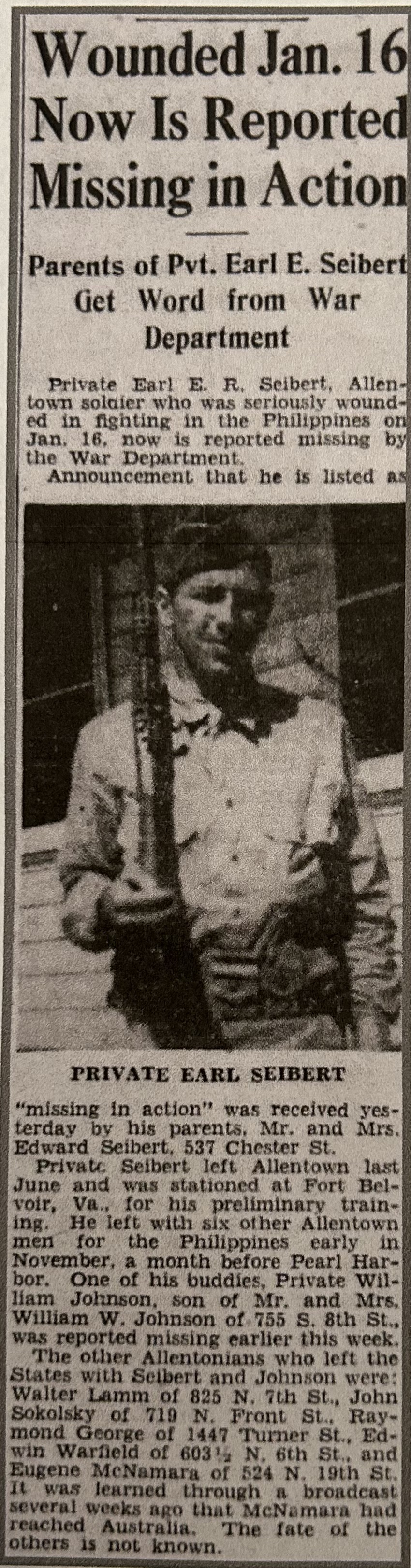
Private Earl Seibert of Headquarters Company, 803rd Engineer Aviation Battalion
(Newspapers.com)

Private Earl Seibert died eighty-two years ago at a prison camp in the Philippines and was buried there. When the Defense Department announced last month that his remains have been identified, I reached for my filing cabinet.

In 2002, I interviewed a veteran who had much in common with Seibert– eastern Pennsylvania hometowns, service in the same Army unit, the Bataan Death March and a camp where more than 2,500 POWs died. The difference was that Joe Poster was spared.

Seibert was among seven men from Allentown who shipped out to the Philippines in the fall of 1941. Along with thousands of other U.S. and Filipino troops, they were taken prisoner the following spring, several months after Japanese forces invaded the islands. Ahead of them was the Death March and horrific captivity. Only three would survive.

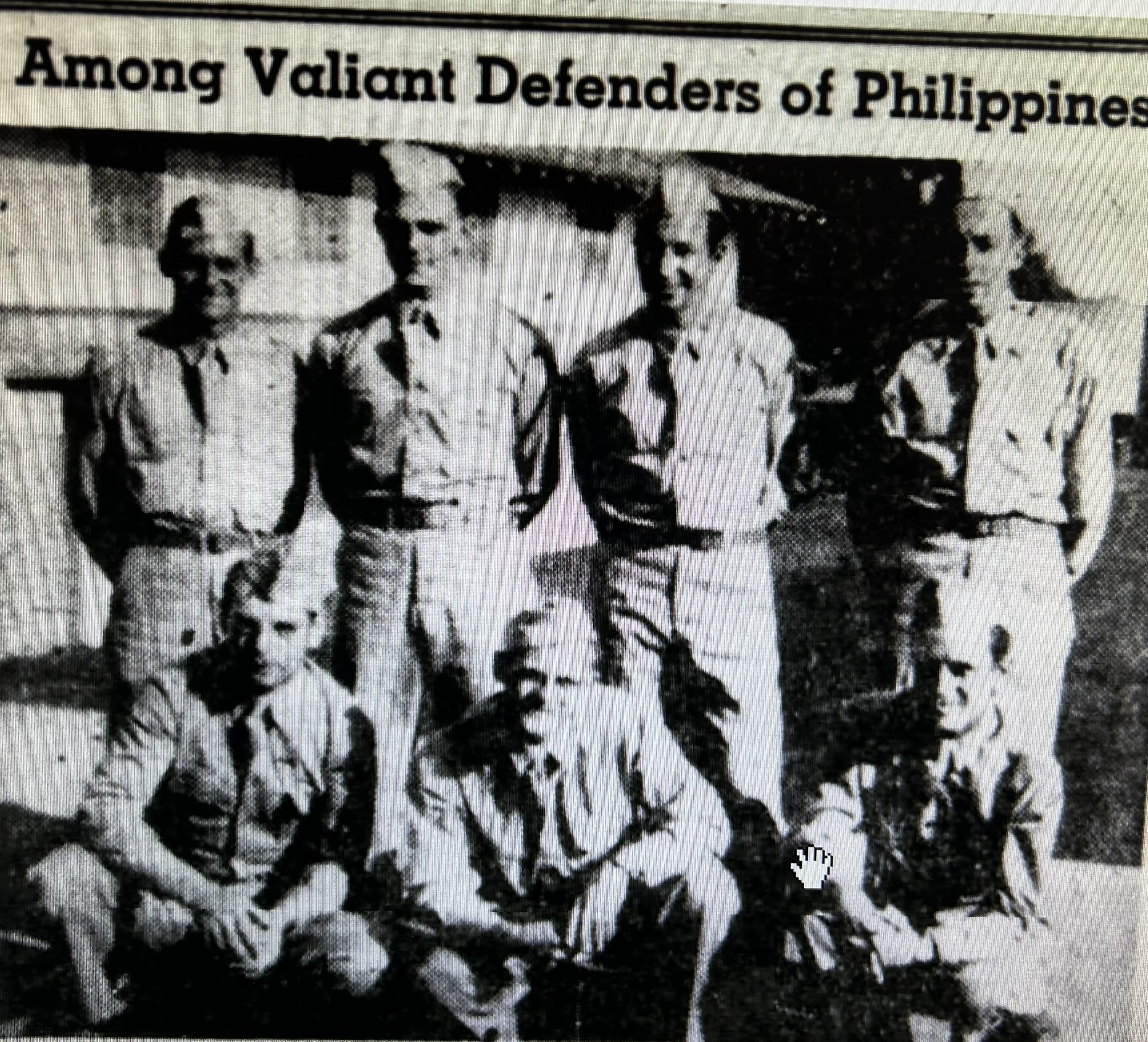
Soldiers from Allentown (crouching, from left) John Sokalsky, Raymond George and Eugene McNamara; (standing, from left) William Johnson, Walter Lamm, Earl Seibert and Edwin Warfield. All belonged to the 803rd Engineer Battalion. The photo ran December 29, 1941, in their hometown paper, The Morning Call.
(Newspapers.com)

In December 1941, just days after the Japanese landed, The Morning Call of Allentown ran a photo of the seven men – Seibert, Eugene McNamara, Edwin Warfield, John Sokalsky, Raymond George, William Johnson and Walter Lamm. Citing a letter from McNamara dated November 29, the paper said they were together at Fort Stotsenburg/Clark Field, about fifty miles from Manila.

Before his Army service, Seibert was a mechanic at Hoffman Bros. auto salvage. He and the six others were inducted in June 1941 and got basic military engineer training at Fort Belvoir, Virginia. Assigned to the 803rd Engineer Aviation Battalion, they arrived on Luzon in October and were attached to the Far East Air Force. Their job was building airfields.

An update in The Morning Call of May 30, 1942
(Newspapers.com)

Seibert, of Headquarters Company, was badly wounded January 16, 1942, as the Americans and Filipinos fought to defend the Bataan peninsula. There were no details on his injuries.

After the Allies surrendered April 9, most of the men in the 803rd’s three companies on Bataan – a fourth company was on Corregidor — walked from Mariveles to San Fernando on the Death March, according to Good Outfit: The 803rd Engineer Battalion and the Defense of the Philippines, 1941-1942, by Paul W. Ropp.  They were taken by train to Capas for internment at nearby Camp O’Donnell. Many of the engineers left the camp to toil for their captors in the mountains of northern Luzon. After a few months, they were marched to Cabanatuan Camp 1 , where disease, malnutrition and maltreatment took a dreadful toll.

Seibert, age twenty-three, died of diphtheria at Cabanatuan on July 27, 1942. He was buried in a common grave at the camp cemetery. His parents didn’t learn of his death until three years later, after Japan’s surrender.

Ropp’s 559-page history of the battalion lists what happened to its members. Here’s what the book says about the six other soldiers from Allentown, all of them members of Company B:

Lamm

— Private Walter Lamm survived the war. He left Cabanatuan in September 1942, was transported on the hell ship Tottori Maru to Korea and then to a POW camp in Mukden, Manchuria. (He died in 2008 at age eighty-nine.)

Warfield

— Private First Class Edwin Warfield survived the war. He was taken from Cabanatuan in July 1944, transported on the hell ship Sehiiko Maru and held captive near Osaka, Japan. (He was eighty-six when he died in 2000.)

Sokalsky

— Private First Class John Sokalsky survived the war. He was taken from Cabanatuan, transported on the Tottori Maru and taken to Mukden in October 1944. (He died in 1984 at age sixty-eight.)

— Private Eugene McNamara died May 1, 1942, at Camp O’Donnell of cerebral malaria and dysentery.

George

— Private Raymond George, twenty-four, died in the Cabanatuan hospital August 27, 1942, of dysentery. He had been wounded in action April 8. (Warfield helped bury him.)

Johnson

— Private William Johnson, twenty-eight, died April 15, 1942, of a fractured skull during the Death March. He might have been murdered near Balanga. According to a November 1945 story in The Morning Call, Warfield told Johnson’s parents their son collapsed during the march and was carried away, never to be seen again.

Poster in photo taken September 8, 1945, after he was liberated from Mukden camp

Word that Seibert died at Cabanatuan and his remains have been identified took me back to an interview I did for The Morning Call twenty-two years ago. Joe Poster grew up in Pottstown and served in Company B of the 803rd. He went on the Death March and the work detail in the mountains. At Cabanatuan, he once helped bury the dead. Sent to Manchuria, he almost died of nephritis at the Mukden camp.

“I can’t say how I made it,” Poster told me. “I lived day to day. I was scared all the time. I thought maybe tomorrow those Japanese will kill me. I never knew whether they were going to murder us or not. That’s the way it was for three-and-a-half years, even till the last day.”

Poster came home late in 1945. He got married, worked for Mack Trucks in Allentown and was a national commander of the American Defenders of Bataan and Corregidor.

When I arrived at his home for one of our interview sessions, he yelled that I was making him remember “all this stuff.” He was still haunted and couldn’t sleep.

He died in 2003, a year after my story ran. He was eighty-three.

A proper home for a fallen airman’s medals

Last of two parts

John Yanno of the 213th Regiment Museum in Allentown, Pennsylvania, shows newly arrived medals honoring Bob Riedy for his service with the Royal Canadian Air Force in World War II.

Robert Harvey Riedy, an American in the Royal Canadian Air Force, was killed March 18, 1942, on a training flight in England. The accident happened at Mount Farm in Oxfordshire, a Royal Air Force satellite base for No. 15 Operational Training Unit, which trained night bomber crews on the twin-engine Vickers Wellington.

Bob was in the cockpit of a Wellington Mk.1. If the records are accurate, he was in the right-hand seat for second pilots. Another RCAF sergeant was the captain in charge of the aircraft and sat in the pilot’s seat on the left. A gunner was aboard and would have been seated near the wing root.  

Wellington Mk.1 bombers

During takeoff at 1:25 p.m., the Wellington swung off the runway and clipped a twin-engine Lockheed Hudson bomber parked on the edge of the fire track, according to the RAF accident report. The Wellington rose vertically to 200 feet, stalled and plummeted to the ground. Riedy, who was twenty, and the captain/pilot died on impact. The gunner was seriously injured.

Captain/pilot Charles G. Wiley, age twenty-three and from Galt, Ontario, was blamed for the crash. The station commander noted the accident was due to “pilot inexperience and error of judgement.” The report explains: “Pilot contrary to training instructions failed to stop aircraft and line up runway prior to takeoff.”

Riedy’s burial card, part of his service record in Ottawa, Canada, shows he was interred March 21, 1942, at the Canadian Military Extension of England’s Brookwood Cemetery.
(National Archives of Canada)

Two days later, Bob’s parents in Allentown, Pennsylvania, received a telegram from Ottawa, Canada. According to The Morning Call, it said he was “killed in action.” They were expected to learn the details later from his commander. Bob was buried in England’s Brookwood Military Cemetery. The Allentown church he attended, St. Paul’s Lutheran, was filled to capacity for a memorial service.

A letter from Bob – the fourth his parents received from him after his death – arrived in mid-April and included a clipping from The Times of London. A photo showed him and five other grinning fliers with the headline, “They swept into battle against the Scharnhorst and the Gneisenau.” The caption said they were among the airmen who, in February 1942, tried to stop the two German battleships from steaming home from the French coast.

Photo from The Times of London shows Riedy (arrow) with fellow fliers. They reportedly joined in trying to keep two Scharnhorst-class battleships from reaching German ports in the Channel Dash of February 11-13, 1942. Riedy sent the clip to his parents. It ran in The Morning Call of Allentown on April 16, 1942.

No. 15 OTU was one of the units that provided Wellingtons for the so-called Channel Dash. But the records of crews and aircraft are sketchy, so I couldn’t confirm that Bob participated.

In 1992, to mark the fiftieth anniversary of Bob’s death, The Morning Call ran a story about him based on letters, interviews and contemporary newspaper coverage. If Bob’s parents knew how he was killed, they apparently didn’t tell the newspapers. One of his Allentown pals said he remembered hearing that Bob’s Hawker Hurricane fighter was shot down over the English Channel.

Intrigued, I wrote to Ottawa for Bob’s service record and to London for RAF records. Months later, the reporter who did the original story wrote a column on my findings – that Bob’s life ended in a training accident.  I went on to write blogs about Bob and even tried to find out what became of the gunner who survived the crash, Sergeant W.J.D. Carter of the RAF Volunteer Reserve. There was nothing more to say, or so I thought.

Last November, The Morning Call emailed that a caller named Bruce Hoch wanted to speak with me about Bob. When I phoned Bruce at his home in Seekonk, Massachusetts, I was amazed to learn he had two medals posthumously awarded to Bob and one given to his parents.

Bruce Hoch of Seekonk, Massachusetts, returned Riedy’s medals to Allentown.

Bruce wanted to find a suitable home for the medals in Bob’s hometown. But how did he come to have them?

In the early 1940s, Bruce’s parents lived next door to Bob’s on Jackson Street in Allentown, and the couples were friends. Bruce’s father was just a few years older than Bob and didn’t know him. After Bob was killed, Russell and Mildred Hoch moved elsewhere in the city, with Bruce a toddler at the time. The Hochs remained friends with Harvey and Eda Riedy.

“My father used to go fishing with Harvey all the time,” Bruce said. “I think the friendship between them was somewhat due to [my father’s] being close to Robert’s age. … As I got older, I used to go with my father and Harvey fishing.”

Bruce’s parents ended up buying a home on South 10th Street in Allentown. When Eva died in 1968, Harvey came to live with the Hochs. He died the next year.

“When Harvey passed, what possessions he had at our house were left with my parents,” Bruce said. “My father gave Robert’s medals to me at the time. I was probably in my twenties. That’s how I came into possession of them, and they’ve been with me probably close to 50 years.”

Yanno mounted Riedy’s medals in this shadow box and set it atop the 213th Regiment Museum’s World War II display case. They are (from left) the War Medal 1939-1945; the Memorial Cross, given to Bob’s parents; and the Canadian Volunteer Service Medal.
(Photo courtesy of John Yanno)

Bruce’s job in a company of inventory specialists took him from Allentown to Hazleton and Lancaster, and then to Nashua, New Hampshire. He moved on, starting a small business in Seekonk.

“The medals stayed with me,” he said. “Every now and then, when Memorial Day would come around, it would work on my mind a little bit, because I’m seventy-two now, and if something happens to me, I don’t know what would happen with these medals.

“I didn’t want them to just fall into someone’s hands that are going to turn around and sell them or whatever. I wanted them to be somewhere where they would mean something to somebody, where people would be able to see them and read about them.”

Bruce saw a story I’d written about Bob online and called The Morning Call to reach me. I put him in touch with John Yanno of the 213th Regiment Museum at Allentown’s Charles C. Curtis Armory. The museum supports the 213th Regional Support Group, a National Guard unit, by maintaining a gallery of artifacts dating to the Civil War. The 213th Regiment is known as the “First Defenders,” so named by President Abraham Lincoln when he asked for soldiers to help defend the capital.

“We have displays from many of the wars that the United States was involved in and would be honored to add Bob’s medals to our collection,” John emailed Bruce.

When the three medals arrived, John found them in “great condition.” Two had been awarded posthumously to Bob — the War Medal 1939-1945, awarded by the United Kingdom to all full-time personnel of the Armed Forces and Merchant Marines, and the Canadian Volunteer Service Medal. The other is the Memorial Cross, given to his parents because their son died on active duty in the Canadian Forces.

The medals are now on display in the 213th Regiment Museum.

“I’m very, very happy to have gotten them down there,” Bruce said. “They’re back home where they really, truly belong.”

War stories: How and why I wrote them

My brother John, director of the Eastern Shore Regional Library in Maryland, invited me to speak to his Salisbury Sunrise Rotary Club. In the Zoom meeting last week, I talked about interviewing war veterans. Here are excerpts:

In 1999, we at The Morning Call in Allentown wanted to do a project on military veterans to mark the end of the century. The idea was to invite Lehigh Valley vets to write about their wartime experiences, and we would publish their accounts in a section called War Stories of the Century. When we didn’t get as many submissions as we hoped, I grabbed a tape recorder and set out to do some interviews.

This is The Morning Call’s special section for Veterans Day 1999, which I wrote for and edited. The veteran on the cover is Olaf Marthinson of Allentown, who served in the Pancho Villa campaign in 1916.

It was a big learning curve. I’m not a veteran, and I didn’t have any particular interest in the military. But I was interested in the personal accounts. These were people who had put on a uniform for the country and had seen and done extraordinary things. Many were lucky to have survived.

One of the first vets I met with was Olaf Marthinson. He was 102 years old. He had helped to defend the country from Mexican rebel leader Pancho Villa in 1916. A friend introduced me to Olaf, saying, “Come here and shake hands with history.”

That was the start for me, and I was hooked. Over the next 17 years, I interviewed more than a hundred war veterans, most of them from World War II, but also some from the Cold War and the wars in Korea, Vietnam and Iraq. These were everyday people who had played a role on the world stage at critical times in our history.

How did I know that the people I was interviewing were the real McCoys, that they did what they say they did? Right off the bat, I insisted that they show me their discharge papers, which give a summary of service. These are absolutely important, but you have to keep in the back of your head that documents don’t always tell the truth.

If the vets had a medal or claimed to have one, I asked to see the citation that says why they got it. I once came across a veteran who wore a medal for valor he hadn’t earned. He was in his late 90s and confused. He had indeed shown bravery in combat and sincerely believed he deserved the medal, so he got it from a military medals dealer he knew.

If I wasn’t sure about something, I asked an expert. A Navy cargo pilot said he flew the Hiroshima bomb’s tail assembly to the Pacific. I contacted a historian at the Los Alamos National Laboratory. He saw no red flag. An Army cryptographic technician said he decoded and delivered an urgent message to Patton. It was from Eisenhower, setting the final date of the Normandy invasion. I spoke with the keeper of Patton’s papers. He said that’s plausible.

A Navy crewman on a landing craft said he saw Eisenhower and the king of England together on a dock in the run-up to D-Day. One of Britain’s top military historians, Antony Beevor, emailed that George VI had gone to the coast before the invasion, so it was plausible.

For fact-checking, there’s a wealth of resources you can tap — many books and a vast amount of information online, on authoritative websites. Things like unit histories. A Marine who lost his legs in the Korean War told me it happened during a mortar attack. I found his unit’s after-action report online and was able to confirm his account and add more detail.

There’s a D-Day order of battle, listing the units that participated in the assault. That helped me with two vets I interviewed who said they landed in France on D-Day, but when I checked, it turned out they hadn’t. They had landed on Normandy beaches, just not on June 6, 1944, but later. They weren’t trying to put one past me. It’s just that over time, they had become confused.

When I did these interviews, usually I had at least three meetings with the veteran, often more than that, and sometimes over several months. Each visit, the story became richer. I think it’s because the interviews got them thinking more. It was in their heads, working on them. So with each visit, more details got layered on. When I was done, I asked the vet to read the story for accuracy, and that would sometimes yield more material.

One of the last steps before publication was having a photographer shoot video of the veteran. I always attended these sessions and ran my own recorder, because magically, when the vet got in front of a camera, he or she remembered even more, or said something in a more meaningful way, and I could add that to the story.

Getting back to the idea of shaking hands with history, Marthinson, the vet in the Pancho Villa campaign, saw “Black Jack” Pershing in the Arizona desert. Bob Carl was a merchant seaman at the start of World War II. When he was a boy, he met Lawrence of Arabia. Carl Schroeter, before he was drafted, worked in the bakery at Princeton. On his way to work early in the morning, he’d exchange hellos with a wild-haired old guy on a bench. It was Einstein.

Through these veterans who were sitting right in front of me, I had a connection with some of the most famous people in history.

Sometimes the interviews did not go smoothly. Joe Poster was a survivor of the Bataan Death March and a POW of the Japanese. He got mad at me one day. He said I was making him remember horrible things and it was giving him nightmares.

We met weekly for several months. When the two-part story was about to be published, he got cold feet. He worried that people wouldn’t believe what he had endured. I told him that he had told his story from the heart, and I thought the readers would believe him. The story ran. Here’s how it ended:

I think to myself, my God,  Joe, what you went through! I can’t say how I made it. I lived day to day. I was scared all the time. I thought maybe tomorrow those Japanese will kill me. I never knew whether they were going to murder us or not. That’s the way it was for three-and-a-half years, even till the last day.

Joe was glad it was published. When he went out to dinner, the people in the restaurant recognized him from the newspaper and stood up and applauded him. He was amazed. He told me, “Since that story ran, I can do no wrong!” He would be gone in a year.

Sometimes you learn little things you never heard anywhere else. Bob Hutchings was a clerk for Eisenhower. He said that when Eisenhower was in North Africa, he had his own cow. He had a private who did nothing but take care of this cow.

Most of these generals had stomach problems, because those guys had to be under tension all the time. Eisenhower was not exempt from that. He drank the milk for his stomach.

Part of the wonder of storytelling is that you can paint a picture with words. Here’s Dan Curatola, who was in the first wave at Omaha Beach on D-Day:

When I got to shore, a shell hit and I went down. I tapped a corporal in front of me and said, “Boy, that was close, wasn’t it?” He didn’t answer. I saw he was dead. Thank God, I had seen dead men before, in Africa and Sicily. But some of the younger troops who hadn’t seen action just went out of their minds. You’d see them screaming and running the wrong way.

Sometimes the vet just doesn’t have much to say. That was true of Alton Knappenberger. He lived in a trailer in the woods, where I interviewed him. In 1944, he got the Medal of Honor for single-handedly holding off a German attack near Anzio with a Browning automatic rifle.

I just did what I had to do. You go in there and just try to get them guys before they get you.

Sometimes I had to do a little prompting to get someone to open up. Charlie Toth was a Marine who fought on Saipan, Tinian and Iwo Jima. The first time I sat down with him, he started rattling off facts and figures. He said his unit went to this island and then to that island and did this and that, and so on. After maybe 10 minutes, I stopped him. “Charlie, I need you to tell me about your experience.”  He just stared at me. What he said next became the beginning of his story.

A collection of 34 of my interviews with veterans from the World War I era, World War II, the Cold War, Korean War and Vietnam War. It was published in 2011 by The Morning Call.

If I started telling you what I have seen, I would never sleep again. Sometimes, the picture comes. You see the flames, you see the explosions. It’s right in front of you, broad daylight, right there. It never goes away, and there’s no medicine for it.

I interviewed a couple of guys who fought in the German army. One was Eddie Sakasitz, who was machine-gunned while riding a motorcycle in Italy and almost died. What he said about going up against the Americans in Italy was almost funny.

We were bombarded day and night. Our artillery would fire 20 to 25 shells at the American positions and get 20,000 shells in return. We wished our artillery wouldn’t fire at all.

Some scenes are horrifying and heartbreaking. Horace Rehrig was aboard the carrier Ticonderoga when kamikazes attacked it. He found his best friend lying on the hangar deck. He was flash-burned, and his right arm was blown off at the shoulder. Tears streamed down Horace’s cheeks when he described what happened.

I quick took some packing and held it on his wound and put his head in my lap and tried to comfort him. He was crying. He kept saying, “I’ll never make it.” Finally we got him down to sick bay. The doctors put him on an operating table. He had his knees up and was waving them back and forth. And then they just stopped. It just plays hell with you when you see stuff like that. I felt so bad about it that I just can’t ever forget it.

One of the women I interviewed was Cecilia Sulkowski, a front-line Army nurse. A week after the Korean War broke out, she arrived in Korea with a MASH unit.

My most traumatic experience was seeing our first patients. It still leaves me teary, still affects me with the most sadness. They were seasoned soldiers, not rookies. Some of them were old enough to be my father. Physically, they weren’t hurt, but they were completely broken down mentally. They’d reach out to you. You’d sit on their cot, or squat by it, and hold their hand, tell them that you understand why they’re feeling the way they are. It was a female presence, a softer voice and gentler touch.

Dick Richards lost his jaw to a German shell. Doctors rebuilt it, but he was forever disfigured. After many months in a hospital, he went home to his wife.

Betty told me once that she hadn’t expected to see me looking the way I did. She said it took her the longest time to accept that that’s the way it was going to be. And she said she knew that I could go on, and she was going to help me however she could.

Don Miller was a B-17 flight engineer. He told me about one of the saddest days of his life. He couldn’t go on the 12th mission with the crew he’d trained with in the States, because he had a bad head cold. His B-17 was shot down over Germany on that mission, and all of his crew mates were killed. After his story ran, a restored B-17 came to Lehigh Valley International Airport, and its crew offered to give World War II fliers a free ride. I asked Don if he’d like to go, and he said yes, but warily.

As we drove to the airport, he said he was afraid that when he got on the plane, he would see his buddies at their positions, the pilot and co-pilot, navigator, gunners. He was afraid he would see their faces, and it would be too much for him.

We went on the plane ride together. Afterward, I asked him if he’d seen his old crew mates. “I did,” he said, “but it wasn’t as bad as I thought it would be.”

There are many more stories about sacrifice and courage. Most of the veterans I’ve interviewed have since died. But their personal accounts, as I recorded them, are still with us. They’re online and, in the case of World War II veterans, hard copies are at the National World War II Museum in New Orleans.

Everyone who served in a war has a story to tell, even if they never saw a shot fired in anger. It’s unfortunate that many of these stories never emerge or are lost to the ages. I see my own role in preserving some of them as payback, as my way of saying, “Thank you for your service.”

A Picture Can Be Worth a Million Words

I try to never miss a meeting at the Terrace Restaurant in Walnutport, Pennsylvania, just outside Allentown, where the Lehigh Valley chapter of the Veterans of the Battle of the Bulge meet each month. This is a Mecca for storytellers. It’s where I get to know the vets and become their friend. The luncheon meetings usually draw about 80 people – the vets, their wives and family members, veterans advocates and people like me who are interested in the these men — now in their mid-80s and beyond – and the stories they tell.

As a reporter for Allentown’s The Morning Call, I write a series called WAR STORIES: In Their Own Words. I wanted a Battle of the Bulge story for the series when I showed up there in the fall of 2008. The guys there recommended that I talk to Don Burdick, a local vet, about his experience at Bastogne, Belgium, surrounded by the Germans at Christmas 1944. 

I did get a harrowing account from Don about the desperate days he spent at Bastogne with his 16th Field Artillery Observation Battalion, under the 101st Airborne Division. They were encircled by the Germans, cut off from food and supplies. The Germans were so close, Don could see their tanks. I noted in passing that after the breakout from Bastogne, Don went on to have a role in the liberation of the Dachau concentration camp in April 1945. With that note, I was hinting that I had more to tell.  I did, but it wasn’t for months that I myself would have any idea of how much.

One day, we were sitting at his kitchen table, talking. I asked Don how the war had played out for him after the Bulge. He explained his unit had come into Dachau when the prisoners were still there. Their task was to arrest the German SS officers who were guarding the prisoners in the camp. The young German officers were hiding under the heaps of bodies there, hoping to evade the notice of the American GIs. Don’s unit was there for about six hours and he told me what he smelled, saw and heard that harrowing day. Then he said quietly “Well, I took pictures. I have never shown them to anyone. Not even my wife.”

“Would you show them to me?”

corpses of dead Jewish prisoners in boxcar at Dachau death camp

Dead corpses in boxcar at Dachau Death Camp

Don went down to his basement and brought me up a box. Tucked in a standard white envelope, there they were: seven small, fading prints of corpses piled up in boxcars, with a few of the photos showing GIs standing around. I gaped at them. He had kept these pictures to himself for more than 60 years.

As we looked at his old photos, I asked him if he’d be interested in seeing them published in The Morning Call. He didn’t hesitate:

“Yes,” he said. “That would be a good thing to do.”

I met with the editors and we hatched a plan. They wanted to feature the photos in a meaningful context that focused on the death camp at Dachau in World War II. Don, a high school biology teacher for 25 years, felt strongly that the denial of the Holocaust could be countered by sharing these photos.  He thought the photographs, as gruesome as they were, made the liberation of the camps 65 years before seem real.

That was the plan, and it worked out exactly like that. The executive editor reviewed Don’s grisly photos and okayed the use of several inside the paper, with the story’s runover, because they were so disturbing.

Don was, after all, an eyewitness to Dachau. As a young soldier, he took photographs with a looted camera even though the Army brass expressly forbade taking pictures.  He tucked his camera in his backpack and waited sixty years to tell anyone what he had done. Still, if I hadn’t gone to talk to him about something else entirely, the story might never have come out – and the disturbing pictures he took might still be sitting in a box in the basement.

Click to view photos of Don Burdick in The Morning Call.