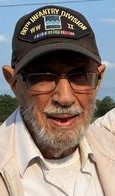
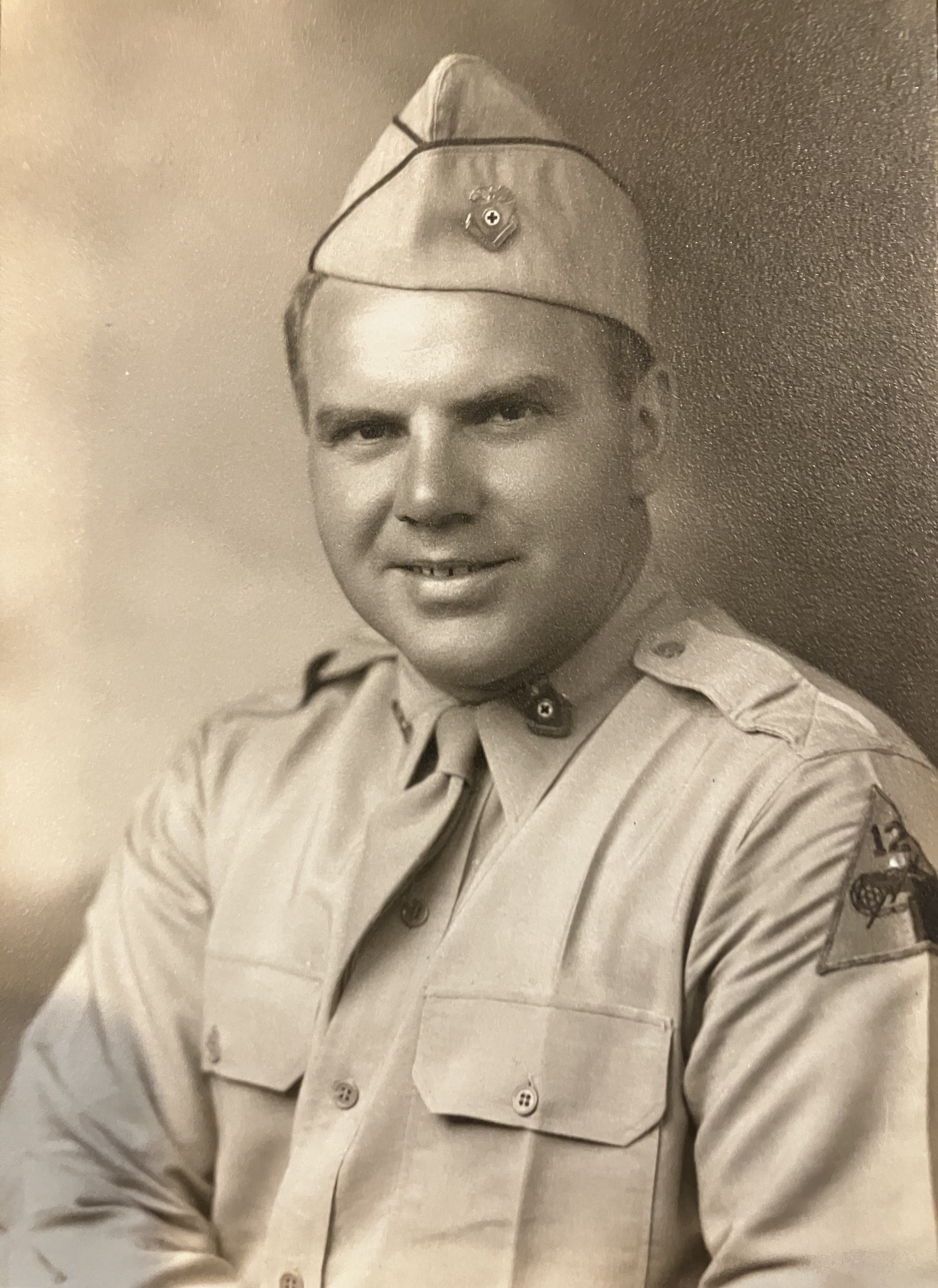
World War II veteran Stan Friday grew up in the Philadelphia area, the eldest of 10 children. He attended Lower Merion High School and worked at a factory that made gasoline cans for the war effort. In October 1942, he was drafted into the Army.
Stan Friday
After training in Kansas and Arizona, he shipped out to Scotland aboard the Queen Mary with 18,000 other soldiers for the invasion of Nazi-occupied France.
In the first week of August 1944, less than two months after D-Day, he came ashore at Normandy’s Utah Beach with the 80th Infantry Division. He fought the Germans across Europe as a 22-year-old scout in the 317th Infantry Regiment.
IN HIS OWN WORDS
I was a private in General Patton’s 3rd Army. From Utah Beach, we went into every little town, cleaned the town out and went to the next town. Every town you went into, they were glad to have you.
My job was to fight if I had to — I carried an M1 carbine, a .45-caliber pistol and grenades — but going behind the lines to get information was my specialty. I collected half a dozen prisoners for interviews. Most of the time, I went out alone. Sometimes I went with a carrier who’d carry messages back to the lines when we’d run into something. I got close enough to the Germans to see them, hear them, smell the stinkin’ cigarettes they were smoking in their foxholes. You could smell them a mile away. That was a giveaway.
I could handle myself pretty good. My dad was a boxer, so he taught all of us boys how to take care of ourselves. We all had a pair of gloves. I started when I was 2 or 3 years old, so I was pretty rugged that way.
Scouting was nighttime or daytime, depending on the situation. If you knew there was a whole bunch of Germans in one area, our commanders wanted to know about how many. Our job was to go out there, be visible and get shot at, and get away and report back.
I moved on instinct, training. Everything happened so fast. I was fightin’ to save my life, No.1, and trying to outwit the Germans. I was kind of foxy, watched where I went. My night vision was extraordinary. That was before they had glasses today that you can see with in the dark.
Was I ever spotted? Yeah, because somebody was shootin’ at me. It was half moonlight, half just getting light. I seen a German up in a big building. There was one shingle missing and a rifle. Light must have hit it and made a glare, and I seen a flicker in it, and I go: There’s a sniper up there. And I just snuck away, hit the edge of a building and dove through the building. The only thing that didn’t make it was the heel of my shoe. He shot it off. Didn’t hurt my foot. I’m glad I got away.
What am I doing here? I’d think that. But after a while you forget it, and you just continue what you’re doing.
The Sherman tanks and the German Mark V’s had a big battle going on at St. Lo. I found a hole, a depression in the ground, and I just threw myself in it to get away from the firing and covered my face with my arms. A shell from a German tank went off near me. It made me deaf, and I got shrapnel in both arms. Blood was running down. I patched it up myself. Them scars are still with me.
Friday on being an Army scout in Europe: ‘I was kind of foxy, watched where I went.’
If somebody was shootin’ at me, I shot back. Did I hit anyone? Damned if I know. I could’ve. You didn’t have time to look around and see if you hit anybody.
I was usually with my buddy. His name was Monday, and I was Friday. His first name was Kenneth. We were like brothers. We were friends from the day we got in. He was from Wheeling, West Virginia. He got killed in France. I think he got hit when we were around Metz or Nancy.
He took one patrol out, I took another patrol out. Somehow he got caught by a German 88 [millimeter gun]. They caught him comin’ down the side of a hill outside a little town. He got hit in the side. The last thing he told the medic, he wanted to know if I was all right. It was a week later, two weeks later that I found out what happened to him. We were in such commotion there, nothing but fighting and noise.
I don’t want to talk about the Battle of the Bulge. That’s gory. It would put me in a bad mood.
We went in every little town up to Austria. When we got there, we found out the war ended. Austria was like a vacation. Sat around, went swimming, boating, just waiting for a boat to take us home. We waited until October ’45.
At home, I was a wreck. I had nightmares. I couldn’t sleep at night. I got arrested for bein’ bad, drinkin’, gettin’ in fights, startin’ trouble. I loved trouble. The cops said, “We don’t want to see you here again.” It was the transition from Army life to civilian life. Guys couldn’t cope with it. They didn’t know what it was. I seen guys commit suicide and get divorced from their wives. Doctors then didn’t have an idea until they found out it’s in the mind. They had to bring them down on pills and dope.
Not me. I said, I can’t go on living like this. I got hold of my senses and after a while, I straightened out. I went down to Willow Grove [the naval air station] and joined the Navy to get used to civilian life. I could wear civilian clothes. I had training to keep the planes in operation. After about three-and-a-half years, I had to come out. My mother was having a rough time, so they let me out early.
I’d wanted to forget a lot of stuff, and I did a good job of it by joining the Navy.
I got into the construction trade, and I liked construction pretty good. I worked hard at it and learned all I could, worked all the way up to a foreman and then to a superintendent. I was a superintendent of construction for 37 years. I worked on the Limerick [nuclear power plant] towers, the two towers. They’re my babies.
EPILOGUE
For this interview, Friday would not talk about the time a German soldier came at him with a bayonet and the fighting was hand to hand.
“I shudder every time I think about it,” he said. “I don’t want to get into that. It’s stuff I don’t want to even think about. It gets me worried. I’m trying to get the hell away from the past! I don’t want to lay in bed and start crying.”
He did say the tip of the blade made contact with his chest but was blunted by the webbing of his carbine.
Friday was honorably discharged Octpber 21, 1945, at Indiantown Gap. At the time, he was a technician fifth grade, or “tech corporal,” with Headquarters Company, 2nd Battalion, 317th Infantry Regiment, 80th Infantry Division. He had fought in France, Luxembourg, Germany and Austria. Among his decorations were the Purple Heart and Bronze Star.
He worked in construction until retiring at 65. In two-and-a-half years, he designed and built a house on Ziegler Road in Marlborough Township, near Pennsburg. “It’s still standing, a beautiful house,” he said. At the time I met with him, he was living in the Souderton area.
He and his wife, LaRue, went to France for the 75th anniversary of D-Day on June 6, 2019. (Here’s an ABC News article about him.) Honored as a participant in the Allied invasion of Normandy, he shook hands with President Donald Trump and received the highest decoration awarded by the French government, the Legion of Honor, from President Emmanuel Macron.
While presenting the medal during the Omaha Beach ceremony, Macron told Friday, “I’ve read your information, and I know what you did for France.”
Here is Friday in a video interview for the Bastogne War Museum, a brief interview with David Muir of ABCWorld News Tonight, and an interview with two other Normandy veterans on CBS This Morning.
Friday died December 28, 2025, nine days after LaRue’s passing. He was 103. Here is his obituary.
—
My friend Sharon Schell, a booster of veterans, told me about Friday. Her late father, Charles F. Remington, had fought across Europe in the 94th Infantry Division. In 2016, my last year at The Morning Call of Allentown, I got his story into the paper.
Sharon took me to interview Friday on July 3, 2023, at his home. I planned to offer the story to The Morning Call and wrote a draft, which you have just read. But 10 days after our meeting, before I could have a follow-up interview with him, Friday backed out.
A friend said Friday didn’t want to talk anymore. He was having nightmares. He just wanted to forget.
First Lieutenant James Solomon attended Officer Candidates School at Fort Benning, Georgia, where he received his commission. (Newspapers.com)
Here’s another World War II story, this one told by retired Lieutenant Colonel James Solomon Sr. of Allentown, Pennsylvania. In 1944, he led a platoon of the Army’s 34th Infantry Division in Italy, fighting on the Anzio beachhead and helping to capture Rome.
That July, the 28-year-old first lieutenant suffered a leg wound. Writing to his mother from a field hospital, he told how his company “lived off the land” for two weeks before he was hit, with pears, plums and figs in abundance from Tuscany orchards.
—
“Sir! Sir! Lieutenant! Lieutenant!”
Discordant and demanding, that call struck at the core of my heart. Above the din of the sounds of war, I heard those desperate and strident cries coming from men to my rear.
It was May 30, 1944, Memorial Day. The sun beat upon us unmercifully, our throats were parched, but we dared not halt to drink from our canteens. Leaden shoes seemed to encompass our feet. The gear we carried was heavy and chafing our shoulders. We were in regimental reserve and following the tanks that were just ahead.
The 1933 Allentown High School yearbook, the Comus, calls Solomon ‘a finely built chap’ with ‘a flare [sic] for literature.’ (Allentown Public Library)
I was leading and intent on looking over the terrain to our front, and at the same time aware of possible mines. The glint of a well-worn wallet caught my attention, and I stooped to pick it up without changing my pace. Shoving it into my pocket, I decided to examine it later. It was probably lost by a soldier who had preceded us. I would make sure that it would be returned to the rightful owner.
Suddenly we encountered machine gun, rifle and small arms fire coming from our right flank. We had been crossing an open wheat field when we were observed by the enemy. Naturally, we hit the dirt. It was exactly what the Germans wanted us to do, because their artillery and tanks opened fire on us. We lay low while the shells exploded around us. The shelling ceased, and as I arose to get the men going toward our objective, I heard the dreaded sounds calling me to come to the rear.
All of my men were still in a prone position. The medic and I arrived at the tragic scene at the same time. I immediately saw that two of my men, Rowe and Ozzie, were wounded. The shell had struck between them. As we crouched beside Rowe, the medic looked at me pleadingly. “What shall we do? He has a sucking wound.”
Rowe’s breathing was hard, and I could hear it coming from the gaping wound in his lower chest. He was unconscious, and death would be upon him in a minute or two.
“There’s nothing you can do!” I responded to the medic.
“Nothing!” the medic echoed. We moved to the next victim, Ozzie.
Ozzie was gone. I could see his brains scattered about. I wanted to see no more. I met the medic’s glance with a shake of my head. “Let them be, and let’s get out of here.”
The assessment of the injuries only took a few seconds. The problem that reared up before me was the necessity of removing my remaining men to a safer place, which was a few hundred yards ahead. Up until then, the rest of the men were unaware of the casualties. As I ran back to my original position, I called to the men to follow me. Then we moved out quickly and at a trot.
Two hundred yards later, after placing my men in a slight defilade, I took a headcount and found that half of my men were missing.
“Sir,” one of my sergeants said, “somebody didn’t pass the word to move out. They’re still lying where we were pinned down. Shall I go for them?”
Solomon at 58, when he was president of Solomon Lincoln-Mercury Sales in Allentown (Newspapers.com)
“No,” I replied. “I’ll go. You stay here until I get back with them.”
I was not going to let the sergeant correct something that was my fault. The men were my responsibility, and I went back for them. It was a grueling couple hundred yards, and I was still carrying all my equipment, which included my pack, walkie-talkie (hand-held radio), field glasses, two rounds of bazooka ammo and a carbine. Halfway, I dropped the walkie-talkie, field glasses and the bazooka ammo, with the idea that I would pick them up on my return with the men.
I found my men still in their prone positions in the wheat field. They were in the column behind the casualties, Rowe and Ozzie. Carefully, I had the men follow me in a manner in which they would not see their fallen comrades. In doing so, I got off the path that I had followed to meet them. As a result, I would not pick up my equipment at the halfway mark. Instead, I got them to safety immediately. I was determined to regain my gear later.
Needless to say, I was exhausted and decided to wait until things quieted before returning to reclaim my belongings from where I had dropped them. The items were vital and in short supply. I could not even think about abandoning them.
An hour before sunset, I steeled myself and set out in a run toward the spot where my belongings should be. When I got there, I could not find them because of the many new shell holes that pockmarked the area. Fresh dirt was thrown everywhere, and the articles I sought to recover could not be readily seen. Then I heard the machine-gun bullets whiz by. I dove into a bomb crater that was a short distance away.
Solomon in 2000 (Newspapers.com)
Several rounds from a not-too-distant tank landed near me, showering me with dirt. I lay huddled at the edge of the crater that faced the enemy. I prayed as the shells landed closer. When an 88mm shell struck the edge of the crater opposite me, I cringed waiting for the deadly explosion. I only received some soil that was thrown my way by the impact. It was a dud! There was nothing more. It was the last round fired in my direction.
I waited several minutes before leaving my sanctuary and then picked up my equipment, which was almost totally covered with Italian soil. Losing no time in returning to my men, I did not mention the close shave that I had just a few minutes earlier. We never spoke of those things, because they occurred all the time to one soldier or another. It was a commonplace experience and not worth mentioning.
Sitting down to rest for the first time in hours was some comfort to me, except that I experienced a jolt to my backside and realized that I had placed the lost wallet there. I took out the wallet, opened it and looked for the owner’s identification. It contained no money, only a V-mail from his mother with his name and APO address. The soldier was from Bethlehem, Pennsylvania. His name was John R. Snell, and he lived in the 1100 block of Arcadia Street.
Within the next few days I stuffed the wallet an an envelope and mailed it to the soldier’s mother with a short note of explanation. I also told her that I was from Allentown [which borders Bethlehem].
The July 26, 1944, issue of The Morning Call of Allentown reports on a letter Solomon wrote to his mother after he was wounded in the leg. (Newspapers.com)
A few weeks later, my mother wrote telling me that John Snell was killed in action and that his mother had paid her a visit. In August 1944, while I was still recovering from my wound at the 6695th Conditioning Company, I received a letter from Mary Snell thanking me for the wallet. She included a photo of John Raphael Snell.
After returning to the United States, either in December 1945 or January 1946, I went to Hamburg, Pennsylvania, to call on the parents of another one of my men who had lost his life in Italy. His folks owned the movie theater there. I do not recall his name.
I am sorry to say that I could not complete my mission that day. I lost my nerve after I arrived at the theater, so I turned around and went home. There were no words in the dictionary that I could use to explain away their loss. I had nothing to say, and the pain was too great.
—
John R. Snell was a 19-year-old private when he was killed on the Italian front May 30, 1944, a month after he shipped overseas and the day Solomon found his wallet.
Solomon had five years of active duty in Europe and was awarded a Bronze Star and Purple Heart. He ran a postwar refugee camp in northern Italy’s Modena, where thousands of displaced Europeans were processed. The experience led him to write and self-publish a novel in 2000, Il Comandante. He worked for the War Assets Administration from 1946-48 and was an Army reservist for 28 years.
A longtime businessman, he owned a Lincoln-Mercury car dealership. He was 86 when he died in 2003. You can read his obituary here.
That was four years after Solomon sent me his story about Private Snell’s wallet.
Here’s another World War II story, untold until now. The writer was China-Burma-India veteran Fred C. Wasem of Jim Thorpe and Bethlehem, Pennsylvania.
—
On March 12, 1943, at age 19, I was inducted into the Army. I went to Atlantic City for basic training in the Army Air Forces and was billeted at the old Hotel Brighton. Our hotel was judged the best marching outfit in Atlantic City. We won the honor of having the Glenn Miller Orchestra play at dinner every evening for a week.
After six weeks, I was sent to South Dakota State College, where I took a course in Army law to become an Adjutant General secretary.
We were up at 5 o’clock in the morning, a half-hour to wash, make your bed and ready the room, exercise for half an hour, one hour for breakfast, a half-hour to one’s self, fall out and march to your respective classes. From 7:30 until noon were classes and lectures. Lunch was from noon until 1 o’clock. Classes then continued until 3:30, with compulsory close-order drill until 4:30. From then until 7 o’clock, you would eat and do what you wanted. Compulsory study began at 7 o’clock and ended at 9. Lights out was 10 o’clock.
This was five-and-a-half days a week. The school lasted three months. I lost a week of schooling by being hospitalized. [Wasem didn’t say whether he was ill or injured.] I had a very difficult time trying to catch up and did not succeed. I completed the course but did not graduate.
I joined the 1066th Quartermaster Company, 12th Air Service Group at Biggs Field in El Paso, Texas. After a two-month stay, we went to Albuquerque, New Mexico, and then to Camp Anza in Riverside, California. This was an embarkation camp for overseas. We stayed for two weeks and did nothing but loaf. Our company had 76 men and five officers; a WAC company had 75 girls and three officers. We had a wiz ding of a beer party.
We then went to our ship, the USS Hermitage, an Italian luxury liner which was scuttled in Cuba and made into a troopship which could accommodate 7,000 troops. We left Los Angeles on November 10, 1943, for Bombay, India.
With nothing to do but loaf, I went to the troop office and inquired about a job with the shipfitters. Being a plumber, I had a sailor as a helper who wanted to learn the trade. We repaired all sorts of leaks in the toilet rooms.
The ship’s engine broke down. While we were in for repair on the island of Bora Bora, my company had to do KP. It was so hot that the steel-plated deck in the kitchen burned your feet. I jumped ship for a swim.
We landed December 11 at Perth, Australia, and at Bombay 15 days later. I was put on detached service to await the arrival of our cargo ship. Our group consisted of 24 men and one officer. We stayed in Bombay about a month, then boarded a passenger train bound for Calcutta. We had only wooden seats to sit and sleep on. I joined my outfit outside Calcutta in a tent camp.
We were caught up in a monkey migration. Thousands of the animals covered everything in their wake. Very noisy and a big nuisance. It lasted about a day. Also, there were red-headed vultures perched in trees. When you would walk in the open area with your mess kit, after going through the food line, they would swoop down and try to steal your kit. You had to bend over and hide under a tree.
We left this camp via a narrow-gauge railroad for somewhere in Assam and experienced many delays. The worst was that the engineer put the train into a siding and went home to his family for about three days. We ran out of our food and had to eat British hard crackers, along with bananas we picked from the trees.
Upon arrival at a railroad yard, we drove two days to an airfield and boarded a C-46 for Kunming, China. Eight of us were put on detached service with the remaining elements of the old Flying Tigers until July 31, 1944. We then were transferred into the 1151st Quartermaster Company, 68th Air Service Group.
In Kunming, we worked in a warehouse very close to the airport. I was the NCO in charge of salvageable material such as clothing, bedding and office furniture.
Claire Chennault (AviationHistory.com)
One day, the major in charge brought a brigadier general into the office. The general was introduced to me. His name was Hood. I had to do a job for him on Major General Claire Chennault‘s private airplane. I had to upholster a fighter pilot’s seat which was being installed in the airplane for the general’s dog. I had the job done with old olive-drab blankets. General Hood was so well-pleased with the work that we became friends. He loafed at my office many times and smoked cigars with he. He brought me beer from India when there wasn’t any to be found.
We had two Chinese orphan boys tending to our barracks. They cleaned and mopped, made our beds, sent our dirty wash to be washed and dried, then picked it up for us. We had a sit-down mess hall, and the house boys acted as waiters. Breakfast always consisted of eggs, hotcakes or french toast, juice and coffee. Lunch and dinner were chicken or water buffalo, boiled vegetables, rice, bread and coffee. I lost about 30 pounds in two years.
We left Kunming for Luliang Airfield. I was put in charge of wholesale PX supplies. It took a lot of paperwork for ordering, inventory and allotting of supplies based on each company’s morning reports for all the outfits we served. This job paid extra, over and above my T/4 rank and overseas pay. It added up to a master sergeant’s base pay of $135.
A volunteer job was added to my regular job. It was a grave registration detail. We were called out all hours of the day and night to recover the bodies of the dead flyers and others. After the bodies were identified, we tagged and boxed them, then transported them by truck to Kunming, where they were placed in above-ground vaults.
We left Luliang in November 1945 via a C-54 for Calcutta and stayed in a camp for about two weeks until a ship came to take us home. The General J.R. Brooke arrived. We went by way of Ceylon [now Sri Lanka], up through the Red Sea, stopped in Egypt, then through the Suez Canal and into the Mediterranean. I saw the Italian boot in the distance, the Rock of Gibraltar. When we arrived in New York on January 3, 1946, the ships in the harbor sounded their foghorns and the fire boats put up a display of water, welcoming us home.
I went by train to Camp Kilmer, New Jersey, then to Indiantown Gap, Pennsylvania, where I was discharged. The Army gave me $1.50 for bus fare home to Mauch Chunk [now Jim Thorpe].
Two years, nine months and 26 days since I left home.
—
Wasem had his own plumbing and heating business in Jim Thorpe and later worked for Bethlehem Steel. He was a Lions Club president, local unit commander of the China-Burma-India Veterans Association and president of the Allentown United Veterans of Wars. He died on his 85th birthday in 2008. You can read his obituary here.
During World War II, Max Snider provided the gasoline for tank commander George S. Patton’s army in Europe. Twenty-six years ago, the freelance writer and retired associate dean of Lehigh University’s College of Business and Economics sent me this story he wrote. It’s about his role in clearing a soldier’s marriage after the war had been won.
—
Colonel Max Snider of the Allentown (Pa.) Army Reserve Officers School on his retirement from teaching there in 1966 (Newspapers.com)
In about mid-September 1945, I found in Army mail brought to my battalion headquarters in Liege, Belgium, orders that the Army had appointed me to interview a young Belgian woman living with her mother, a widow, on a small farm a few miles outside Liege. An American soldier had requested the required Army permission to marry the daughter. These orders demanded that I fill out an elaborate questionnaire, designed by some Army personnel type, and make a mandatory decision as to whether I would recommend approval or disapproval of the marriage. The soldier’s Army record was detailed. He was 21 years old and had served as a private first class infantry rifleman who landed on D-Day in Normandy at Utah Beach, fought his way through the campaigns of Normandy, Northern France, Ardennes (Battle of the Bulge), Rhineland and Germany and somehow managed to suffer only two minor wounds. I marveled at the awesome control of our Army over this soldier — to intrude into the most intensely private and personal issue of approving or denying his marriage.
At this time, I was a 30-year-old lieutenant colonel in command of a battalion headquarters. I had served in the headquarters of General Patton’s 3rd Army in charge of gasoline through the campaigns of Normandy, Northern France and Rhineland. It was my job to travel by jeep from the 3rd Army headquarters to as near the front lines as we dared to set up gasoline dumps and supervise their operation. The United Nations had won the war in Europe and in Japan. We waited impatiently to return home. The horrors of the war were still fresh in my mind. In my nightmares, I re-enacted them — the ancient stone houses of Sainte-Mere-Eglise in Normandy that had housed many generations of French families reduced to rubble, the wan and hungry children, the dead soldiers and the dying soldier crying for his mother in an Army hospital during my 10-day confinement there in Nancy, France.
The Army furnished me with a staff car and driver and a translator who could speak the French dialect of the Belgian Walloons and turn it into heavily French-accented English. The translator, skinny, poker-faced with a cadaverous complexion, smoked a huge pipe almost as big as a saxophone. He had stuffed his pipe with a minimal amount of tobacco, still in short supply in Belgium after the war, but if you judged from the odor of his pipe, the biggest portion in his pipe bowl was dead leaves. I dreaded this whole operation, especially asking all the personal questions. One of them even asked the bride-to-be whether she was pregnant.
Our driver drove us to a modest cottage in the center of four or five acres of farmland. A basket of apples and two pumpkins rested just outside the front door. A light rain had stopped, and the sun came out just as an apron-clad and apprehensive farm wife answered the door. The translator told me that she was expecting us and knew why we came.
In an effort to ease the tension, I remarked, “I’m glad you turned off the rain for us.” She managed a feeble smile and introduced her equally fearful daughter, a beautiful young woman dressed in a simple blue dress accenting her blue eyes. My voluminous instructions had told me she was 18 years old. Her innocent and shy demeanor left me ill at ease when I thought of the questions I must ask her.
During the long process of questioning, slowed by the necessity to use French, both mother and daughter sat nervously on the edges of their chairs. I learned both of the young people grew up on farms and that they planned to live with the soldier’s parents temporarily on a large farm in Iowa — the translator pronounced it “E-oh-wah” — until they had their own house.
Finally I came to the question I dreaded to ask: Is the soldier’s fiancee pregnant? I instructed the translator to ask the young woman to step out of the house until he told her to return. When she was gone, in an atmosphere thick with suspense, I posed the question to the mother. She shook her head vigorously in the negative. When the bride-to-be returned with a mystified expression on her face, she immediately asked her mother what the question was. The translator, in a stage whisper, relayed their conversation to my ear. After the mother told her the issue was whether or not she was pregnant, both women burst into laughter and shook their heads to indicate “no.” Then the mother, who suddenly seemed more relaxed, more talkative and all smiles, described how much the couple loved each other and how happy they were together.
“If you could see them together,” she said, “you would know they are very much in love.”
Snider earned four battle stars in the European Theater. (Newspapers.com)
“I will strongly recommend approval of this marriage,” I told the mother and daughter. They laughed and embraced, and the daughter began to cry.
Reluctantly, I told them that a higher Army headquarters could overrule my approval.
“When will we hear the final outcome?” the mother asked.
“From my experience in this Army,” I replied, “it is not noted for speed in its paperwork.”
After the pleasant ending of the conversation, I left in high spirits indeed. In a world that had started two ghastly world wars only 25 years apart, this brave soldier could look forward to peace with his beautiful wife. During the drive back to Liege, I fantasized about this couple who would live on that big farm in Iowa. Their children would be bilingual, learning French from their mother and English from their father, and, of course, some of them would be blue-eyed like their mother.
The End
—
Snider stood out in both the military and education. An Illinois native, he earned master’s degrees in advertising/marketing and business administration. From the Army’s Reserve Officer Training Corps, he became a second lieutenant of cavalry in 1936. In Europe with Lieutenant General Patton’s headquarters, he rose up the ranks from first lieutenant to colonel. Three decades of service in the Reserve followed. At Lehigh University for 34 years, he was a professor and dean and co-wrote four books. Later, as a freelancer, he wrote his memoirs. He lived in rural Durham Township, Bucks County, where he died in 2012 at age 97. You can read his obituary here.
Snider sent me his “marriage approval” story in 1999 while I was working at The Morning Call of Allentown. When I retired, it came home with me along with other war stories that were offered to the newspaper but not published.
Robert O.A. Wolfe was called to service as an American Red Cross field director in 1942. He had been a newspaper reporter in Allentown, Pennsylvania, for 13 years. (Bill Wolfe)
Newspaper reporter Bob Wolfe was an American Red Cross field director with the Marines in the Pacific during World War II. Among his chores, he provided softball and volleyball gear, set up boxing bouts and entertained island natives with boogie-woogie records. A shrapnel wound earned him a Purple Heart, for which he was eligible because he worked for the military.
An athlete, he had started at The Morning Call of Allentown as a sportswriter in 1929 while still in school. According to a chatty column in the paper that December, he “has his arm out of the sling again after having broken it recently for the seventh time.” At Allentown High School, which he graduated from in 1930, he was a football lineman and standout swimmer.
His work with the Red Cross dated to 1931, when he passed the nonprofit’s first-aid course and became a member of its Life Saving Corps. A head injury he suffered while swimming at a local park that year dogged him for many months. He was admitted twice to the University of Pennsylvania Hospital in Philadelphia. On top of that, a lightning strike shocked him while he was walking home from a ballgame, landing him in an Allentown hospital for about a week.
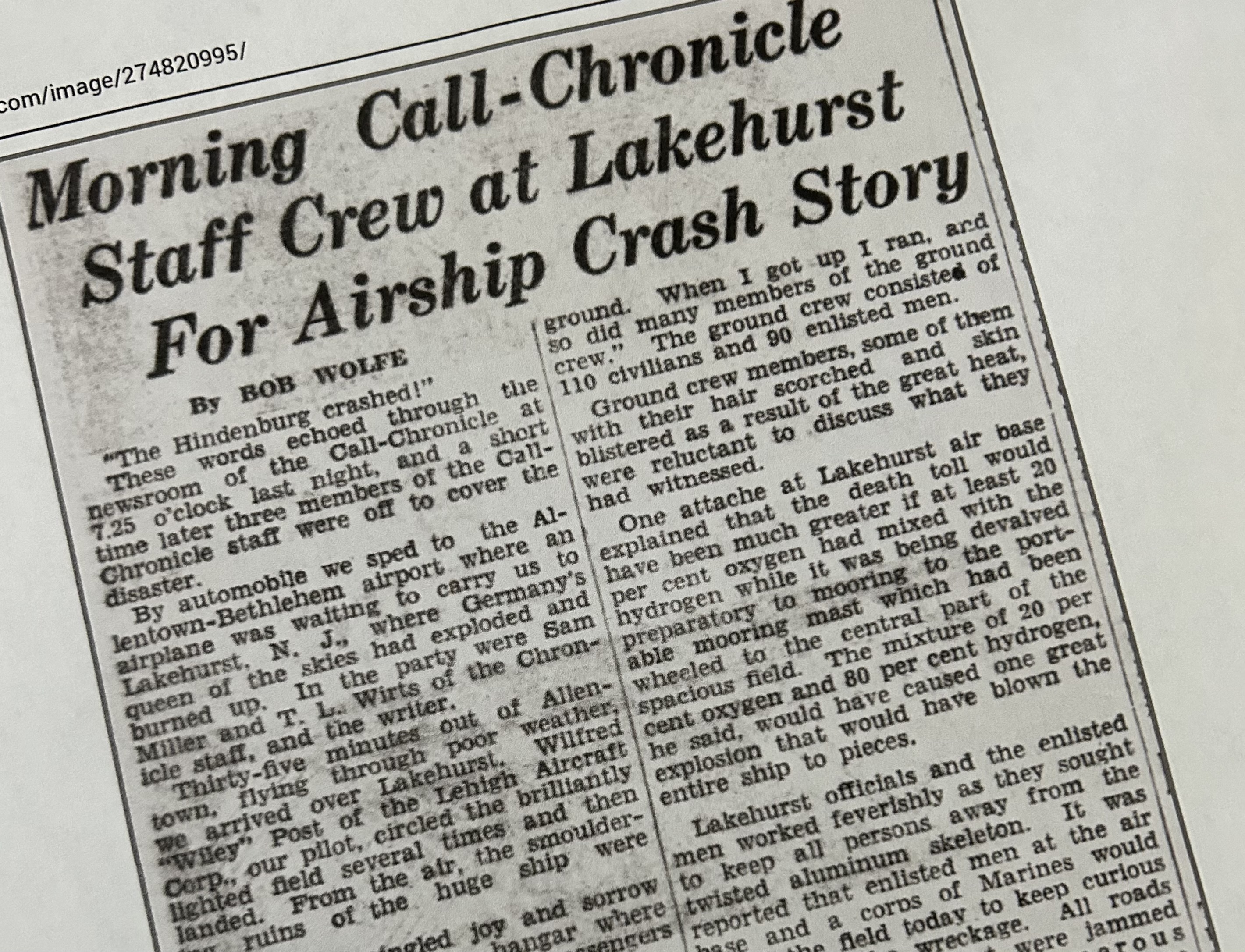
Wolfe’s May 7, 1937, article about the Hindenburg disaster (Newspapers.com)
As a newshound, he sped to Lakehurst, New Jersey, in 1937 to cover the Hindenburg disaster. “Scenes of mingled joy and sorrow were common in the hangar where relatives of some of the passengers and persons who were to have embarked on the return trip at 10 o’clock last night were gathered,” he wrote on May 7. “Pieces of ribboned fabric, which floated to the ground after the two explosions in the air, were guarded closely by enlisted men at the hangar.”
Thirty years old, married and the father of a 3-year-old boy, Wolfe took Red Cross training in Washington, D.C., in 1942. When he came home from overseas two years later, he wrote a report for the service organization that describes an aspect of the war unfamiliar to many of us. Here is his entire report, which took up 14 typewritten pages:
—
STATEMENT BY Robert O.A. Wolfe American Red Cross Field Director of Allentown, Pennsylvania on his return from the MARSHALL ISLANDS, where he served with the United States Marines
The American Red Cross Washington, D.C. Wednesday, July 12, 1944
I was with Marine Aircraft Group 31, originally attached to the 3rd Marine Air Wing at Cherry Point, North Carolina.
Whimsical certificate pronouncing Wolfe a ‘shellback’ for crossing the Equator on October 10, 1943 (Bill Wolfe)
When the group arrived in the South Pacific, it was detached from the 3rd Air Wing and became a part of the 4th. Just before we left Wallis Island, which is about 300 miles south of Funafuti, Colonel C.R. Freeman, group commander, called in the Red Cross man — myself — and wanted to know how much money was available for the purpose of creating a unit PX [post exchange]. I explained that so much money was in my revolving fund, and he asked if it were possible to advance sufficient cash finances for the purchase of supplies, including 100 crates of cigarettes. This money was advanced to him on the signature of his PX officer, Captain George Cruze, a Californian.
While we were preparing to embark from Wallis to go into the Marshalls, the supplies were picked up at Funafuti, put aboard one of the transports which was to take us into the new campaign as a small part of a huge fleet. That was the Marshall Campaign.
Colonel Freeman approached me on approximately the 15th of January. Prior to embarking at Wallis, I purchased and made ready for distribution aboard the transports two crates of playing cards, each crate containing 427 decks. The voyage from Wallis to Makin Island in the Gilberts, where we were to rendezvous with the fleet, was uneventful except for a tropical storm which tossed the ships around like corks in an open sea. The playing cards mentioned before were put to use practically 24 hours a day, with some of the Marines playing games around the clock. They’d sit down at 10 in the morning, and they’d still be playing at 10 the next morning.
When we left Makin to go into the vaunted Japanese waters of the Marshall Islands, we had strong seapower escorting us, as well as air coverage. It was a sight that millions would pay fabulous fees to see when we sailed into the waters of Roi-Namur at the northern tip of Kwajalein Atoll, where hundreds of ships were lying off shore awaiting their part in the big battle. There were more carriers than you could count on your hands, battleships were numerous, there were plenty of destroyers and, in fact, every type of warship which goes to make up our powerful Task Force 58.
Wolfe in the Pacific: ‘I have been able to give our men everything they could desire.’ (Bill Wolfe)
The Marines went ashore on Roi on the 1st of February after the atoll had been plastered by sea and air power, and in four days’ time both Roi and Namur were secured, with the exception of the few snipers who holed up in the drainage system which skirted the runways and revetments on Roi. The drainage systems were concrete, about 18 inches wide, about 14 inches deep, and had openings about 2 inches wide with concrete slabs thrown across the top. In these drains, Japanese snipers would stick a rifle through one of the openings and take potshots at Marines or Seabees who were working on the runways. The last of these snipers were killed about a week after the battle itself ended.
On the island of Roi, a fire which started during a bombing early in the morning on February 12th destroyed vast quantities of supplies and gear, but fortunately most of my recreation supplies arrived a few days later in fairly good shape. These supplies comprised practically the only recreation gear on both islands and were put to good use and brought a great deal of pleasure to Marines and Navy personnel during their off hours.
Among the supplies were softball gear, volleyballs and nets, footballs, diving glasses, a large quantity of small games, including acey-deucey, dominoes, checkers, chess, bingo and dartboards. Also among the supplies were 800 songbooks, which included both popular and old-time songs which the men sang with much gusto during the evening hours when there was little else to do. They were the official Army-Navy songbooks.
With the softball gear available, a number of leagues were soon organized, and there probably were more softball games played on Roi landing strips in one week than in a medium-sized city in an entire summer. Softball was played as early as the 14th of February, which was exactly two weeks after the initial landings on Roi. That can be considered as remarkable and another sign of the ingenuity of American fighting men when it is taken into consideration that the islands were nothing more than a pile of rubble after the battles were ended.
A dispatch from Wolfe in The Morning Call of March 8, 1944 (Newspapers.com)
The softball leagues were organized principally by Lieutenant (j.g.) John R. Burrington, USNR [Navy Reserve], and an alumnus of North Dakota University with the class of 1938 and recreation officer for ACORN 21, and myself. Lieutenant Burrington handled all the volleyball.
The first boxing in the Marshalls was a result of a challenge issued to Captain Eben Hardy, USMCR [Marine Corps Reserve], of New Orleans, an alumnus of Tulane, and myself, by the athletic and recreation officer of the USS Curtis, which was lying at anchor in the lagoon at Kwajalein Island on the lower end of Kwajalein Atoll. The USS Curtis is a seaplane tender and served as the flagship of Admiral Hoover, the military governor of the Marshall Islands.
With the challenge at hand, I approached Lieutenant Burrington on the idea of running a Roi-Namur Golden Glove Boxing Tournament to select a team to oppose the Curtis boxers. The idea was put into a memorandum and sent to Captain E.C. Ewen, USN, island commander and a former football player at the Naval Academy at Annapolis. Captain Ewen gave his hearty approval to the idea and was a driving influence in the successful tournament which quickly got underway. The brunt of the work in arranging for the tournament was carried by Lieutenant Hugh Gallernau of Chicago, former Stanford football great and a member of the Chicago Bears for two seasons prior to his enlistment in the Marines, and Lieutenant Burrington and myself. Commander Chapline, an old-timer in aviation and commander of the ACORN 21 unit, also gave great support to the movement and was in a ringside seat the night of the semifinals, when it was announced that he would be relieved of his command and sent to another station to take a new command.
The first-round bouts were conducted on a sand spit being filled in between the islands of Roi and Namur, and the only discomfort suffered by the spectators was the occasional rustle at their feet by the large rats which make the island their home. The rats are almost as big as cats.
The semifinal bouts and the final bouts were staged on a ring set up at the end of a runway on Roi, and although a heavy rain broke during the semifinals, no[t] one of the men left their seats, and the bouts continued as though a brilliant moon were shining. The boxing gloves used in the tournament were “bummed” from the Army at Kwajalein Island. Kwajalein Island was spared of air raids and their supplies were large in comparison with our meager quantity.
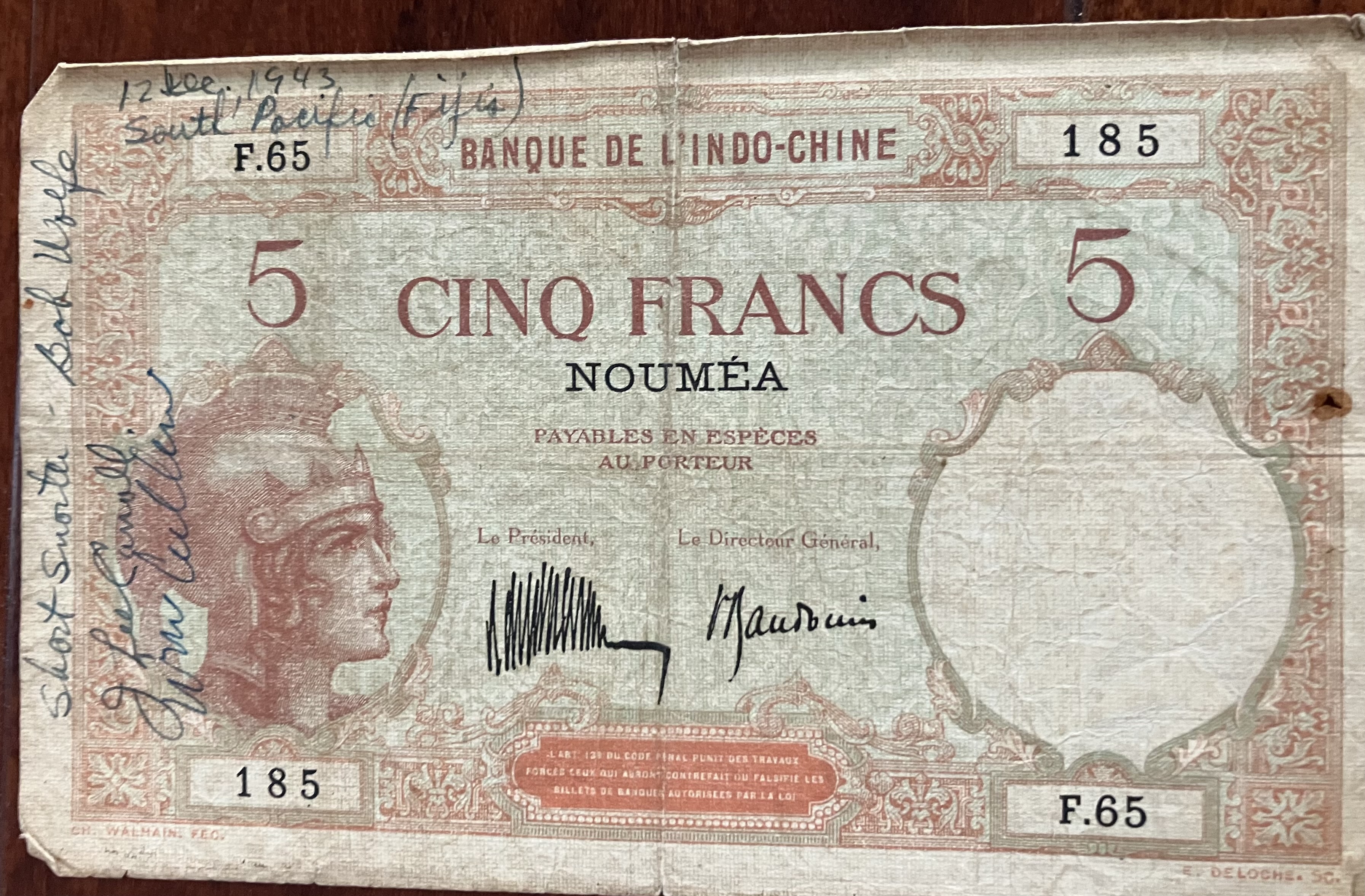
This short snorter was signed by Wolfe on December 12, 1943. Two other men also signed it. The Bank of Indochina bill is from the French territory of New Caledonia. Short snorters were banknotes signed by servicemen overseas and kept as souvenirs of their travels. (Bill Wolfe)
Kwajalein Island is just 45 miles south of Roi and forms the extreme northern tip of the atoll.
The gloves were brought into Roi by one of the Navy attack planes which made the return run in about half an hour. When you consider they have to take off, put down on the deck, pick up the gloves and be off again, you will see that half an hour is not much time to make the run.
Lieutenant Robert McAllister, USMCR, of Los Angeles flew me to Kwajalein in an SBD, a Dauntless dive bomber, to pick up the gloves. Four sets of gloves were used up in the tournament, and in the training program which preceded the bouts, approximately a dozen sets of used gloves were used, which had been secured from ships at anchor off Roi and also from the salvaged supplies after the bombing of Roi itself.
The boxing at Roi-Namur was the first in the Marshalls, and in view of the fact that the Japanese engage in jujitsu and judo instead of the American sport of boxing, it is believed that the Roi-Namur tournament was the first boxing in the Marshalls in many years.
Softball was introduced to the Marshallese natives by the Red Cross when I took to their small island just south of Namur two softballs, one bat, two pick handles and a dozen asbestos hand gloves. The natives knew nothing at all of softball or baseball, but they readily grasped the idea of the game when I spent an afternoon with them on an expansive beach at their island. The natives were quartered on Anton Island, which was less than 100 yards square.
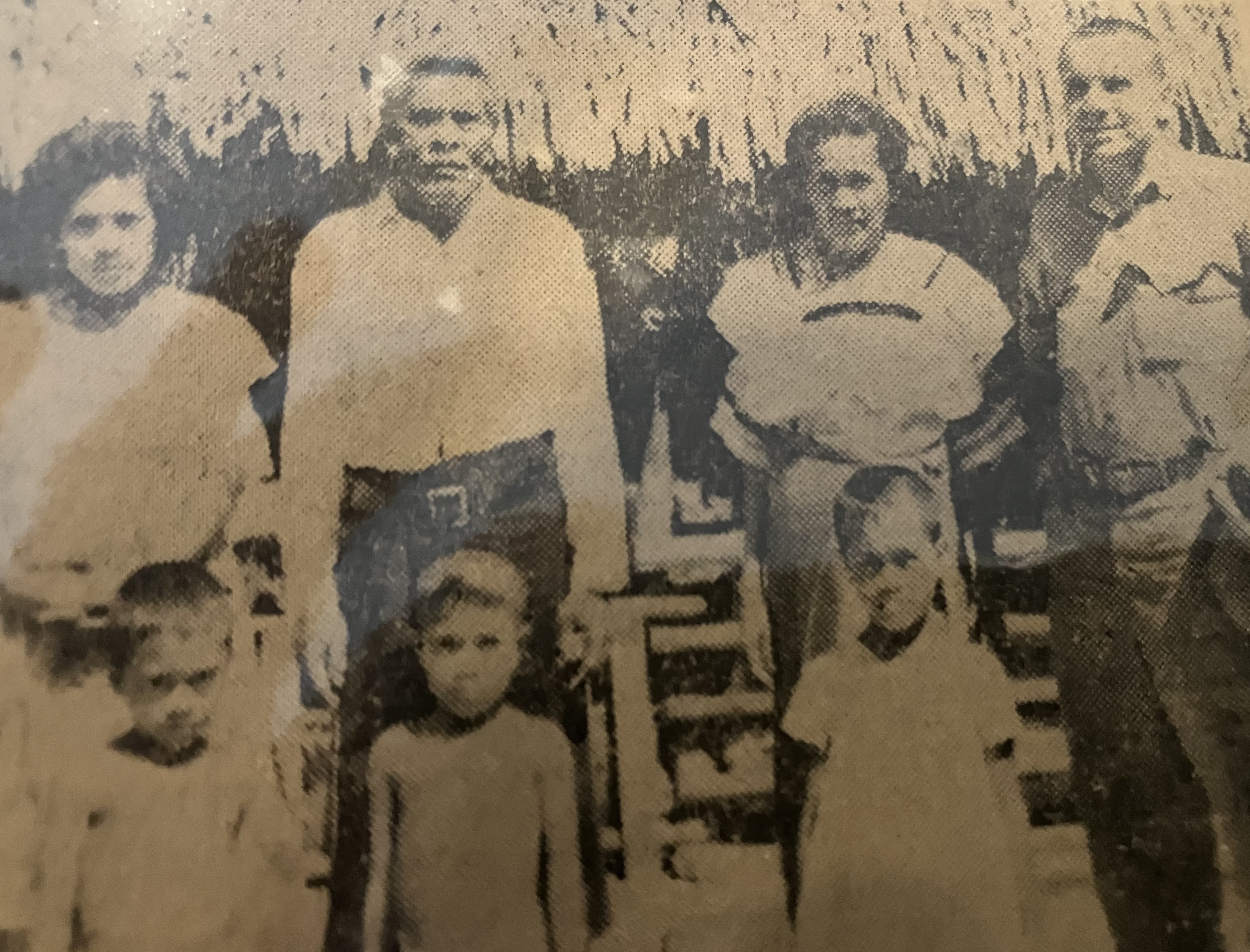
Wolfe with Chief Nakoma and his family on Pago Pago, American Samoa (Bill Wolfe)
In addition to the softball gear, I gave them a volleyball and a net, an old phonograph which had been beaten up in the bombing but was repaired by some Seabees, and some boogie-woogie records. The records were played for the first time one moonlit evening on the beach, where all of the natives gathered at the command of their leader. The women wore Mother Hubbards, and the men were attired in whatever clothing they were able to gather or beg from the servicemen. Some of the men wore shirts, while others were stripped to the waist.
The boogie-woogie records gave the natives a great laugh, and it was amusing to our small group of whites that after each record was played, they would all shout “OK” and they would clap vigorously.
In return for the phonograph music, the natives sang some of their native songs in beautiful harmony and rhythm. I often wished that I had a recording machine to record their music.
The Marshallese natives are very religious and are 100% Christians, principally Baptists. They had a native Baptist preacher there. He was a man about 70 years of age.
The only Marshallese native I came in contact with who was able to speak fluent English was a young man who had been educated at a college on the West Coast of the United States. His name is Laamanelli, and he is the leader of the group.
The natives, during the bombardment which preceded the battle, had worked their way from Roi and Namur, where the heavy shellings were concentrated, to small islands down the atoll. Eventually, the natives were rounded up by Lieutenant Collyer, USNR, civil affairs representative at Roi. The natives, deprived of their source of food when the shellings and bombings destroyed most of the coconut trees as well as the rice which had been stored on the islands, had to be subsisted by the Navy. The male members of the family would work on the various islands, helping to clear the debris and also to move supplies, and in this manner worked off their board.
Wolfe’s duffel bag with the names of places where he had been (Bill Wolfe)
The Marshallese are a healthy-looking type of people. They are of medium build, and the women have long, coarse, black hair. They all go barefooted. The men keep their hair fairly close-cropped, and when working in the sun, they always keep their heads covered with a turban-like cloth.
Lieutenant Collyer made the native women very happy one day when he distributed among them necklaces, bracelets, rings, hair ornaments and earrings. Although purchased at a five-and-10 in the States before leaving this country, they might just as well have been priceless jewels, as far as the natives were concerned. I doubt whether I have ever seen a happier group of people than those women were the day Lieutenant Collyer distributed these things. Lieutenant Collyer, after calling the women together, explained that the jewelry was a token of thanks for what the male members of the families had done so far, and also for the laundry which the women were doing for some of the officers. By the way, they launder by pounding the clothing against a piece of coral rock in brackish water.
There were only about a dozen service people who actually mingled with the natives. Parties of native men were transported each morning by landing craft from their island to Roi or Namur for the purpose of doing cleanup work and also helping transport supplies around the islands.
Laamanelli, the leader, explained in Marshallese language that the American Red Cross was a neutral agency operating with troops in battle, and he told the natives that their recreation supplies and the phonograph and records were a gift from the Red Cross field director who landed with the Marines on Roi. This little speech by Laamanelli brought a cheer and great hand-clapping.
How Wolfe appeared in Allentown High School’s 1930 yearbook, the Comus (Allentown Public Library)
Laamanelli knew a little about the Red Cross but was surprised to know that the American Red Cross was sending men with the troops into the battle zones. He said that the Japanese, as long as they were in the Marshalls, never had Red Cross representatives with them.
The phonograph was set up on a gasoline drum on the white, sandy beach which fronted on the lagoon. The natives squatted in a semicircle around the phonograph, and to their backs were a few small lean-to’s which provided their shelter and also some coconut and pandanus trees. There was also some undergrowth which gave the island a typical tropical setting.
The phonograph was first played as the natives faced the setting sun. The sun set over the stacks of some of the powerful warships which were at anchor in the lagoon, and as it slipped farther beyond the horizon, it left a brilliant red glare in the sky, which Laamanelli said indicated another hot day for the morrow. The tide was receding at the time, and as the waves rolled down the sloping beach, there was a rhythmic pounding of the surf.
At his tent in the Marshall Islands, April 9, 1944 (Bill Wolfe)
To the northwest, the ocean side of the island was being pounded by high breakers which rolled over the coral reef which circles the entire atoll. The natives were quiet as the phonograph beat out the boogie-woogie, with the exception of occasional laughing by some of the younger folks and the women. The men were as sober as church deacons, and it was only after the record had played through that the men would holler “OK” and then clap and shout.
Laamanelli is a much larger man than the average Marshallese and stands about 5 feet 11 inches. He is a well-built man of about 40 years of age, and his leadership among the natives in his section was passed on to him by his father. Laamanelli is a keen-thinking man and has his natives always under control and at the tips of his fingers. He knows everything that is going on and knows where everybody is.
There are only 8,000 Marshallese in all the Marshalls. Laamanelli is the leader of the natives around Roi and Namur, and they might total only 300.
The Marshallese natives are recognized as among the best navigators in the world, and before the Americans landed, they did considerable fishing both in the ocean and in the lagoon, principally for the ulua, barracuda, and a type of tuna which abound in the waters around Roi and Namur.
Laamanelli wore a pair of GI trousers and a white shirt, apparently given to him by some Navy man. He was barefooted and at times wore shell-rimmed glasses.
July 12, 1937, announcement in The Morning Call of Wolfe’s upcoming marriage to Elsie E. Heilman, a stenographer and ‘prominent member of Catasauqua’s younger set’ (Newspapers.com)
The Japanese provided rice and tinned fish to augment their supplies of fresh fish, coconuts and pandanus.
The natives were on Anton Island temporarily, having been driven from their natural habitats by the invasion, and no doubt by now they have been installed in more permanent living quarters. Their quarters were built out of odds and ends of wood, and the temporary lean-to’s on Anton were constructed out of K-ration boxes with palm fronds woven to form a waterproof roof. The way they do that is really quite ingenious.
Following the phonograph concert, Laamanelli extended his personal thanks to both Lieutenant Collyer and myself, and he expressed the hope that we would return soon with more music. The second trip we made back to the island, we took some Benny Goodman, Bing Crosby and other popular music along, as well as the “Marines’ Hymn,” “Anchors Aweigh,” and the national anthem. The phonograph was left to the natives for their entertainment.
It should be explained that the phonograph had been severely damaged in a bombing and was considered a total loss until one of the energetic and ingenious Seabees went to work on it and put it in operation again.
The needle shortage became serious at one time, but the natives sharpened their supply of needles with coral stone and seemed to encounter no difficulty in keeping the machine in operation.
Lieutenant Collyer, a small garrison of Marines and myself were present that night, and following the concert we opened up some fruit juices and some boxes of K-rations and had a little party among ourselves. The natives seemed to enjoy their little bill-of-fare, which consisted of tinned fish and coffee which they prepared themselves with the brackish water. They had American coffee. Approximately 150 natives were present at the concert; all but a few were there. The old folks were in their beds. There were no babies there; the youngest child was about 4 years old.
Laamanelli pointed to the Red Cross insignia on my collar during his little talk to the natives, in which he explained the Red Cross and the work it was doing there.
Incidentally, the concert took place three weeks after the landing.
—
Back home, Robert Owen Andrew Wolfe lectured about his Red Cross experience in the Pacific. He was secretary of the Allentown Chamber of Commerce, worked for Western Electric in public relations and in 1962 edited Allentown’s bicentennial commemorative book. He was president of Wiley House, which helped children with emotional problems, and served on the Allentown YMCA board and as president of the Catasauqua School Board.
Washington Post cartoonist LeBaron Coakley celebrated Wolfe’s role in introducing softball to the people of the Marshall Islands. (Bill Wolfe)
He and his wife, Elsie, had two sons and a daughter and lived in North Catasauqua. He died in 2004 at age 91.
Fifteen years ago, his younger son Bill sent the 1944 Red Cross report to me at The Morning Call with a note, “I hope you find it as interesting as our family does.” I spoke with Bill, read the paper and tucked it into a file of prospective stories. It stayed there. When I retired, I brought the file home.
A few weeks ago, I came across the report and called Bill about posting it on my blog. He sent me images from an album his mom kept, along with photos of some keepsakes, and mentioned something I hadn’t read anywhere — that his dad was treated at Walter Reed General Hospital for elephantiasis he had contracted overseas.
“In the field of combat,” Bob Wolfe wrote for The Morning Call in 1944, “the Red Cross is called upon to do a thousand-and-one-things — among them the tough job of trying to keep a program of recreation and entertainment going under the most adverse conditions. There is also plenty of work to be done in field hospitals, where wounded are treated before being taken to base hospitals.
“And we can’t forget the job of teaming up with the chaplains as a sort of ‘wailing post’ for homesick boys and boys who have become bomb-happy.”
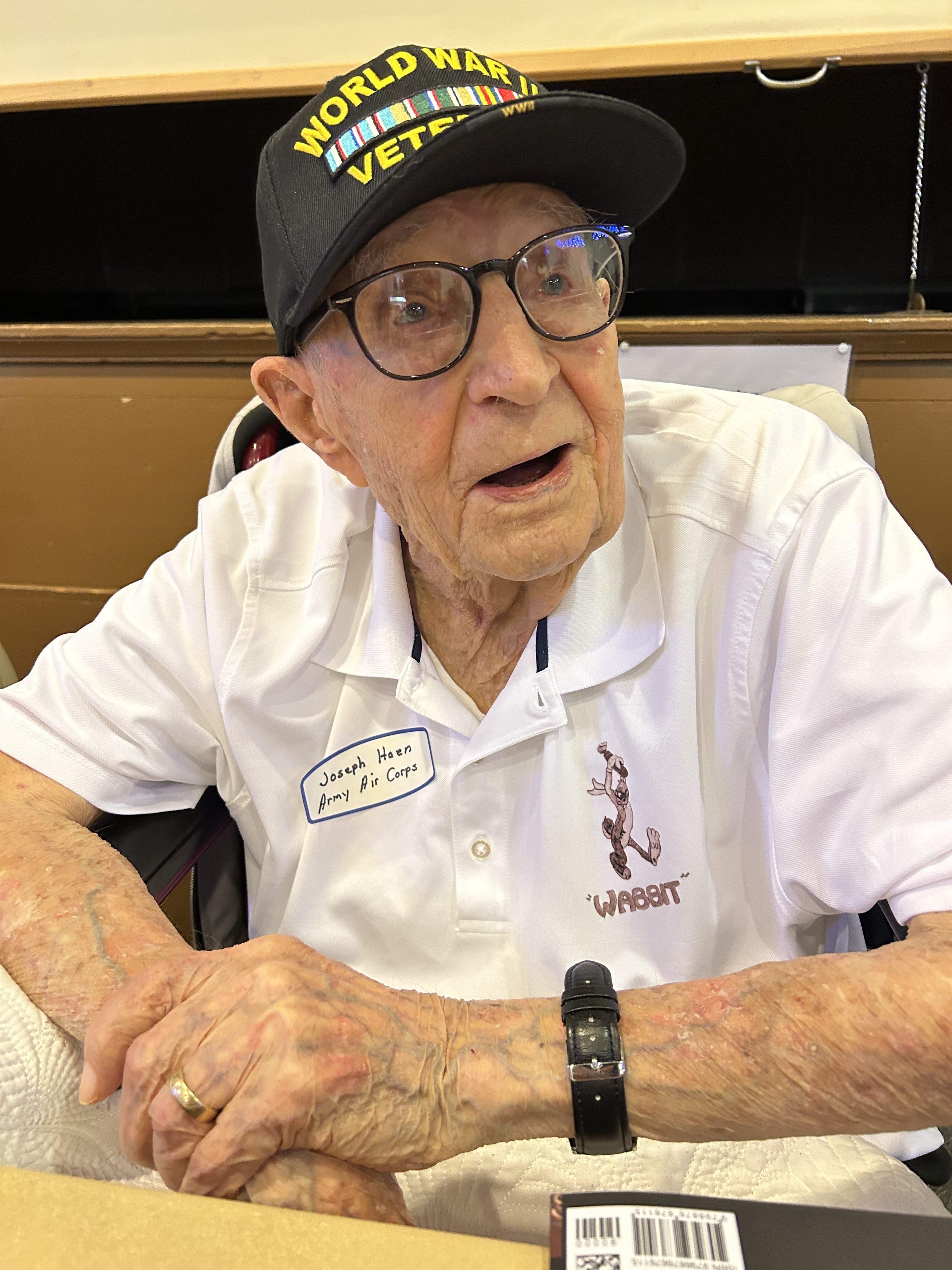
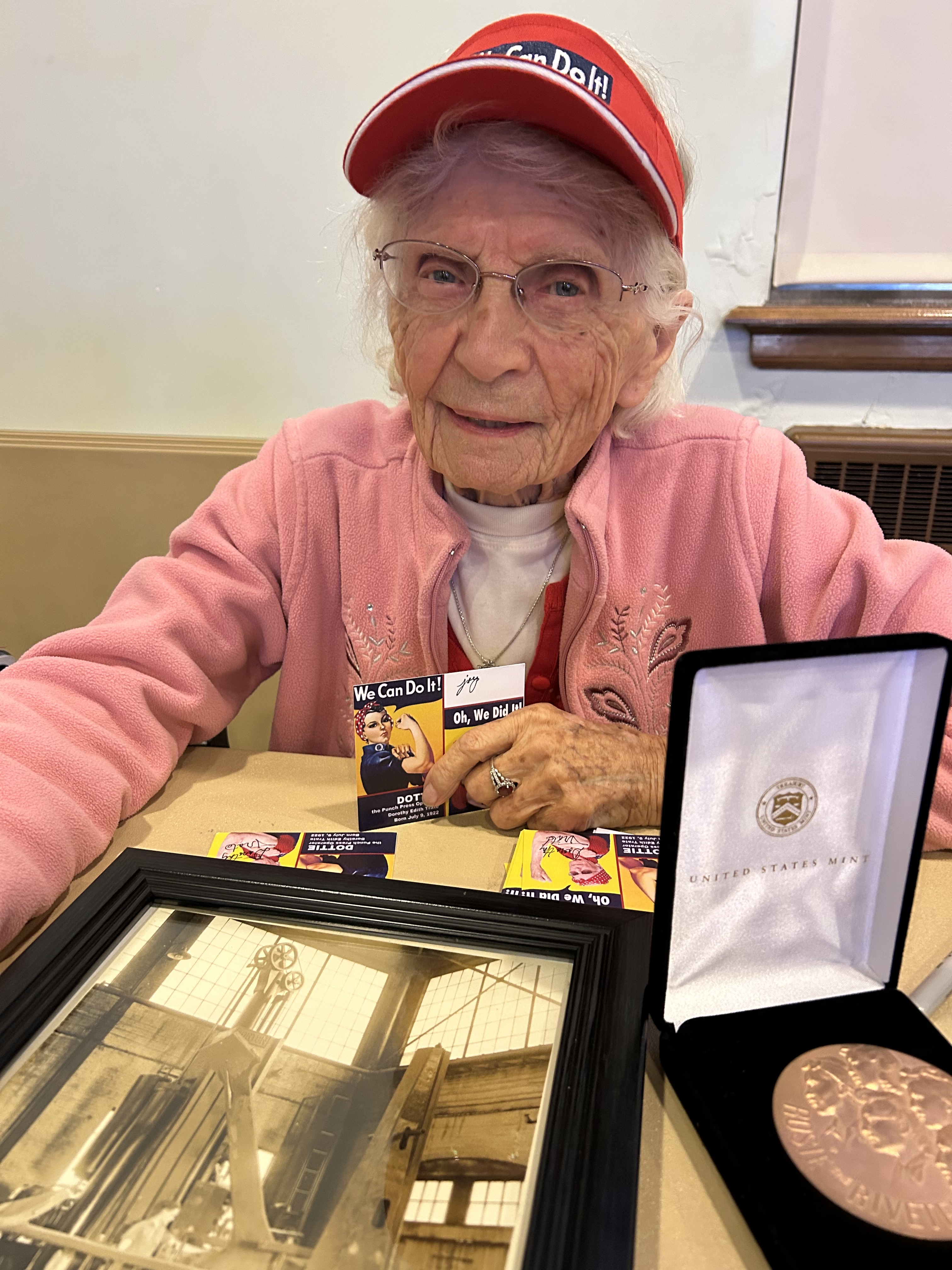
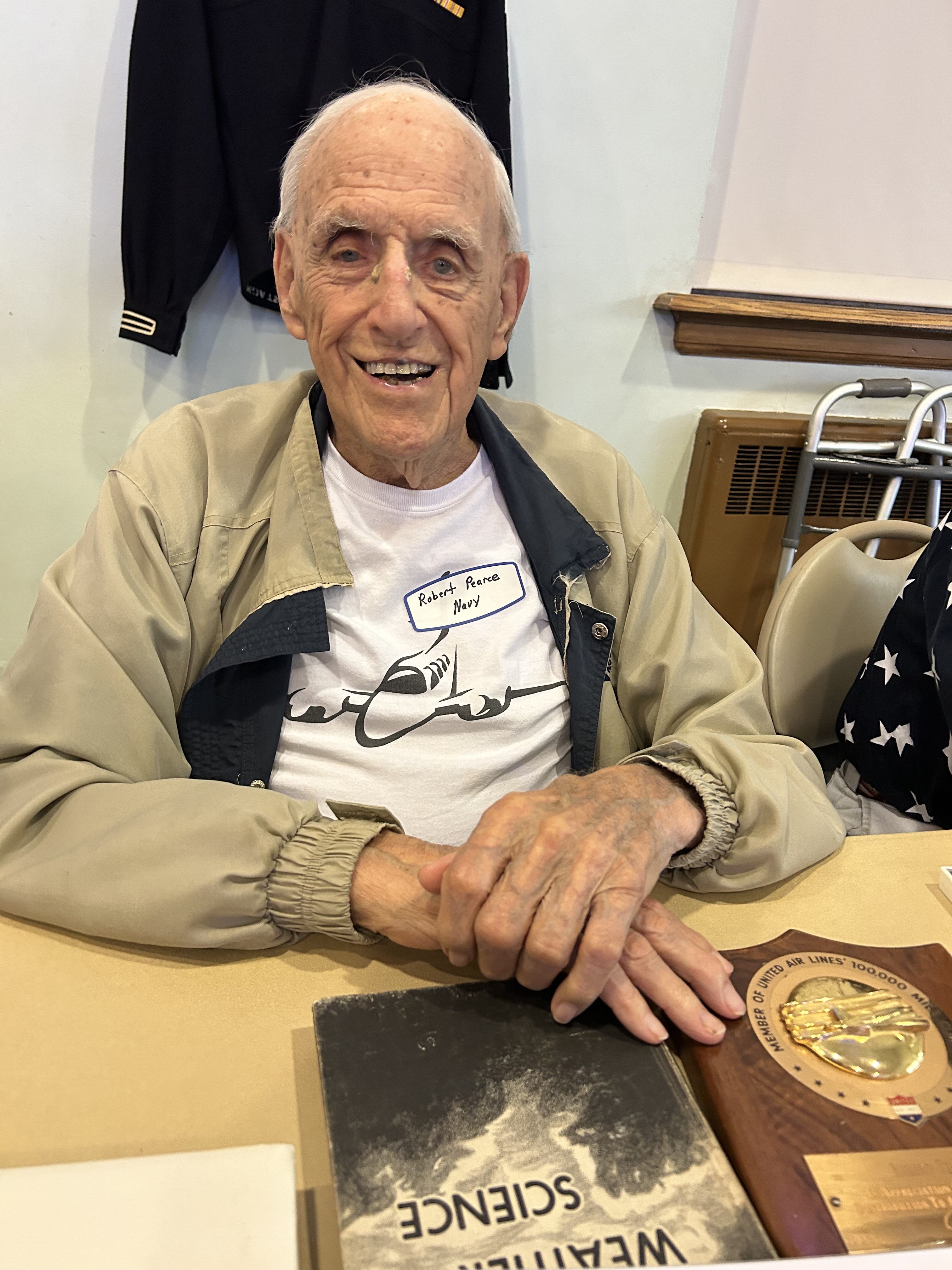
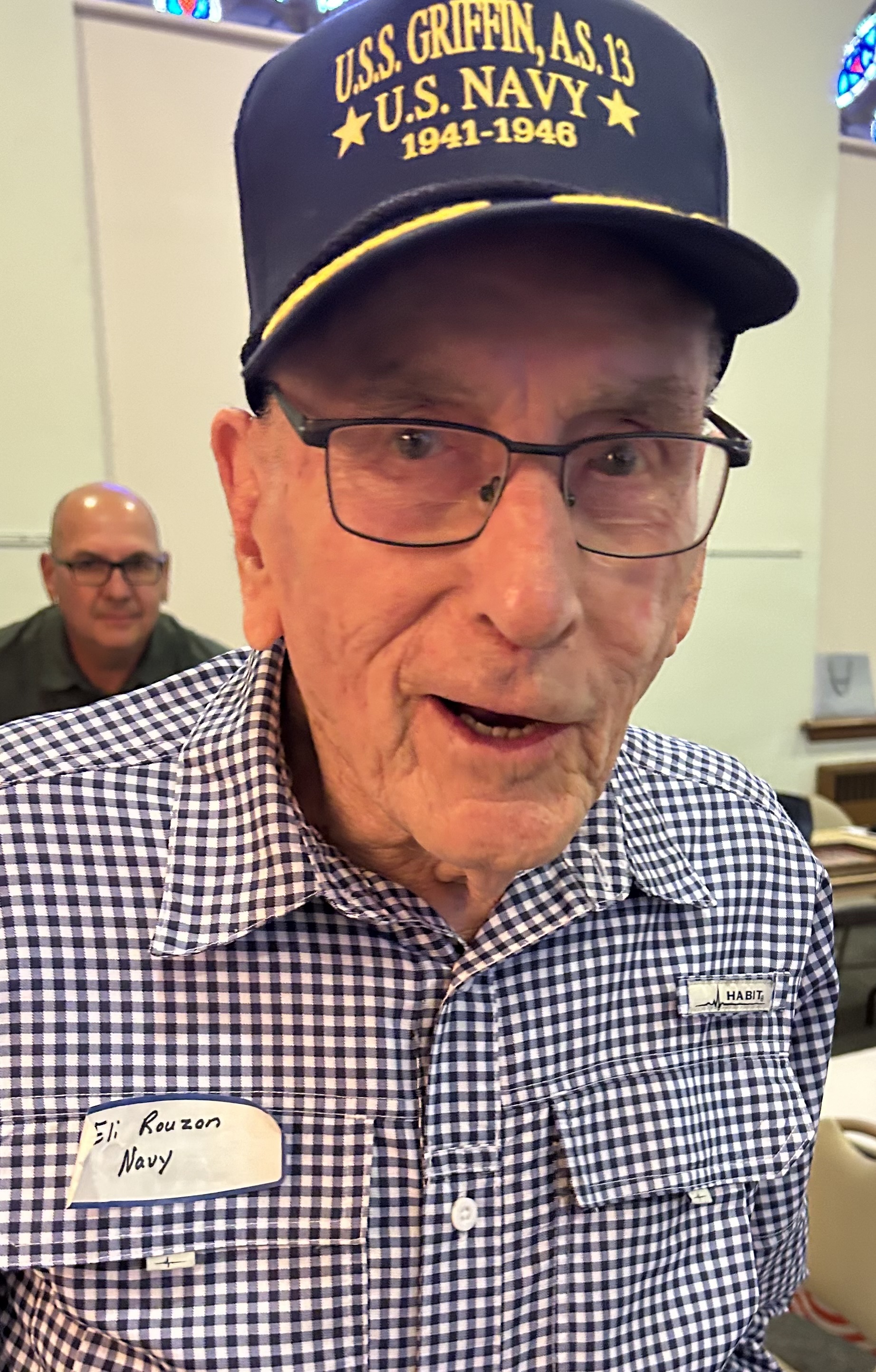
Pennsylvania World War II veterans, standing from left: Harry Bean (Army), Russell Sattazahn (Army), Frank Stellar (Army), Milton Ripple (Navy), Eli Rauzon (Navy) and Jacob Vanino (Army). Seated from left: Edward Conrad (Navy), Stanley Isenberg (Army Air Corps), Joseph Haenn (Army Air Corps), Rubino Degenhart (Army), Dorothy Trate (‘Rosie the Riveter’), William Balabanow (Merchant Marines), James Determan (Army), Edward Czechowski (Navy), and Robert Pearce (Navy).
—
It was a stirring sight. Fourteen World War II veterans and a “Rosie the Riveter,” all around a hundred years old and beyond, including one gentleman of 108, were gathered last Friday at a church hall in Emmaus, Pennsylvania. The event marked the 80th anniversary of V-J Day, August 15, 1945, which celebrated the end of fighting against Japan.
Besides newspaper and TV coverage, dozens of people had come to meet and talk with these last survivors of the Greatest Generation. Only about 66,000 of the 16 million Americans who served in the war are still living. About 3,900 are Pennsylvanians.
My friend Meta Binder of Lehigh Valley Chapter 55 of the Battle of the Bulge Association had organized this salute at St. John’s Lutheran Church. The group’s president, another good friend, Steve Savage, had flown up from his new home in Florida to be there. Most of the honored guests had been gathered by 21-year-old Albright College student Tyler Boland, who has interviewed hundreds of World War II veterans so their stories will live on.
The vets were entertained with songs and dancing from the 1940s. A 10-year-old boy, James Papalia, who has written several books about a kid’s journey through time to World War II battles, read from his work.
I didn’t manage to speak with all of the vets. Here are the ones with whom I had that honor:
Haenn
Joseph Haenn of Telford, Montgomery County, at 108 is the oldest World War II veteran in Pennsylvania. An assistant crew chief in the Army Air Corps, he worked on B-24 Liberators with the 8th Air Force’s 467th Bomb Group in England.
Determan
James Determan, 102, of Lititz, Lancaster County, served with the Americal Division’s 182nd Infantry Regiment at Leyte Gulf and Cebu in the Philippines. He carried a Browning automatic rifle and was awarded a Bronze Star.
Czechowski
Edward Czechowski, 100, from Reading, was a gunner on the destroyer USS Saufley in the Pacific, including Iwo Jima, Guam, Leyte Gulf and Okinawa. He received a Silver Star for blowing apart a kamikaze as the Japanese plane was about to hit his ship.
Sattazahn
Russell Sattazahn, 99, from Schaefferstown, Lebanon County, served with the 1st Infantry Division. In March 1945, he was severely wounded in Germany. He received two Bronze Stars and a Purple Heart.
Trate
Dorothy Trate, 103, from Narvon, Lancaster County, was a punch press operator at the Doehler-Jarvis plant in Pottstown, which built parts for warplanes.
Bean
Harry Bean, 99, from Norristown, was a bazooka operator with the 351st Infantry Regiment, 88th Infantry Division, who fought the Germans in Italy.
Pearce
Robert Pearce, 102, of Lower Macungie, Lehigh County, was a Navy weatherman with Fleet Air Wing 10 on Palawan in the Philippines. He went “typhoon hunting” in PB4Y-2 Privateers to gather weather data.
Rauzon
Eli Rauzon, 102, of Upper Macungie was a Navy electrical repairman on the submarine tender USS Griffin and worked on subs in Australia. He went on to serve in the Air Force during the Korean War and as a contractor for the Defense Department.
It was clear these and the other vets enjoyed getting the attention they richly deserve. As Meta Binder put it for The Morning Call of Allentown, “It is extremely important for their legacy to be preserved. … Let us never forget their sacrifices.”
“Thought you might enjoy a peaceful story of the war,” Dr. Jack E. Cole of Bethlehem, Pennsylvania, wrote to me in 1999. “It is true and unpublished.”
Here’s the former Army doctor’s account of his visit to Northern Ireland during World War II:
OFFICIAL LEAVE
Dr. Jack E. Cole was from Matamoras in northeastern Pennsylvania. He graduated from Penn State in 1937 and earned a degree in medicine from the University of Pennsylvania in 1941. (The Morning Call)
She reached for the pack of gum which I had extended to her. I watched in amazement as she unwrapped each stick and stuffed it into her mouth. Since it was my week’s supply, it was a minor tragedy, but I had had the pleasure of being awed.
We had boarded the train in Enniskillen, bound for Belfast. It just happened we entered the same compartment, and being the only occupants, struck up a conversation. We soon learned we were both physicians. In her Irish brogue, which she managed around a huge wad of gum, she asked, “What do you do for a baby with a fever? All I know is give an enema.” I pointed out other methods that might be used. I never saw her again after arrival at Belfast, but I still picture her giving enemas while chewing a large wad of gum.
My purpose in Belfast and surrounding territory was to visit my in-laws. The commander of the 13th Infantry Regiment had urged us to use up some of our accumulating leave time. I grasped this opportunity because I did want to meet some of my wife Lynn’s relatives and to explore Ulster.
When the 8th Infantry Division was preparing to depart the USA, those of us of lesser rank had no idea to which part of the world we were headed. Just in case, I asked my Irish-born father-in-law, Bill Darragh, for names and addresses of his relatives and friends in Northern Ireland. Unbelievably, I was plunked down a few kilometers from them.
Belfast was in total blackout, having been bombed by the Luftwaffe. Groping my way from the train station, I found a cab and requested the driver to help me find a bottle of whiskey before going to a hotel. He knew just the place. Going a few blocks, we stopped in utter blackness and he said, “Wait here, I’ll be right back.”
He handed me a bottle of Old Bushmills and asked for 5 pounds ($20.15). After paying, I took a swig and immediately exclaimed, “This is at least half water!”
“Sir, you didn’t expect pure whiskey, now did you?”
Although the whiskey wasn’t pure, the blackness was. I knew I was defeated. “Take me to a hotel.”
The hotel desk clerk was working in candlelight. “And what is this?” I asked as he handed me a black chunk. “That is peat, sir. Burn it in your fireplace. You’ll get a chunk each day you’re here.”
The bus ride to Ballymoney was pleasant. Certainly, Emerald Isle is a fitting name for this lush green bit of land. Ballymoney, a city of about 20,000 and the ancestral home of Lynn, wasn’t as pretty as the countryside. When I found the home of her Uncle Jim, it was far from affluent. In fact, it was downright humble.
Jim Jr. met me outside the house. He was courteous but wary. I’m sure there were many eyes peeking out windows. Here was I, resplendent in an Army officer’s uniform, captain’s bars flashing in the sunlight, visiting a peasant area. It wouldn’t be safe for them to invite me into their home, not knowing whether I was Catholic of Protestant, and I looked so majestic.
Jim directed me to the general store and home of Mr. Crumbie, a close friend of Bill Darragh’s. … He gladly invited me into his home behind the store. He and Mrs. Crumbie treated me to tea, crumpets and scones. Conversation was warm, with many questions about Bill and his family.
Departing their home through the store, Mr. Crumbie said, “Now wait. I have a present for your Mrs. Darragh. Not Bill’s Mrs. Darragh, but yours.” He evidently had forgotten my name. He pulled out a pile of handkerchiefs, all labeled Pure Irish Linen. As he went through the pile, he picked out certain ones, saying, “That’s linen.” I was polite enough not to ask what the others were made of.
The bus ride along the east coast of Ulster on the Antrim Coast Road terminating at Portrush was a thrilling experience. The craggy shore churned a constant display of waves crested with white water. The 4,000 residents of Portrush thrived on tourism, and their homes indicated affluence.
Here I visited another friend of Bill’s, a Mr. Kittough. He shrewdly determined my religious affiliation by asking if I was a member of the Craft. When I answered that since I reached my majority, I had not lived in any one place long enough to join the Masonic Order. He was satisfied that I was a suitable house guest.
He had a lovely home and treated me royally. When I refused milk and sugar in my tea, he was distressed that he had no lemon. The German U-boats were sinking many of the Allies’ supply ships, and as a result, lemons, if one could be found, were $5 apiece. I relieved his pain by accepting milk in my tea. After answering the usual questions about my father-in-law and his family, and some discussion on the war, I took my leave and headed for the Giant’s Causeway, a short distance of seven miles.
The Causeway is a spectacular promontory of columnar basalt composed mostly of irregular hexagons, caused by a rapid cooling of lava flows into the sea. It is a must for anyone visiting Ulster.
An elderly gentleman who oversaw the Causeway conducted us — I had picked up another officer as a companion — on a guided tour. Since it was toward the end of winter, he hadn’t seen a tourist for several weeks. His volubility was stunning. He told us many stories, one of which was how an Irishman had written the Star-Spangled Banner.
In the vicinity was one of those shelters scattered throughout the world, set up by service organizations to cater to the needs of American servicemen and women. The lieutenant and I sought hospice there. We were overwhelmingly greeted by a young woman who hadn’t seen a fellow American since autumn. She had undiluted whiskey. We celebrated. We put her to bed before we hit the sack and left a note the next morning thanking her for her exuberant hospitality.
Arriving in Enniskillen, I had to endure the usual post-leave letdown. The Allies had made progress in spite of my week-long absence.
—
Cole was wounded in Europe and received a Purple Heart.
He went on to have a family practice in Bethlehem. In the late 1960s and early ’70s, he was a Peace Corps physician in Afghanistan, Swaziland (now Eswatini) and India. In 1987, he led a United Church of Christ medical team in Honduras. He was an author and poet.
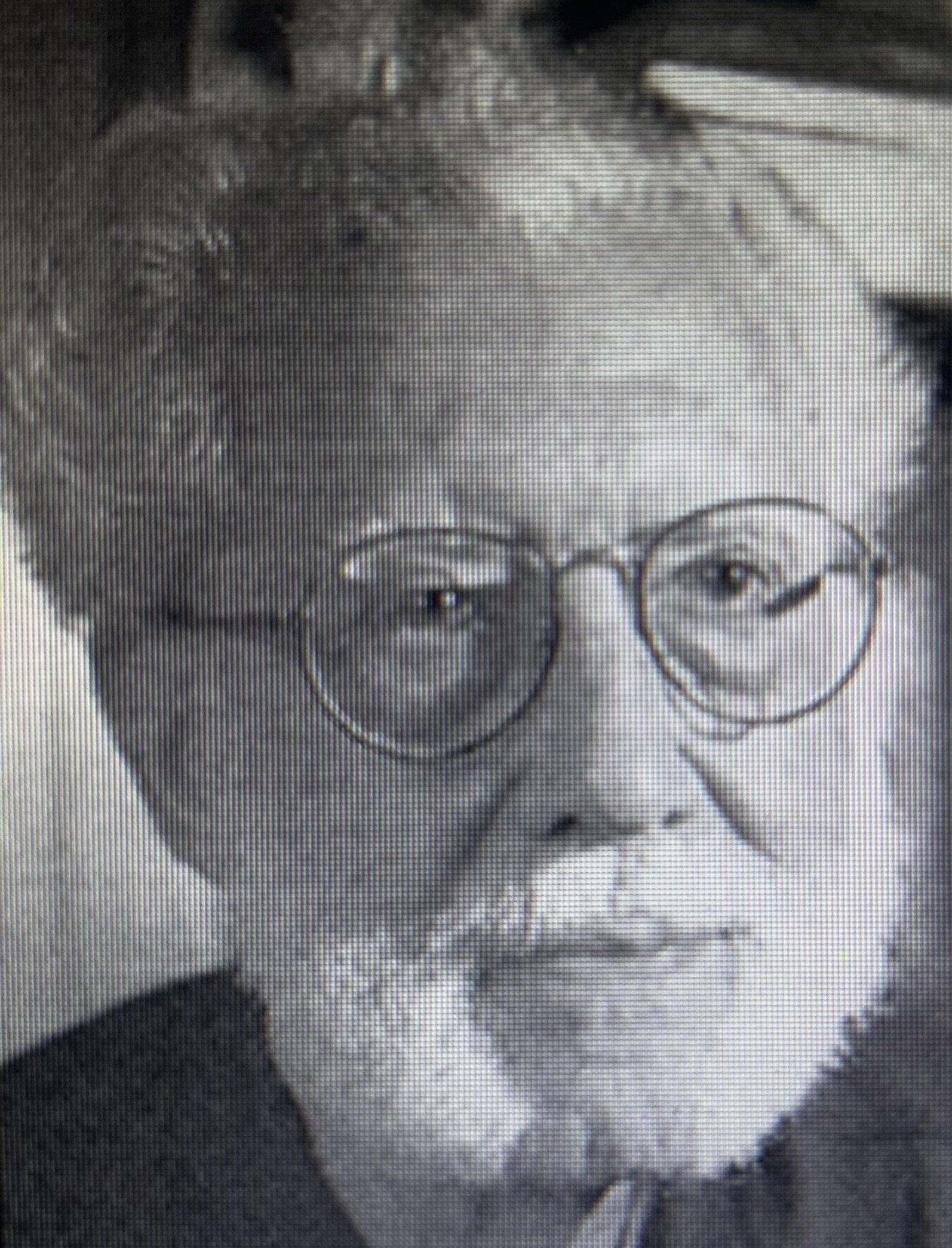
William J. Holmes was born in Carbondale, in northeastern Pennsylvania.
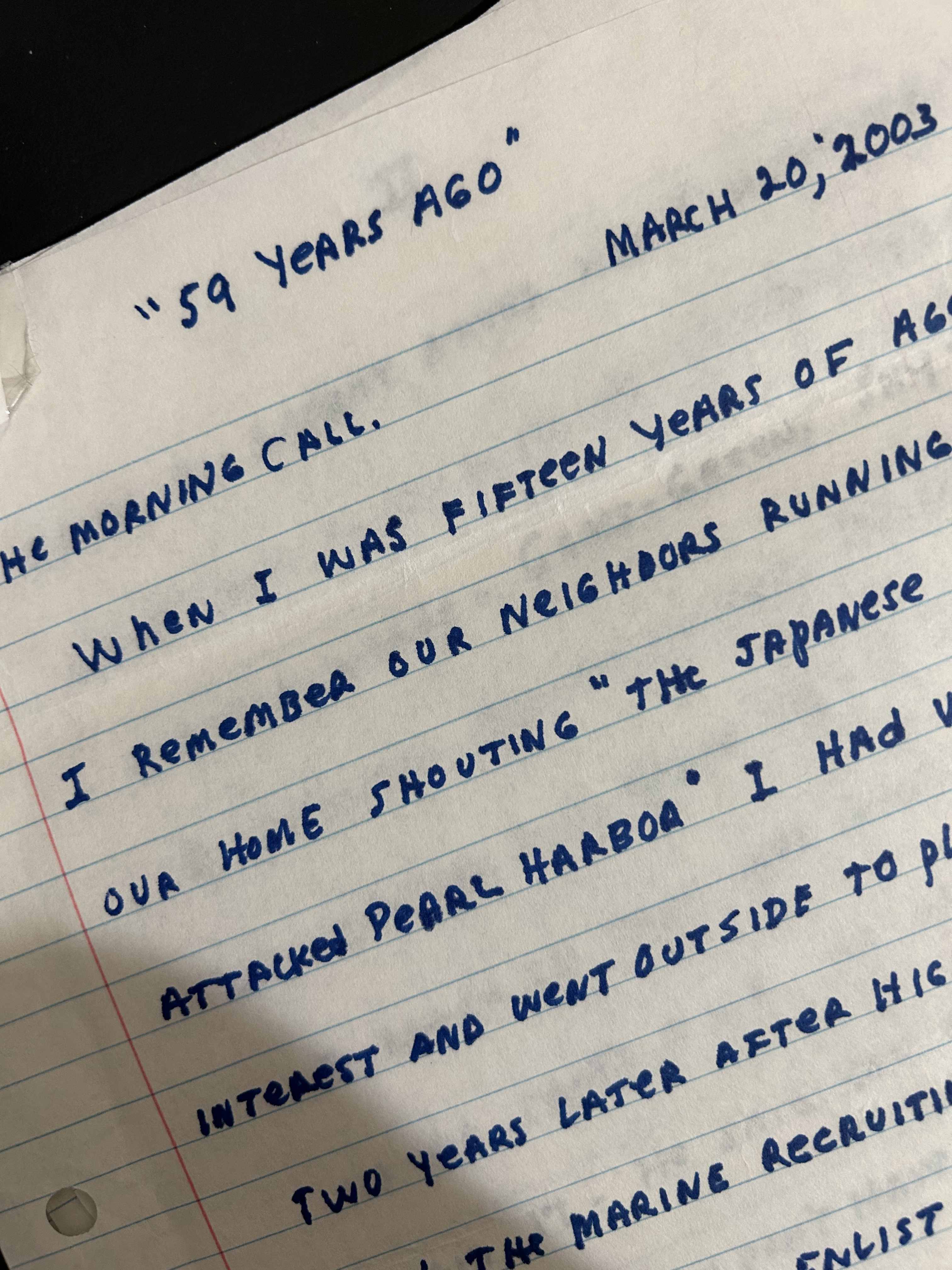
In 2003, William J. Holmes of Mertztown, Pennsylvania, wrote to The Morning Call of Allentown about his World War II service. His hand-printed, six-page letter landed on my desk.Itwasn’t published, and I don’t remember calling him about it.When I retired more than a dozen years later, his letter was among the papers I took home. It turned up yesterday while I was going through my files. Here is what Holmes wrote:
—
When I was 15 years of age, I remember our neighbors running into our home shouting, “The Japanese have attacked Pearl Harbor.” I had very little interest and went outside to play.
Two years later, after high school, I visited the Marine recruiting office in Wilkes-Barre, Pa., to enlist, as my older brother, John, was already in the Pacific since 1941 with the 2nd Marine Division. I passed all the written tests and was asked to repeat after him immediately what came to my mind as he mentioned certain words — grass-green, sky-blue, bird-wing, hammer-board. He stopped after board and asked why I said board.
I asked if that was wrong. He replied, “No, no that’s fine.” He asked my age. I said 17. He said, “You are not 17 1/2? I told him you don’t have to be 17 1/2 to join, just 17. He said for the last month the age was raised, as too many were enlisted in the Marines and this was temporary. In anger, he said: “If you want to join something, join the Navy. They take anybody.” I immediately walked a few blocks to the post office and was surprised that I could join for two years. This was because I would be in a reserve status for two years or duration of the war.
I had boot training at Bainbridge, Md., and was shipped to Treasure Island, Calif., a few week later. We were told that we would be on our way within 72 hours. We all laughed at this, as we were getting ready for meal time at 5 p.m. … Shortly, a Marine officer flew into the barracks and said: “Pack your seabags and be ready to go.” Someone asked about our meal, and he said: “You will eat on the ship.” While going under the Golden Gate Bridge, an officer told us, “The next time you pass under that bridge, you will either cry or be choked up. (He was right.)
Our first stop was Pearl Harbor. We dropped off 200 women Marines. … Next stop Enewitok, then Saipan, Ulithi and then the Philippines. I was attached to a repair-and-supply outfit. … All damaged ships that could make it to our area were repaired. Our ship was a converted Merchant Marine cargo-carrying vessel that held oxygen and blood plasma. These supplies from the States were loaded aboard, and we made periodic runs to Okinawa and back.
When the atom bomb was dropped, and we realized we would shortly get going home, there was a point system for leaving. Who were there the longest, had the most battle stars?
While waiting for my points, a group of American civilians asked if any of us would like to be flown home right away with a 30-day leave and sign up for another year. This was for Bikini A-bomb tests. I do not know to this day why I didn’t sign, although a lot did. I believe to this day that, had I been taken into the Marines instead of the Navy and had signed the Bikini paper, I may not have gotten back.
—
Holmes went on to serve in the Korean War. In civilian life, he worked as a letter carrier, a security guard at Lehigh Valley Hospital and as a police officer in Macungie. When he retired in 1992, he was a security guard for Kraft Foods. He was married with two sons.
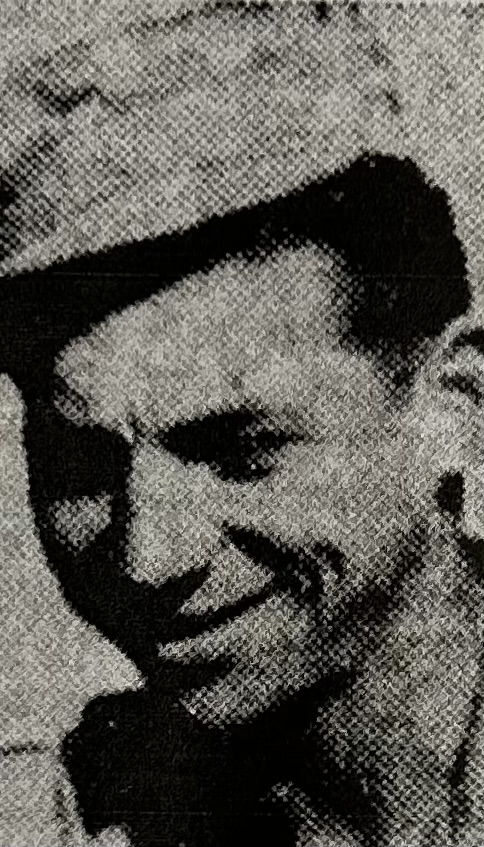
In civilian life, Steve Kleman machined parts for Mack trucks in his hometown of Allentown, Pennsylvania. Transformed into a soldier for World War II, he helped lead a unit of combat engineers onto Omaha Beach early on D-Day, the epic invasion of Nazi-occupied France on June 6, 1944.
“The landings were made under heavy mortar, artillery, and machine gun fire inasmuch as no infantry had preceded the landing of the engineers on Dog Green and part of Dog White beach.”
That’s from the after action report of the 121st Engineer Combat Battalion, 29th Infantry Division.
Staff Sergeant Kleman and the 40 other men of the battalion’s 2nd Platoon, Company B, neared the Normandy beach in an LCM, a landing craft mechanized, about 6 a.m. Each engineer carried satchel charges of TNT, a Bangalore torpedo, a rifle and full field pack. Melvin B. Farrell, who was on the craft, described what happened:
About 200 yards out, our LCM floundered, nosed up on a hidden sandbar and stuck fast. The operator seesawed back and forth, but she wouldn’t give. The machine gun fire rattling off the sides set up such a din of noise you could hardly think. The operator threw the ramp down and yelled, “Hit it!”
I was the third man out. We three wheeled left and jumped off the side of the ramp. Machine gun fire was now raking the inside of the LCM, and a high percentage of our men were killed before they could get out.
Melvin B. Farrell (6juin1944.com)
When the first three of us jumped, we landed in a shell hole, and what with all the luggage, we had plummeted to the bottom like a rock. We walked along the bottom until we climbed out of the hole. It seemed an eternity before we reached the surface. We were then on the barren sand, but there was another stretch of water between us and the beach. This stretch contained a maze of tank traps, mines and every object the Krauts could plant to thwart a landing attempt.
It all seemed unreal, a sort of dreaming while awake, men were screaming and dying all around me. I’ve often wondered if all the men prayed as fervently as I did.
The engineers’ immediate job was to blow up a masonry wall so tanks could get through.
Farrell made his way around tripwires attached to a Tellermine and blew a 20-foot gap in a tangled mess of barbed wire. He reached the wall, threw his satchel charges onto it and crawled to safety just before the explosion. As he and others huddled behind the wall’s wreckage, he looked toward the water where the first wave of infantry was about to land and saw his sergeant, Steve Kleman.
—
Kleman was the third of four children born to immigrants from Austrian Galicia. His parents, Wasyl Kleman and Anna Bujar, were married in 1915 in Allentown. Steve had a sister, Stella, and brothers Walter and Joseph. The family lived in the 6th Ward, between the Jordan Creek and Lehigh River. For much of his life in the city, Wasyl was a sweeper in a Mack Trucks machine shop.
Steve Kleman belonged to Boys Haven, which sought to steer kids away from delinquency, “to teach young people properly in their social hours, thereby acquiring the knowledge of what is the right and safe thing for young boys to do.” A 1944 story in The Morning Call says he attended Allentown High School, but I couldn’t find any mention of him in old school yearbooks.
In 1938, when he was 18, Kleman toiled out west for the Civilian Conservation Corps. At 6 feet and 185 pounds, he was suitably built for the work.
The Army called him in March 1942 while he was a turret lathe operator at Mack. Training followed at Camp Blanding, Florida. He left for England via Camp Kilmer, New Jersey, in the fall of 1943 and wrote to his parents that he arrived on October 12. The buildup for the Normandy invasion was underway. Kleman had seven months to get ready.
His brothers were in the war as well. Joseph was an Army private in Europe and Walter a Navy seaman on the aircraft carrier Ticonderoga in the Pacific. Both would survive.
A landing craft carries U.S. troops to Omaha Beach on June 6, 1944.
At 1 a.m. June 6 aboard a ship in the English Channel, according to Farrell’s account, the engineers were rousted and had breakfast of toast and coffee. A half-hour later, they began boarding the landing craft for transport to the beach. The channel was exceedingly rough.
“Waves would throw the LCM up out of the water, and it would slam down with a bone-breaking jar. Every man jack of us were so seasick we had regurgitated on ourselves and everyone around us by 5 a.m.”
Farrell got safely ashore despite a torrent of German machine gun fire. He and other engineers succeeded in blowing up the masonry wall, about four feet high and four feet thick.
“At this time our initial mission was completed, so we huddled behind the ragged remnants of the wall we had just blown. I turned my gaze toward the coming infantry and saw my sergeant, Steve Kleman, not 40 yards from me. He was sitting down, had been hit through both hips. I tried four times to get out to him to drag him in. Each time I left cover, a hail of machine gun fire would drive me back. By this time he had been hit so many times, it was hopeless.”
The battalion’s after action report notes: “It is estimated that 50% of this initial force were casualties, and 75% of the equipment was lost.”
—
July 26, 1944, story in The Morning Call of Allentown (Newspapers.com)
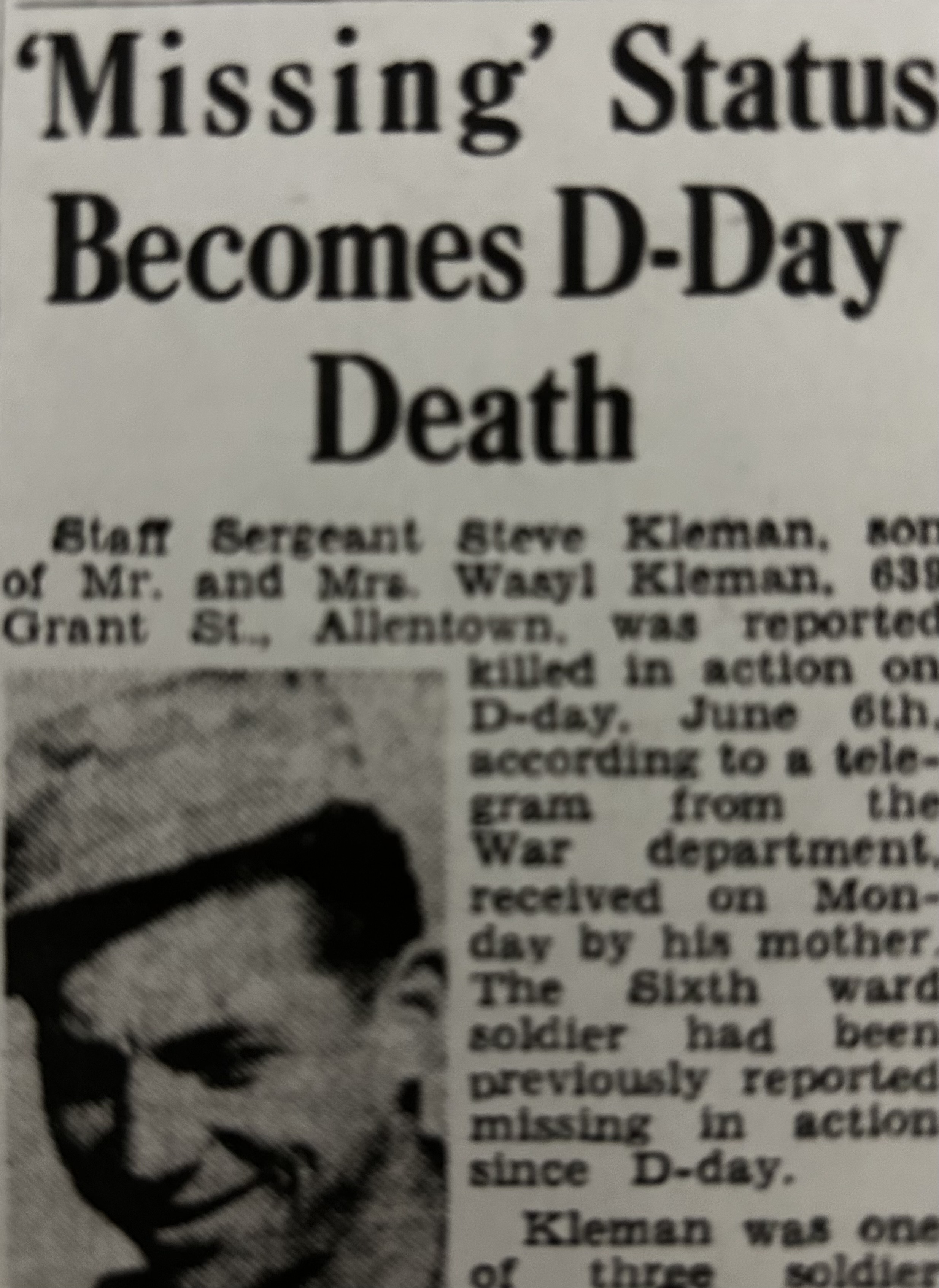
Within two weeks, Kleman’s parents got a telegram from the War Department saying he had been missing in action since D-Day. A follow-up telegram near the end of July reported he was killed June 6. His parents received their 24-year-old son’s last letter four days after his death.
St. Mary’s Ukrainian Orthodox Church, where his family worshiped and his father helped lead a war bonds drive, held a memorial Mass for Kleman on July 30.
In 1948, his remains were brought home. Military honors greeted him at a service led by Veterans of Foreign Wars Post 13 of Greater Allentown, and another Mass was said for him at St. Mary’s. He now lies in the parish cemetery.
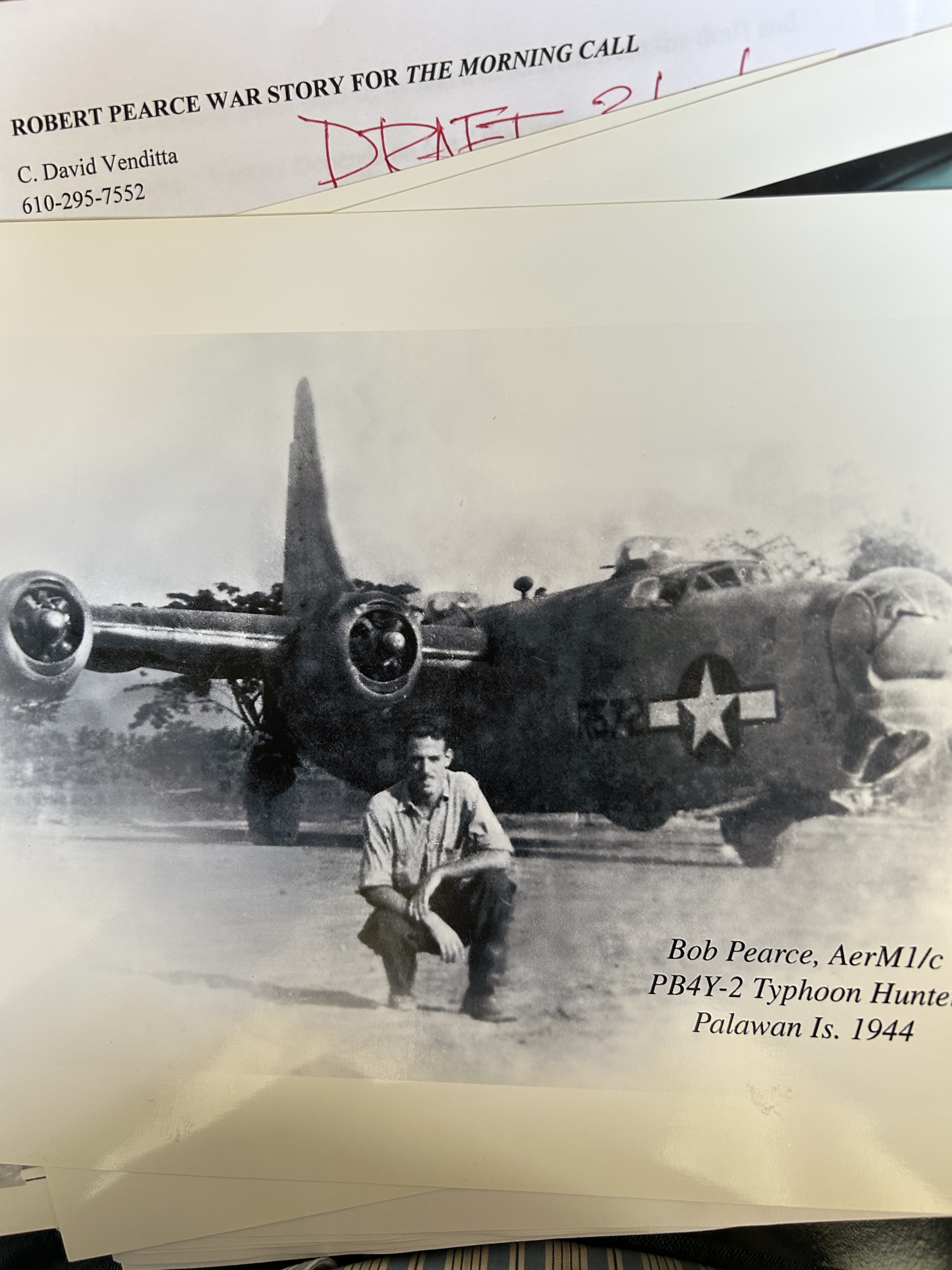
Robert Pearce, a Navy aerographer’s mate first class, in front of a PB4Y-2 Privateer used for ‘typhoon hunting’ in the Pacific, 1945. Pearce went on some of those missions.
Over the last few weeks, I’ve been interviewing a 102-year-old World War II veteran about his experiences as a Navy weatherman in the Philippines.
Robert Pearce grew up in Philadelphia and has lived in Lehigh County since the war. He is a former pilot and an organist who worked nearly five decades for Allen Organ Company. I had material that helped me put together his story — a memoir he wrote for his grandchildren a dozen years ago and a video of a talk he gave in 2023 for the Lehigh Valley Veterans History Project, which I attended.
My two-part “in their own words” war story is running in The Morning Call of Allentown. Part 1 appeared online March 19, and Part 2 the next day. It’s running in print this week.
I want to share with you an anecdote Pearce told me that isn’t in the story. It’s gruesome but reflects the reality of life on Palawan, which until early 1945 was occupied by the Japanese. The island is etched in World War II history as the place where, on December 14, 1944, Japanese troops executed 139 American POWs. It happened near the town of Puerto Princesa, where the enemy had an airfield.
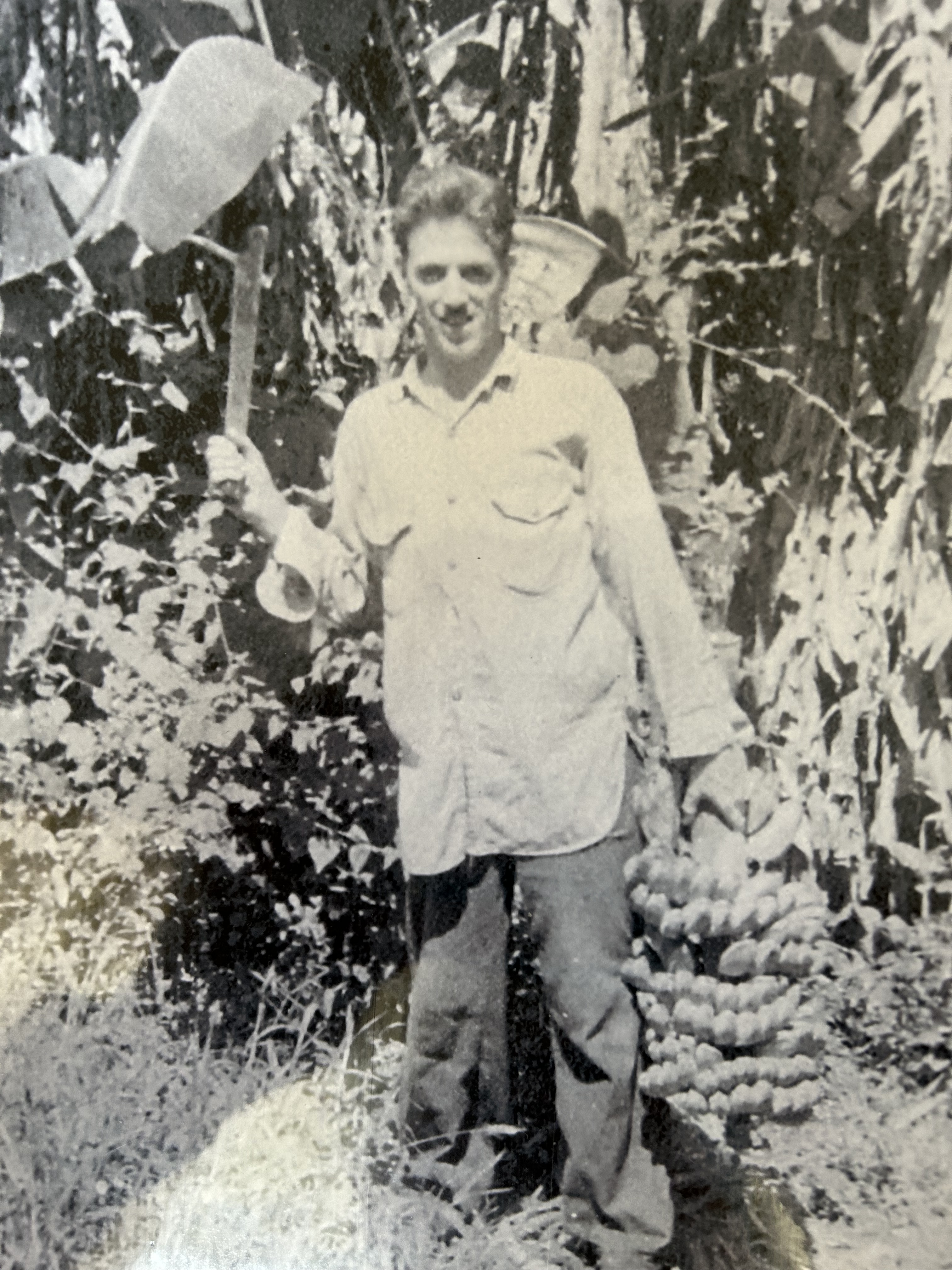
Pearce with a bolo knife and batch of bananas on Palawan
U.S. planes bombed the town for four months. Then at the end of February 1945, part of the Army’s 41st Infantry Division landed there and captured the airfield. The Puerto Princesa strip was rebuilt and used by the 13th Air Force Fighter Command until war’s end.
Pearce’s Navy unit, Fleet Air Wing 10, arrived in mid-April. It was tasked with conducting patrol plane operations against shipping in the South China Sea and along the Indochina coast. An aerographer’s mate first class, Pearce ran a weather office of six enlisted men. Their officer was Art Lund, a leading singer with the Benny Goodman Orchestra. Pearce and Lund would fly out to ships at sea, where Lund would entertain the men as Pearce accompanied him on the organ.
Pearce remembered episodes of horror at Puerto Princesa — fatal plane crashes on the airfield and, far more disturbing, Filipino revenge on the Japanese.
Pearce, 102, at his home in Lower Macungie Township on February 28, 2025
“The natives were primitive,” Pearce said. “They loved us because we were helping to ferret out the hated Japanese soldiers who were hiding out on the north side. Their thing was to capture one, chop his head off and proudly carry it by the hair through our camp. This time it was in front of the chapel while I was talking to the chaplain and some others. The chaplain shouted, “I want every man down on his knees!” He did not address the Filipino, and let him pass.
“Hatred of the Japanese was fueled by the fact that when they had the island, rape and killing were common.”
—
A search of Pearce’s name on Newspapers.com turned up a gem.
Pearce was a 19-year-old Navy trainee at Bainbridge, Maryland, at the end of 1942. He wrote a song that was performed by the boot camp’s stage band. He wasn’t married but wrote the lyrics as if he were a husband and father.
I’d love to be at home for Christmas, But it’s my duty to be here. When the snow is drifting on your window, I’ll be thinking of you, dear.
I’d love to see our kids at Christmas, Watch them tripping down the stair, See them picking up each toy I sent them, I can just picture them there.
I don’t like to talk about the war. It seems that’s all one ever hears. We all know what we’re fighting for: A home that’s safe through the years.
I’d love to be at home for Christmas At the end of ’43. But my darling you must not expect us Till we march home in victory.
In the first days of 1943, the Associated Press reported on a flurry of songs being written by sailors at Bainbridge Naval Training Center. It ran in newspapers across the country. “Embryo tars write songs at Bainbridge” was the headline in the Anderson Herald of Indiana. The subhead was: “Musicians are affected by the newness of mushroom camp on Susquehanna.”
Of Pearce, AP writer James E. Hague wrote:
“The Bainbridge charm worked even more quickly on Robert Pearce, ex-organist from Philadelphia. A week after his arrival, he wrote words and music — while on cleaning detail — for the top song of the Bainbridge ‘Hit Parade’ — ‘I’d Love to Be Home for Christmas.’
“If sailors could whistle while they work, its easy-to-whistle melody would be chirped by half the sailors at the station. And its popularity shows no signs of flagging.”
Pearce didn’t know about the story until I showed him the clip. He was delighted.
















 David Venditta