
One of the most controversial episodes of the Vietnam War was the reported mutiny of U.S. troops in the summer of 1969. It involved soldiers from the Americal Division’s 196th Light Infantry Brigade.

(Courtesy of Fred Sanders)
Over the last dozen years, I’ve had contact with several GIs who had direct knowledge of the incident — battalion commander Bobby Bacon, trooper James Dieli and artillery officer Alan Freeman — and wrote blogs about what they told me.
Now I have another, Fred Sanders. He was a medic with Alpha Company, 3rd Battalion, 21st Infantry Regiment – the unit involved.
“There were five guys. It was a very unfortunate thing that was not a mutiny,” said Sanders, who is 78 and lives in South Carolina. He told me that in media interviews at the time, “I gave them a good report so they wouldn’t say that the men did anything that was less than honorable.”
The trouble started when the battalion commander, Lieutenant Colonel Eli Howard, sent the company to the Americal base at Chu Lai for a stand-down. The men got into a brawl with another unit.
“Colonel Howard blamed the entire company. He said if they want to fight, I’m going to put them out there and let them fight.”
Alpha Company got orders to clear North Vietnamese Army troops from bunkers and trenches in the Song Chang Valley, about thirty miles south of Da Nang. The troops had deadly encounters with the enemy, who were at the base of a ridge.
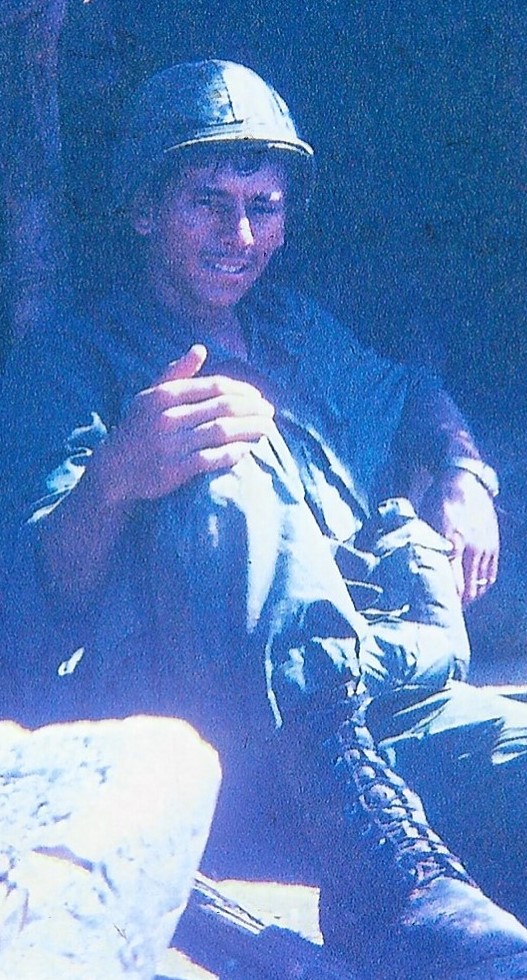
“We lost about half of our men killed in action or wounded,” said Sanders, who was in the 1st Platoon.
At one point, arrangements were made to evacuate a freelance photographer, Ollie Noonan, who was with them. A helicopter carrying Howard and others arrived August 19 to take him aboard and bring him to LZ Center, site of the battalion command bunker.
“I was the last person who spoke with Ollie before he got on Howard’s helicopter,” Sanders said. “He said, ‘Doc, take it easy. Be careful.’ I said, ‘Ollie, we’re in a very bad place here.’
“Ollie slapped me on the back and ran out to get on the helicopter. I went to the edge of the clearing and made hand signs repeatedly to Colonel Howard and the chopper crew not to try to fly over the knoll ahead, but to return the way they came in. I stood watching Howard with his arm over the pilot’s shoulder, pointing toward the knoll and repeatedly gesturing.
“I knew if he went that direction, he was going to get shot down. There was a .50-caliber gun somewhere on that hill that he would be flying directly over. Howard wanted to go that way because there was small-arms fire in the opposite direction. The small-arms fire was a better risk than going over the .50-caliber position.”
The chopper was shot down over the hill and crashed in a ball of fire, killing Noonan, Howard and the six others aboard.
“That was a very tragic moment,” Sanders said.
Three days later, Alpha Company got orders to make what Sanders calls “a very bad move” – walk the ridge line and go downhill toward the NVA position.
As they moved down the hill, they unwittingly approached an enemy spider hole. Someone in the hole opened fire. A friend of Sanders’ from Oklahoma, Sergeant Derwin Pitts, was hit. He lay helpless and groaning.
“I was 5-6 feet from him, trying to figure how I could pull him back. He was in an exposed position. I knew if I crawled there, they’d kill me also.”
Sanders knew he couldn’t leave Pitts there. Just then, Private First Class Ray Barker came up and said, ‘Doc, you’re not going to do it,’ and crawled past Sanders. Immediately he, too, was shot. Both he and Pitts were dead.
A man off to Sanders’ right was shot and suffered a sucking chest wound. Sanders tended to him. He and two others knelt beside the man and prayed for him as they waited for a medevac.
They were in a small clearing on the ridge line. The helicopter came and took the wounded man, rising straight up. Sanders turned and tripped over a fallen tree. “Where’d that come from?”
One of the men with him answered, “Doc, didn’t you see that?” A rocket-propelled grenade had been fired at the helicopter as they were loading the man onto it. The RPG missed and felled the tree, which landed just a few feet away.
By August 25, after five days of fighting, the company was down to half of the 95 troopers who had come to the valley, Vietnam War writer Keith William Nolan wrote in his 1987 book Death Valley. Eight men had been killed.
The new battalion commander ordered Lieutenant Eugene Shurtz Jr. to lead his men down into the valley to recover their dead, including the bodies from the helicopter crash. Shurtz was new to the unit.
“I am sorry, sir, but my men refused to go – we cannot move out,” Shurtz radioed Lieutenant Colonel Bobby Bacon at the battalion command post, according to a dispatch filed by Peter Arnett and Horst Faas of The Associated Press.
“Repeat that, please,” Bacon said. “Have you told them what it means to disobey orders under fire?”
“I think they understand,” the lieutenant replied, “but some of them simply had enough – they are broken. There are boys here who have only 90 days left in Vietnam. They want to come home in one piece.”
Bacon told Shurtz to leave the unwilling men on the hill and “move to the objective.” He then ordered his executive officer and a sergeant to fly in and give the men “a pep talk and a kick in the butt.”
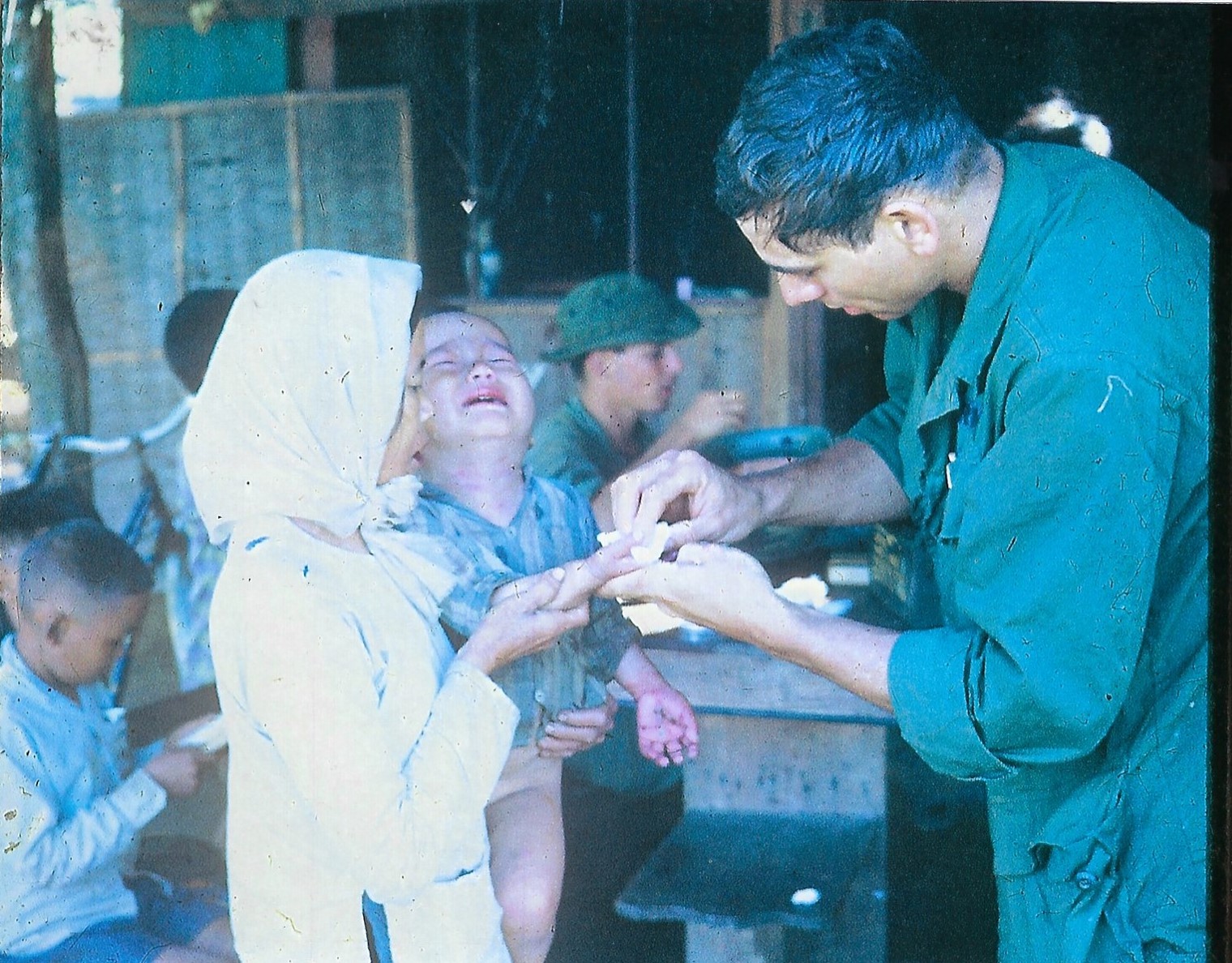
Sanders remembered that five GIs balked at walking down to the foot of the ridge.
“I walked around and talked to the fellas. They were very distressed and run-down. I told them: I’m with you. I’m your medic.”
He said they were afraid they’d be sitting ducks for the North Vietnamese. It seemed like suicide. But none of them said they weren’t going to go, according to Sanders. No one wanted to be court-martialed. They just didn’t want to do something stupid and get themselves killed.
“They were bargaining for time to see if they could negotiate going another way, a different maneuver.”
When Sergeant Okey Blankenship arrived from battalion headquarters, “The guys were saying: I hope you don’t think we don’t want to go. We just don’t want to be killed for no sensible reason.”
Blankenship told them, “You’re soldiers. You’ve got to do what you’ve got to do. Brace up and carry on.”
When the sergeant finished his talk, everyone was quiet, Sanders said. The men started packing up their gear, getting ready to move out. As it turned out, the NVA were no longer at the base of the ridge. They had withdrawn from the area.
Faas and Arnett’s report landed atop Page 1 of the next day’s New York Times under the headline, “Told to move again on 6th deadly day, Company A refuses.”
Sanders said he was interviewed by the Times, Newsweek, Time magazine and CBS. “I would not say anything to discredit the unit,” he told me. “I was aware that news outfits can slant the news.”
 David Venditta