Tag Archives: navy

On the Home Front, for those on the Fighting Fronts

In 1944, The Berwyn Post was in its second year of publication.

It is a Page 1 roll call of 1944 casualties.

Army Air Corps Sergeant Maurice Houston, 30, son of a First World War officer, was killed in action August 12 in Indonesia. Private John McKelvey, 24, married with a toddler son, was killed on Saipan. Private First Class Edwin Benner, 19, was killed February 16 on the Anzio beachhead.

Marine Private First Class James Newman was wounded July 21 on Guam. Army Private First Class James D’Innocenzo, 22, was wounded July 26 in France. Army Corporal Angelo DiMarino of Devon, whose family and mine had a connection broken by a terrible accident, was slightly wounded in France on August 3 while in a convoy strafed by German planes.

Those casualties appear in the September 1944 issue of The Berwyn Post, a monthly tabloid published on Philadelphia’s Main Line “by Berwyn men and women on the Home Front for the Berwyn men and women on the Fighting Fronts.” The masthead notes the paper went to all graduates and students of Tredyffrin-Easttown High School in the service, by arrangement with the Paoli-Berwyn-Malvern Rotary Club. If you were in the military and a Berwyn resident or T-E grad, your subscription was free. Others in the service and civilians got the paper for a small price.

My dad graduated from Tredyffrin-Easttown in 1944 and went on to join the Coast Guard. But I’m not sure that’s how I happen to have this slightly torn eight-page issue of The Post. Still, when I found it in my file cabinet a few weeks ago, I couldn’t put it down. You can see how popular it must have been. Main Line servicemen and women all over the world were getting news from home about people they knew. They saw photos of hometown buildings and street scenes. They could read about the high school’s sports teams. They could turn to The Chaplain’s Corner for inspiration from the likes of Methodist minister Henry F. Hamer Jr., who wrote that “faith is the most precious of our possessions” and gave advice on how to keep it. On the front page, they learned what was most compelling: Who among them would not return?

The inside pages are full of chatty columns. A Mailbag takes up more than two full pages. In one typical letter, Army Corporal Norman L. Duncan writes from France: “Seems kind of tough to be in a country where most of the people are trying to be friendly and you can’t ever hold a conversation with them due to not being able to speak or understand their language. However, we are kept too busy to have any time to mingle with them. Let me tell you this sleeping in a ‘foxhole’ isn’t at all what it’s cracked up to be, especially if it is pouring rain. Food was rough for a while but is getting better every day and I don’t imagine it is going to be too tough.”

The paper printed excerpts from a letter James Newman, the Marine wounded on Guam, wrote to his mom: “[W]e descended from the transports via cargo nets into the Higgins boats and shoved off for the beach. We were the guests at this party and the host gave us a warm welcome — in fact, as hot as Hades.

“We hit the beach with mortars popping all around us, and I don’t know how we managed to dodge them and start our individual jobs. I was up with the infantry for about a week and I saw plenty of the sights that I’ve heard so much about since this war started. The infantry — honest to goodness — is the best there is, they are real artists when it comes to exterminating Japs. I saw them knock out three Nip tanks in one day and it is amazing how they all work together, calm, collected and with precision adjustment.”

This item on Larry B. Mercer ran on Page 2 of the September 1944 issue of The Berwyn Post. In the Navy, an ARM2 is an aviation radioman second class.

Navy flyer Larry B. Mercer of Berwyn got a Commendation Ribbon for “meritorious and efficient performance of duty as air gunner of a dive bomber in an attack on enemy shipping in Rabaul Harbor, New Britain Island, on Nov. 11, 1943.”

The Post ran a picture of him and the complete text of his citation. Part of it states “Mercer, by maintaining a heavy and accurate fire from his gun against large numbers of enemy fighter planes, assisted materially in repelling their assault against the bomber formations.” The four-paragraph story adds Mercer was awarded a Purple Heart for wounds suffered at Tarawa and that he was now in California awaiting his next assignment.

The Post masthead lists its editors as the Rev. Elbert Ross, William W. Eadie, Charles T. Smith, Theodore Lamborn Jr. and Joseph Kelly. In bringing the war home, and home to those in the war, they served their community well.

Angelo DiMarino, the wounded Army corporal I mentioned above, was an older brother of John DiMarino, who was engaged to my aunt Josephine Venditta of Malvern. John was killed in a B-24 training accident on April 5, 1944. I wrote about him in my December 2, 2021, blog “How a WWII bomber crash in Colorado hit home.”

A V-J Day event brings World War II vets together

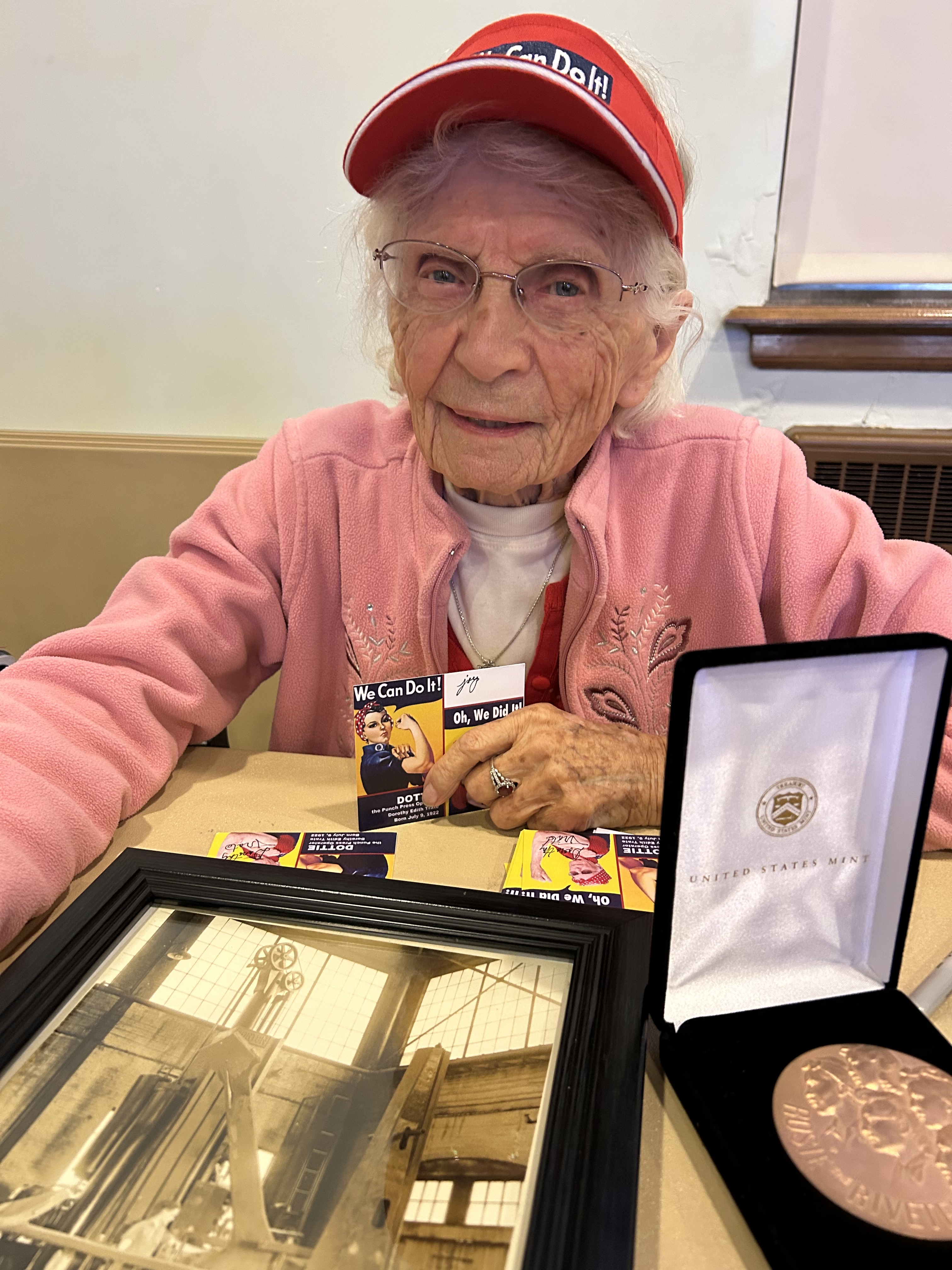
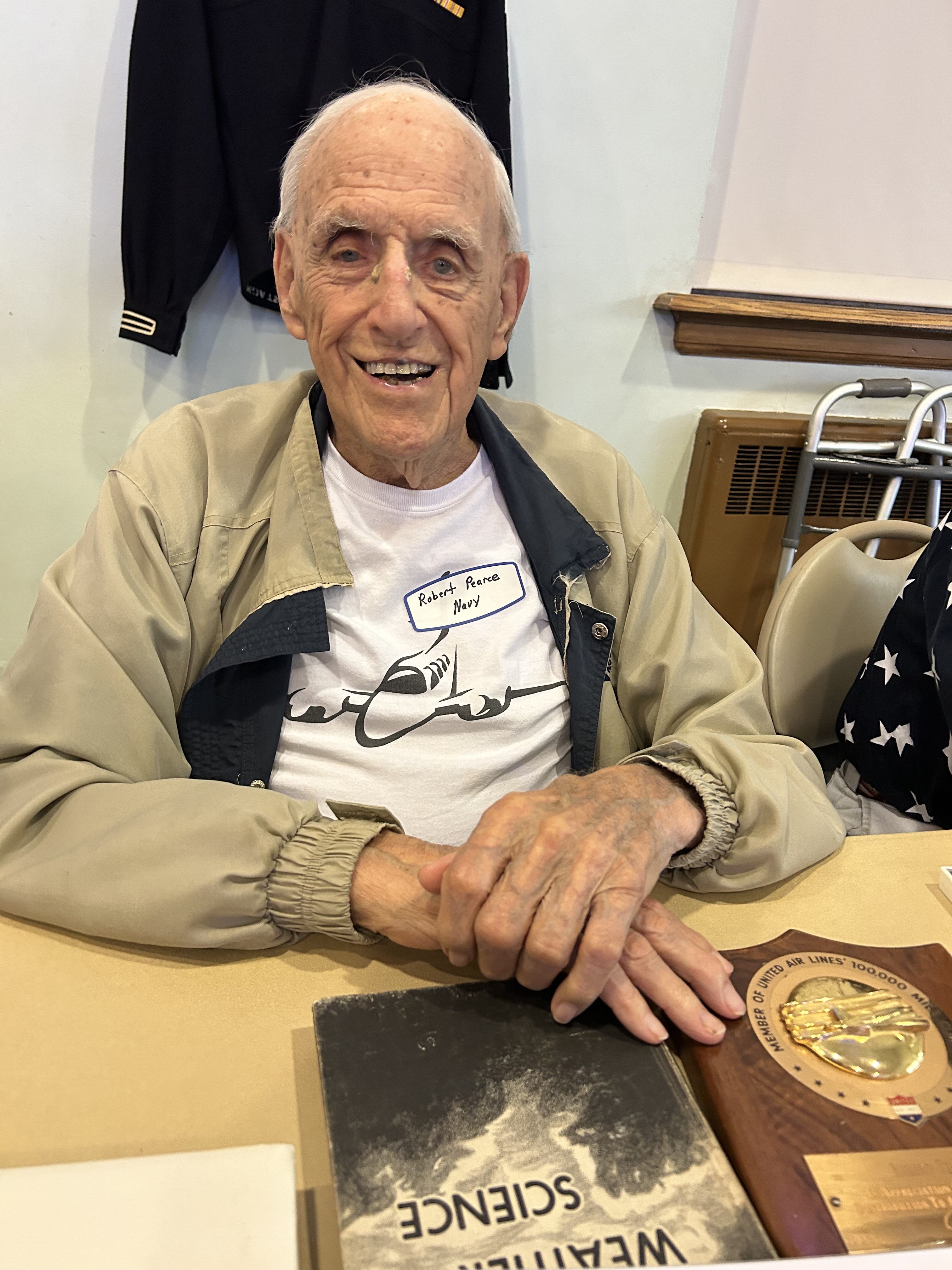
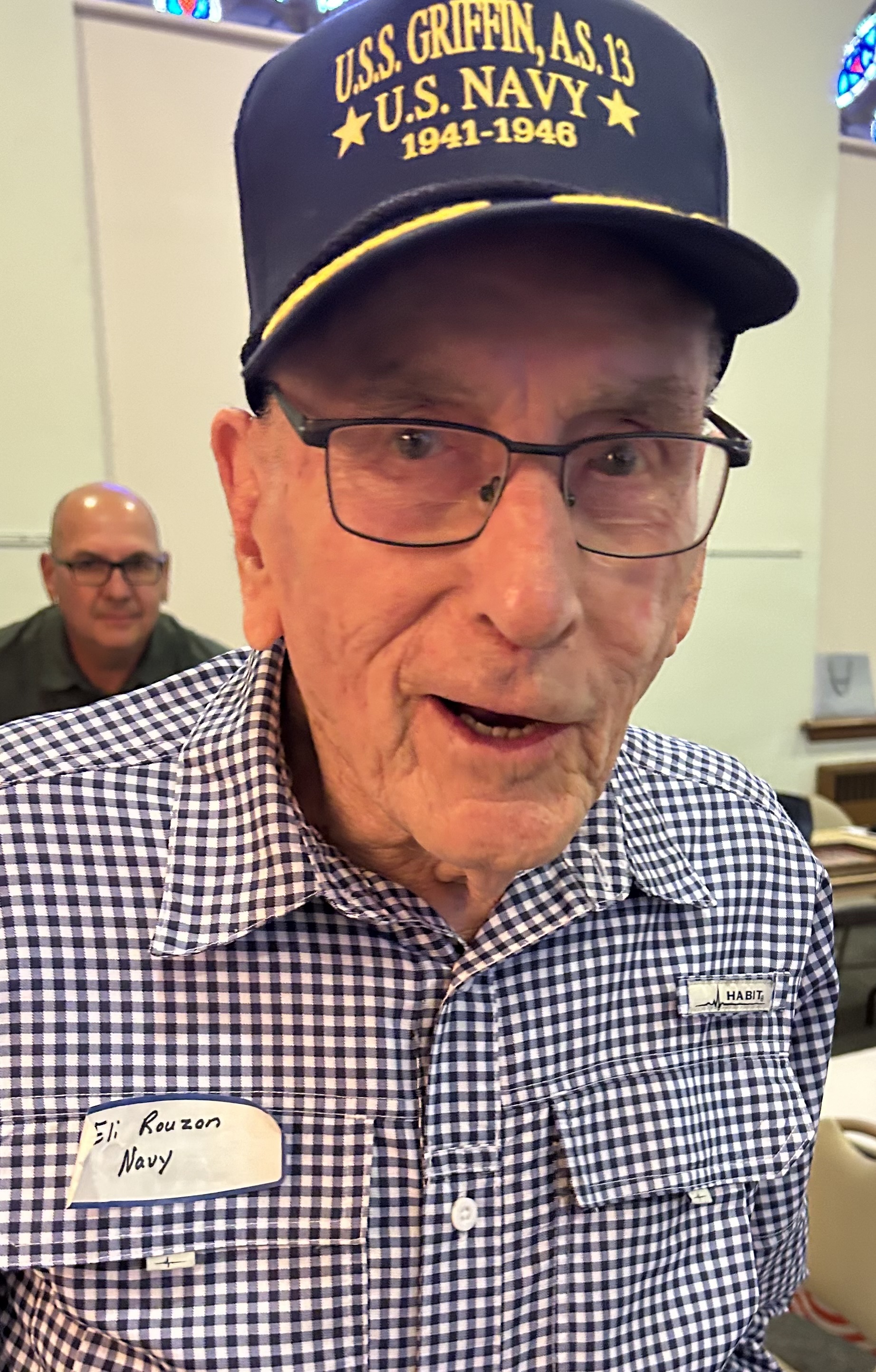
Pennsylvania World War II veterans, standing from left: Harry Bean (Army), Russell Sattazahn (Army), Frank Stellar (Army), Milton Ripple (Navy), Eli Rauzon (Navy) and Jacob Vanino (Army). Seated from left: Edward Conrad (Navy), Stanley Isenberg (Army Air Corps), Joseph Haenn (Army Air Corps), Rubino Degenhart (Army), Dorothy Trate (‘Rosie the Riveter’), William Balabanow (Merchant Marines), James Determan (Army), Edward Czechowski (Navy), and Robert Pearce (Navy).

It was a stirring sight. Fourteen World War II veterans and a “Rosie the Riveter,” all around a hundred years old and beyond, including one gentleman of 108, were gathered last Friday at a church hall in Emmaus, Pennsylvania. The event marked the 80th anniversary of V-J Day, August 15, 1945, which celebrated the end of fighting against Japan.

Besides newspaper and TV coverage, dozens of people had come to meet and talk with these last survivors of the Greatest Generation. Only about 66,000 of the 16 million Americans who served in the war are still living. About 3,900 are Pennsylvanians.

My friend Meta Binder of Lehigh Valley Chapter 55 of the Battle of the Bulge Association had organized this salute at St. John’s Lutheran Church. The group’s president, another good friend, Steve Savage, had flown up from his new home in Florida to be there. Most of the honored guests had been gathered by 21-year-old Albright College student Tyler Boland, who has interviewed hundreds of World War II veterans so their stories will live on.

The vets were entertained with songs and dancing from the 1940s. A 10-year-old boy, James Papalia, who has written several books about a kid’s journey through time to World War II battles, read from his work.

I didn’t manage to speak with all of the vets. Here are the ones with whom I had that honor:

Haenn

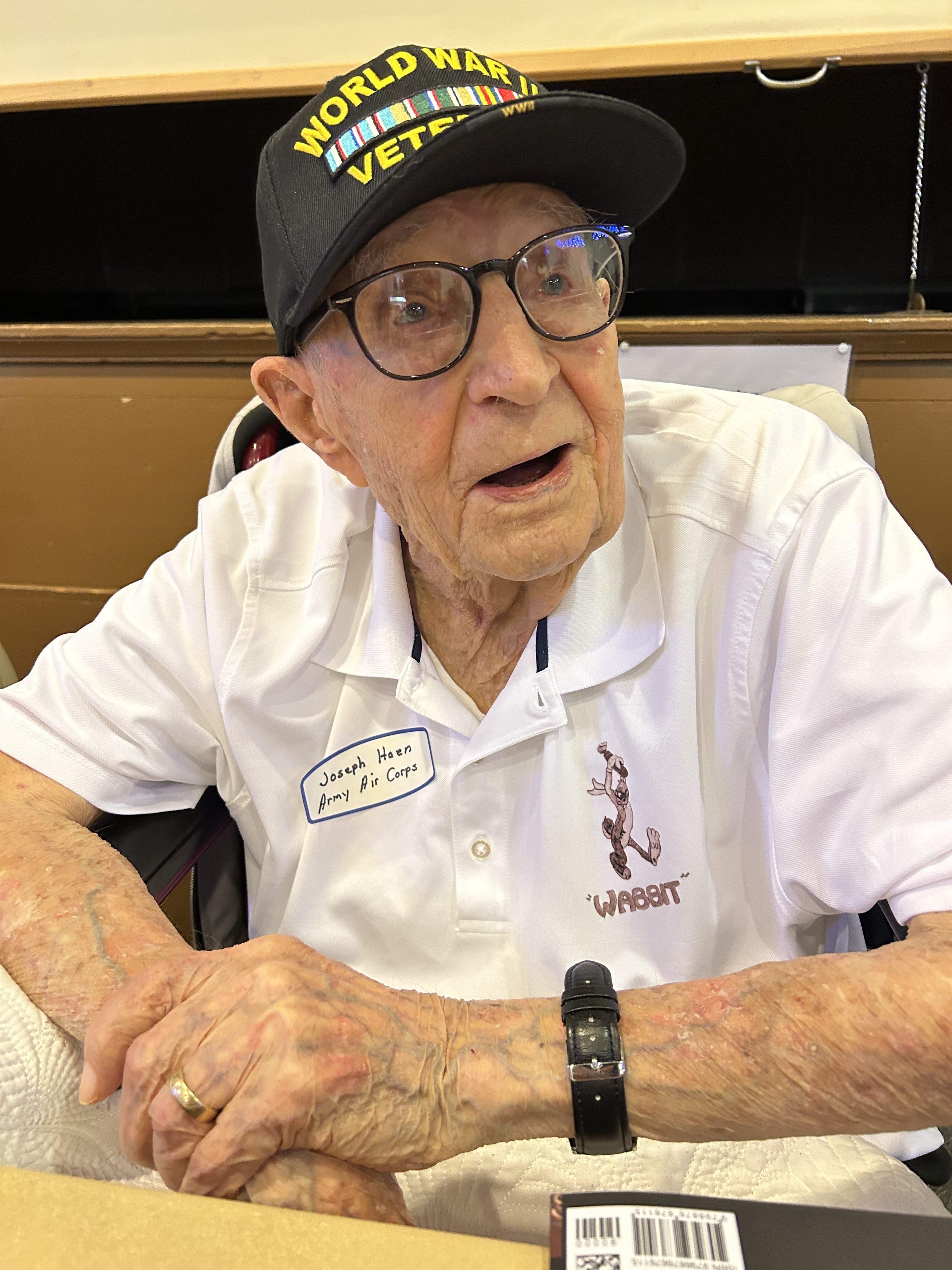
Joseph Haenn of Telford, Montgomery County, at 108 is the oldest World War II veteran in Pennsylvania. An assistant crew chief in the Army Air Corps, he worked on B-24 Liberators with the 8th Air Force’s 467th Bomb Group in England.

Determan

James Determan, 102, of Lititz, Lancaster County, served with the Americal Division’s 182nd Infantry Regiment at Leyte Gulf and Cebu in the Philippines. He carried a Browning automatic rifle and was awarded a Bronze Star.

Czechowski

Edward Czechowski, 100, from Reading, was a gunner on the destroyer USS Saufley in the Pacific, including Iwo Jima, Guam, Leyte Gulf and Okinawa. He received a Silver Star for blowing apart a kamikaze as the Japanese plane was about to hit his ship.

Sattazahn

Russell Sattazahn, 99, from Schaefferstown, Lebanon County, served with the 1st Infantry Division. In March 1945, he was severely wounded in Germany. He received two Bronze Stars and a Purple Heart.

Trate

Dorothy Trate, 103, from Narvon, Lancaster County, was a punch press operator at the Doehler-Jarvis plant in Pottstown, which built parts for warplanes.

Bean

Harry Bean, 99, from Norristown, was a bazooka operator with the 351st Infantry Regiment, 88th Infantry Division, who fought the Germans in Italy.

Pearce

Robert Pearce, 102, of Lower Macungie, Lehigh County, was a Navy weatherman with Fleet Air Wing 10 on Palawan in the Philippines. He went “typhoon hunting” in PB4Y-2 Privateers to gather weather data.

Rauzon

Eli Rauzon, 102, of Upper Macungie was a Navy electrical repairman on the submarine tender USS Griffin and worked on subs in Australia. He went on to serve in the Air Force during the Korean War and as a contractor for the Defense Department.

It was clear these and the other vets enjoyed getting the attention they richly deserve. As Meta Binder put it for The Morning Call of Allentown, “It is extremely important for their legacy to be preserved. … Let us never forget their sacrifices.”

WWII sailor: ‘Had I been taken into the Marines …’

William J. Holmes was born in Carbondale, in northeastern Pennsylvania.

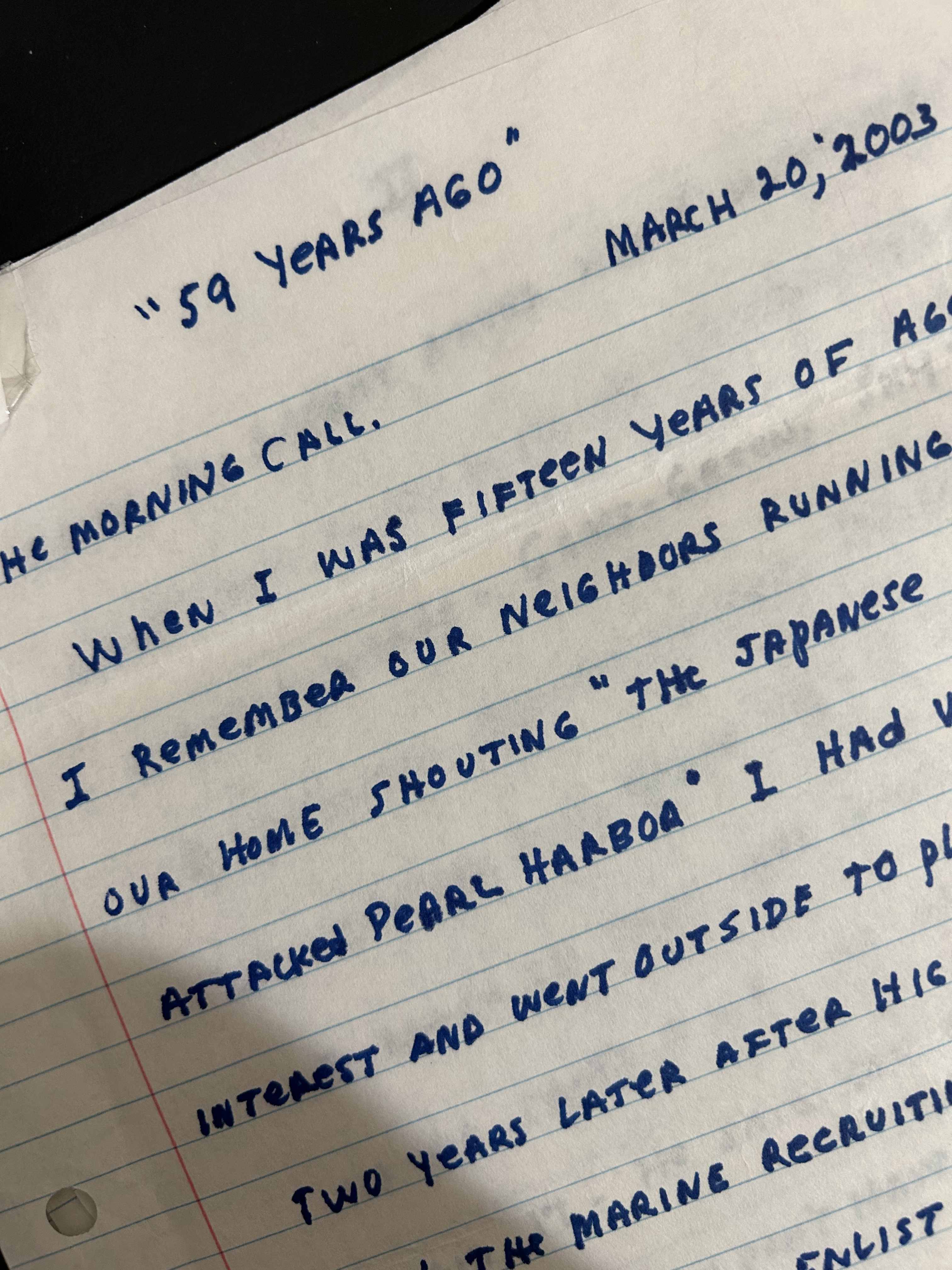
In 2003, William J. Holmes of Mertztown, Pennsylvania, wrote to The Morning Call of Allentown about his World War II service. His hand-printed, six-page letter landed on my desk. It wasn’t published, and I don’t remember calling him about it. When I retired more than a dozen years later, his letter was among the papers I took home. It turned up yesterday while I was going through my files. Here is what Holmes wrote:

When I was 15 years of age, I remember our neighbors running into our home shouting, “The Japanese have attacked Pearl Harbor.” I had very little interest and went outside to play.

Two years later, after high school, I visited the Marine recruiting office in Wilkes-Barre, Pa., to enlist, as my older brother, John, was already in the Pacific since 1941 with the 2nd Marine Division. I passed all the written tests and was asked to repeat after him immediately what came to my mind as he mentioned certain words — grass-green, sky-blue, bird-wing, hammer-board. He stopped after board and asked why I said board.

I asked if that was wrong. He replied, “No, no that’s fine.” He asked my age. I said 17. He said, “You are not 17 1/2? I told him you don’t have to be 17 1/2 to join, just 17. He said for the last month the age was raised, as too many were enlisted in the Marines and this was temporary. In anger, he said: “If you want to join something, join the Navy. They take anybody.” I immediately walked a few blocks to the post office and was surprised that I could join for two years. This was because I would be in a reserve status for two years or duration of the war.

I had boot training at Bainbridge, Md., and was shipped to Treasure Island, Calif., a few week later. We were told that we would be on our way within 72 hours. We all laughed at this, as we were getting ready for meal time at 5 p.m. … Shortly, a Marine officer flew into the barracks and said: “Pack your seabags and be ready to go.” Someone asked about our meal, and he said: “You will eat on the ship.” While going under the Golden Gate Bridge, an officer told us, “The next time you pass under that bridge, you will either cry or be choked up. (He was right.)

Our first stop was Pearl Harbor. We dropped off 200 women Marines. … Next stop Enewitok, then Saipan, Ulithi and then the Philippines. I was attached to a repair-and-supply outfit. … All damaged ships that could make it to our area were repaired. Our ship was a converted Merchant Marine cargo-carrying vessel that held oxygen and blood plasma. These supplies from the States were loaded aboard, and we made periodic runs to Okinawa and back.

When the atom bomb was dropped, and we realized we would shortly get going home, there was a point system for leaving. Who were there the longest, had the most battle stars?

While waiting for my points, a group of American civilians asked if any of us would like to be flown home right away with a 30-day leave and sign up for another year. This was for Bikini A-bomb tests. I do not know to this day why I didn’t sign, although a lot did. I believe to this day that, had I been taken into the Marines instead of the Navy and had signed the Bikini paper, I may not have gotten back.

Holmes went on to serve in the Korean War. In civilian life, he worked as a letter carrier, a security guard at Lehigh Valley Hospital and as a police officer in Macungie. When he retired in 1992, he was a security guard for Kraft Foods. He was married with two sons.

He died last April at age 97.

‘We were full of piss and vinegar, and no brains’

Mathias Francis Gutman: 1925-2024

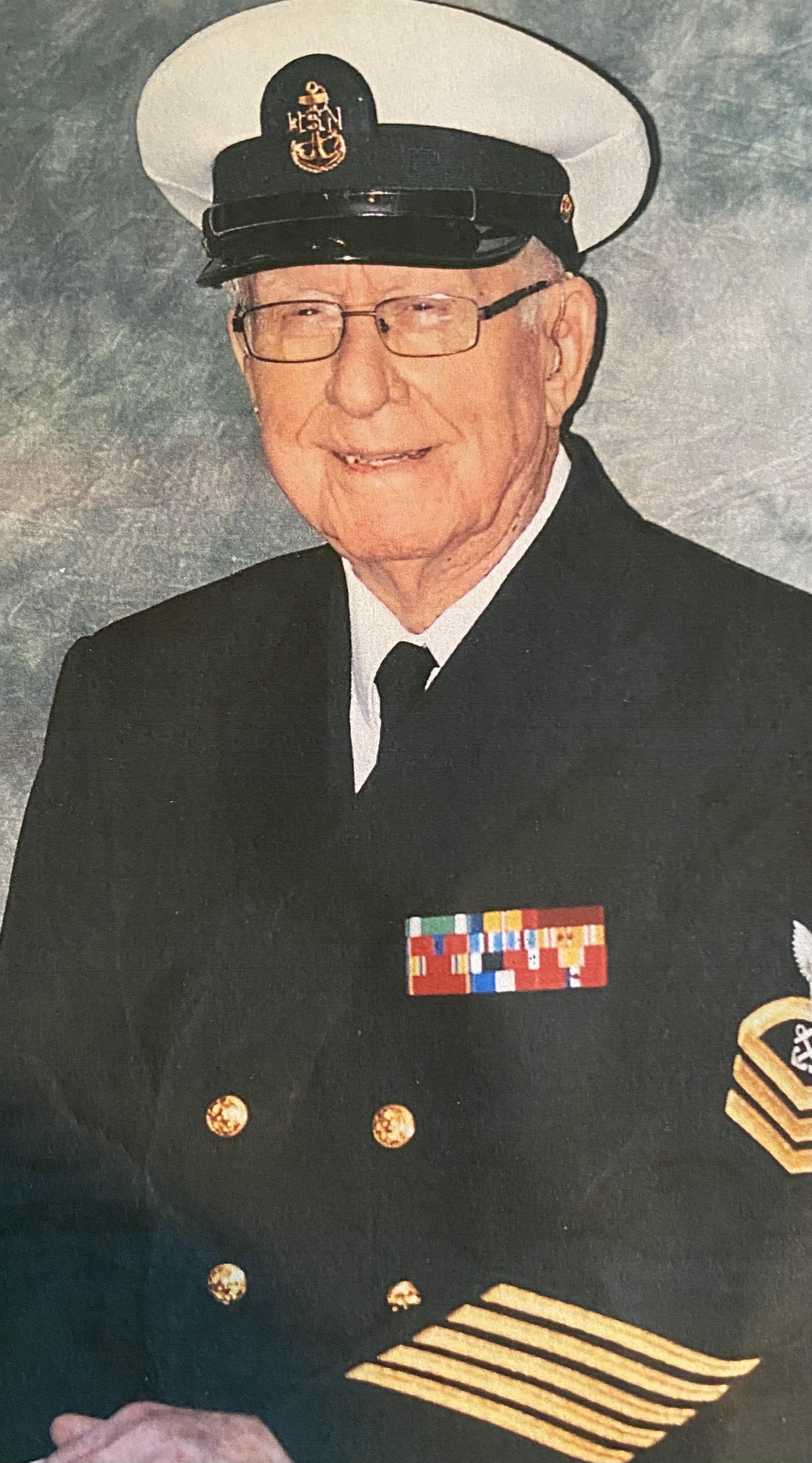
World War II veteran Matt Gutman died last Thursday, November 7, at his apartment in Allentown, Pennsylvania. He was 99. I wrote a story about his passing for my old employer, The Morning Call. For you, I’m sharing a partial transcript of my August 18, 2022, interview with him. Here, he tells about joining the Navy in 1943 and heading for the fight against Japan.

I didn’t want to be trapped in the Army or Marines.

When I was in junior high school, my brother who was in the Navy gave me one of these sea caps, and I used to wear it to school. I sort of liked the Navy because, first of all, I wanted to have good, warm chow and a bunk to sleep in, not a mud hole. … And that’s why I chose the Navy.

I enlisted at the Navy recruiting station in Allentown. … I wanted to go into the Seabees originally, [so] I talked to the chief Seabee, and he says, “What’s your occupation? What did you do?” I said, “No, I just come out of high school. I had basic electric.” He said, “Look, son, go next door. Talk to the Navy recruiter. We can’t be teaching you. We want people that are already trained.” So then I went next door to the chief of the Navy, and he enlisted me.

Then I went to Sampson, New York, for seven weeks of basic training. There was 106 of us. We trained together, marched together, ate together, everything together as a unit, and then, of course, graduated and then were given a seven-day leave to go and visit our parents, our friends. After seven days, we had to report back to Sampson for fleet assignment.

Gutman left Allentown High School in 1943 to sign up, and served in the Naval Amphibious Forces.

They sent me with a group of others by train down to Camp Bradford, Virginia, for amphibious training. First of all, I didn’t know what it would entail. … I knew it was land and sea. This was something new. When we got down there, they showed us all the different types of ships they used for invading an island, went over every one of them. They also told us about what to expect on those ships, and they told us these ships were made only to invade an island. That’s why they called them amphibious. They carried troops and tanks to invade an island.

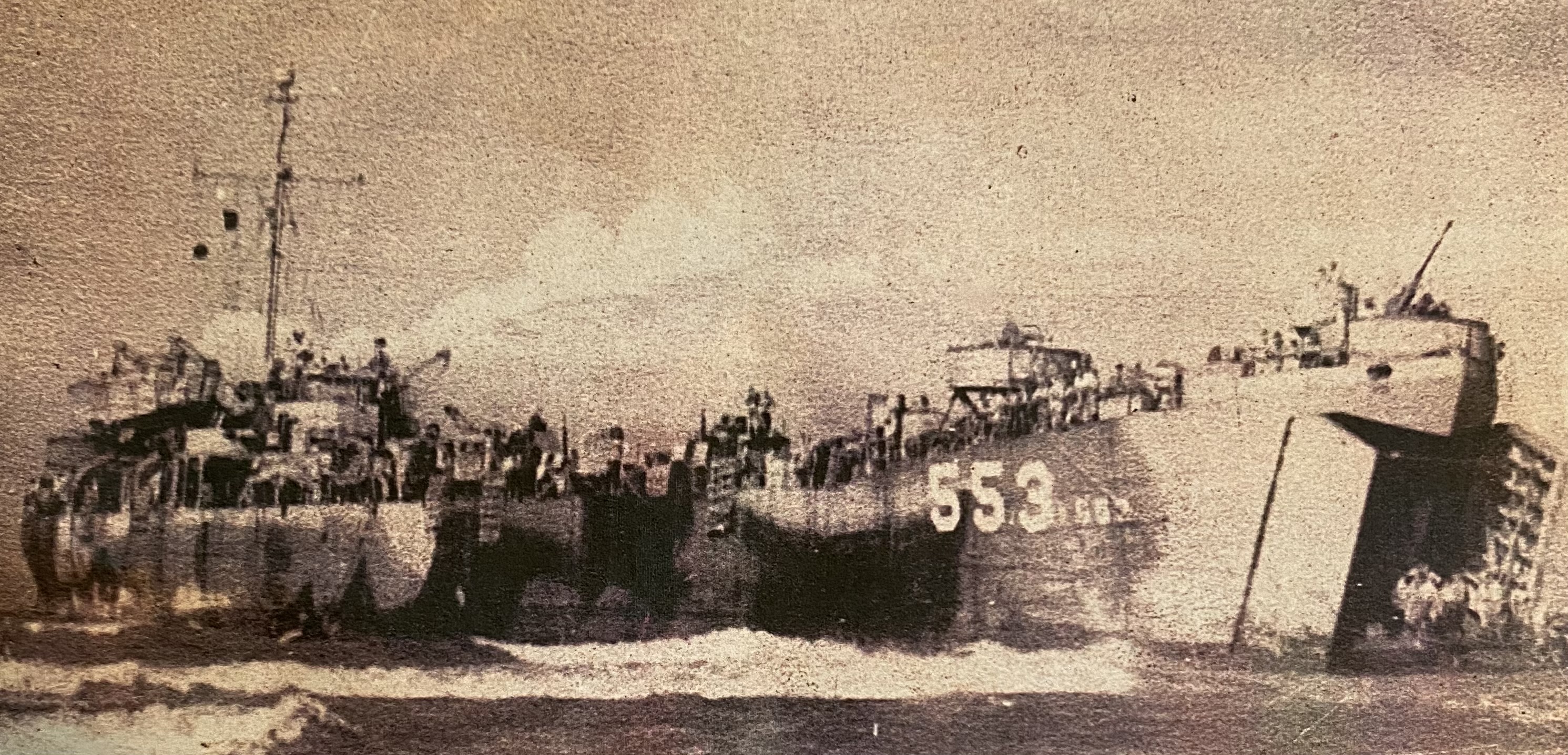
That was the main purpose of the ship that I was assigned on. It was called a landing ship, tank, an LST, and they were all numbered. They never had no names. Mine was 553. I was with it all through the war. It was camouflaged brown and green. You know why? Because when we boarded that ship in Evansville, Indiana, where it was built, we seen that ship was all in tropical colors. Tropical! We knew right then and there that ship was going to be assigned to the Pacific Theater, not European, because once that ship beaches, it blends with the foliage on that island.

They taught me how to operate the Higgins boat, and I was in charge of the Higgins boat on our ship when we made the landings. I was a seaman first class then. I don’t know why I was picked, but they came and asked me if I’d like to do that, and I said, “Why not? I’m in the Navy, I’ll do what I can.” And I operated that landing craft all through my landings in the Pacific. …

Gutman’s LST, a landing ship, tank

After they trained me, I went to San Pedro [in Los Angeles] and Hawaii, I used that boat a lot to take people to shore, back and forth. So I was trained all along with it, you know what I mean? It only had one propeller. You had to watch the wind and currents. Well anyway, they trained me pretty well.

We only had two Higgins boats on our ship, one to starboard and one on the port side. I had the one on the port side. [As coxswain] I was in the stern. I always had to watch where I was going. These Marines and Army men we had in there, they’re all hunkered down. I had to see where I’m going, you know. I had to stand because I wanted to see where I was going, because the bow doors were up pretty high. It had a diesel engine, very noisy, and it always smelled awful. But we were young guys, we could take it. We were all young, full of piss and vinegar, and no brains.

Getting smooched by The Magnolia Sadies, a vintage dance troupe, on May 8 at a V-E Day picnic honoring World War II veterans in Macungie Memorial Park

They shipped a crew of us to Evansville, Indiana, where we picked up our ship. It was built there, right alongside the Ohio River. We boarded that ship in April 1944. The skipper took her down the Ohio River, the Mississippi River to New Orleans. That’s when the ship was commissioned. We stayed in New Orleans for four days, taking on supplies – water, fuel. Then we headed back down the Mississippi to the Gulf of Mexico.

While in the gulf, the skipper put the ship through what is called a shakedown cruise. A shakedown cruise consists of testing all the components of that ship – the navigation equipment, all the guns were working properly, checking out the fire system we had, the fire hoses, check everything to see that that ship was ready for combat. From there we went to Panama City, Florida, where they taught us how to distinguish all types of shipboard fires we might encounter in combat. We were there about four days.

From there, we went to Gulfport, Mississippi. We were there to pick up creosote pilings. They were large logs, about 18 foot long and 2 foot wide. We wondered, what the hell is this gonna be? They loaded them on our tank deck. We went through the gulf and the Panama Canal with about seven other LST’s. And we we went up along the coast to San Diego, 108 men and eight officers. … We enjoyed liberty there. We were there maybe three or four days. We took on more supplies. We also took on a contingent of Seabees.

We left San Diego with a fleet of ships going due west. The skipper was on the P.A. system and he said, “We are now heading for Pearl Harbor.”

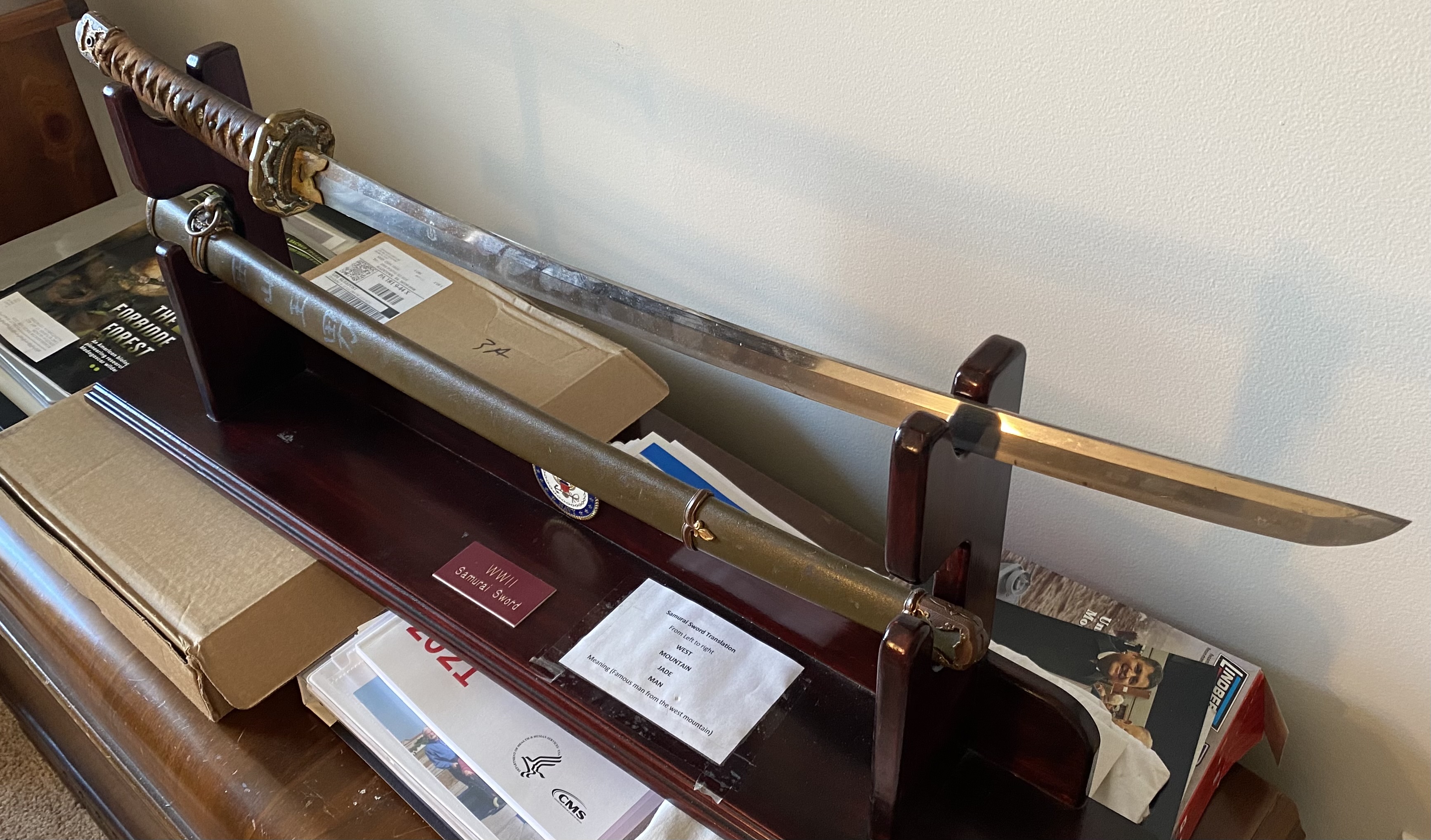
A sword and scabbard Gutman took from a Japanese officer after the surrender. ‘Sir, you will not need this any longer,’ he told the man while helping to disarm enemy troops on a Pacific island.

When we entered Pearl Harbor, we could still see a lot of the destruction that took place when they [the Japanese] bombed that harbor. We then found out that these creosote pilings, along with the Seabees, were brought there to repair the docks and ships that were destroyed in the bombings. We were there maybe about a week. We enjoyed liberty. A lot of guys got drunk, got pie-eyed. I think I had a couple of beers. We had a lot of fun. I guess the skipper wanted us to have fun.

We knew from there, God only knows where we’re gonna go.

In September 1944, Gutman landed Marines on Peleliu in his Higgins boat under fire. He went on to take troops ashore at four sites in the Philippines and at Okinawa. At war’s end, he and some others on his LST volunteered to sweep pressure mines that U.S. planes had dropped in Japanese harbors. For “the personal danger involved,” he was awarded a Navy Commendation Medal. Back home, he had active duty in the Reserve as an instructor and recruiter, retiring in 1967 as a chief petty officer.

He was more than a distinguished veteran and the subject of several stories I wrote for the newspaper over the past few years. He was my friend.

Photos a Normandy-bound ex-seaman holds dear

Matt Gutman (third from left) and pals from the LST-553 on a Japanese boat on Leyte Island at the end of World War II. They were assigned to disarm enemy troops there and on two other islands. ‘We had the Japanese break up all their rifles and load everything onto their large, wooden boats.’ The stash was taken out to sea and dumped.

A 99-year-old World War II veteran here in Allentown, Pennsylvania, is among vets going to France this week for the 80th anniversary of D-Day.

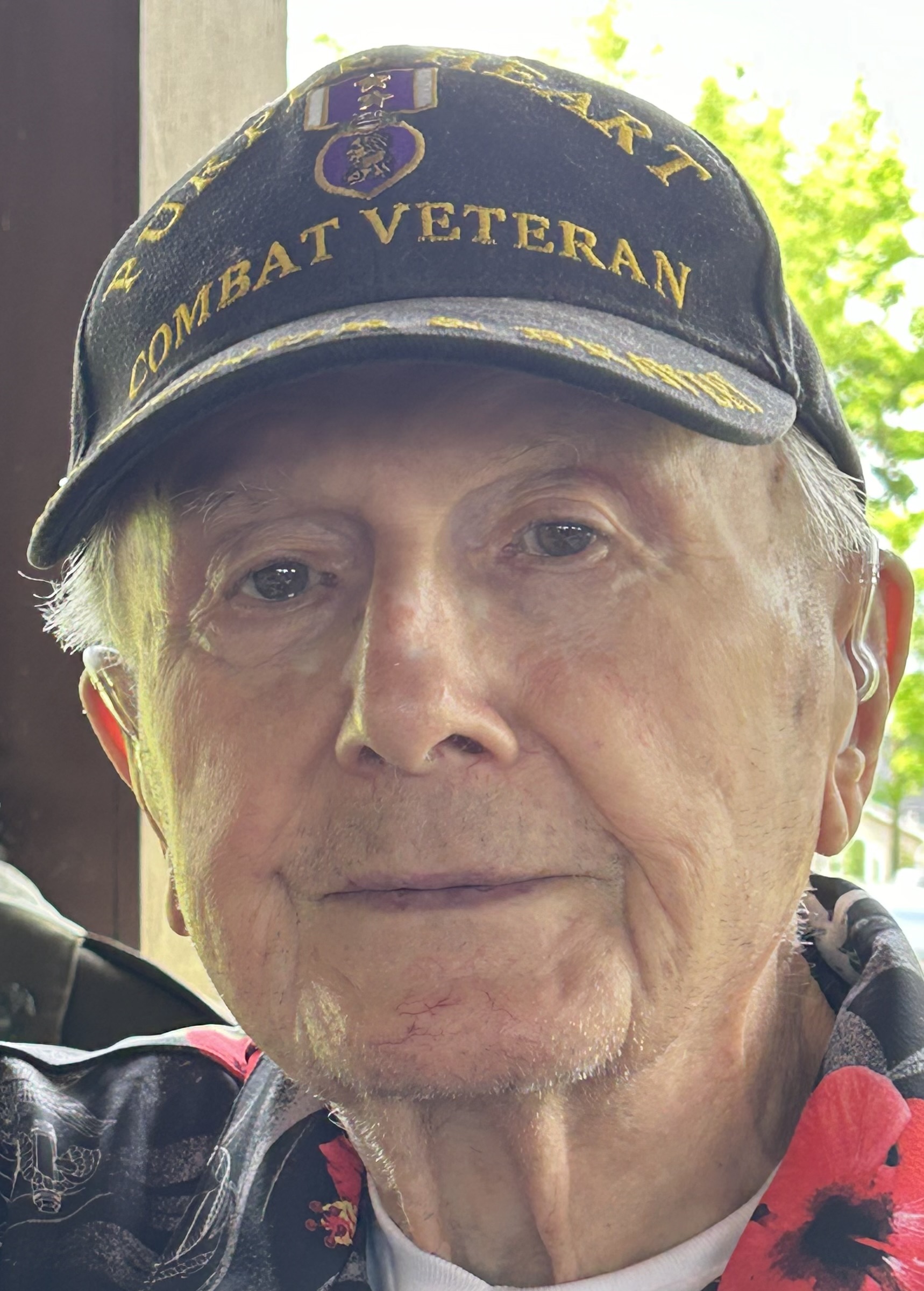
Matt Gutman is well-known in the Lehigh Valley veterans community. He rides in parades and speaks in schools and elsewhere about his service in the Navy.

I’ve known him for years. As a volunteer Veterans Affairs driver, I once gave him a ride to the VA hospital sixty miles away in Wilkes-Barre. I’ve taken him to picnics held to honor vets. Two years ago, I interviewed him for an “in their own words” war story in The Morning Call and wrote a blog about the first time he crossed the Equator.

On Friday, the newspaper ran my story about his upcoming journey to the beaches where the Allies landed June 6, 1944, against a hail of German gunfire.

Matt will be one of eight vets the Tennessee nonprofit Forever Young Veterans is taking to Normandy for seven days, all expenses paid. He’s the only one who didn’t fight in Europe, but in the Pacific, where he had a berth on a landing ship, tank, the LST-553. As the coxswain on one of its two Higgins boats – the same type of landing craft used in the Normandy invasion — he ferried troops to Japanese-held islands. Forever Young wanted him along to represent the Pacific Theater. Matt said he’s excited about what he’ll learn. It’s his first trip to France.

Each of the vets is going with a companion. Matt’s will be his eldest son, Mike, who lives in Florida and was the Air Force crew chief of an F-4E Phantom jet in the Vietnam War.

Before my story about the trip ran last week, my wife and I visited Matt. We chatted in his apartment, where I was struck by two photos on the wall – images I must have overlooked in previous visits. Matt told us about them and gave me the OK to use both in this blog.

A Gutman family portrait that Matt thinks was taken in 1936 shows (back row, from left) Louis, who was in the Army; Christina; Edmund; Veronica; Joseph, in the Navy; and (front, from left) their father, Mathias, a blacksmith employed at the Allentown Iron Works; Matt; Francis; and their mother, the former Veronica Gomboz.

One is a family portrait Matt believes was taken in 1936, when he was 11. The other is a candid shot showing him and six other LST-553 crew members standing on a Japanese boat on Leyte Island in the Philippines. It was 1945, the war was over, and they were assigned to disarm Japanese troops – a job that brought Matt a prized possession, an officer’s sword.

The photos reflect the American story. Matt’s parents were immigrants from Yugoslavia, the part that is now Slovenia. His father was a blacksmith. Matt and his pals on the LST were young men who, like millions of others, took up the fight when their country called.

When I asked about his siblings in the family portrait, Matt shook his head. Everyone but him is gone. Among the sailors, it’s likely he is the only one still living. He keeps these two pictures on the wall among others he values. For an old salt, they’re a reminder of home and far away, of peacetime and war, of family and friends he had long ago.

WWII vets saluted at V-E Day remembrance

The Magnolia Sadies, a vintage dance troupe, smooch Navy veteran Matt Gutman, 99, on May 8 in Macungie.

Pennsylvania is home to about 7,000 World War II veterans, all in their 90s or older. Eleven of them were honored yesterday, May 8, with a picnic that included 1940s singing and dancing at Macungie Memorial Park near Allentown.

I knew a few of the men and spoke with all of them, and came away grateful for their sacrifice and courage.

The occasion was the seventy-ninth anniversary of Nazi Germany’s surrender, called V-E Day for “victory in Europe.” Japan’s surrender four months later, on September 2, 1945, ended the war and was called V-J Day, for “victory over Japan.”

Here are the men, great patriots all, who attended the event presented by the Lehigh Valley Chapter of the Battle of the Bulge Association:

ARMY

Ridyard

Herb Ridyard, 98, of Elizabethtown, with the 94th Infantry Division in the Battle of the Bulge

Bokeko

Angelo Bokeko, 101, of Lower Macungie, with the 13th Armored Division in Europe and a recipient of two Bronze Stars       

MARINE CORPS

LaSota

Walter LaSota, 98, of Reading, a rifleman with the 6th Marine Division who earned two Purple Hearts on Okinawa

MERCHANT MARINE

Balabanow

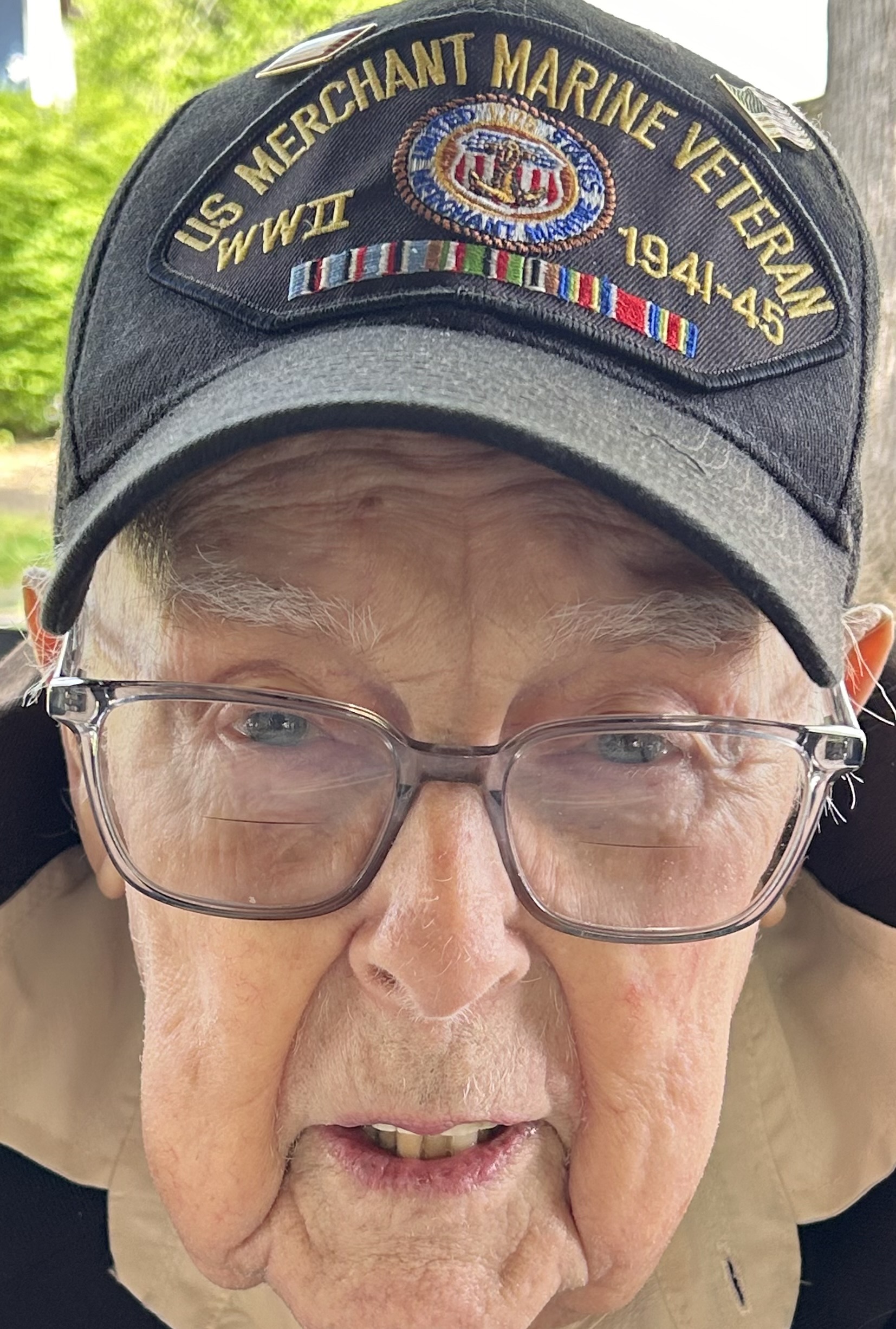
Bill Balabanow, 98, of Lancaster, a radio operator on cargo ships who had thirty-three years of sea duty

Cinfici

Lou Cinfici, 95, of Reading, an engineman on a seagoing tugboat who later served in the Navy in the Korean and Vietnam wars

NAVY

Conrad

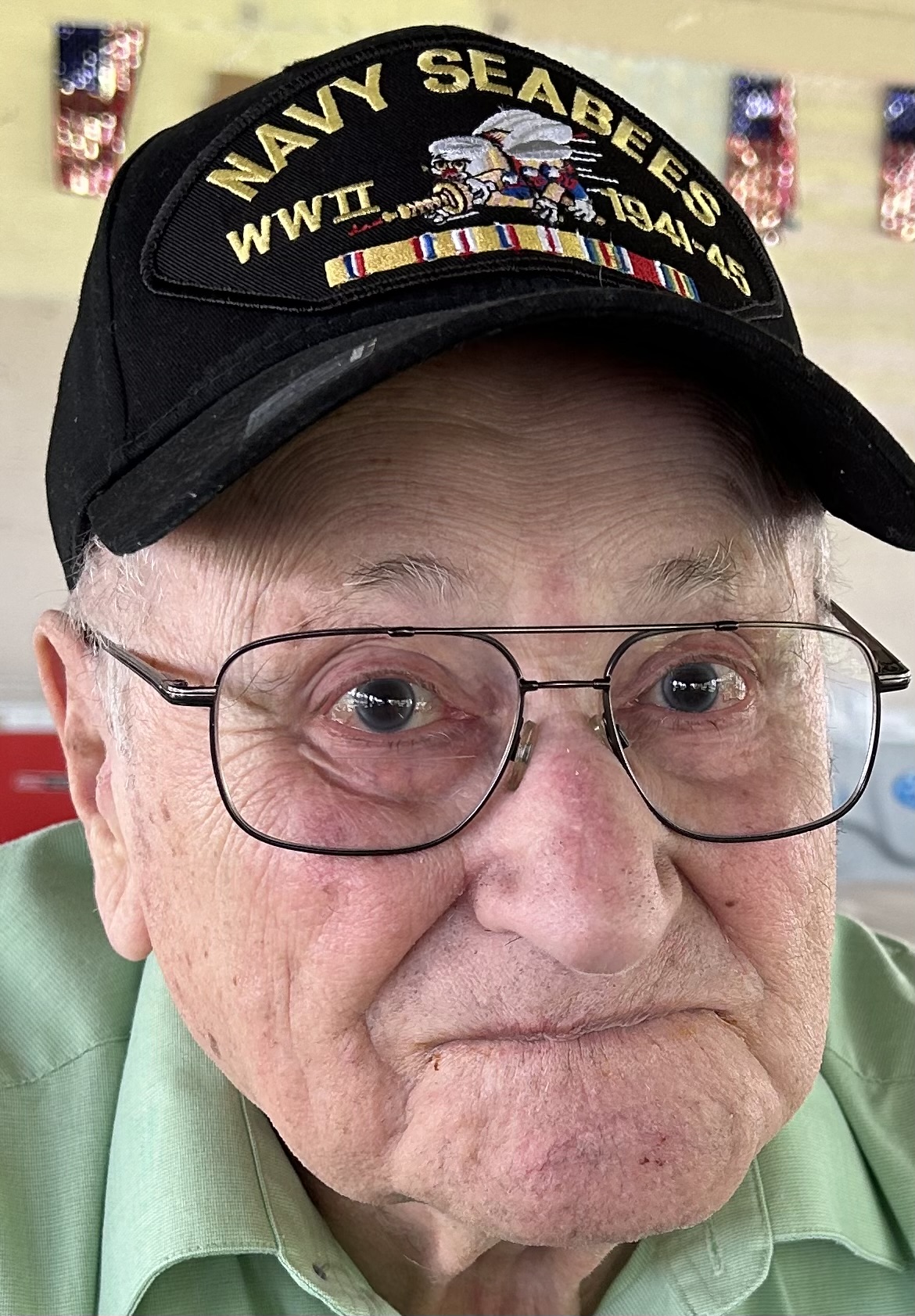
Ed Conrad, 97, of Fleetwood, a Seabee on Okinawa

Czechowski

Ed Czechowski, 99, of Reading, a gunner on the destroyer Saufley in the Pacific

Gutman

Matt Gutman, 99, of Allentown, a Higgins boat coxswain on a landing ship, tank (LST) in the Pacific

Ongaro

John Ongaro, 98, of Allentown, a crewman on an Atlantic freighter

Pearce

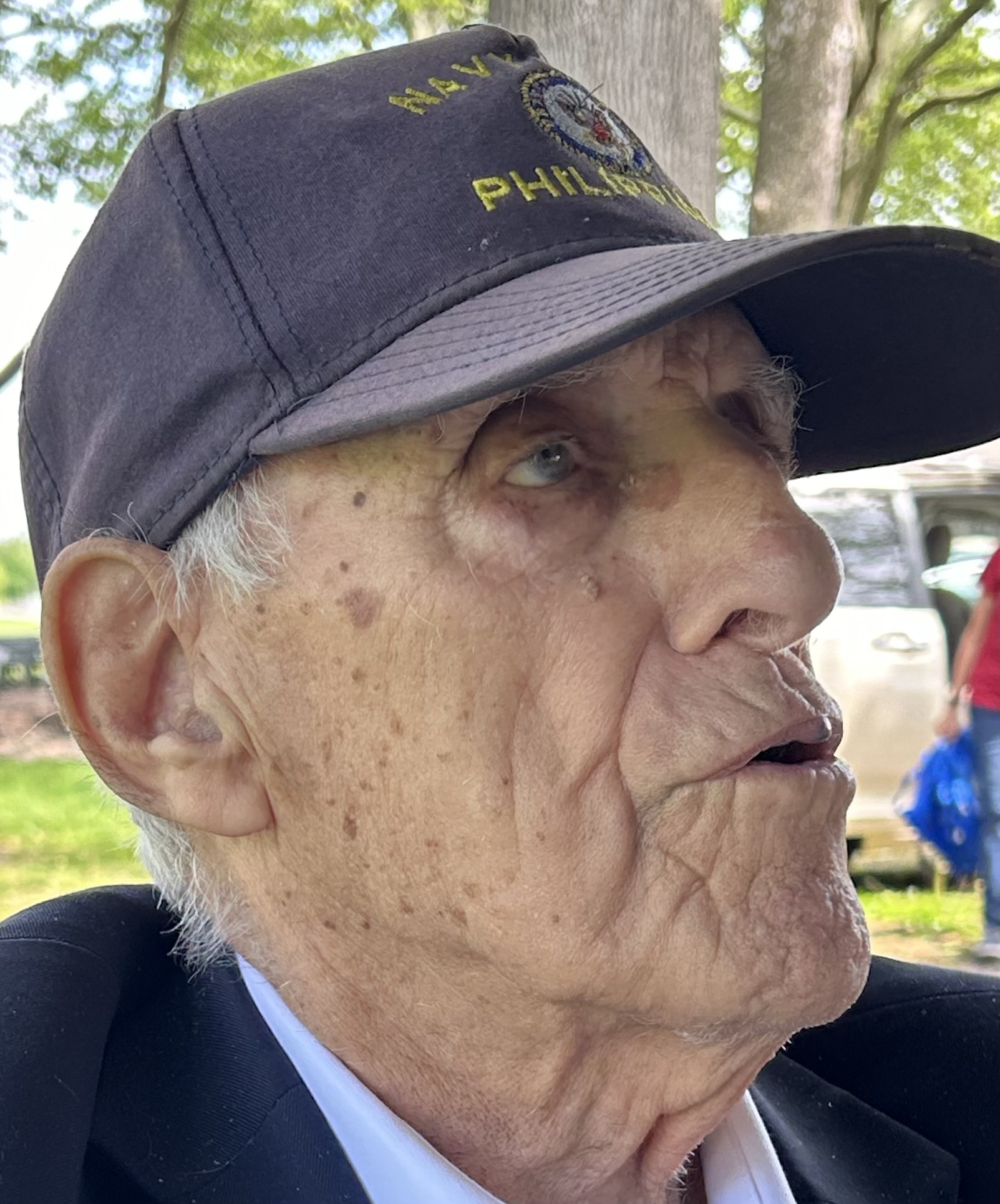
Bob Pearce, 101, of Emmaus, an aviation weather specialist in the Philippines

Stabley

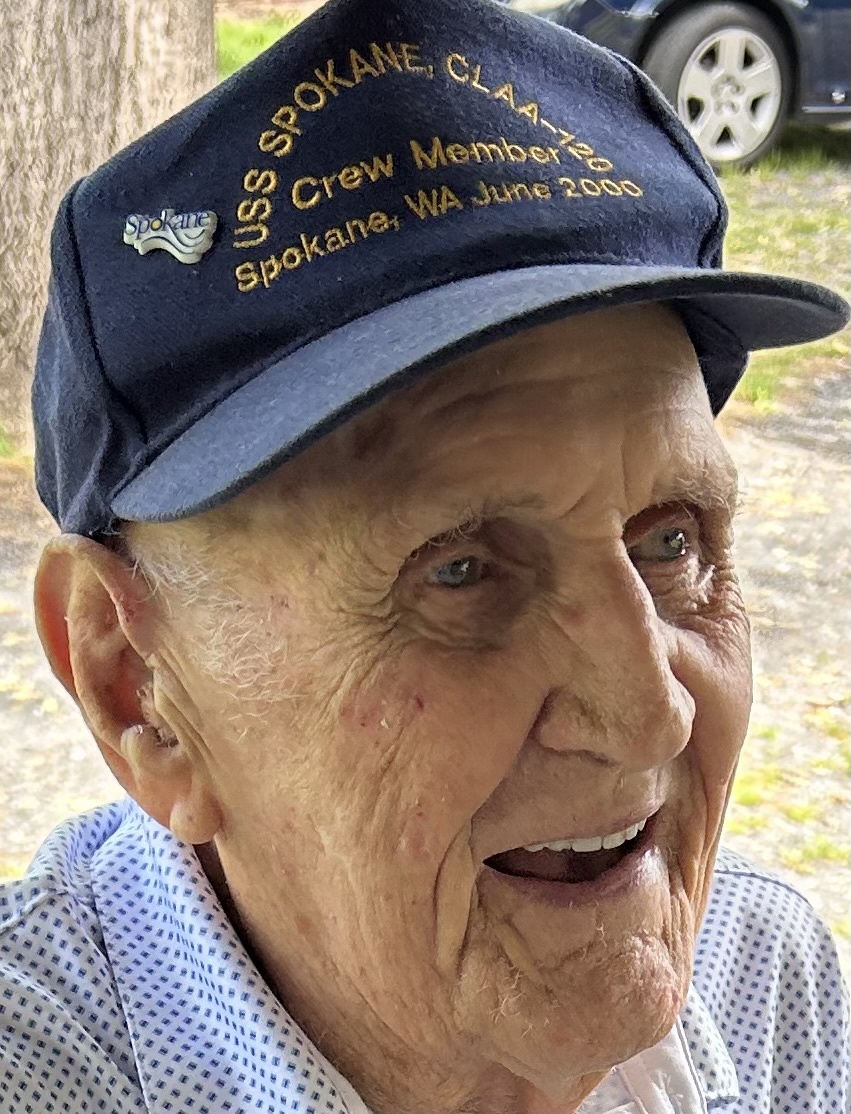
Jere Stabley, 97, of Lancaster, a baker on the light cruiser Spokane

Gutman, whom I interviewed for The Morning Call in 2022, and Balabanow are bound for Normandy next month for ceremonies marking the eightieth anniversary of D-Day, June 6, 1944.