
(Newspapers.com)
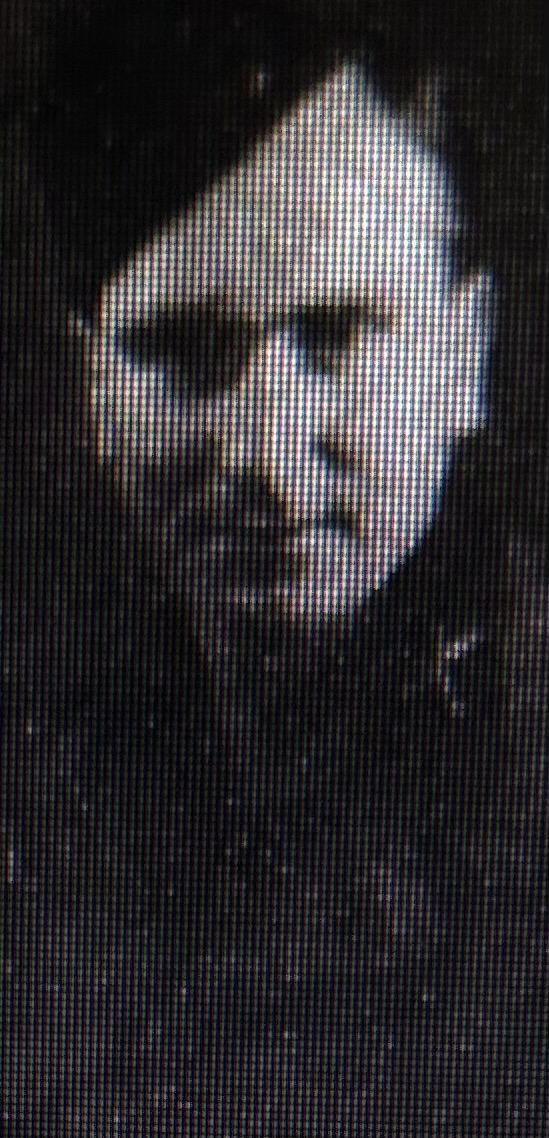
Here’s another World War II story, this one told by retired Lieutenant Colonel James Solomon Sr. of Allentown, Pennsylvania. In 1944, he led a platoon of the Army’s 34th Infantry Division in Italy, fighting on the Anzio beachhead and helping to capture Rome.
That July, the 28-year-old first lieutenant suffered a leg wound. Writing to his mother from a field hospital, he told how his company “lived off the land” for two weeks before he was hit, with pears, plums and figs in abundance from Tuscany orchards.
—
“Sir! Sir! Lieutenant! Lieutenant!”
Discordant and demanding, that call struck at the core of my heart. Above the din of the sounds of war, I heard those desperate and strident cries coming from men to my rear.
It was May 30, 1944, Memorial Day. The sun beat upon us unmercifully, our throats were parched, but we dared not halt to drink from our canteens. Leaden shoes seemed to encompass our feet. The gear we carried was heavy and chafing our shoulders. We were in regimental reserve and following the tanks that were just ahead.

(Allentown Public Library)
I was leading and intent on looking over the terrain to our front, and at the same time aware of possible mines. The glint of a well-worn wallet caught my attention, and I stooped to pick it up without changing my pace. Shoving it into my pocket, I decided to examine it later. It was probably lost by a soldier who had preceded us. I would make sure that it would be returned to the rightful owner.
Suddenly we encountered machine gun, rifle and small arms fire coming from our right flank. We had been crossing an open wheat field when we were observed by the enemy. Naturally, we hit the dirt. It was exactly what the Germans wanted us to do, because their artillery and tanks opened fire on us. We lay low while the shells exploded around us. The shelling ceased, and as I arose to get the men going toward our objective, I heard the dreaded sounds calling me to come to the rear.
All of my men were still in a prone position. The medic and I arrived at the tragic scene at the same time. I immediately saw that two of my men, Rowe and Ozzie, were wounded. The shell had struck between them. As we crouched beside Rowe, the medic looked at me pleadingly. “What shall we do? He has a sucking wound.”
Rowe’s breathing was hard, and I could hear it coming from the gaping wound in his lower chest. He was unconscious, and death would be upon him in a minute or two.
“There’s nothing you can do!” I responded to the medic.
“Nothing!” the medic echoed. We moved to the next victim, Ozzie.
Ozzie was gone. I could see his brains scattered about. I wanted to see no more. I met the medic’s glance with a shake of my head. “Let them be, and let’s get out of here.”
The assessment of the injuries only took a few seconds. The problem that reared up before me was the necessity of removing my remaining men to a safer place, which was a few hundred yards ahead. Up until then, the rest of the men were unaware of the casualties. As I ran back to my original position, I called to the men to follow me. Then we moved out quickly and at a trot.
Two hundred yards later, after placing my men in a slight defilade, I took a headcount and found that half of my men were missing.
“Sir,” one of my sergeants said, “somebody didn’t pass the word to move out. They’re still lying where we were pinned down. Shall I go for them?”
(Newspapers.com)
“No,” I replied. “I’ll go. You stay here until I get back with them.”
I was not going to let the sergeant correct something that was my fault. The men were my responsibility, and I went back for them. It was a grueling couple hundred yards, and I was still carrying all my equipment, which included my pack, walkie-talkie (hand-held radio), field glasses, two rounds of bazooka ammo and a carbine. Halfway, I dropped the walkie-talkie, field glasses and the bazooka ammo, with the idea that I would pick them up on my return with the men.
I found my men still in their prone positions in the wheat field. They were in the column behind the casualties, Rowe and Ozzie. Carefully, I had the men follow me in a manner in which they would not see their fallen comrades. In doing so, I got off the path that I had followed to meet them. As a result, I would not pick up my equipment at the halfway mark. Instead, I got them to safety immediately. I was determined to regain my gear later.
Needless to say, I was exhausted and decided to wait until things quieted before returning to reclaim my belongings from where I had dropped them. The items were vital and in short supply. I could not even think about abandoning them.
An hour before sunset, I steeled myself and set out in a run toward the spot where my belongings should be. When I got there, I could not find them because of the many new shell holes that pockmarked the area. Fresh dirt was thrown everywhere, and the articles I sought to recover could not be readily seen. Then I heard the machine-gun bullets whiz by. I dove into a bomb crater that was a short distance away.

(Newspapers.com)
Several rounds from a not-too-distant tank landed near me, showering me with dirt. I lay huddled at the edge of the crater that faced the enemy. I prayed as the shells landed closer. When an 88mm shell struck the edge of the crater opposite me, I cringed waiting for the deadly explosion. I only received some soil that was thrown my way by the impact. It was a dud! There was nothing more. It was the last round fired in my direction.
I waited several minutes before leaving my sanctuary and then picked up my equipment, which was almost totally covered with Italian soil. Losing no time in returning to my men, I did not mention the close shave that I had just a few minutes earlier. We never spoke of those things, because they occurred all the time to one soldier or another. It was a commonplace experience and not worth mentioning.
Sitting down to rest for the first time in hours was some comfort to me, except that I experienced a jolt to my backside and realized that I had placed the lost wallet there. I took out the wallet, opened it and looked for the owner’s identification. It contained no money, only a V-mail from his mother with his name and APO address. The soldier was from Bethlehem, Pennsylvania. His name was John R. Snell, and he lived in the 1100 block of Arcadia Street.
Within the next few days I stuffed the wallet an an envelope and mailed it to the soldier’s mother with a short note of explanation. I also told her that I was from Allentown [which borders Bethlehem].

(Newspapers.com)
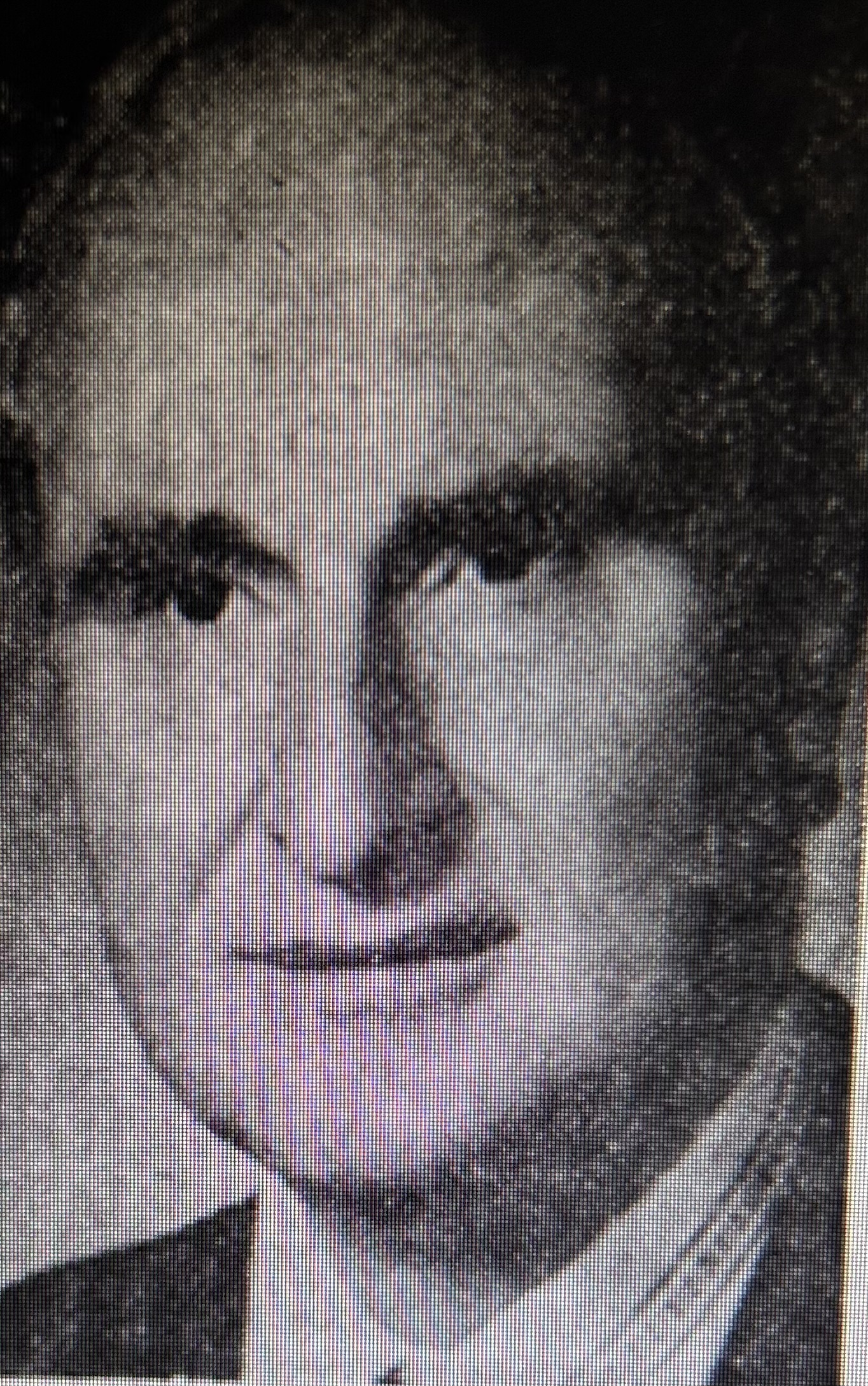
A few weeks later, my mother wrote telling me that John Snell was killed in action and that his mother had paid her a visit. In August 1944, while I was still recovering from my wound at the 6695th Conditioning Company, I received a letter from Mary Snell thanking me for the wallet. She included a photo of John Raphael Snell.
After returning to the United States, either in December 1945 or January 1946, I went to Hamburg, Pennsylvania, to call on the parents of another one of my men who had lost his life in Italy. His folks owned the movie theater there. I do not recall his name.
I am sorry to say that I could not complete my mission that day. I lost my nerve after I arrived at the theater, so I turned around and went home. There were no words in the dictionary that I could use to explain away their loss. I had nothing to say, and the pain was too great.
—
John R. Snell was a 19-year-old private when he was killed on the Italian front May 30, 1944, a month after he shipped overseas and the day Solomon found his wallet.
Solomon had five years of active duty in Europe and was awarded a Bronze Star and Purple Heart. He ran a postwar refugee camp in northern Italy’s Modena, where thousands of displaced Europeans were processed. The experience led him to write and self-publish a novel in 2000, Il Comandante. He worked for the War Assets Administration from 1946-48 and was an Army reservist for 28 years.
A longtime businessman, he owned a Lincoln-Mercury car dealership. He was 86 when he died in 2003. You can read his obituary here.
That was four years after Solomon sent me his story about Private Snell’s wallet.
 David Venditta