A different kind of medic story

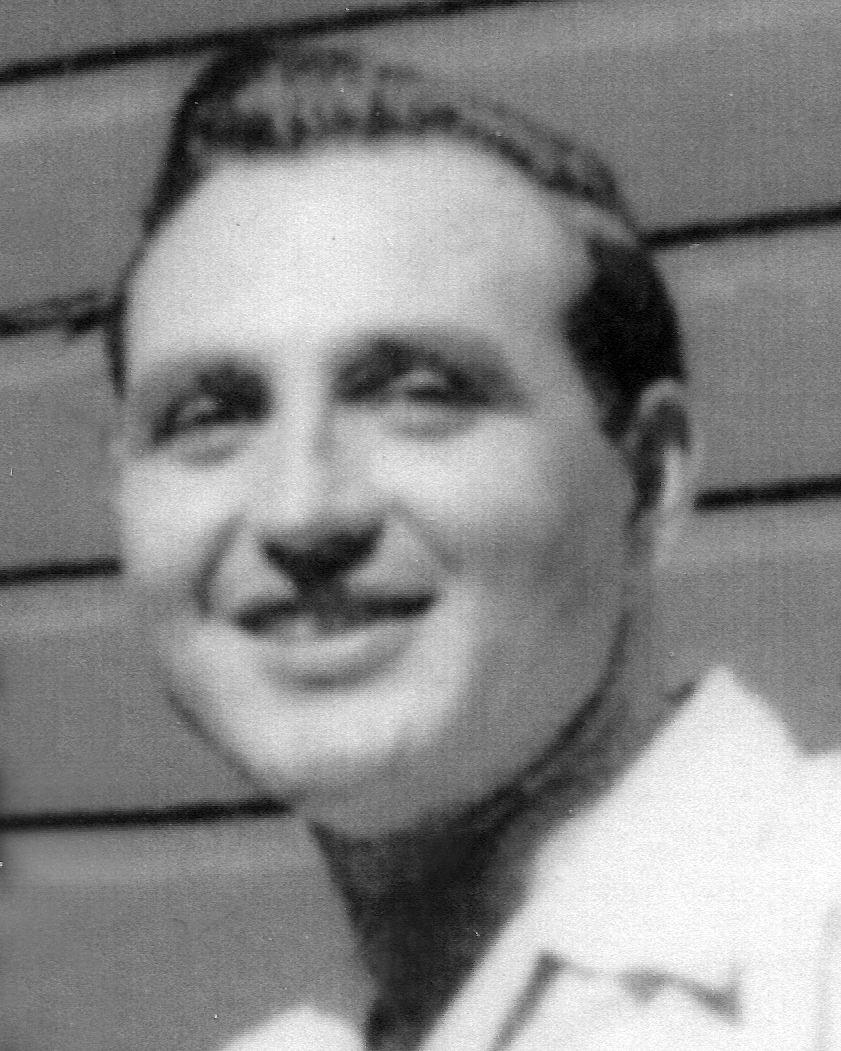
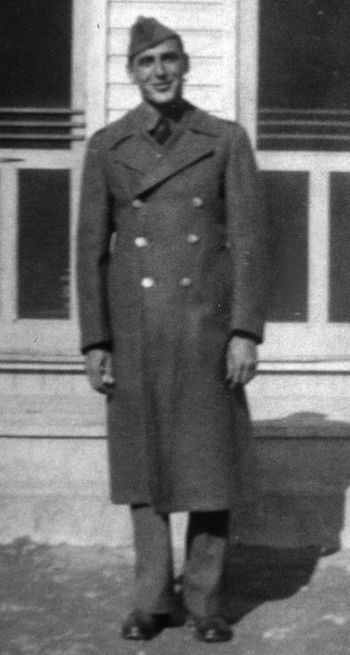
Frank Venditta in the 1940s

Frank Venditta in the 1940s

One of my dad’s older brothers was an Army medic during World War II and had a job you don’t usually associate with medics. He wasn’t on any battlefields mending the wounded. Instead, he worked with psychiatric patients stateside.

I got Frank Venditta’s story on tape in 1998 at his home in Malvern, Pa.

After going to Panama soon after the U.S. entered the war and spending almost 28 uneventful months there, Uncle Frank came home in 1944 and was reassigned to Mason General Hospital on Long Island. Rented by the Army, Mason General was a surgical-medical-psychiatric center where patients included German and Italian prisoners of war with mental problems. Uncle Frank worked on the seventh floor with the worst cases, the most troubled American soldiers.

“That’s where the electroshock therapy was given,” he said. “I hear they’re coming back with that shit now. Three times a week, we’d take the guys out, kicking and screaming and hollering, tie them down. It took four of us to hold them down. Electroshock, volts of electricity. Some would wake up, look around and say, ‘Where the hell am I?’ ‘New York, Mason General Hospital.’ ‘How’d I get here?’ They’d be perfect after seven or eight treatments. Others, it never did any good for them.”

Frank and Dutchy Venditta with daughter Nicolette

Frank and Dutchy Venditta with daughter Nicolette. The couple met at Mason General Hospital on Long Island during World War II. Frank was an Army medic. Dutchy was a Women’s Army Corps technician.

Uncle Frank would have preferred to serve overseas in the war – many of his buddies had been shipped there — but he stayed at Mason General. That’s where he met his wife-to-be, Florence Prebe, a medical technician who worked on the fifth floor helping troubled U.S. servicewomen.

“I was in the mess hall one morning,” Frank said, “and I seen this nice-looking blonde walking across, standing in the chow line. I said, ‘Well, let me take a look.’ Oh Christ, I never saw anybody eat so much as her.”

“I heard that, Frank,” his wife called from the kitchen.

“You were a chowhound, Florence, believe me!” he called back.

Florence, whose nickname was Dutchy, was from Philadelphia and served in the Women’s Army Corps. She had seen Frank at lunch a few times and noted he was a handsome guy usually surrounded by four or five nurses. He’d say to her, “I saved you a seat,” and she’d answer, “No thanks.” They finally hooked up when Dutchy was trying to assemble a new coffee machine on her floor and asked Frank for help.

Another time, I’ll tell you Aunt Dutchy’s war story.

Uncle Frank, who had made his living as a construction manager, had a stroke in 1999. He died in November 2002, a month after his 83rd birthday.

Here’s the link to his wartime biography I posted on the National World War II Memorial website:    

http://www.wwiimemorial.com/registry/search/pframe.asp?HonoreeID=2315229&popcount=1&tcount=1

Just when you thought the story was perfect…

 There’s something magical about telling a story in front of a video camera.

 When I interview war veterans for my Morning Call series War Stories: In Their Own Words, http://www.mcall.com/news/local/warstories/ I rack up hours of audio recordings during visits spaced out over days and weeks, sometimes months. In the end, when I have my narrative, I tend to think: The story can’t get any better than what I have.

Then, as one of the last steps before publication, a Morning Call photographer comes to the vet’s home to shoot stills and video. The video starts to run and the veteran tells a story I’m familiar with, from having spent so much time with him.

But guess what? He says something a different way that perhaps is more poignant than what I have on my audio recording. Or maybe he uses a turn of phrase that’s more evocative. Maybe he fills in a gap I hadn’t realized existed, which will add to a reader’s understanding of his experience.

Occasionally, he’ll say something that will jab me to check the accuracy of what I’ve written – and save me from getting a piece of the story wrong.

When any of this happens, when I get a richer narrative from the veteran’s off-the-cuff remembrances in front of a camera, I shake my head in amazement and praise the power of video.

It’s happened so often, I’ve learned to run my digital audio recorder the same time as the photographer is doing the filming, so I don’t miss the gems.           

Back in the office, the photographer goes to work turning the interview into art, mixing footage of the vet telling his story with still pictures of him, with artifacts such as medals or old weapons, and with potent archival photos. The video lasts only a few minutes, but the melding of now-and-then images produces a stunning effect.

Photographer Harry Fisher, who has worked with me on many of the war stories, turns to Real War Photos, based in Ann Arbor, Mich., for the contemporary pictures. http://www.realwarphotos.com/

You need to see this material to appreciate it, so click on the links below for a sampling of Harry’s work: 

For Woody Woods in the Battle of the Huertgen Forest:

http://www.mcall.com/videobeta/d1fa7028-3739-4e6c-9fae-2485a52ba2e4/News/War-Stories-Woody-Woods-remembers-Battle-of-Huertgen-Forest

For Don Burdick on the siege of Bastogne:

http://www.mcall.com/videobeta/026e84c5-8bcb-4bd4-8146-c54b4e43f200/News/WWII-Vet-Donald-Burdick-remembers-the-Siege-of-Bastogne

For Dan Curatola on D-Day:

http://www.mcall.com/videobeta/73376d37-e879-47b4-87ae-8e553adf819f/News/Daniel-Curatola-Remembers-D-Day

For Don Burdick on the liberation of Dachau:

Finally and most recently, from last Thursday, Veterans Day, here’s Stanley Parks on the Battle of Peleliu:

http://www.mcall.com/news/local/mc-veterans-day-war-story-parks-20101110,0,3510316.story

So you can see how video enhances the story.

It’s magic.

Remembering veterans advocate Gene Salay

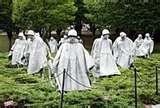
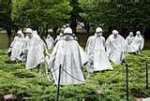
Korean War Memorial, Washington

The Korean War Memorial in Washington

It was heartwarming to see more than a hundred people show up Sunday at the Lehigh County Government Center in Allentown for a tribute to the late Gene Salay.

Gene was a Korean War POW and longtime director of veterans affairs for the county — and my good friend. The tribute, coming four months after his death on June 24 at age 78, was sponsored by the new Military Nursing Corps of Pennsylvania, VFW Post 12099 of Lehigh County. Gene was a founder of the post, along with Wendall Phillips and Joe Zeller. On Sunday, Wendall offered a prayer and Joe was master of ceremonies.

A number of people who knew Gene spoke movingly about his kindness and dedication to veterans.

I also had a role in this ceremony. Joe had asked me to be the speaker, based on an interview I had with Gene in 2003 that was published in The Morning Call on the 50th anniversary of the end of the fighting in Korea. In my talk, I read parts of the story.      

Here is what I said: 

As an editor at The Morning Call, I had occasional brief phone contact with Gene in the early ’90s when he was director of veterans affairs for Lehigh County.

The first time we had a real conversation, I called to ask him how I could get records about my cousin Nicky, an Army helicopter pilot who was killed in Vietnam. I remember the call distinctly, not because of what Gene told me, but because of his manner.

I hang up and think: What a good guy. Helpful. Patient. Friendly. We’d never met face to face and he called me his buddy.

“Hey buddy.”

I would get used to hearing that.

Gene grew up south Bethlehem. When he was 14, he was caddying for Bethlehem Steel Chairman Eugene Grace, one of the most powerful men on the planet. If Mr. Grace wanted to golf and Gene was in school, no problem. Gene was pulled out of Broughal Junior High and sent to Saucon Valley Country Club to hit the course with the boss.

In 1950, Gene started working at The Steel, first in the sintering plant and then in the electrical repair gang. Two years later, he joined the Army. He went to Korea and in 1953 got caught up in the last communist offensive of the war, just two weeks before the armistice.

I’d known he had been a POW and had a bullet lodged near his heart. From time to time, I asked him to let me do a story on his experiences, but he always answered with a polite, firm “no.” Instead he steered me to interview other veterans he felt deserved to have their stories told. One of them is here, Bob Serafin.

In 2003, I wanted to do a story marking the 50th anniversary of the end of the fighting in the Korean War. I wanted to interview Gene, but he again declined. He wrote in an e-mail:

“I am unable to go through with your request of me. I’ve had nightmares thinking about it. I am very emotional. I break down very easily. When I think about certain of my experiences, I’m a wreck for days. And I think about my experiences every day of my life. ..To see my story in print for others to see as well, I am afraid I would be incapable of handling it.”

Two days later he softened. He had spoken with Ellie about it – Ellie, who would be with him for a total of 56 years – and she convinced him that he should talk about his war experiences for publication.

“Please try to put up with my head,” he e-mailed me. “I’ll give serious thought to the scenario surrounding my capture, and begin making some notes for your edification.”

Soon after that, Gene and I sat down together and the story took shape.

In July 1953, when he was 21, Gene was a PFC assigned to the Capital ROK Division – ROK meaning Republic of Korea, the formal name for South Korea. He was wounded and taken prisoner during the Battle of the Kumsong River Salient.

I’d like to read parts of his story to you.

“We were posted on a hillside at Kumhwa, near the border with North Korea. Division headquarters was three or four miles behind us.

“For the most part, it was a static war.

“July 13, 1953, was the same as any other day. Periodically, we could hear the sounds of outgoing rounds from The Triple Nickel, the 555th Field Artillery Battalion, about a mile to our rear. They fired 105 mm and 155 mm cannons. This was our way of staying in touch with the enemy. Of course, it’s how they communicated with us, as well. But for the most part, their incoming rounds fell harmlessly onto the mountainside. We hoped ours were more effective.

“It had been raining off and on for over a week. Perfect weather for an attack, I thought.

“Around 7:30 p.m., the Chinese started an incessant bombardment of our hillside position that lasted more than two hours. Around 10 p.m., they fired flares that lit up the Kumhwa Valley.

“We saw the hills and valleys come alive with thousands of enemy soldiers, reminding me of millions of ants feverishly at work. First one, then another bugle was heard, then another, and still another, from tops of mountains and ridges around us.

“I was in radio contact with Sgt. Mel Shannon, who was at division headquarters.

“‘Gene, he said, ‘you’re completely surrounded.’

“Including ROKs, there were about 50 of us on the bare hillside. Below, three Chinese divisions were coming toward us.

“They were running up the slight slope, so close we fired our M-1 rifles from the hip. We were incredulous. It was like a scene unfolding in a motion picture. We hollered and looked around for more cartridges, but there weren’t any.

“In seconds the fighting was hand-to-hand. One Chinese soldier grabbed my M-1 at the muzzle end and was trying to pull it away from me. I yanked it out of his hands and swung it at him and hit him, and he went down. I was using my rifle like a baseball bat.

“Then I felt something like a mule kicking me in the head — it was probably a gun butt — and I went down.

“I couldn’t move my left side.

 “I was on my back, in a daze. Hundreds of Chinese were all around, running over bodies. Many ran over me, jarring me awake.

“In 20 minutes, the first wave had passed, decimating our position. I heard firing in the rear. Up ahead, the mop-up crew was coming. I prayed. I thought this was the end. I could feel the presence of God.

“There was a lull in the fighting, and I could hear the moans of others in the distance.

“As loudly as I dared, I whispered for some of my buddies. ‘Hey Dick, Kenny, Duke.’ Only Dick Annunziata responded. We crawled to one another, between and over the bodies of friend and foe. He, too, was wounded. A bullet had creased his left shoulder.

“In the darkness we tried to assess our situation. We thought we could hold out for maybe 24 hours. In the meantime, we’d hope and pray for a counterattack.

“We heard Kenny Clough’s call among the moans and crawled to him. He was seriously wounded.

“Unarmed, we nestled in among the dead in a crater and fell silent. We waited and waited through the night. I prayed to the Blessed Mother and asked her to please tell Mom and Pop I’m OK.

“No counterattack came by the time day broke. Our ammo supply trucks had been cut off, we found out later. The Triple Nickel was completely overrun, and each gun emplacement destroyed. The enemy had us totally zeroed in.

“From our crater, where we lay intermingled with more than 20 dead, we could hear enemy patrols firing short bursts from their burp guns. They were the mop-up crew. Their guns chattered brrrrrrt, brrrrrrt, and they were getting closer.

“The crater was about 15 feet wide and 3 feet deep, with a ridge about 8 feet high at one end. It might have been caused by incoming artillery early in the fighting. Kenny, Dick and I were 3 or 4 feet apart from each other.

“I was bleeding. My left arm and side were useless.

“Until dawn, we didn’t know there was anyone alive around us. Then we saw a lone ROK soldier who had a grease gun, a .45-caliber machine gun. We tried to talk him out of it, so that we would have a weapon, but he couldn’t understand English.

“Four or five Chinese showed up on the ridge along our crater. I was lying partly on my side, looking up with my left eye, and saw them. They were talking. We assumed one of them said, ‘What do you think about those guys? You think they’re all dead?’

“The ROK must have heard them and got scared. Maybe he understood what they were saying. He didn’t want to be taken prisoner. He got on his knees, bent over forward, put the barrel to his belly and pulled the trigger.

“I saw the bullets coming out of his back.

 “He died instantly.

“From where they were standing, the Chinese couldn’t see him. They probably thought they were being fired at, so two or more of them started firing their burp guns into the pit, spitting out bullets.

“They missed Dick and me, but one shot got Kenny in the stomach. He was already horribly wounded. He moved when he was struck, so the Chinese realized there must be somebody alive where we were, and they came down from the ridge and encircled us.

“If they had been North Koreans, none of us would have survived. They were known to take no prisoners.

“Instead, the Chinese came around and kicked people, and grabbed us and pulled us out of the pit. We were all bloody from ourselves and from the others.

“Dick and I thought we were going to die.

“We pulled Kenny out — he was completely paralyzed — and moved into a clearing where there were no bodies. Kenny was turning gray but was conscious. … We stayed with him.

“The Chinese searched us, but Dick and I had buried our wallets during the night, because we were afraid they would get into enemy hands. So the only things we had were our dog tags.

“About 11 a.m., when they wanted us to go, I said, ‘We’re not gonna leave him.’

“But Kenny said, ‘Gene, don’t worry about me. I’ll be all right.’

“And he died.

“We moved on and saw headless torsos, arms, legs, pools of blood everywhere. There were thousands and thousands of dead, and the blood flowed down the hill into a ditch and ran along the roadside.

“There must have been 40 to 50 guys captured, Americans and ROKs.

“As we were marched northward, we met guys from The Triple Nickel, the 187th Airborne Regimental Combat Team and the 5th Regimental Combat Team who had also been rounded up. Now we numbered about 100.

“We came across enemy machine gun nests in the open along the road. The gunners were sitting on the ground, firing into the hills. We were made to walk directly in front of their guns and expected our legs to get blown out from under us. Fortunately, whenever we passed in front, the guns stopped.

“After we were on this road for half a mile, some of our own guys in the hills thought we were friendly troops counter-attacking, and so a couple of them got up and started shouting, ‘Hey, we’re over here!’ The guards opened up on them.

“Our artillery was pounding all around us. I thought: If I’m going to die, let it be from one of our own…. Our guys weren’t hitting anything. Their rounds exploded harmlessly against the mountainside.

“It was fiercely hot and humid, but we were given no water or anything to eat.

“When we crossed a river I assumed to be the Kumsong River, we delighted in drinking as much from it as we could stand. It was muddy and filthy, but when you’re thirsty, you don’t mind. At least it was wet. We also got a taste of what reminded me of seaweed. It was green and not too bad.

“After the second day’s march, the officers were separated from the enlisted ranks, and the ROKs isolated from both. We bedded down at a so-called aid station, although there was no aid to be had, even for the Chinese who needed medical attention.

“When we enlisted men continued the march the next day — there were 50 to 60 of us — we didn’t know what happened to the officers and ROKs. We walked all day, every day for about a week, resting at night.

“Our ragtag outfit underwent one more separation. The wounded were separated from the unwounded. Some of us who were wounded took this to be an ominous sign.

“I was nearing my breaking point.

“My left leg started bothering me and began to swell. I had suffered a knee injury playing high school football. Now it was killing me, and I was limping badly.

“Before we started to march one morning, I told Dick that I couldn’t go on.

“‘If you don’t get up and march, they’ll shoot you,’ he said.

“‘Let ’em shoot me.’

“But Dick was adamant. There was no way he was going to leave me behind. At sun-up, he helped me to my feet and half dragged, half carried me until I was able to limp along on my own.

“He saved my life….

 “One night we stayed in a man-made cave in a mountain. It had a high ceiling, about 25 feet, with no supports. The dirt floor had 2 to 3 inches of water in the area where we were forced to sleep.

“We grumbled but huddled close to one another and eventually fell into slumber, if only for brief periods.

“In the morning, we were called out of the cave one at a time to be interrogated in a tent. After the first one of us was taken out, roughly 20 minutes passed, and we heard gunfire. He didn’t return. Another was taken by the arm, and 20 minutes later, more gunshots. He didn’t return. This went on.

“When it was my turn, I made the sign of the cross and prepared to die.

“A guard escorted me to the tent, which was square and had a table and two chairs. Another guard was posted at the entrance.

“I sat down across from an English-speaking Chinese officer who claimed he was a graduate of a California college, UCLA or USC. Uh-oh, I thought, no games with this guy.

“He offered me a cigarette, and I took it. He placed a map of the area in front of me and wanted to know what I could tell him about our units.

“‘Pfc. Gene Salay,’ I said, and gave my serial number.

“He laughed and began to identify the units in our area, actually naming officers, most of whom I didn’t know.

“Then another officer burst into the tent and knocked the cigarette out of my hand. I stood up, and he slapped me several times. I controlled my temper.

“He laid a map of the United States on the table and asked, ‘Where do you live?’ I didn’t see any harm in telling him, didn’t think I was endangering any of our guys. I pointed to Pennsylvania.

“‘What do your parents do?’

“I pointed to the Lehigh Valley and said, ‘My mom works at Bethlehem Steel in the blast furnace.’ Then I pointed to Cambria County. ‘My father works on a farm.’

“It was a lie. My father worked at Bethlehem Steel and my mother was a secretary in the English department at Lehigh University.

“A guard grabbed me by the arm and led me out of the tent. I thought my time was up and made the sign of the cross again.

“We went around a corner, away from the others still waiting to be queried, and I was surprised to see the guys who had preceded me standing there. As I neared them, a Chinese soldier fired his burp gun, a short-barreled submachine gun, into a dirt bank.

“The interrogation was all a game.”

 Gene was held at a POW camp north of Pyongyang, North Korea. On Aug. 28, 1953, he was freed at Panmunjom, where he got a welcome-home handshake from Gen. Mark Clark, the commander of U.N. forces. Besides a Combat Infantryman Badge, Gene now had a Purple Heart.

He told me in our interview: “I’ve asked myself a thousand times why God permitted me to live, while so many of my buddies died in that godforsaken place 50 years ago.”

For about two years after he got home from the war, the VA monitored the bullet lodged near his heart. The doctors were satisfied that a layer of fat had formed around it and it had become a part of his body. They were concerned that if they operated, his left arm might be left useless. Even when he was into his 70s, the bullet caused him no discomfort. 

About his story getting in the paper, Gene felt some relief from his anxiety. “It’s as though a weight has been lifted from me, but I’m glad it’s over,” he said.

He returned to Bethlehem Steel in 1954 and later attended Moravian College while working full time. Get this: The company let him and others who wanted to go to school work a steady 4-to-midnight shift and gave them jobs that could take up to six hours to complete. They could use the rest of their shift to study.

After Gene graduated from Moravian in 1960, he got into Bethlehem Steel’s management training program and spent a year at the Lackawanna plant near Buffalo. Then he was transferred back to Bethlehem and worked in the Manufacturing Division, mainly the No. 2 Machine Shop. Ultimately he worked in the accounting department.

In 1984, Gene retired after more than three decades at the company. He volunteered at the Allentown VA Clinic and became veterans affairs director for Lehigh County in 1986. He had that job for 14 years.

By all accounts, by any measure, he was an intrepid veterans advocate. After his death, Paul Pagoda of Lower Saucon wrote in a letter to The Call:

“During the years I served as the administrative officer at the Veterans Affairs clinic in Allentown, I worked closely with Gene on many veteran-related issues – on individual cases as well as on those affecting the veteran community. Gene was a true professional who worked tirelessly on behalf of all veterans. He always made time for a veteran in need. A true hero and more.

“When the VA eliminated funding for dental services at the new VA clinic, Gene was among those who successfully petitioned the VA and Sen. Specter’s office to restore funding for those services. That was just one of the many issues Gene supported and worked on in behalf of area veterans. He left a legacy of achievement and service to veterans. Indeed I consider myself lucky to have served those same veterans along with Gene and to have called him a friend. He will be missed but certainly will not be forgotten.”

Gene was recognized at the state level with a Distinguished Service Medal for his work. He also was awarded a Meritorious Service Medal because he had championed veterans preference in hiring.

One of his fondest moments, he gave a plaque to Bob Hope, making him an honorary member of the American Ex-Prisoners of War. Gene was adjutant for the group’s Lehigh Valley chapter. He made the presentation in 1983 while Hope was performing at Lehigh University. We ran a picture of Gene and Hope with Gene’s story. 

With all he had suffered in the war, it hardly seems fair that more tragedy was in store for him, but it was. He and Ellie lost their only child, Lisa, to cancer in 1997.

Over the years, Gene and I stayed in touch. We had a lot of lunches together – that was the big thing for us. My wife, Mary, and I went out to dinner with him and Ellie. He sent me e-mails or called me about the stories I wrote. I have a file at home, 2 inches thick, that has every card, note and e-mail he ever sent me.

Gene introduced me to Gen. Anna Mae Hays, who grew up in Allentown, led the Army Nurse Corps and was the first woman in the U.S. military to become a general. 

He took me to an Honorary First Defenders banquet. He had a great interest in the Civil War, and we talked about touring Gettysburg together, but it didn’t happen. 

I saw Gene in Bob Bryant’s social studies classes at Northampton High. Gene would help Bob arrange for war veterans to speak to his classes. Bob, who is here today, wrote in a letter to The Call that Gene “was a genuine, kind-hearted man.”

“As a teacher of social studies at Northampton Area High School (now retired),” Bob wrote, “I had the privilege to meet and become close friends with Gene years ago as he helped arrange for a variety of World War II and Korean War veterans to come into my classes and enlighten my young adults. He would always briefly address my students with a few patriotic words before introducing that day’s guests, always referring to them as ‘the true heroes,’ which they certainly are. Always modestly deferring to others, deflecting praise from himself – that was Gene.

“To me, my students, my family and so very many others, Mr. Salay was the truest of heroes, a beloved man who’ll be deeply missed. A man who shall never, ever be forgotten.”

I know what Bob is talking about.

Four months after Gene’s death, I can still hear him clearly:

“Hey, buddy.”

Seek out ‘living history’ before it’s too late

WWII Museum, New Orleans

The National World War II Museum in New Orleans

With Veterans Day near, I got an e-mail and a phone call last week from the National World War II Museum in New Orleans, which is running a campaign urging young Americans to seek out WWII vets and get their personal stories. It won’t be long before the aging warriors are gone.

The messages cited sobering statistics: WWII vets are dying at the rate of 797 a day. An estimated 291,176 vets will die this year. Pennsylvania has 109,827 WWII veterans. In 2020, an estimated 13,960 will remain.

Here’s what Gordon “Nick” Mueller, the museum’s president and CEO, has to say: “America’s families need to hear the stories of our Greatest Generation These citizen soldiers were witnesses to one of history’s most momentous events, and they have much to convey about courage, teamwork, service and sacrifice, especially to our younger generations. We need to hear them now because there’s not much time left to listen.”

I’m on board with that, which is why I’m passing this information on to you.

The museum lists these six ways to “talk to living history:”

  1. Talk to a family member who served in WWII. Tape or record his or her recollections.
  2. Ask your friends and neighbors if they have family members who served and who might want to talk about it with your family or a small group of interested people. 
  3. Reach out to local VFW posts, American Legion chapters, and Veterans Administration Hospitals. They may know of veterans willing to speak about their experience or suggest ways to volunteer to help veterans.
  4. Inquire at your place of worship about members who may be WWII veterans. After services, a church or a synagogue resource room is often a convenient place to meet.
  5. Remember the home front. It wasn’t just the men in uniforms who won the war. Millions of women worked in defense plants across the country and still have vivid memories of living with blackouts, Victory Gardens and rationing.
  6. Visit the National World War II Museum. The New Orleans campus is filled with artifacts, large and small. Most important, many of the docents are World War II veterans who will answer your questions.  Additional information can be found at the Museum’s website, www.nationalww2museum.org.

Speaking of WWII vets, I had a blunder in my blog last week and in a story I wrote for The Morning Call about a Lehigh Valley veterans’ bus trip to Washington, D.C. I wrote that Douglas MacArthur is buried in Arlington National Cemetery.

Several hawk-eyed folks set me straight in e-mails and phone calls. MacArthur is buried in the MacArthur Memorial in Norfolk, Va. His father, Arthur Jr., and older brother, Arthur III, are buried at Arlington. I saw an Arthur MacArthur stone and thought it marked Douglas’ grave.

‘A good day’ at the National WWII Memorial

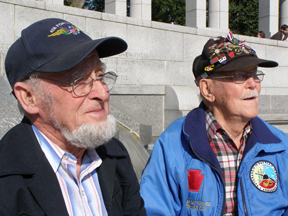
Wilmer Myers and Dwight Rist at the National World War II Memorial

Wilmer Myers (left) and Dwight Rist at the National World War II Memorial

It’s one thing to see the awesome National World War II Memorial, and doubly stirring to experience it in the company of people it honors.

I was fortunate to have that opportunity on Saturday.

The Lehigh Valley Veterans History Project Roundtable brought a busload of 25 World War II veterans and their companions to Washington, D.C.

Invited to go along, I brought my friend Dan Curatola of Bethlehem, who was a few days shy of his 91st birthday and struggling with a gimpy right knee. I had done Dan’s story in two parts for my Morning Call series War Stories: In Their Own Words in 2009. http://www.mcall.com/news/all-a1_5curatola1.6866562may25,0,4282737.story http://www.mcall.com/news/all-online1qsyl.6910821may26,0,2387967.story

If any vet deserved to walk the monument to American spirit, commitment and sacrifice, it is Dan. As a 1st Infantry Division soldier, he fought in North Africa, Sicily and Normandy, where he was in the first wave to hit Omaha Beach on D-Day. He was badly wounded two days later.

Dan was in sterling company. Other aging warriors in our group included Wilmer Myers of Sellersville, who served in the 5th Army’s 681st Ordnance Company in North Africa and Italy, and his buddy, Dwight Rist of the Quakertown area, a 28th Infantry Division vet who fought in the Huertgen Forest and Battle of the Bulge.

There was Gordon Higgins of Whitehall, a veteran of the 431st Antiaircraft Artillery Battalion attached to the 1st Infantry Division. He came with his daughter, Debbie Nagy of Orefield. There was Pearl Harbor survivor Dick Schimmel of Allentown, an Army vet who worked with the radar operators on Oahu. I did his story in 2007. http://www.mcall.com/news/warstories/all-richard-schimmel,0,2980600.story And there was Morris Metz of the 94th Infantry Division, who came with his wife, Dorothy. Morris, who lives near Easton, is president of the Lehigh Valley Chapter of the Veterans of the Battle of the Bulge.             

We got a tour of Arlington National Cemetery, where our guide pointed out the graves of such luminaries as Audie Murphy and Claire Chennault. At the Tomb of the Unknowns, we were among hundreds who stood in respectful silence for the changing of the guard.

Then our group of more than 50 joined thousands in the sun at the National World War II Memorial, some of our members in wheelchairs. 

The roundtable’s tribute to the World War II vets wasn’t over when we got back to the Lehigh Valley in the evening. The Sands Casino Resort Bethlehem treated us to an elegant dinner at Emeril’s Chop House, where we spent some two hours in fellowship.

“It was a good day,” Dan said afterward while I was driving him home.

We have the Lehigh Valley Veterans History Project Roundtable to thank for it. This dedicated volunteer group meets in Allentown and works “to collect, document and preserve the personal experiences of U.S. wartime veterans, as well as home front workers and volunteers who supported the war effort,” according to its website, http://www.lvveteranshistory.org/. Mike Sewards, Dick Musselman and Tony Phillips organized and raised money for the trip and led our group.

It was a job well done.

This first trip to D.C. for local vets won’t be the last. The roundtable is planning another one for next spring.

War films that get the shiniest medals

"The Best Years of Our Lives"

Dana Andrews and Teresa Wright in "The Best Years of Our Lives"

Got home from work the other night in time to see the last few scenes of one of the best films ever made, The Best Years of Our Lives. There stood Dana Andrews as Fred, the World War II flier come home, in a graveyard of junked warbirds. He climbs into the nose of a B-17 and drifts back to battle. You don’t see or hear any fighting, but it’s there. Haunting.

Then the wedding scene. Homer (played by Harold Russell) has lost both hands in the war and now uses metal claws. As the guests look on anxiously, he deftly slips the ring on Wilma’s finger with his mechanical hands. I love that part.

It got me thinking about my favorite war films, so I came up with a list. Here goes:

1. The Best Years of Our Lives, 1946

2. All Quiet on the Western Front, 1930

3. Saving Private Ryan, 1998

4. Das Boot, 1981

5. Schindler’s List, 1993

6. The Deer Hunter, 1978

7. Casablanca, 1942

8. Full Metal Jacket, 1987

9. The Big Parade, 1925

10. Stalag 17, 1953

Honorable mention goes to these three others:

—  A Walk in the Sun. This drama came out at the end of 1945 and was directed by Lewis Milestone, the director of the 1930 version of All Quiet on the Western Front. (Huntz Hall, one of the goofy Bowery Boys, plays a private in an American platoon during the 1943 invasion of Italy.)

— Action in the North Atlantic, 1943.  Dane Clark is great as a crewman on a Liberty ship headed for Murmansk.

— Guadalcanal Diary, 1943. This has the best prayer uttered in a war film. It comes from Cpl. Taxi Potts (William Bendix), as he and other Marines, including a Catholic priest, are huddled in a bunker during a Japanese bombardment.

POTTS: “I’m no hero, I’m just a guy. I come out here because somebody had to come. I don’t want no medals, I just wanna get this thing over with and go back home. I’m just like everybody else, and I’m tellin’ you I don’t like it. Except maybe I guess there’s nothin’ I can do about it. I can’t tell them bums to head somewhere else. Like I said before, it’s up to somebody bigger than me, bigger than anybody.

“What I mean is I … I guess it’s up to God.

“But I’m not kidding when I say I sure hope he knows how I feel. I’m not gonna say I’m sorry for everything I’ve done, maybe I am and maybe I’m not. When you’re scared like this, the first thing you do is start tryin’ to square things. If I get out of this alive, I’ll probably go out and do the same things all over again, so what’s the use of kidding myself?

“The only thing I know is, I … I didn’t ask to get into this spot. If we get it – and it sure looks that way now – well I only hope he figures we done the best we could and lets it go at that. Maybe this is a funny kind of prayin’ to you guys, but … it’s what I’m thinkin’ and prayin’.

FATHER DONNELLY: Amen.

Two wars, a father and his son

Louis C. Venditti, Army Air Forces, World War II

Louie Venditti of Malvern, Pa., was a ground crewman with the 8th Air Force.

Last week I wrote about my Uncle Sam and the brain injury he suffered in the Pacific during World War II that ultimately caused his death. I never knew him; he was gone before I was born. But everyone in the family said he was a nice guy.   

Sam was the oldest of four brothers, including my father, who served in the war. The only one who set foot in Europe was Louie, the wildest of the Venditta boys, a playful rogue and jokester. He didn’t see any fighting as a ground crewman for the 8th Air Force’s 479th Fighter Group in England. But he did see the horror of it.       

I know, because he once told me about something that happened at the Army Air Force station in Wattisham, where one of his duties included driving a fire truck.  

One day, the pilot of a P-38 Lightning on his way back from a mission radioed that he was hurt and having trouble with the controls. His fighter plane had gotten shot up over Nazi-occupied Europe. He had to make an emergency landing, so a controller directed him away from the main airfield. The sleek, twin-engine Lightning crash-landed, flipped and burst into a fireball. The blaze intensified into an inferno.

Twenty-year-old Pfc. Louis C. Venditti (he spelled his surname differently) had sped to the wreck in a fire truck and now looked on helplessly. Against the searing heat, he saw the pilot pinned upside-down in the cockpit, banging on the bubble canopy with his fist to force it open. But it was too late. No one could save him from the flames.

“That really got me,” Uncle Louie said. “It got me for a long time.”

The hazards of combat flying were surely on his mind, but unspoken, in 1969 when his 20-year-old son went to Vietnam as an Army helicopter pilot. Nicky Venditti was dead in 11 days, but it wasn’t from being shot down and didn’t have anything to do with the “Huey” he was trained to fly. In fact, he never got off the ground. He died in a grenade explosion, a result of what the Army called a training accident. http://www.davidvenditta.com/

Uncle Louie put flowers on Nicky’s grave just about every Sunday for 27 years,  then joined him.

‘A series of hysterical fugues’

Sam Venditta, WWII

Sam Venditta of the Army coast artillery, World War II


A fascinating story in the September issue of Smithsonian magazine looks at the phenomenon of “shell shock” as it emerged in the First World War. Were the afflicted soldiers brain-damaged by blast force, a physical injury, or emotionally traumatized by the horrors of mechanized war? “Unhappily, the single term ‘shell shock’ encompassed both conditions,” writes Caroline Alexander in her article, “The Shock of War.” http://hy.pr/server/hypr/?action=light&l=1gc67 

The diagnosis remains controversial and reminds me of the complex case involving one of my uncles, a soldier during World War II. 

In the mid-1990s, I got Sam Venditta’s inch-thick Army medical records from the U.S. Department of Veterans Affairs. Sam was a technician fifth grade with the 198th Coast Artillery Regiment (Antiaircraft). He began having “episodes of unconsciousness” in August 1942 when he was 23 and stationed on the Polynesian island of Bora Bora, south of Hawaii. Bora Bora was part of a chain of island bases where U.S. ships could anchor and refuel while sailing the 8,000 miles from California to Australia. 

Sam told doctors he worked up to 18 hours a day on a demolition squad, blasting coral to clear the way for ships to dock. “[A] witness gave story of patient shouting during sleep with foaming at the mouth and convulsive seizures,” one entry says. After Sam had “a series of hysterical fugues,” doctors questioned him and his family and concluded he’d had epilepsy before he entered the service, and that the blasting on Bora Bora had aggravated his condition. He was certified disabled, discharged and sent home in 1943. 

Exams done for the VA so Sam could get benefit payments found troubling signs. “[H]e is tense, anxious about himself, unable to control the trembling in his arms and legs…He has insomnia and terrifying nightmares … severe attacks of headache … He is worried over his nervous state and fears he never will get well.” 

One night in May 1950, Sam saw the Philadelphia Athletics play the Cleveland Indians at Philly’s Shibe Park. Back home in Malvern, as he lay in bed with his wife, he cried out, gripped a pillow and died. He was 31 and had suffered a cerebral hemorrhage. 

Uncle Sam’s terrible misfortune was one example of what war can do to the brain. 

Sixty years later, we have reason to be concerned as our government continues to send men and women into harm’s way overseas. In her article, Alexander cites a Rand Corp. study that found 19 percent of U.S. troops sent to Iraq and Afghanistan, about 380,000, may have sustained brain injuries from explosions.

A key reward for promoting veterans’ stories

GIs in Battle of the Bulge

GIs in the Battle of the Bulge

When you meet a war veteran, it’s as if you’re shaking hands with history. No matter if it’s World War II or Vietnam, the person you’re getting to know has had a role on the world stage. He or she is a bridge to America’s past.

That’s always been a reason I’ve enjoyed spending time with vets and writing about them. But as I realized yet again last week, there’s a valuable connection that goes well beyond mere hobnobbing.

I spoke last Tuesday to the Lehigh Valley chapter of the Veterans of the Battle of the Bulge. The group has about 150 members, 60 of whom are actual Bulge vets, and has been meeting monthly since 1998. I’ve attended almost all of the meetings for the last several years and written stories on more than a dozen VBOB members for my Morning Call series, War Stories: In Their Own Words,  http://www.mcall.com/news/local/warstories/.

My talk was about interviewing veterans. In preparing for it, I thought about what that work has meant to me. The answer is simple. One of the rewards, other than getting the vets’ stories into the paper and online for thousands of readers to appreciate, is personal. It’s my getting to be friends with these men and women who have served the country in wartime.

I told the Bulge group a story to illustrate the point.

Early in 2002, I was interviewing Bataan Death March survivor Joe Poster. One day I came to his home for another session, and he had a gift for me – the newly published book by Hampton Sides, Ghost Soldiers, about the Army Ranger raid to rescue imprisoned survivors of the Bataan march.  http://www.amazon.com/Ghost-Soldiers-Account-Greatest-Mission/dp/038549565X/ref=sr_1_1?s=gateway&ie=UTF8&qid=1285536426&sr=8-1

I thanked Joe but told him I couldn’t accept it on ethical grounds. I was doing a story on him and it might appear that he was influencing me.

Joe took offense at that and barked at me:

“I’m not giving you this book because you’re doing a story on me! I’m giving it to you because you’re my friend!”

I took the book.

A Vietnam encounter at a Cape May inn

Stephen J. Saluga III

Army Specialist 5 Stephen J. Saluga III in Vietnam

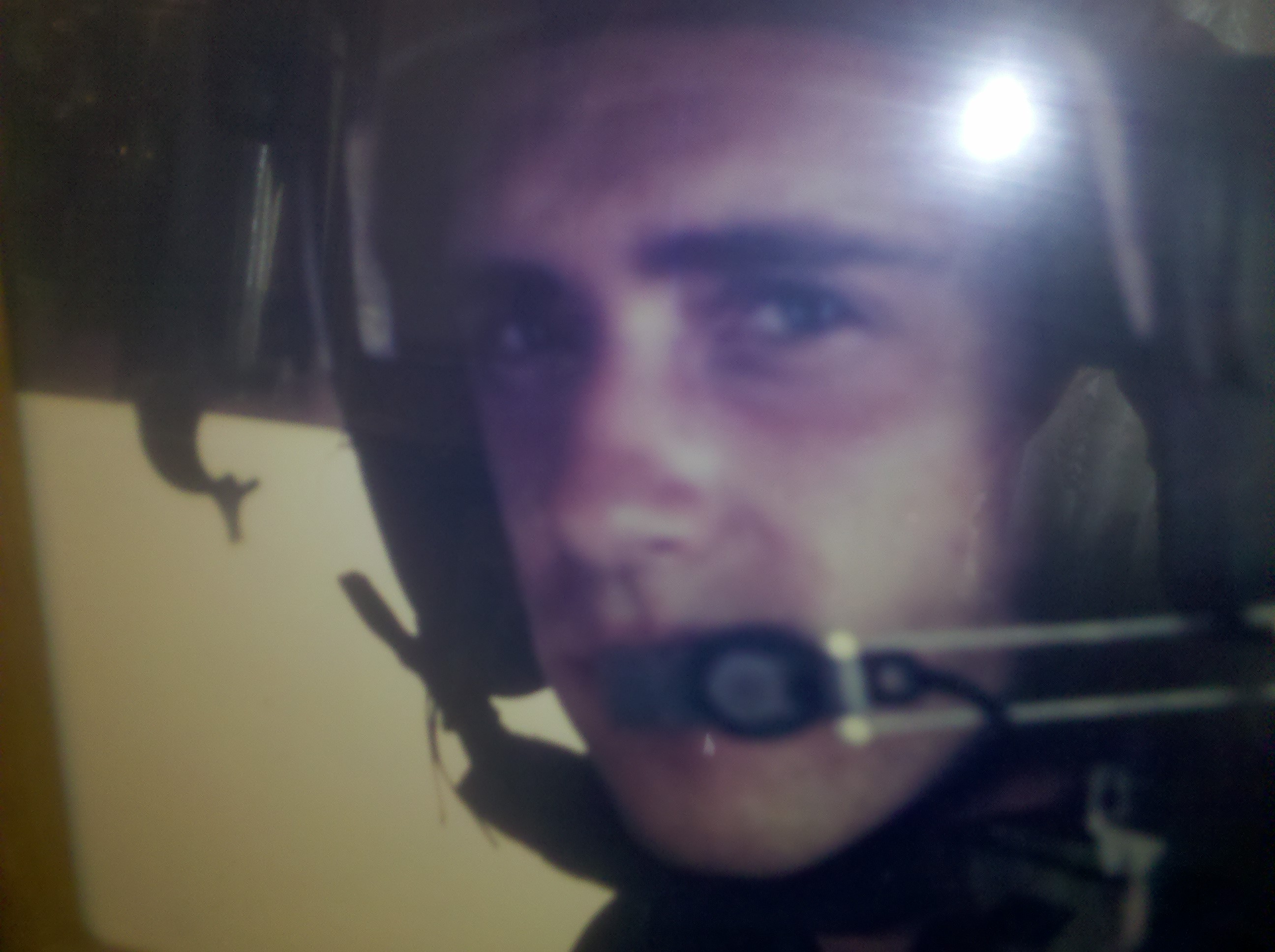
My wife, Mary, and I spent a few days last week at a bed-and-breakfast in Cape May, N.J. On the second floor of the Bedford Inn, at a hallway table where guests could help themselves to tea and coffee, was a shrine to a soldier killed in the Vietnam War. His name was Stephen J. Saluga III.

The shrine consisted of a picture of Stephen’s name as it appears on the Vietnam Veterans Memorial in Washington, a rubbing of his name and a photo of the handsome young man in a flight helmet, taken aboard a helicopter. There is also a framed saying: “Until everyone comes home, until the battle ends, until everyone is safe with their family and friends. Then we shall have peace.” And a painting of a soldier carrying a pack and walking toward a slant of light, titled Heading Home, by Thomas Kinkade.

We asked innkeeper Archie Kirk about Stephen, and he said the soldier was his wife Stephanie’s brother.

Stephen, an Army specialist, was a helicopter crew chief with the 82nd Medical Detachment, 44th Medical Brigade. On Oct. 19, 1968, during a night rescue mission in the Mekong Delta, his chopper crashed and all aboard were killed. Stephen was 21 and the only person from Medford, N.J., to die in the war. Among his medals was a Bronze Star for heroism.

The New Jersey Vietnam Veterans Memorial website says Stephen’s helicopter malfunctioned before plunging into the Bassac River and exploding.  http://www.njvvmf.org/STEPHENSALUGA-vetmemorial2027. But Archie, who said he himself had gotten in on the tail end of the Vietnam War and was familiar with its vagaries, said the circumstances were murky. He said Stephanie found a veteran who’d known her brother in Vietnam, and the vet said the crash happened because the pilot was inexperienced.

The uncertainty reminded me of my cousin Nicky Venditti’s death in Vietnam about nine months after Stephen was killed. Nicky was mortally wounded his first week in the war zone when an Army instructor unwittingly tossed a live grenade during a class for new Americal Division arrivals at Chu Lai. It’s still not clear why the instructor, a sergeant, had a live grenade instead of the inert one he usually carried as a prop. My quest to learn the truth about what happened to Nicky is the subject of my book, Quiet Man Rising: A Soldier’s Life and Death in Vietnam. www.davidvenditta.com

Stephanie Kirk’s family has a history of service to the country. Her father, an Army veteran of World War II, hit Omaha Beach on D-Day, June 6, 1944. He died in 2003. A cousin was one of the 17 sailors killed in the 2000 suicide attack on the destroyer USS Cole off Yemen.

During our stay, we didn’t get to talk with Stephanie about her brother. But the loving shrine to Stephen at the Bedford Inn, like the photos of Nicky I have on my desk, is an example of how the memory of Americans who died in that war four decades ago still burns in the hearts of friends and family.