Fit for tribute: a cluster of D-Day veterans

D-Day veterans in Nazareth Boro Park, June 6, 2011.
D-Day veterans in Nazareth Boro Park, June 6, 2011. Bench Hartman is seated at far left.

I gave Bench Hartman a ride to the D-Day picnic in Nazareth this month. It was the first time he’d gone to the celebration held each year by the Lehigh Valley Chapter of the Veterans of the Battle of the Bulge. He was invited to last year’s picnic, after I provided VBOB with the names, addresses and phone numbers of all the D-Day vets I knew of, but he didn’t make it.

This time he was happy he went.

Some 80 people, plus World War II re-enactors with a display of vehicles, showed up at the June 6 event in Boro Park marking the 67th anniversary of the invasion that doomed Adolf Hitler’s Third Reich. Besides Bench, the subject of my 2006 D-Day war story in The Morning Call, eight other D-Day vets were there. Among the honorees were my war stories subjects from previous years — Joe Motil of Bethlehem and Nathan Kline of Allentown — and the subject of my story in that day’s paper, Ralph Mann of Coopersburg.

Absent were others who have been to the picnic in the past and were featured in my series War Stories: In Their Own Words: Dr. John Hoch of Nazareth; Dan Curatola, who is in the VA hospital in Wilkes-Barre, and Duncan Cameron,
who is in the Mary Ellen Convalescent Home near Hellertown.

VBOB President Morris Metz had the D-Day vets stand up one by one and talked about their service. Bench rose when his name was called. In awe and admiration, Morris told the crowd that Bench had parachuted into Normandy
with the 101st Airborne Division in the early morning darkness. Heartfelt applause broke out across the pavilion. Bench sat down, turned to me and said, “I’m glad you brought me.”

After the introductions, Bench shook hands with Ralph Mann, who made the jump with the 82nd Airborne Division. It was heartwarming to witness the meeting of these two ex-paratroopers in their late 80s, strangers until now, who had parachuted into northern France in the vanguard of the greatest invasion in history.

The vets were rounded up for photos. The one that accompanies this blog was taken by Dick Musselman, a leader of the Lehigh Valley Veterans History Project Roundtable. 

On my way to work after dropping Bench off at his home in Hokendauqua, I thought about the dwindling fraternity of vets who came ashore on June 6, 1944 – and the ones I’ve interviewed who have since died: John Feninez of Allentown; Frank Cudzil of Schnecksville; John Desrosiers of Breinigsville; Earl Metz of Lopatcong Township, N.J.; John Umlauf of Allentown; Ernie Leh of South Whitehall Township; and Harold Saylor of North Catasauqua.

They’re on the honor roll of history. It’s good that I got their stories into the newspaper.

You can find all my D-Day stories, and the complete series,
at http://www.mcall.com/news/local/warstories/
 

A musty first draft of World War II history

A co-worker at The Morning Call whose father fought in the Battle of
the Bulge told me last week about a World War II treasure trove in the
newspaper’s library.

Frank Warner said there are half a dozen binders on a shelf that contain weekly summaries of the war as it unfolded from 1939 to 1945, written by staffers of the old Call-Chronicle.

I had to see for myself. Sure enough, there are six binders containing faded-yellow, musty clippings – one for each year of the war. The first is dated Sept. 10, 1939, nine days after the war began with Germany’s invasion of Poland, and goes to Sept. 1, 1940. The last covers Oct. 8, 1944, to Sept. 9, 1945, seven days after the Japanese surrender ceremonies.

It was a huge effort, coming at a time when folks got their news from newspapers, magazines and radio.

The binders are titled “World War II Review.” For each week of the war, the Sunday Call-Chronicle ran through the events and disclosures of the past seven days for its readers. The stories are lengthy – around 50 column inches – and tell as much as the military and the government were willing to divulge in a time of censorship. Most of the accounts I saw had no byline identifying the Call-Chronicle writer, but some credited a W.R. Reinert.

The stories started on Page 1. An editor’s note for each says: “In order to correlate war events of the past week, the Sunday Call-Chronicle presents the following summary of important news based on what we believe to the most authentic reports available.”

I looked up the binder that has the entry for June 14, 1942, containing reports of the battles of the Coral Sea and Midway in the Pacific. Regarding Midway, which followed the Coral Sea battle and took place June 4-7, the newspaper wrote: “The full story of this second engagement has not yet been told, but again Army and Navy reports are that losses to the Japanese are far greater than those sustained by the American forces.”

After each installment ran, someone in the newsroom clipped the story and pasted it neatly into the three-ring binder. That went on for six years.

Together, the binders contain a precious first draft of World War II history, reported as it happened and presented to Lehigh Valley residents hungry for news of the fighting — and a big picture that would help them understand the conflict.

How one veteran’s D-Day story took shape

Eisenhower with D-Day paratroopers

Eisenhower with D-Day paratroopers

Monday marks the 67th anniversary of D-Day, so look for my story on World War II paratrooper Ralph H. Mann in The Morning Call and on its website, www.mcall.com.

Ralph was a sergeant in Headquarters Company, 508th Parachute Infantry Regiment, attached to the 82nd Airborne Division. He was 21 when he jumped
into Normandy in the early morning darkness of June 6, 1944. He’s 88 now and still living in the town he grew up in, Coopersburg.

Years ago, Ralph wrote a book about his experiences for his family at the urging of his sister Fern Mann, former president of the teachers union in the Allentown School District. It was Fern who got in touch with me in May 2010 when I ran a query in the newspaper in search of Lehigh Valley D-Day vets. She sent me Ralph’s book, A Red Devil from Coopersburg, Pa., on a CD. (The soldiers in the 508th PIR were nicknamed the Red Devils.)

My search for D-Day vets also turned up E. Duncan Cameron, who hit Omaha Beach as a private in the 26th Infantry Regiment, 1st Infantry Division. Duncan’s story became the D-Day anniversary piece that year for my series, War Stories: In Their Own Words. I made up my mind at the time to do Ralph’s story in 2011.

He made it easy for me. The CD has a great amount of detail, plus maps, his Army records, letters he wrote and received, and photos, including many that he took with a Kodak camera he carried across Europe. He covers all
of his training and combat from D-Day until an accidental shooting in January
1945, during the Battle of the Bulge, put him out of the war. He goes on to write about being hospitalized with a bullet wound in Paris and England, rejoining his regiment at the end of the war against Germany and going home.

What he wrote became the backbone of the story. I could use it to jog his memory and support his oral account.

I visited Ralph three days in May at his home, and we went over his experiences for hours with my digital recorder running. On the last day, Morning Call photographer Monica Cabrera shot video of him, a re-interview that made the story richer. With so much material, I narrowed the scope of my story to Ralph’s experiences on the one day, D-Day. Then I added several paragraphs about the day he was wounded, because the circumstances were so bizarre.

Ralph will be among the D-Day vets who will be honored Monday in Nazareth
Boro Park at the annual picnic put on by the Lehigh Valley Chapter of the Veterans of the Battle of the Bulge. I’ll be there to applaud him and the others.


A VA plate brackets a soldier’s lost life

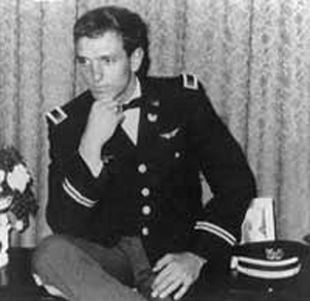
Nicholas L. Venditti

Nicky Venditti at home in Malvern, Pa., in June 1969 while on leave before deploying to Vietnam. He was dead within a couple of weeks.

My cousin Nicky’s grave marker at Philadelphia Memorial Park, near his hometown of Malvern, Pa., is the standard Veterans Administration plate, 2 feet long by 1 foot wide. Oxidation has crusted it to a greenish blue. A cross is centered at the top and stands out from the surface in relief. Below it, also in relief, is the following:

NICHOLAS L. VENDITTI
PENNSYLVANIA
WO    SPT COMD AMERICAL DIV
VIETNAM
NOV. 26, 1948     JULY 15, 1969

Nicky was an Army helicopter pilot. WO was his rank – warrant officer, which put him above enlisted men and below commissioned officers. Soldiers of other rank had to address warrant officers as “mister.” SPT COMD AMERICAL DIV was Support Command, Americal Division. Under the Support Command organization, new arrivals at Chu Lai, Vietnam, were processed through a replacement company and trained at the Americal  Combat Center. Nicky hadn’t yet been assigned to an assault helicopter company. If he had been, the unit might have been listed on the marker instead of Support Command.

He hadn’t yet been assigned because the 20-year-old didn’t survive his Americal Division orientation. He had arrived in Vietnam on the Fourth of July 1969 and was dead in 11 days. An Army instructor had unwittingly set off a grenade in a classroom while addressing Nicky and a few dozen other newly arrived soldiers. Nicky lost a leg and died on July 15, 1969, at Chu Lai’s 312th/91st Evacuation Hospital. I was 15 years old when he came home in a silver metal casket.

Forty-two years have passed. I have framed photos of Nicky on my desks at home and at work, and I’m working on a book about him, Quiet Man Rising: A Soldier’s Life and Death in Vietnam, http://www.davidvenditta.com/. It’s my way of remembering his sacrifice.

On this Memorial Day, he is on my mind.

There was yet another funeral last week for a veteran whose story I got into The Morning Call – Horace Rehrig of Lower Macungie.

Horace was my buddy. We would meet for breakfast at the Trivet diner on Tilghman Street outside Allentown, where he wore his cap identifying
him as a World War II crewman on the carrier USS Ticonderoga. His account of
kamikazes crashing into the ship while he was on deck ran on Memorial Day 2007. http://www.mcall.com/news/all-horacerehrig2,0,1596930.story

I met Horace in the spring of 1999 while working on the first article in my series, War Stories: In Their Own Words. The story was about Horace’s brother Laird, and the man telling it was Laird’s high school German teacher, Bill Haas. Bill and Laird were 9th Infantry Division soldiers who met up in Normandy after D-Day. Shortly after their chance meeting, a German shell killed Laird. I went to Horace’s home – he was living in Allentown then – and borrowed a picture of his brother to run with Bill’s story. Horace and I chatted briefly; he mentioned serving on the Ticonderoga. I made a mental note that I might want to interview him someday.

It took me eight years to get around to that, and I was glad I did. His moment-by-moment account of the Japanese attacks on the Ticonderoga was riveting.

Horace died May 21. I went to the funeral Thursday in Ashfield, Carbon County,
and grieved with his family and friends. A copy of The Morning Call with his story, and a large photo of Horace on the front page, was buried with him. His son, Rick, told me the article was a highlight of his dad’s life.

It was heartwarming to hear my friend Bob Kauffman of Emmaus tell hundreds of people Sunday about his brushes with death during World War II and how he survived by the grace of God. Too many of his fellow soldiers were not so fortunate, he said with great emotion during the veterans appreciation service at Cedar  Crest Bible  Fellowship Church. They were robbed of a future, he said, and the rest of us were robbed of their promise.

Afterward, Bob signed copies of his book, The Replacement. His account of his
experiences in Europe with the 36th Armored Infantry Regiment ran in three parts in 2004 as part of The Call’s War Stories: In Their Own Words series. http://www.mcall.com/news/all-robertkauffman1,0,1872991.story,
http://www.mcall.com/news/all-robertkauffman2,0,1938528.story,
http://www.mcall.com/news/all-robertkauffman3,0,2004065.story

One sailor’s link to the stuttering king

King George VI

King George VI

Ever since I saw The King’s Speech months ago, I’d wanted to call Dr. John Hoch but kept putting it off.

John, a Navy veteran of World War II who lives in Nazareth, was the subject of my War Stories: In Their Own Words feature on the D-Day anniversary in 2008. Here’s the link to my Morning Call story: http://www.mcall.com/news/all-johnhoch,0,4550409.story

In the run-up to the Normandy invasion, he saw King George VI in person. How many folks still living can make that claim?

I finally called John this month. He and I hadn’t spoken in almost three years. As soon as I identified myself, the 86-year-old broke in excitedly:

“I saw The King’s Speech!”

John had been on a landing craft moored in southern England in the days before the Allied invasion of northern France, waiting to take troops across the English Channel. He had told me Gen. Dwight D. Eisenhower and the king appeared on the dock about 30 feet away from him.

While fact-checking before my story ran, I asked British historian Antony Beevor about John’s seeing Eisenhower and George VI together. In an e-mail, the author of D-Day: The Battle for Normandy wrote:  “It is plausible on 4th or 5th of June, but not on June 6th, as ships had left and the King was broadcasting live to the nation that morning.”

John, who told me his wife’s great-uncle had been a king’s guardsman, said in our phone chat that when he saw George VI on the dock, “He had an admiral’s uniform on. He motioned a lot with his hands to Eisenhower. His mouth was moving, but I didn’t hear him.”

Even if he had, John said, “I didn’t know about his speech impediment. I’d never heard him talk.”

Two distinguished vets are gone, but their stories survive

You’ll have to excuse me for feeling down tonight. In the last week, two war veterans I’ve written about in The Morning Call have died.

Harry Yoder on May 8. His story about his experiences as a cargo pilot in the Berlin Airlift ran on the Fourth of July 2009. http://www.mcall.com/news/warstories/mc-harry-yoder,0,2809102.story

Jack Davis on May 12. His account of his role in the Battle of the Bulge ran on Christmas Eve 2006. http://www.mcall.com/news/all-5bulgedec24,0,1718578.story

Of the two, I knew Jack best. He lived on College Hill in Easton. We stayed in touch by phone, and I saw him at luncheon meetings of the Lehigh Valley Chapter of the Veterans of the Battle of the Bulge. He was a serious student of World War II, widely read, and liked to speak about it in public. He gave one of those instructive talks last year at the Bulge vets’ annual tribute to D-Day veterans in Nazareth.

Jack, who was 87, had two Silver Stars for gallantry. I never found out what he did to earn them; he declined to tell me. He said it was between him and the Army buddies with whom he shared the experiences. But a close friend of his, another Bulge vet, told me the medals concerned incidents in which Jack acted to save the lives of fellow soldiers.

Harry was an extraordinarily energetic and personable man whose military experience reached from World War II, when he was a B-24 bomber pilot, to the Cold War, to the wars in Korea and Vietnam, and to the Pentagon. Among his many decorations was the Distinguished Flying Cross for bravery.

After his story ran, I brought him extra copies of the paper. As we sat in his Boyertown home, he read part of his story about defying the Soviet blockade of Berlin, looked up at me and burst out happily: “Ah, this is great history!” He was right about that.

Harry was 95.

He and Jack were more than just good stories for me. They were my friends. I’m glad I spent time with them and got their stories into the newspaper, and into the permanent collections of the National World War II Museum in New Orleans and the Library of Congress in Washington.

You know I’m just one of many who aim to record veterans’ stories before it’s too late. Locally the effort is led by the Lehigh Valley Veterans History Project Roundtable.

Another contributor is the PCN television network, which has recorded more than 300 hours of interviews with Pennsylvania veterans since 2002. Its series “World War: In Their Own Words” focused on World War II vets.

Now a new PCN series, “Voices of Veterans,” covers WWII, the Cold War, and the Korean and Vietnam wars. It debuts this Friday, May 20, at 10 a.m. and 6 p.m. The series will continue on Saturday, May 21, and Sunday, May 22, at 2 p.m.

“Voices of Veterans” will also re-air several times during the Memorial Day holiday beginning Friday, May 27 at 6:40 p.m. Encore presentations have been scheduled through Memorial Day on May 30. See the daily schedule at www.pcntv.com.

Among the 21 vets who will be featured are Frank Ginther of Bethlehem; Matt Gutman of Macungie; Bob Kauffman and Mark Kistler, both of Emmaus; Hank Kudzik of Northampton; and Walter Morgan of Allentown.

Kauffman’s and Kudzik’s stories have appeared in my Morning Call series
War Stories: In Their Own Words.

Reflections of a Special Forces veteran

Special Forces, Vietnam

Special Forces in Vietnam

Longtime readers of The Morning Call might have recognized the retired Special Forces lieutenant colonel who was the subject of a Page 1 story last week on the killing of Osama bin Laden.

John McGeehan of Bethlehem, who was interviewed about the Navy SEAL raid on the terrorist leader’s hideaway in Pakistan, has been profiled in the newspaper several times, most notably for a 2000 special section that I oversaw.

The four-page broadsheet insert was published on April 30 that year to mark the 25th anniversary of the communist victory in Vietnam – the fall of Saigon. It had eight stories about people whose lives were defined by the Vietnam War, McGeehan among them.   

He was 23 when he arrived in Vietnam in 1968 as a Green Beret on what would be the first of three tours of duty. He served at first with Delta Project, small reconnaissance teams that snatched enemy prisoners and spent weeks in hostile territory, assessing strategies and strength.

“I wanted to be a soldier,” McGeehan, then 56, told reporter Debbie Garlicki in 2000. “You have to take care of little boy dreams. If you don’t, you will always wonder, ‘What kind of guy would I have been?’ If you take care of that, it solidifies you in your own mind.

“I did it, along with the greatest bunch of men I have ever been around.”

 In last Wednesday’s story, the now 67-year-old McGeehan harked back to his own experience in covert missions. He said the commandos who went after bin Laden had to have been really pumped up.

“The days go by and that adrenaline is still with you … and you’re not going to sleep because you’re still high from the mission,” he told Morning Call reporter Devon Lash.

Coincidentally, both stories closed with the words on a plaque that hangs in McGeehan’s home. It is the Special Forces Creed, and it reads: “My goal is to succeed in any mission – and live to succeed again.”

That is the spirit of the breed.

How Grandpa joined the war with Spain

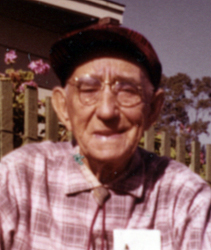
Robert Burns Dees in the late 1950s

Robert Burns Dees in the late 1950s

Amazing, the things you find out even after 25 years of marriage. 

We were sitting at the dining room table when my wife mentioned that her grandfather had served in the Spanish-American War.

Remember the Maine? Well, no one living today remembers the U.S. battleship getting blown up in Havana harbor.

Hard to believe Mary could have a grandfather who was in a war as far removed in time as 1898. Considering we’re baby boomers, World War I would have been easier to figure.

Right away, I wanted to know about Robert Burns Dees.

Mary’s mom, Naomi Schleicher, who lives in Allentown and taught in the Easton Area School District for years, told me that her dad grew up in Arkansas and signed up in Texas, but didn’t leave the country during the war. Afterward, he worked for a Texas rancher and married his daughter. The couple moved to California and had eight kids, Naomi being No. 7 in 1922.

First thing was a Google search. “Robert B. Dees” got 3,900 hits. But when I narrowed it to “Dees & Spanish-American War & Texas,” I got a hit on Texas Adjutant General Service Records 1836-1935 at the Texas State Library and Archives. Dees is listed on the site as a U.S.volunteer in the Spanish-American War.

I wrote to the library for any information it might have. A few days later, a librarian called and said there’s info on Dees online, and she walked me through it on my PC.

The Texas State Library website, www.tsl.state.tx.us, allows you to do a search on individuals. I plugged in Dees’ name and got a prompt for “image.” When I clicked on that, I got a single photocopy of a one-page document in PDF format.

Dated November 1901, it says: “Received from Honorable Joseph D. Sayers, Governor of Texas, the sum of $8.32 in payment of amount due me, late private Company L, 4 Texas Volunteer Infantry as compensation for services …. [in] the war with Spain.” It has Dees’ signature and address in Ballinger, Texas.

A Google search on 4th Texas Volunteer Infantry found a summary of its service, which says its men were mustered in during July 1898, after the main battles and a month before the fighting stopped.

The unit, which had 46 officers and 949 enlisted men, did not go overseas but was stationed at Fort Houston as part of the Department of the Gulf. Dees was 21 at the time. He was mustered out, along with the rest of the 4thTexas, in March 1899.

I got on the National Personnel Records Center website, http://www.archives.gov/st-louis/, and printed out Standard Form 180 for requesting military records. I filled it out with as much as I now know about Dees, including his date and place of birth and date of death, which I got from Naomi. The paperwork is in the mail to the National Archives and Records Administration in Washington,D.C. I’ll let you know what, if anything, I get in return.

Dees died in 1961 at age 84.

One of the hits I got on my Internet search of his name had a newspaper item about a family tragedy that must have caused him and his wife profound grief.

It’s a 1918 story in the Mariposa (Calif.) Gazette about the accidental death of their 9-year-old daughter Mary Belle, who was hit in the head by a falling tree limb. Both parents saw it happen.

 Naomi was born four years later. She remembers that when she was a child, her father looked down at her and said, “My little Mary Belle.”

Why you need to see ‘Restrepo’

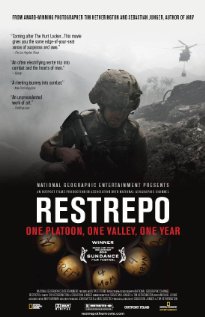
Restrepo war documentary

The Sebastian Junger/Tim Hetherington documentary on the Afghanistan war

If you want a picture of what the fighting in Afghanistan is like, see Restrepo.

Until I watched this documentary film recently, my most in-depth exposure to the war came from reading Jon Krakauer’s Where Men Win Glory: The Odyssey of Pat Tillman. That book is an eye-opener but centers on what happened in one day, the friendly fire incident in 2004 that killed the football star.

Restrepo puts you with a U.S. Army platoon over the course of its 15-month deployment in 2007-08 in eastern Afghanistan’s menacing Korengal Valley. It’s the work of author Sebastian Junger, who crafted The Perfect Storm, and photographer Tim Hetherington, who tragically was killed last week in Libya. The 2010 film was nominated for an Academy Award, and you can borrow the DVD, as I did, from the Allentown Public Library. 

What’s with the title? Restrepo was a medic, Pfc. Juan Restrepo, “Doc” to the guys, who was killed early on. At the start of the film, you see him kidding around in a video one of the guys shot as they were heading for Afghanistan. His fellow soldiers in the 503rd Infantry Regiment, 173rd Airborne Brigade Combat Team honored his memory by naming their mountain outpost after him.

You get an idea what it means to spend time in a dangerous area – periods of nothing happening, followed by seconds of incredible intensity under fire. There are sit-down talks with tribal leaders and questioning of villagers. In one part that really got me, one of the soldiers is killed while they’re on patrol and another, who is nearby, falls apart on hearing the news and has to be kept away from viewing the body. The guy who restrains him tries to be consoling, telling him it happened quickly.

There isn’t any opinion injected into the film, and no overall context or explanation of what our government is trying to get done in Afghanistan, where Americans have been caught up in the war on terror for almost 10 years. So you don’t get the big strategic/political picture, and I don’t think that’s what Restrepo is about.

But you have to wonder a little at the end, when the American commander is asked what the soldiers accomplished in their time in the Korengal Valley. His answer: They built an outpost.

One veteran’s link to Lawrence of Arabia

T.E. Lawrence, Lawrence of Arabia

T.E. Lawrence

While browsing at Barnes & Noble in the Lehigh Valley Mall recently, I noticed the new biography Hero: The Life and Legend of Lawrence of Arabia by Michael Korda.
 
It reminded me of a World War II veteran I interviewed in 1999 for The Morning Call’s special Veterans Day section, War Stories of the Century – Robert A. Carl of Salisbury Township, a retired captain in the Navy Reserve. Here’s the story:  http://www.mcall.com/news/warstories/all-robertcarl,0,5355839.story
 
Bob, who grew up in Pottsville and served in the Merchant Marine and later in the Navy during the war, told me that he had met T.E. Lawrence in New York. It was shortly before the legendary British World War I soldier was killed in a motorcycle accident in 1935. I noted the encounter in the epilogue of Bob’s story.
 
Seeing Korda’s book got me wondering about the circumstances of Bob’s meeting with Lawrence. So yesterday I rooted around in the shoebox where I keep my microcassette interviews and fished out the one with Bob. (I don’t use tapes anymore. I have a digital recorder now, a Sony ICD-SX700. It’s far more efficient and trustworthy.)
 
On the flip side of the tape, near the end of our chat, Bob says: “When we were in New York in 1934 or ’35, my father introduced me to probably the most fascinating man, the most educated man I ever met. That was Lawrence of Arabia. He was in a group, and my father said, ‘This is Lawrence of Arabia.’ ”
 
Well, guess what? I didn’t ask the obvious question: How did he and his father happen to be in the same place as Lawrence?
 
Bob had told me that his father was a businessman – he owned a timber operation – so it could have been a business trip on which the senior Carl took his boy along. I listened to the rest of the tape to see if we got back to Lawrence  later on, but we didn’t. It was a missed opportunity to get an interesting historical nugget.
 
Coincidentally, one of Bob’s favorite topics was English history, something he lectured on at colleges. Meeting Lawrence was a high point of his life. “I would’ve loved it if he had lived and I had gotten a chance to talk to him,” Bob said on the tape.
 
Here’s a footnote: Bob and I had an improbable connection.
 
A prolific writer, he published a book, Men of the Sea, in 1992, had a column in the Pottsville Republican at the time we met, and before that had a war stories feature in the old Bethlehem Globe-Times.
 
One of the veterans he interviewed for the Globe-Times was Lynn Bedics, the Army nurse who tended to my cousin Nicky Venditti as he lay dying in an evacuation hospital in Vietnam in 1969. Lynn lives in my Allentown neighborhood and appears in my as-yet unpublished book about Nicky, Quiet Man Rising: A Soldier’s Life and Death in Vietnam. http://www.davidvenditta.com/
 
I regret having no contact with Bob after 1999. He died in 2002.
 
But his meeting with Lawrence of Arabia lives in my memory as yet another extraordinary example of how ordinary people connect with history.