American Veterans Center honors Lehigh Valley vet

World War II warriors continue to get the recognition they deserve, and a recent honoree on the big stage in Washington is a former sailor I know.

On Oct. 27 the American Veterans Center saluted Hank Kudzik, a Lehigh Valley man I wrote about in 2010 to mark the 110th anniversary of the Navy’s submarine force.

Hank, of the Lehigh Valley’s Allen Township, was one of four vets to receive the Audie Murphy Award, named after the most decorated soldier of World War II, for their roles in the Battle of Midway.

He was 17 years old and serving aboard the USS Nautilus when the big sub took part in the June 1942 battle in the mid-Pacific. The Nautilus was strafed by Japanese planes, put three torpedoes into the damaged carrier Soryu and was depth-charged by an enemy destroyer.

“We dived to around 200 feet, and that’s when the depth charges came, one right after the other,” Hank told me for my series “War Stories: In Their Own Words” in The Morning Call. “Boom! A few seconds passed and we’d hear another one. Boom! It was the loudest sound I ever heard, scared the hell out of me. The boat shuddered. Light bulbs shattered.”

Hank’s award was presented as part of the Veterans Center’s 15th annual award gala in the ballroom of the Renaissance Washington Hotel.

The others who got the Audie Murphy Award are Ed Fox, a machine gunner on Midway with the 6th Defense Battalion, Fleet Marine Force; John Crawford, an ensign aboard the carrier USS Yorktown; and Albert Grasselli, a Marine Corps aerial navigator.

You can read Hank’s story at http://www.mcall.com/news/local/all-5kudzik.7185625apr05,0,7508994.story or in my book, War Stories: In Their Own Words, published last year by The Morning Call, http://morningcallstore.com/warstories. For the American Veterans Center, in Arlington, Va., go to http://www.americanveteranscenter.org/


A Pottstown church celebrates vets’ stories

It’s always heartening to see what’s done at the community level to preserve veterans’ stories.

Last week I spoke about “Why War Stories Matter” before a Life Long Learning group at New Goschenhoppen Church in East Greenville. Life Long Learning is a nonprofit that offers learning opportunities in history, the arts, health, religion, travel and other topics to Upper Perkiomen Valley residents. I was invited because of my book, War Stories: In Their Own Words, published last fall by The Morning Call of Allentown.

In the audience was Scott Armstrong, author of Russian Snows: Coming of Age in Napoleon’s Army, who had helped interview veterans at Cedarville United Methodist Church in Pottstown. Here’s the link to the Cedarville vets: http://www.parentssource.com/veterans.asp You’ll find stories and pictures of 35 men and women.

And if you’re interested in Russian Snows, Scott’s story of Napoleon’s doomed invasion of Russia as witnessed by a 14-year-old boy attached to the French army, go to www.RussianSnows.com.

Why do war stories matter? Because if these personal accounts are left untold, they will be lost to the ages as the veterans die. Future generations won’t know about the courage and sacrifice of these people and what they accomplished in the service of their country.


Tips for interviewing war veterans

We’re in the season for interviewing military veterans. Veterans Day is coming up on Nov. 11, the Pearl Harbor anniversary is right on its heels on Dec. 7, and anytime after Dec. 16 and into January, there’s the Battle of the Bulge.

Here are some suggestions for how to have a productive interview:

COME PREPARED: Before you meet with the vet, know something about his or her service. If he’s a Pearl Harbor survivor, which branch of the service was he in, and where on Oahu did he serve? If he was in the Army Air Forces at the Wheeler Field fighter base, read up on what happened at Wheeler. Ask for the unit he served in and look it up on authoritative websites.

ASK FOR PROOF OF SERVICE: Before your visit, have the vet dig out his or her military paperwork ready for you to examine, preferably a DD-214, which is a summary of service at discharge. You want to be sure you’re dealing with the real McCoy. (I once killed a story because a man who claimed to be a Vietnam vet couldn’t, or wouldn’t, show me papers to prove it.) Be careful, though: Documents don’t always tell the truth. Asking questions can help resolve discrepancies.

THE RIGHT PLACE: Set up the interview for a place where the vet will feel comfortable. This is almost always at his or her home or the home of a relative.

BE ON TIME: If you tell an aging ex-warrior that you’re going to be at his home at 1 p.m., make sure you’re there. Getting someone to open up requires that you first gain his trust, and one way to do that is to show respect. I once was five minutes late for an interview with an Iwo Jima Marine and caught hell from him about it.

RECORDING: I bring a Sony recorder, get it out first thing, hold it up and say, “This is a digital recorder. I’m going to turn it on and leave it on while we talk.” Then I set it down on a table until we’re done. I also use a pad to take notes, mainly to jot down dates and the spelling of names and places.

THE INTERVIEW: Pulitzer Prize-winning investigative reporter Eric Nalder said an interview is a conversation, but a directed conversation. That’s how you need to approach it. Chat, but make sure you’re on the path to getting the information you need. You lead the conversation.

I usually start by asking the vet to tell me about his or her childhood – where he grew up, what his parents did for a living, if he had siblings, if he was working before he got into the service, then where he trained. This acts as a warm-up to make him relaxed and comfortable. You’re starting with (presumably) good memories of family life and home, not with traumatic events of war.

Be sure that the anecdotes he tells you form an image in your mind. This is the power of storytelling. If you’re not getting the picture, ask questions to fill in the gaps. Remember that if you can’t follow the thread of a story, your readers won’t, either.

Don’t interrupt; you might wreck his train of thought and lose a valuable insight. And don’t think you have to say anything during long pauses. Often during these silent interludes, he’s thinking, rummaging through the file cabinet of his mind that you have helped him to unlock. You don’t want to distract him from that search.

Don’t hold back on asking the tough questions. You don’t want to upset him, but still you need to ask the vet who describes an up-close fight with the enemy: Did you kill anyone?

If he starts crying, don’t touch him or say anything to stop him; just let him go until he pulls out of it – and he will. Then you might want to say something to reassure him like, “It’s OK, you can tell me as much as you want or as little as you want.”

If he gives you times and dates that don’t line up with the historical record, point them out to him. He’ll be grateful that you’re helping him preserve the integrity of his story.

ASK FOR PHOTOS: Personal wartime photos help to send the vet back in time. Ask when and where they were taken, and under what circumstances. This will lead to more remembrances.

GOING BACK: I’ve always found that one interview of two to three hours is a good start, but not enough. Schedule another for a week or two hence. In the meantime, the vet’s mind will work on what he’s told you, and what you’ve asked him about, and more truths will surface that he’ll tell you about the next time. When I interviewed a Bataan Death March survivor, we met almost weekly for several months to cover the march and his more than three years as a prisoner of the Japanese. On the down side, some vets might have nightmares after your visit. More than once I’ve been told: Dammit, you’re making me remember all this stuff I wanted to forget! But they didn’t stop talking to me.

There you have it in a nutshell. I hope these ideas help.


Samuel Weiss, 1919-2012: Nazi-fighter in Yugoslavia

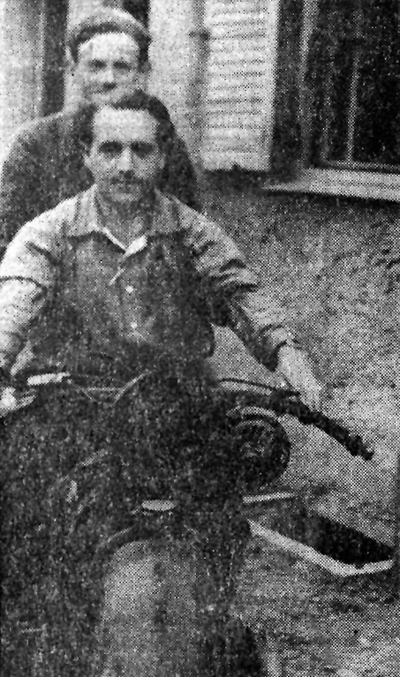
Samuel Weiss in Yugoslavia, 1944

Samuel Weiss (front) in Yugoslavia, 1944

The obituary Saturday in The Morning Call noted that Cantor Samuel Weiss, who had been active in the Jewish community and Congregation Sons of Israel in Allentown for more than four decades, retired to Florida in 1994.

That was a year after I got to know him and wrote a story about his World War II experiences as a partisan fighting the Germans in Yugoslavia. He was 73 when I interviewed him, and he told me then about his plans to move south. He lived in Deerfield Beach, Fla., and died Oct. 1 at age 93. As is the case with so many people I’ve written about, I had lost touch with him.

It hurt to hear that he’s gone. I remembered my story from 19 years ago and thought again about his courage and sacrifice in facing the Nazis.

My story ran on a Sunday in May 1993 in the midst of an unstoppable cycle of violence in Bosnia-Herzegovina. An estimated 150,000 people had been killed and 2 million Bosnians had been forced to flee their homes as Balkan Serbs pressed their campaign to live in ethnically pure communities. The story beside mine at the top of Page 1 was headlined, “Bosnia’s defiant Serbs vow to reject peace plan.”

You can’t find my Samuel Weiss story on the Web, so I’m presenting it here in its entirety, along with a photo of him taken in 1944 in Yugoslavia. Here’s the link to Weiss’ obituary on The Morning Call’s website: http://www.legacy.com/obituaries/mcall/obituary.aspx?n=cantor-samuel-weiss&pid=160301357#fbLoggedOut

HE FOUGHT WITH SERBS IN WWII
German army was enemy then; now it’s revenge, says Allentonian

By David Venditta
The Morning Call
May 16, 1993

The  assignment was routine: Blow up a bridge the German army was using to bring  munitions and other supplies into Yugoslavia.As dusk closed a summer day in the Serbian countryside, Sam Weiss   toiled secretly beneath the bridge, digging a hole for explosives around a pillar. He wielded his pick, mindful of the Nazi SS sentinels pacing the deck high above him.

Weiss grew tired and took a break, edging toward the nearby brush where a Serbian comrade was on the lookout. Then he heard the crack of rifle fire. He bolted. Another shot was fired, and he heard one of the   Germans on the bridge shouting the alarm.

Weiss stopped and looked up. He pulled a pistol from inside  his jacket, aimed carefully at one of three Germans peering down from the rail, and fired.

Half a century later, Samuel Weiss of Allentown recalls the moment.

“I got him,” he said.   “I saw him fall back. I don’t know if I killed him, because I took off.”

He and the other Yugoslav partisan got away. The next week they returned to finish their work, and the bridge  came down.

Weiss, a Jew from Czechoslovakia, wanted to  dedicate his life to his faith. But for more than three years during World War II, he fought alongside the Serbs to purge their land of the Nazi invaders. He spied on SS officers in saloons, helped ambush German patrols in the mountains and destroyed trains and bridges.

When the German troops retreated, he   saw the corpses of hundreds of Jewish slave laborers who had been taken on   the march, shot along the road and dumped in craters.

And when the fighting against the   Germans in Yugoslavia was   over, he went home to find that most of his large family had perished at the   Auschwitz death camp in Poland   or while laboring elsewhere for the Nazis.

After the war, Weiss studied music and worked in synagogues in Europe for   several years, then came to New  York. In 1952 he settled in the Lehigh Valley.

At 73, he has been cantor of   Congregation Sons of Israel in Allentown   for 40 years. When he retires this summer, he and his wife will move to Florida.

But as Weiss nears the end of a career that war wouldn’t let him start, the battleground of his youth is again soaking up the blood of  soldiers and innocents.

The war in Bosnia-Herzegovina has become the most destructive European conflict since the days when Weiss’ band of saboteurs roamed the Balkan hills.

And it has brought another horror:   the “ethnic cleansing” of Muslims by Bosnian Serbs, a reminder to Weiss and many others of the “final solution” that   slaughtered 6 million Jews during the Third Reich.

Reports of Serbian atrocities leave Weiss anguished and angry. When he was in the Yugoslav  underground, the Serbs’ passionate defiance of the Nazis inspired him.

“I was very happy to work with   the Serbs,” he said. “They are a proud and tough people. By nature,   they are a good people. If they like you, they’ll take their last shirt and   give it to you.”

Like the Jews, the Serbs were being tortured and murdered by the Germans, Weiss said, so Jews and Serbs shared a common purpose.

“The reason that I see for  what’s happening now is that the Serbs are paying back the Muslims for what they did during this time. The Muslims were collaborating with the Germans, and they were pointing out where the partisans were and giving them over to the hands of the Germans, who murdered them.

“But two wrongs don’t make a right. What we did 50 years ago was self-defense. I don’t believe what they   are doing now is correct. They’re doing the same thing that the Germans did.

“Only God can take  revenge.”

Germans and Muslims weren’t alone in killing Serbs and Jews. They had help from the Croats, who had never been complacent in Yugoslavia.

The treaty that ended the First World War had crafted a kingdom of Serbs, Croats and   Slovenes out of the decimated Austro-Hungarian and Ottoman empires. But Serbs and Croats sniped at each other for a decade, with the Croats believing the   Serbs dominated the kingdom. In 1929 King Alexander, a Serb, renamed the land  Yugoslavia and ruled like a dictator. The Croats seethed and formed a fascist separatist   movement called the Ustase.

When World War II broke out in 1939, Yugoslavia claimed to be neutral, but German   political pressure and Italy’s   invasion of Greece   the next year spurred the Yugoslavs to line up with the Axis powers. Not for   long, though. Within two days of the signing of the pact, the Yugoslav   military overthrew the government.

“Better war than the pact, better death than slavery,” Serbian demonstrators chanted.

Adolf Hitler was miffed. On April 6, 1941, he sent his Luftwaffe to bomb the capital, Belgrade, and his army across the frontier.   Yugoslavia collapsed in 11   days, and Hitler dismembered it, rewarding his fellow fascists, the Ustase,  with control of an independent Croatia that included all of Bosnia-Herzegovina and 2 million Serbs.

The Ustase butchered Serbs, and in retaliation, Serbian nationalists butchered Croats.

A CAMP FOR JEWS

Into this whirlwind of hate and  confusion stepped Weiss, by his own admission an unlikely   soldier.

He was born in 1919 in Lozo-Irshavah, a town of several thousand people in the Carpathian region of eastern Czechoslovakia. He was the fourth oldest of nine children. The family was poor. His father  earned a meager livelihood buying animal skins from butchers and selling them to leather makers.

But young Weiss had a chance to improve his lot, because he had a gift:   He could sing. And because he aspired to be a cantor, he got a scholarship to   attend a yeshiva in the state of Slovakia and earned some money  there, working in a wholesale grocery store.

“As I was preparing myself for a   career in school, trouble started,” Weiss said. “Suddenly, overnight, the state where I was born was   overrun by the Hungarian government.”

Hungary — and Poland,   too — had snatched disputed frontiers from Czechoslovakia   after Britain, France and Italy   agreed in 1938 to let Germany   have Czechoslovakia’s   western border areas.

Weiss had to leave the yeshiva in Slovakia and go home. Months   passed.

“Being that I was the age of military service, the Hungarians naturally started to train us and drafted me   into the army. So I was taken to the training camps. I was trained for about   six months.”

Weiss found it ironic that he was pressed into combat  training in the Hungarian army, because in his own country, the   Czechoslovakian military wouldn’t have taken him. At 5 feet 2 inches tall, he   was too short.

“They transferred us to a camp   where only Jewish people were,” Weiss   went on. “The training for combat was stopped, and we were given picks   and shovels. They put us into a labor camp — we worked a few months here, a   few months there.”

Eventually, Weiss and about 5,000 other Jewish laborers were sent to Bor, in eastern Yugoslavia.

“That city was rich for mining.   There was a big mountain where camps were already established. The Hungarian   army assigned the people to work, so some were assigned to mines. I was assigned to do odds and ends, janitorial kind of work, cleaning up. It was a big place, at least 10,000 people.”

After a while, Weiss was assigned to work in the city for the German command  because he could speak and understand German, which he learned in the public school at home. Besides German and his native Czech, he also knew Ukrainian and the Slavic languages.

At the German command, he worked in a large building with many offices.

“My job was to deliver mail. My superior was a German, a nice old man.

“Then they decided to have other   offices in the city,” Weiss said. “They assigned me to go delivering messages from one office to the   other. I wore a band around my arm indicating I was serving the Germans, and   I had documents always with me.

“This gave me a little bit more   freedom in the city, so I would stop in to a saloon and have a drink.”

On one of these visits to the bar, Weiss said, “I saw there was a guy sitting there, and he   was looking at me. I didn’t think of it, and I walked out. After that I saw   him four or five times.

“One time I came in to eat   something, and the guy came over to me and sat down next to me and started to   tell me he knew who I was and that I shouldn’t be afraid, but he would like   to help me and my friends.

“He said, `I know how many   people there are in the camp. I know a lot of these things. It’s our job to   know. What I’d like you to do is try to round up a few of your friends, and  we will make arrangements to help you escape from there.’

“Of course I was suspicious, but I figured, `Well, we’ll see. I’ll let you know.’

“We met again, then I started to   talk to my friends in the camp. Some of them said, `I don’t want to take a chance.’ It was very difficult for them to escape, but I was able to convince   about a dozen of the younger fellows. The older ones were always   afraid.”

The deal was simple: The contact in the saloon would arrange to help the Jewish slave laborers flee the camp, and   in return the escapees would join the Yugoslav underground.

Names and pictures of the Jews were  passed to the underground, new passports were forged and Weiss’ friends got out without incident.

Then it was Weiss’ turn.

“One day they got me the   documents, passports, everything. They provided me with clothing.”

He went to the saloon and met his contact.

“Right from the place where I   was talking to him, I made my escape. He already had a truck there, and I   changed my clothing and left.”

A German patrol stopped them outside   the city, checked their papers and let them pass.

Weiss was taken to a huge cave in one of Serbia’s  rugged mountains, where he joined about 20 partisans and learned the saboteur’s trade.

He went willingly, eager to do his   part to stop the Germans.

JUST LIKE A SOLDIER

Yugoslav resistance to the Nazi occupation had been swift. After Yugoslavia surrendered, an army colonel and Serbian patriot named Draza Mihajlovic organized bands of   guerrillas called Chetniks.

The Chetniks’ work — acts of   sabotage and outright military opposition — led to brutal German reprisals.   Because he didn’t want to provoke the Germans to massacre more Serbs,   Mihajlovic softened his strategy, opting to hold back and strengthen his   forces to assist the Allies when they landed on the Adriatic coast.

After the German invasion of the Soviet Union in the summer of 1941, a second resistance   movement emerged under the direction of a Croatian Communist, Josip Broz, known as Tito. He ran the operations of irregular units called partisans,   whose slogan was “Death to fascism, liberty to the people.”

More aggressive than the Chetniks,  the partisans welcomed all foes of the Nazis into their ranks — regardless of nationality or social status.

Weiss was now among them.

The other partisans in Weiss’ unit of about 20 were all Serbs. Four were Jews,  including Weiss, who used a Yugoslav name — Rigodah   — and spoke to his cohorts in Slavic.

He referred to his fellow saboteurs,   none of whom was more than 25 years old, as “the boys.” They traveled in pairs from village to village so that the Germans wouldn’t be  suspicious.

“We were always broken up,”   Weiss said. “We were never in large   groups. One or two people are hard to spot.”

Weiss and his partner, Yanovitch — “a very fine, educated boy” — stayed with fellow partisans and sympathizers who fed  and cared for them.

“They knew what our work was, and they were helping us. It didn’t cost us money.”

At times, for the sake of appearance, they worked in the fields.

“There was a life going on, even though it was miserable. But we had to cover up. On the farms, we’d help to   collect the bundles of hay, but it was always as a cover-up.”

Once a week, a truck driven by a  superior would come to the home where Weiss and Yanovitch were staying. The superior would pick them up and   drive them to the mountains, where they would meet in a cave with the others   who had been brought there to plan the unit’s next move.

“Sometimes changes came up and we had to be prepared. We were never allowed to take off and go away on our   own. There was a strictness in it. We had to be always ready, just like a  soldier.

“We had these assignments. We had to blow up railroads, knock off the bridges. And we had to do it not   where it’s close to the community,” Weiss said, not only to ensure the safety of Serbs living in the area   who would be close to an “action,” but to discourage reprisals   against them.

“If our boys would go to a German camp and kill a few soldiers, the Germans would then come into the closest city, and they would make an issue of this, and they would take the   mayor out into the public square and hang him right away.

“So naturally we tried to restrain our work. Our superiors would say, `If you get to a camp, don’t kill the Germans. Get them naked and tie them up, but don’t kill them.'”

But there were exceptions to the  rule.

“I was on guard on top of a  mountain,” Weiss said, recalling one encounter with  the enemy, “and the boys were all gathering in the forest, in the trees, and they were expecting a brigade of Germans to come through. It was like an ambush.”

From his vantage point, Weiss saw five small Nazi tanks rumbling along on a curvy   mountain road.

“There was always a gap between the troops and the tanks,” he noted.

Weiss watched as the tanks approached the spot where the partisans were waiting.

“The boys dropped themselves down from the trees and on top of the tanks,” he said. “They stabbed the guy who was in the tank, threw him out and took over the  tank.”

Quickly, all five tanks were occupied by the partisans, who then turned them around and lined them up to face the  approaching Germans.

“The troops were coming in trucks, some were on motorcycles. They were coming and they saw the tanks were stopped and were turned around. They couldn’t understand what happened.”

Before the Germans could react, the partisans sprayed them with bullets from the tanks’ machine guns. The Germans  fell, were scattered and fled, and the partisans drove off in the tanks,  which they kept to use another day.

A GERMAN-SPEAKING SPY

Weiss’ knowledge of German made him an especially valuable  partisan.

“My superior would send an associate of his with me, and we would go where there was a big concentration of German soldiers.”

At saloons in those places, the Germans would gather to drink and get drunk — and talk too much.

“My job was to listen to what they  were talking about.”

Once while a fellow partisan waited  outside, Weiss went into a bar and hit pay dirt. He   overheard one SS officer tell another, “We’re expecting a big shipment   of munitions.” Details followed, and Weiss heard them.

“I told my superior what I   overheard. He called his superior on the phone and gave him the message in   code.”

The pieces of information that Weiss had received were matched with information provided by   other spies in the underground. As expected, the train transport was made,   but the partisans were ready for it.

“There were about 18 wagons full of munitions. They were exploding for weeks.”

The hazards of these operations were  clear to Weiss and his comrades, and high on the   list of fears was the possibility of dynamite blowing up prematurely.

“I was afraid mostly when we did   sabotage work that we shouldn’t blast away and get killed with it too,” Weiss said. “That was the only time I really had big  fear.”

Ambushes from German patrols were a   concern, but the partisans, when they neared a site they planned to work at, would first send a few men ahead to determine if there were any signs of the enemy or booby traps.

Weiss said his group lost only one man during the time he   served with it.

“One time a guy went out to do   something, and he was ambushed by a German patrol — killed on the spot. He   wanted to shoot them first, but he wasn’t fast enough.”

Of all the hazards, the most   insidious threat came from within. It was the Yugoslavs themselves, the ones   who joined the SS, or Schutzstaffel, the elite military unit of the Nazi   Party.

“A lot of the SS were from the   Yugoslavian people. Some who joined the SS movement were even worse than the   Germans themselves. We had to be very careful of them. They could speak our   language. We were told: `Watch out for them. They’re very, very dangerous.’   They were the ones who got most of our boys.”

THREE SURVIVORS

In 1944, the Germans were in deep   trouble.

“They had been beaten all over,” Weiss said, “and that’s when we were   able to push harder.

“But those miserable Germans,   they killed these people who were slaves to them. As they were retreating,   they took the people along. Then they killed them off.

“They took them along with them.   I’ve never understood why.”

Weiss said he and others in his unit saw the bodies of 400 to   500 people — mostly Jews from the work camps — lying in craters along the   route of the German retreat. They had all been shot.

Soon, the fighting against the   Germans in Yugoslavia   stopped.

“Our superiors called us all together in Belgrade   and told us that the war in our section was over. I stayed for a while, just relaxed and took it easy.”

When Weiss returned home to Czechoslovakia, no one was living  in his family’s ransacked home. A cousin who had survived Auschwitz  told him that his parents and younger siblings had died there. The others had died in Nazi work camps. Of nine children, only Samuel and two brothers were still alive.

The brothers eventually moved to Israel, where   they live today.

Weiss pursued his dream, receiving operatic and cantor training at the Vienna Conservatory, and had jobs with several synagogues before he came to the United  States in 1948. Two years later in New York, he married Bertha Rosnar, who was also from Czechoslovakia. They have two children, a son in Israel and a daughter in Chester  County.

`GIVE HIM BACK WITH LOVE’

The SS trooper on the bridge was the only person Weiss ever shot — and it was only to keep the Germans at bay and buy time for his escape.

“I never was proud of this stuff,” he said. “We Jewish scholars, learned people, we follow the  Bible, the Talmud, and we do not look to harm somebody. As soldiers, we have to protect ourselves, but we are always told before we hit somebody or do some harm that we think of him as a human being.

“In fact, the Talmud speaks  about it that if somebody is doing harm to you, give him back with love and   joy, never revenge, never revenge.”

Wendall Phillips and the story that almost happened

I went in to my interview with Wendall Phillips knowing that I was going to get a compelling “in their own words” war story for the Memorial Day paper.

He had agreed to talk with me about his experiences as an Army Air Forces radio operator in World War II. I knew the outline: He had been shot down and taken prisoner by the Germans, escaped and later flew “the Hump” in the China-Burma-India Theater, where his cargo plane crashed and he was taken prisoner again – this time by the Japanese, who tortured him.

My plan was to get his account in-depth, maybe open a file cabinet in his mind that he had kept locked.

But as we spoke on March 23, 2010, at his home in Hanover Township, Northampton County, Wendall changed his mind about the interview. He said enough had been written about him over the years and maybe I could interview a veteran whose story hadn’t been told.

Seeing that his sentiment was genuine, I didn’t press him and said, “Of course I can do that.” He just smiled. I asked him for suggestions, and he gave me names and phone numbers. He also put me on his email list so we’d stay in touch.

After that, I spoke with him again almost exactly a year later at the memorial service for another local World War II flier, fighter ace Frank Speer.

Wendall, a productive and patriotic citizen who had been a Presbyterian elder, national chaplain of the China-Burma-India veterans organization and a revered figure in the Lehigh Valley veterans community, died last week at age 88.

Because of his modesty, the only words I ever wrote about him are here. I’d like to add one thing: Thank you, Wendall, for serving our country.


Was it mutiny among U.S. soldiers in Vietnam?

A few weeks ago I wrote about a retired Army colonel who figures in the book I’m writing about my cousin Nicky Venditti, an Americal Division helicopter pilot who was killed in Vietnam in 1969.

What I didn’t tell you was that Bobby Bacon, then a lieutenant colonel, played a central role in one of the most controversial episodes of the Vietnam War – the reported mutiny of men under his command, a story that made the top of Page 1 of The New York Times and shocked the nation.

First, my connection to Bobby: Briefly in the summer of 1969, he was commandant of the 23rd Adjutant General Replacement Company, which ran the Americal Combat Center at Chu Lai, where Nicky was undergoing orientation and training. On July 10, 1969, an instructor accidentally set off a grenade that mortally wounded Nicky. He was dead within 11 days of his arrival in Vietnam.

Bobby’s name appears on a condolence letter sent the next month to Nicky’s dad. Back in the late 1990s, when I saw the letter, I called Bobby to see what he knew about the training accident. It turned out he knew hardly anything because he wasn’t at Chu Lai when it happened; he arrived days after Nicky’s death. Still, Bobby has been a good source and we’ve stayed in touch over the years. He lives in Columbia, S.C.

Early on, he told me about the “mutiny.” His story begins when he left the Americal Combat Center to command the 3rd Battalion, 21st Infantry Regiment of the 196th Light Infantry Brigade. Its previous commander, Lt. Col. Eli Howard, was killed Aug. 19, 1969, when his helicopter was shot down southwest of Da Nang.

When Bobby took over, the battalion was trying to reach the wreckage. On Aug. 26, Horst Faas and Peter Arnett of The Associated Press reported that Company A had refused to go on. The story began:

SONGCHANG VALLEY, South Vietnam, Aug. 25 – “I am sorry, sir, but my men refused to go – we cannot move out,” Lt. Eugene Shurtz Jr. reported to his battalion commander over a crackling field telephone. 

The company had been ordered to move down a rocky slope of Nui Lon Mountain into a labyrinth of North Vietnamese bunkers and trench lines. The soldiers had been making the push for five days, but each time they had been beaten back by the enemy.

“Repeat that, please,” the story quotes Bobby as saying. “Have you told them what it means to disobey orders under fire?”

“I think they understand,” the lieutenant replied, “but some of them simply had enough – they are broken. There are boys here who have only 90 days left in Vietnam. They want to come home in one piece.”

Bobby told him to leave the men on the hill and “move to the objective,” the story says. The colonel then told his executive officer and a sergeant to fly across the valley and give Company A “a pep talk and a kick in the butt.”

They found the men exhausted in the tall, blackened elephant grass, their uniforms ripped and caked with dirt…. The soldiers told why they would not move. “It poured out of them,” the sergeant said.

They said they were sick of the endless battling in torrid heat, the constant danger of sudden firefights by day and the mortar fire and enemy probing at night. They said they had not had enough sleep and that they were being pushed too hard. They had not had any mail or hot food. They had not had any of the little comforts that make war endurable.

The story goes on to say the sergeant, Okey Blankenship, argued with them, suggesting they lacked courage, then started walking down the ridge line. He turned around and saw that they were stirring. They got into a loose formation and followed him down the slope.

Bobby relieved Lt. Shurtz as commander of Company A. The Americal Division said five enlisted men had questioned Shurtz’s orders to move out, but that all five had finally gone with the rest of the company “and the company completed its mission.” No charges were filed and there was no formal investigation.

Meanwhile, Faas and Arnett’s dispatch shot around the world. The news, hailed by the Viet Cong, created the impression that President Nixon now had to contend with a revolt by the U.S. military in Vietnam.

Except that Bobby says it didn’t happen the way Faas and Arnett reported. The story stunned him and he wanted to set the record straight.

Here’s what Bobby says happened:

— The men of Company A did not fail to obey an order. They were never given an order. When one was given, the entire unit moved out.

— The story was written as a first-hand account, but neither Faas nor Arnett was ever with Company A and did not talk with any of its soldiers. Their story was based on what they overheard on the radio and a conversation with Sgt. Blankenship.

—  The soldiers’ hesitation lasted about 55 minutes and the company was still in the field doing a good job.

Faas and Arnett wrote to Bobby the day their story ran and said it was “absolutely fair.”

But over the next month, newspapers and news magazines did their own reporting and challenged the AP reporters’ version of events. Bobby cites Newsweek, which called the article “a gross injustice to all concerned,” and Time, which said the report “that nearly all the soldiers of A Company broke was plainly exaggerated.”

The whole episode is yet another example of how things are not always as they seem, especially in a war.  The big problem, Bobby says, is that the Army, “for some unexplainable reason,” failed to promptly respond to the AP story, instead imposing a blackout on the news media for two critical days.


Same school, different paths through WWII

Don Hoff in 1938 Mariposa (Calif.) High School yearbook

The National World War II Museum in New Orleans prints a newsletter called V-Mail, and as a charter member, I’m on the mailing list. I don’t pay much attention to most of what’s in it, because I probably won’t get to the museum any time soon. But I always like to read one feature, the Oral History Spotlight, which is an interview with some WWII veteran.

I got two sentences into the interview in the summer 2012 V-Mail and screeched to a halt. The story is about Don Hoff, who was a Navy radioman/gunner on a Dauntless dive-bomber in the Battle of Midway, which took place in June 1942 and crippled the Japanese navy. The line that stopped me says he graduated from Mariposa High School in the Sierra Nevada Mountains of northern California in 1940.

That’s where my mother-in-law, Naomi Schleicher, went to school.

I remember her saying there were only about two dozen students in the graduating classes back then, and wondered if she knew Hoff. When I got her on the phone, Naomi told me she graduated from Mariposa High in 1939 and didn’t remember him. But she later found him in both her 1938 and 1939 yearbooks, and she was tickled to see that he had signed one of them for her.

Naomi Dees Schleicher in 1938 Mariposa High School yearbook

Naomi Dees Schleicher in 1938 Mariposa High yearbook

The 1938 La Mariposa book shows Hoff as a sophomore on the baseball team, and that’s the picture he signed. It’s posted with this blog. The facing page has Naomi – her maiden name was Dees – posing with fellow classmates who had earned letters in girls sports (inset). The 1939 book shows Hoff with the basketball team.

Naomi had spent her first two high school years in Madera County’s tiny Raymond, where she was born. Her family moved to Mariposa County when private land became available in Yosemite National Park. After Mariposa High, she graduated from Fresno State University.

She was teaching fourth-graders in Merced, Calif., when she met Harry Schleicher of Easton at a USO dance. Harry was a pilot trainee at Merced Army Air Field. They were married, and Harry spent the rest of the war as a bombardier instructor in Texas. Afterward, they lived in Easton. Harry died in 1999. Naomi celebrated her 90th birthday a few weeks ago. My wife is their daughter Mary.

At the time of the Battle of Midway, Don Hoff was stationed aboard the aircraft carrier USS Enterprise and served with Scouting Squadron 6. He was awarded a Distinguished Flying Cross for his role in the battle, during which his plane dived and dropped a bomb on the Japanese carrier Kaga. He later flew off the USS Saratoga and from Guadalcanal.

Hoff eventually returned to California and lived in Fresno until his death in the summer of 2010.

I wonder if he had a Mariposa High yearbook.

A dangerous disease stalks veterans

A few times people have asked me if I accept guest posts. Once it was from a friend from high school who is now an Army veteran, and I was happy to accommodate him. I ask to see the material first, and if it suits me, I give it a go.

I have one for you today, from Doug Karr, a former petty officer second class in the Navy who writes about veterans’ health for the Mesothelioma Cancer Alliance. He describes mesothelioma as an extremely deadly disease that unfortunately affects many veterans.

“This message is extremely important to get out to military personnel and veterans,” Doug emailed me.

Here is his article:

By Doug Karr

U.S. veterans risk their lives every day. However, veterans who served between World War II and the Vietnam War may have endangered their lives in another way. Because of their exposure to asbestos, veterans are at an increased risk for developing mesothelioma.

What is mesothelioma? It is a rare cancer that affects the lining of the internal organs. It is categorized into three different types, depending on the area affected. Pleural mesothelioma develops in the lining of the lungs. This is the most common form of mesothelioma and occurs when asbestos fibers are inhaled. The pleura then become inflamed, scarred and begin to mutate. Mesothelioma also affects the lining of the heart, abdomen and testicles.

Mesothelioma brings a poor prognosis for survival and is often fatal due to not being detected until it has reached late stages. It can have a latency period of 20 to 50 years and symptoms may often be ignored or misdiagnosed. These symptoms may include coughing, chest pain, fatigue, weight loss, decrease in appetite, fever, night sweats, shortness of breath and difficulty swallowing.

If detected early, prognosis for survival may improve. It is important to inform veterans and their families of the risk of mesothelioma if there was a chance that they were exposed to asbestos.

Between the 1940s and ’70s, asbestos was frequently used because of its durability and heat resistance. Asbestos functioned well for insulation, brake linings, flooring and many other products required by the military.

Though all military branches may have been exposed, Navy veterans have an especially high risk for mesothelioma. The construction and repair of ships and submarines used a great amount of asbestos. Certain professions are at higher risk, such as engine mechanics, welders and those who worked in boiler rooms. Naval veterans who lived on the ships and submarines for long time durations have increased risk.

Veterans in other military branches may have been exposed to asbestos as well. Military bases and training camps were often constructed with asbestos. Frequent exposure to tanks and other military vehicles put Army veterans at an increased risk. Veterans in the Air Force were exposed due to the asbestos used in the engines and brake linings of fighter planes. Marines who served on the seas have the same chance of developing mesothelioma as Navy veterans.

Mesothelioma may also be caused indirectly. Second-hand exposure occurs when inhaling asbestos fibers from the clothing, skin and hair of someone who had direct exposure. Secretaries and other office personnel who may have only had second-hand exposure are now developing this deadly disease. Families of the soldiers may also be at increased risk.

There is also concern for veterans who served in Iraq. During the demolition of old buildings, asbestos fibers may have been released into the air.

Treatments for mesothelioma depend on when it is detected. If it’s caught early, surgery, chemotherapy and radiation may be given. Alternative therapies are becoming more popular for palliative care and may be used when allopathic treatments fail.

Resources are available to veterans for prevention, early diagnosis and treatment of mesothelioma. Other legal resources involving financial compensation to veterans and their families may also be obtainable. To find more information on their options, veterans can contact their local Department of Veterans Affairs.

Mesothelioma is a deadly disease that often goes undetected until it is too late. Though a cure might not always be feasible, treatment may be available to help manage symptoms. Early detection and education are the best weapons against this disease.

For more about Doug and his mission, go to http://www.mesothelioma.com/blog/authors/doug/bio.htm


Ex-colonel, grunt connect over Vietnam War

Sometimes improbable connections are right under your nose and you don’t see them.

It happened to me recently when I got back in touch with a retired Army officer who figures in the book I’m writing about my cousin Nicky, an Army helicopter pilot who was killed in Vietnam. I had been out of touch with former Lt. Col. Robert Bacon for seven years.

A few weeks ago I wrote to Bobby, who is 78 and lives in Columbia, S.C., and sent him a copy of my book War Stories: In Their Own Words, published last fall by The Morning Call in Allentown.

A few days later, Bobby called to thank me, and a few days after that, he called again, this time to say excitedly that one of the three Vietnam stories in the book was an account by a soldier who had served in his unit – the 3rd Battalion, 21st Infantry Regiment, 196th Light Infantry Brigade, Americal Division, based at Chu Lai.

The soldier is Eric Shimer, who served in B Company and now is about to retire as an attorney in Bethlehem. His account is set in 1969, the year Nicky was killed.

Briefly that summer, Bobby was commandant of the 23rd Adjutant General Replacement Company, which ran the Americal Combat Center at Chu Lai, where Nicky was undergoing orientation and training. On July 10, an instructor accidentally set off a grenade that mortally wounded Nicky. Bobby’s name appears on a condolence letter sent the next month to Nicky’s dad, my Uncle Louie.

Bobby left the Americal Combat Center to take over the 3rd Battalion, 21st Infantry. Its previous commander, Lt. Col. Eli Howard, was killed Aug. 19 when his helicopter was shot down southwest of Da Nang.

Eric wrote his Vietnam account for my Morning Call “War Stories” series in 2005 to mark the 30th anniversary of the war’s end. I did the editing. Then in 2011, I included the story in my book.

All these years, I had never connected Bobby and Eric. Now they’ll have a chance to talk. I hooked them up by giving them each other’s phone numbers. I’ll check back with them and see how it went.

For more about Nicky and my book Quiet Man Rising, go to www.davidvenditta.com/. For my War Stories book, go to https://morningcallstore.com/warstories.

Gallant Pennsylvanians in Somalia, Iraq

I’ve written before about Pennsylvania’s Medal of Honor recipients, and now I’ll bring you up to date. Since the Vietnam War, two men from the state have received the nation’s highest military award for valor, both posthumously.

Sgt. 1st Class Randall D. Shughart of Newville, Cumberland County, was honored for his heroism Oct. 3, 1993, while serving with Army Special Operations Command, Task Force Ranger in Mogadishu, Somalia. http://www.msc.navy.mil/inventory/citations/shughart.htm Mark Bowden’s 1999 book Black Hawk Down tells the story. I have the book but haven’t read it yet. I did, however, read about Shughart when portions were published as a series in The Philadelphia Inquirer, where Bowden worked.

The other was Ross A. McGinnis for his bravery in Iraq on Dec. 4, 2006. McGinnis, of Knox, Clarion County, was then an Army private first class with C Company, 1st Battalion, 26th Infantry Regiment, 2nd Brigade Combat Team, 1st Infantry Division. You can read about his deeds in Baghdad at http://www.army.mil/medalofhonor/mcginnis/profile/index.html