A long time coming: my Vietnam story

My story about what happened to my cousin in Vietnam

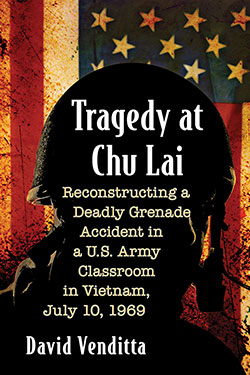
Cover of my book, to be published this spring or summer

In 1994, when I learned how my cousin Nicky Venditti was killed in the Vietnam War, I set out to write about him. We had hardly known each other. He was five years older, and we grew up in different towns near Philly.

But we had a big Italian family in common. Our dads were among a dozen children of an immigrant from central Italy. (Two of Grandpop’s sons, including Nicky’s dad, spelled our surname differently, with an “i” on the end instead of an “a.” I’ll tell you the story behind that another time.)

Nicky was a 20-year-old Army helicopter pilot when he went to Vietnam in the summer of 1969. He was dead in 11 days. The truth about what happened to him shocked me. The Americal Division told his parents he was mortally wounded when a grenade accidentally went off during an orientation class at LZ Bayonet, just outside the big Army base at Chu Lai. He died five days later, on July 15, at the 312th Evacuation Hospital on the base.

I’d always thought he was killed by the enemy.

One part of writing about Nicky was to re-create his life and follow his path to Vietnam. I could do that through interviews with friends and family. But finding out exactly what happened in that Army classroom on July 10, 1969, was not so easy. It took me many years, because no record of an investigation exists. The military had mishandled its response to the incident, doing a disservice to Nicky’s family and the families of two other young soldiers who died with him, Billy Vachon and Tim Williams.

Twenty-one years have passed since the reality of Nicky’s fate caught my eye. Soon you will be able to read the story I put together over those two decades. It will be published this spring or summer by McFarland & Co. under the title Tragedy at Chu Lai. Information about it is on McFarland’s online catalog at http://bit.ly/1SLp0Ia, where you can pre-order it, if you like.

This is more than a war story. It’s also a life-affirming reconstruction of family, friendship, loyalty and small-town life in 1960s America, the small town being Malvern, Pa., where Nicky grew up.

After 70 years, a WWII prayer book is back with its owner

Bob Serafin with World War II prayer book.

Bob Serafin holds his World War II prayer book. I took the photo on April 30.

World War II holds countless mysteries. Here’s a small one that had a big impact on a former soldier I know:

Last November I got an email from a Susan Senger in Minneapolis. While cleaning out a bookcase, she found a decades-old little book, a Prayer Book for Catholic Servicemen. It had a signature in the back, Robert E. Serafin, and an Army serial number. She didn’t recognize the name, so she did a Web search and got a hit.

Susan found that in May 2002, I had done an interview with a Robert E. Serafin as part of my “War Stories: In Their Own Words” series in The Morning Call. Some 100 of these stories going back to 1999 have a permanent home on the newspaper’s website at http://www.mcall.com/warstories.

A career soldier, Bob had served in both World War II and the Vietnam War. You can read my interview with him here: http://www.mcall.com/news/all-robertserafin-story.html#page=1

Susan wrote that if she’d found the right Robert Serafin, she’d like to send him the prayer book.

Right away I was certain that the Bob I knew was the one she was looking for. The first name, middle initial and last name matched. Bob had been in the Army. He was a Catholic.

But how did a prayer book he’d had in the 1940s turn up in a home in Minneapolis?

I emailed Susan the address and phone number of the assisted living facility in Allentown where Bob was a resident. She contacted the place, which put her in touch in with his son, who lives in Slatington.

The book was Bob’s. He was thrilled.

Susan put it in the mail for him Dec. 1 and included a letter offering information that might help determine why her family had it. She said she’d been cleaning out a bookcase that held books once belonging to her grandmother, Zella Rutledge, and her mother, Helen Rutledge. Helen, who was born in 1923, married Louis Smith in the 1940s, and the couple might have lived in Columbus, Ohio, for a while. They divorced and Helen married Susan’s dad, Robert Senger. He’d been in the Navy during World War II but never left the U.S. She thought he was on the West Coast.

Susan said Bob might have crossed paths with her uncle, Boyd A. Rutledge, known as “Bud” or “Buddy.” He was captured during the Battle of the Bulge and held by the Germans at Stalag IX-B, a notorious prisoner-of-war camp near Bad Orb in Hesse, Germany.

“I have no idea how my family ended up with your prayer book,” Susan wrote.

Bob’s son, also named Bob, wrote back and thanked her on behalf of his grateful dad.

Bob Serafin as a soldier

Bob Serafin as a soldier

Last week I finally got around to visiting Bob, now 92 and still sharp. When I asked about the prayer book, he grinned and pulled it out of a drawer.

“It knocked me over,” he said about getting it back.

But he has no idea how it got to Minneapolis.

“I don’t know any of these guys,” he said of the names Susan mentioned. “I’ve never heard of this family, and I’ve never been to Minnesota. The closest I’ve been to Minnesota is Chicago.”

Bob came from Plains, just north of Wilkes-Barre. He said a Catholic priest gave him the prayer book in 1943 while he was in training at either Camp McCain in Mississippi or Camp Carson in Colorado. After that, he guarded German POWs in Colorado and Wyoming until the late summer of 1944, when he was reassigned as a hospital orderly. In February 1945 he landed in France as a corporal with a mobile hospital unit, the 84th Field Hospital, which followed the U.S. 1st Army deep into Germany.

Somewhere along the way, the book vanished.

“I don’t remember losing it or anything about it,” Bob said.

He wonders if it might somehow have gotten into Bud Rutledge’s hands at Stalag IX-B.

The book is less than a quarter-inch thick. It includes prayers for peace, for the civil authorities and for Pope Pius XII – the pontiff during World War II — as well as the Lord’s Prayer, the Hail Mary and the Act of Contrition. On the last page, Bob wrote his full name and serial number in ink.

In 1963, he went to Vietnam as a military police investigator, serving at the Criminal Investigation Division office in Saigon. He returned to Southeast Asia in 1966 as a CID agent in Thailand. In 1978 he retired as a chief warrant officer.

Susan’s contact with Bob was not the first time someone connected with him after seeing his story online. In January 2014, a man emailed me that he was doing research on letters his father wrote home while serving in the 84th Field Hospital.

“I’m trying to put all the pieces from the letters together and thought of reaching out to Mr. Serafin for any additional info he might have,” he wrote.

I told him where to find Bob, and Bob told me that the writer visited him.

How Bob’s prayer book changed hands, presumably during World War II, and turned up in Minneapolis might never be known. What’s important is, after 70 years and thanks to Susan Senger, he has it.

‘We all have a job to do’

Korea/Vietnam Memorial

Armed Forces Plaza at Lehigh Carbon Community College on Sunday after 10th anniversary program

The Korea/Vietnam Memorial marked its 10th anniversary Sunday at Lehigh Carbon Community College with teary-eyed speakers, tributes to veterans whose names are etched on new pavers in the Armed Forces Plaza and recognition of a World War II warrior, my friend Bert Winzer.

Bert, 92, of Lower Macungie stood in the national limelight in February when he and other surviving members of the elite American-Canadian commando unit, the 1st Special Service Force, received the Congressional Gold Medal in Washington, D.C. Bert brought the medal with him to LCCC and spoke with warmth and humor about his wartime experience in the Devil’s Brigade.

Bert Winzer

Bert Winzer as a World War II commando

When he was wounded in 1944, he told the crowd in his favorite line, “It was an international incident. German artillery fired from Italy into France hit me, an American; a Canadian gave me first aid; and a Russian-American Jewish doctor operated on me.”

I had met Bert at one of the annual banquets of Lehigh Valley Chapter 190, Military Order of the Purple Heart, and interviewed him for my Morning Call series, “War Stories: In Their Own Words.” The story ran on Memorial Day 2012. http://articles.mcall.com/2012-05-27/news/mc-memorial-day-war-story-winzer-20120527_1_monte-la-difensa-1st-special-service-force-germans I wrote about Bert again a year later when he received a long-overdue Bronze Star medal. After he got the Congressional Gold Medal, he was invited back to Washington, this time to the French Embassy, to receive the French Legion of Honor. Bad weather kept him from going, though, and instead the medal was mailed to him. He was also honored this month at a meeting of the Lower Macungie Township Board of Commissioners.

His happy appearance at Sunday’s event contrasted with somber remembrances by family and friends of soldiers, sailors, airmen and Marines no longer living. Songs sung by Erin Kelly, who performed at the first KVM ceremony in 2005, reminded everyone of what sacrifice is about — the national anthem, “I’m Proud To Be an American,” “God Bless America.” Names of vets added to pavers were read – Jack Covington, John Groller, Robert Hargreaves and a dozen others — and their family members came forward. At the end, a three-volley rifle salute by American Legion Post 576 and the playing of taps cemented the mood.

As a non-veteran, I felt out of place in this gathering of a few hundred as I looked around at the attendees, among them Vietnam vets in their biker jackets. All were attentive and deeply respectful, drawn together by camaraderie that I can’t hope to identify with. Bert summed it up as he closed his speech: “I’m the same as all of you. We all have a job to do. We do it. We’re all heroes.”

Almost forgotten stories rescued from a drawer

Charlie Gubish as a Marine

Charlie Gubish as a Marine

Late last year, after I’d written stories for The Morning Call marking the 70th anniversary of D-Day and the Battle of the Bulge, my friend Dick Musselman asked me at a meeting of the Lehigh Valley Veterans of the Battle of the Bulge:

“What’s next for a 70th anniversary? Iwo Jima?”

I hadn’t thought much about it, but that was certainly a key battle, especially with the famous flag-raising on Mount Suribachi. The Marines landed on Iwo Jima on Feb. 19, 1945, the flag-raising was the 23rd. If I were going to find a Lehigh Valley veteran of the fighting on the island, I didn’t have much time.

But I didn’t have a lead on any Marine survivors. A few weeks passed and I saw the window of opportunity closing. The interviews take time – at least two meetings of perhaps three hours each, then many hours of transcribing the digital recording, then shaping the narrative and finally a two- or three-hour photo session that includes shooting video of the veteran for online as well as a portrait, and copying the vet’s wartime images for the print product and an online gallery.

As I mentioned in a previous blog, I had a stash of papers in my desk that were stories and story ideas I’d collected over many years. Over Christmas and New Year’s, I pored over every paper to see what gems I might still have and to throw out others I would never use.

One scrap of paper jolted me. I had gotten a phone call from a Charles L. Gubish of Bethlehem, who told me that he had a Purple Heart but hadn’t had the certificate to go with it, and he’d finally received the certificate to prove he had earned the medal. Among other things, such documentation has the vet’s name, unit and the date and place where he was wounded in battle.

Gubish said he’d been a Marine and was hit on Iwo Jima. I had noted that, jotted down his phone number and scrawled the date of our conversation on the paper: 3/11/08. I remembered talking with him and thinking that someday I might interview him, but the information got lost in my pile and pushed back in my memory.

I’d spoken with Charlie Gubish almost seven years ago. Was he still living?

A Nexis public records search showed that he was. But the phone number I had for him was out of service. On the same Nexis page, I found a Gubish with the same first name who also lived in Bethlehem, and called the number listed. This Charles Gubish answered and told me that he was Charlie’s son and that his dad was alive and well at age 95 and living in a retirement community outside Bethlehem. I said I’d like to interview him for a story to mark the Iwo Jima anniversary. The son gave me his dad’s phone number. Immediately I called and Charlie picked up the phone. He hesitated for a moment, “Well, I don’t know … oh, OK.”

I interviewed Charlie on Jan. 23 and 29. Harry Fisher of The Morning Call shot photos and video Feb. 4, with me beside him, and I met again with Charlie on Feb. 18 to go over loose ends. The story ran on Page 1 Sunday, Feb. 22. By then, Charlie had turned 96. You can read his story here: http://www.mcall.com/news/local/mc-iwo-jima-anniversary-gubish-20150221-story.html#page=1

Another World War II tale that came out of the stash in my drawer also made Page 1 of a Sunday paper, this one to mark the deadliest air bombardment in history, the March 9-10, 1945, firebombing of Tokyo.

The story-teller was Carl J. Manone. He had been a B-29 bombardier but was no longer living. He had sent his written account to The Morning Call in September 2011, was hospitalized for kidney failure several days later and then was in rehab. He died March 14, 2012 at age 88, before I could meet with him. But I held onto his very detailed story in the hope that I could get it into the paper someday.

That would be for the 70th anniversary of the Tokyo raid.

First, though, I wanted to get permission from his widow. Again, a Nexis search gave me the address and phone number in Palmer Township where Carl had lived. I called, but Carl’s widow, Dani, didn’t live there anymore. The woman who did live there knew Dani and gave me her email address. She said Dani lived in Florida and was now visiting relatives in Thailand. I sent Dani an email and she responded from Bangkok. She remembered that I had tried to contact her husband after he had mailed in a hard copy of his story. She was pleased that I planned to get it into the paper.

After Dani got back to Florida, she sent me 14 photos of Carl, most of them from wartime – all of which were posted in an online gallery when the story ran March 8. In many emails we exchanged over weeks, Dani patiently and thoroughly answered my questions. Her information filled in the background of the story, which you can read here: http://www.mcall.com/news/local/bethlehem/mc-tokyo-firebombing-anniversary-manone-20150307-story.html#page=1

If I hadn’t gone through a messy drawer, Charlie Gubish’s and Carl Manone’s precious stories might never have seen daylight.

The war stories that readers never see

war story pile

My pile of prospective war stories

This pile of papers contains war stories that never materialized. It lived and grew in my desk at work from the 1990s on. Whenever someone sent me an email asking if I’d interview their father, uncle or grandfather or whoever, I copied it and threw it into the drawer. Whenever I took down information about a veteran over the phone, that scrap of notebook paper was added to the heap. If a vet sent me something they wrote about their experiences, it went there, too.

I read and considered all of the messages and the handful of stories that came in, and responded to the writers by phone or email.

Occasionally I rummaged through the stuff, but most of the time it sat undisturbed and out of view. Then came the point where I wanted to sort out the mess, so over the holidays I cleaned out the drawer and brought the pile home and left it on the desk in my home office, where it festered for a few weeks – until last Sunday, the day of rain and ice. With coffee and the wide space of our dining room table, I leafed through the pile and read every email, letter and note with the idea of throwing out what I could.

There were lots of disappointments in that pile. Emails would start out, “I enjoyed your story on so-and-so and thought you might be interested in interviewing my dad…” And I would write back that I’d be happy to add him to my list of prospective story ideas and nothing would ever come of it. That’s the way it is when you only write up maybe a half dozen interviews a year. Only a precious few actually see the light of day with publication in The Morning Call.

Veterans in many of these stories I didn’t do have since died; in some cases I’d attached a note to that effect. But there were snippets that jumped out at me and that I will develop into stories for the newspaper. Just a couple. I’ll tell you about them another time.

I did succeed in cutting the pile down to a quarter of its size and throwing the other papers away. Then I organized the remaining material into file folders that I labeled by battle or war: Pearl Harbor vets, D-Day vets, Iwo Jima vets, Korean War, Vietnam War and so on. Then I took the folders in to work and stashed them in that same deep drawer. But now I know what’s in there and how to get to it quickly.

Just as I was feeling some satisfaction for this bit of housekeeping, I had a setback that hit me as hard as going through that stack of papers and realizing how many worthy stories I didn’t get around to doing for the newspaper.

At the end of every December for a dozen years, I’ve gathered the “in their own words” stories I’d written in the last 12 months and sent them to the Veterans History Project at the Library of Congress. They’d agreed to accept the interviews for their collection even though my work didn’t fit the requirement of being original material – that is, written by the veterans themselves – and a set length.

The ax fell this week in an email from the Library of Congress. “Unfortunately, given continued resource constraints including space and staffing we can no longer accept the materials,” the Veterans History Project collections manager wrote to me.

How sad! For years I’ve been able to tell the veterans I interviewed that their accounts would have a permanent home in the Library of Congress. I could see their minds working as they considered the idea that their stories would live long after them in a place of national honor. When Bataan Death March survivor Joe Poster was in the hospital, I told a nurse standing beside him about his story appearing in The Morning Call. “That story’s in the Library of Congress,” Joe added. His pride from knowing that stuck with me.

I do still send all my stories from the year — if they’re World War II stories, and most of them are — to the National World War II Museum in New Orleans. They don’t acknowledge the contributions as they once did, but someone there must see them.

Getting military stories right

If you’re not a military person and you’re writing on a military topic, especially around Veterans Day and Memorial Day, you want to get the information right or you could end up in some knowledgeable person’s cross-hairs.

I’ve gotten plenty of calls from folks correcting me on everything from what a Japanese knee mortar was to where MacArthur is buried.

To help out my co-workers at The Morning Call in Allentown, Pa., I came up with a military style and reference guide years ago. I’m thinking you might find it interesting and informative, so in honor of Veterans Day, here it is, with the items in no particular order:

Veterans Day pays tribute to all U.S. veterans. It’s observed on Nov. 11 because the First World War ended on Nov. 11, 1918. For more info: http://www.military.com/veterans-day/history-of-veterans-day.htm

Memorial Day honors the war dead. For more info: http://www.military.com/memorial-day/
The bugle call is taps. Lower case, no quotation marks.

Don’t say 21-gun salute unless you mean 21 artillery pieces firing in succession to salute the president or a foreign leader. What we see around here is a rifle squad of seven men firing three volleys. Say something like, “A rifle squad fired a salute.” Don’t call it a “firing squad.” Usually, people aren’t executed at these ceremonies.

Don’t write U.S. Army, U.S. Navy, etc. if the context is clear. If they’re not in the U.S. Army, whose army are they in? Panama’s? Just say, “He served in the Navy” or “She joined the Air Force.”

It’s the Department of Veterans Affairs, not the Veterans Administration. The Veterans Administration was created in 1930. It became a Cabinet-level department, with the title of Department of Veterans Affairs, in March 1989. VA is acceptable on second reference. http://www.va.gov/

Flags fly at half staff on land. At sea and on naval installations they fly at half mast.

It’s the Army Reserve, Navy Reserve (not Naval), Marine Corps Reserve, Air Force Reserve, Coast Guard Reserve – all singular. Collectively, though, they are the reserves (lower case). A person can be an Army reservist (lower case), Navy reservist, Air Force reservist, etc.

The National Guard is part of the overall reserve but is state-controlled, despite the title. It’s the Guard (capitalized), the Pennsylvania Army National Guard and Pennsylvania Air National Guard. And if you’re a National Guardsman (capitalized) or a guardsman (lower case when the word stands alone), you’re a reservist. If you’re a woman in the National Guard, you’re still a guardsman, not a guardswoman. The Guard can be called into action by a governor or president.

Pennsylvania’s National Guard is descended from the colonial militia, created by the Assembly (what was then the Legislature) in November 1755 during the French and Indian War.

Pennsylvania Army National Guard: http://www.paguard.com/
Pennsylvania Air National Guard: http://www.dmva.state.pa.us/portal/server.pt/community/pa_air_national_guard/7267
Pennsylvania Department of Military and Veterans Affairs: http://www.dmva.state.pa.us/portal/server.pt/community/veterans_affairs/7179

There are soldiers (Army), sailors (Navy and Coast Guard), Marines and airmen (Air Force, even if you’re a woman). Marines are not soldiers. The Marine Corps is under the Department of the Navy. Soldiers are in the Army. Even though soldiers can also be sea-borne, the Corps has made its identity a branding issue to set it apart from other branches of the armed forces. Even the capitalization of Marines is something the Marines insist on.

Need an explanation of a military term? Here’s the site for the Pentagon’s Dictionary of Military Terms: http://www.dtic.mil/doctrine/dod_dictionary/

The nation’s highest military honor is the Medal of Honor. It’s given by Congress for risk of life in combat beyond the call of duty.

Before 1947, there was no Air Force. Through World War II, air crews flew for the Army, the Navy, the Coast Guard and the Marine Corps.

The Army Air Corps was born in 1926. In June 1941, before we entered World War II, it officially became the Army Air Forces (note the plural). Force of habit had folks during WWII continuing to refer to the Air Corps, even though that title had been dropped. Even today, it’s common to see and hear “Air Corps.” But don’t write Air Corps unless you’re quoting someone. The correct reference is Army Air Forces. “He was a colonel in the Army Air Forces.” The Air Force became a separate entity under the National Security Act of 1947.

Don’t write that three troops were injured. When dealing with small numbers, break it down: Two Marines and three soldiers were injured. “Troops” has to do with size of force, especially if that force is integrated. (An integrated force includes soldiers and Marines, for example.) This AP example is correct: There were an estimated 150,000 troops in Iraq. There’s no threshold number for when you can say “troops.” Just remember to use “troops” when talking about the overall size of a force, not when referring to individuals.

Helpful websites:

Department of Defense: http://www.defense.gov/
National World War II Memorial, Washington: http://www.wwiimemorial.com/
National World War II Museum, New Orleans: http://www.nationalww2museum.org/

Local sites:

Lehigh Valley Military Affairs Council: http://lvmac.wordpress.com/
Lehigh Valley Veterans History Project: http://www.lvveteranshistory.org/

Good hunting!

How veterans add up

With Veterans Day approaching, the U.S. Census Bureau on Friday came out with one of its Facts for Features news releases profiling American veterans. The statistics are all for 2013.

Here’s a sampling:

Number of veterans in the United States: 19.6 million
Female veterans: 1.6 million
Veterans 65 and older: 9.3 million
Those younger than 35: 1.6 million
World War II veterans: 1.3 million
Korean War veterans: 2.1 million
Vietnam-era veterans: 9 million
Veterans who served during the Gulf War Era (representing service from August 1990 to the present): 5.2 million
Peacetime-only veterans: 4.7 million
States with the most veterans: California, Texas, Florida
Veterans with a service-connected disability: 3.6 million

By the way, I’m not a veteran. The military didn’t interest me when I was a kid. Plus, I got out of high school the year all of our combat troops pulled out of Vietnam, a time when the service wasn’t held in high regard.

I’m not sure I would’ve been able to make the grade as a soldier, sailor or airman — I’m too slow, too nervous and too much of a klutz. Still, sometimes I think the training and discipline would have been good for me, might have helped me grow up faster than I did.

And if I’d been in the military like the millions above, I could have said I served the country. That would count for a lot.

The little church that stood up in a big way

Zion's Church in Allentown

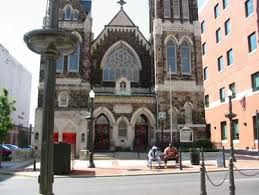
Zion’s Reformed United Church of Christ, the “Liberty Bell” church, in Allentown

The email from Pastor Bob Stevens landed in my box at work Friday afternoon and got my attention immediately. The service on Sunday would be marking the role Zion’s “Liberty Bell” Church played as a hospital during the Revolution.

It snagged me because I knew little about that. I did know, like just about everyone else in the Lehigh Valley unless they’re a transplant from Mars, that Zion’s Reformed United Church of Christ in downtown Allentown was the place where the Liberty Bell was hidden during the British occupation of Philadelphia. For years, on the Sunday closest to the Fourth of July, I’ve gone to Zion’s service where people in the audience get to stand up and read one of the usurpations cited in the Declaration of Independence – the reasons we wanted to break away from Britain. When it’s my turn to rail against the king, I like to spit my lines out, loud and angry.

But somehow in my three decades in Allentown I’ve missed Zion’s annual Colonial Sunday service. This time I wouldn’t.

Bob was dressed in Colonial garb. Singers led us in popular songs of the era like “Schnitzelbank,” and we all played kazoos, which, we were told, were indeed around at the time. During the service we said prayers and sang hymns from the 1770s, some stanzas in Pennsylvania Dutch. Bob used the biblical text that the Rev. Abraham Blumer used more than two centuries ago.

And during his sermon, Bob drove home Zion’s role when he said that right where we were sitting, sick and wounded Continental Army soldiers had been tended to. Many of them died. Hundreds were cared for at the church from September 1777 to April 1778. Some who were better off were taken into the homes of the congregation, which numbered only 38 members. Others, Bob said, were housed at the old Farr building two blocks west, at Eighth and Hamilton streets. The building even has a plaque attesting to that.

Some of Zion’s members helped the soldiers out of support or sympathy for the American cause, Bob said. Others were following the Christian teaching that they should “love a stranger,” which was what these unfortunate soldiers were to the folks of what was then Northamptontown. The congregation was showing the “hospitality” that comes with “hospital.”

Bob’s talk took me back to that time of sacrifice and uncertainty. I could imagine the soldiers in the church, with volunteers giving them whatever aid they could and doing their best to comfort the dying. I thought, too, about this being downtown Allentown and the economic revival that’s bringing a billion dollars’ worth of development, with the new arena and the office and retail buildings and restaurants sprouting up all around little Zion’s.

Members of this church stepped up when the emerging nation needed them 237 years ago. As this hallowed place shows, no matter how much Allentown advances and its face changes, the city will always be deeply rooted in the American story.

More on the mystery of Gene Salay’s medals

I’m back after weeks of sloughing off.

I wanted to fill you in on my search for what happened to Korean War medals that belonged to Gene Salay, because I left you hanging back in April.

You might remember Gene’s story. He was wounded, taken prisoner by the Chinese and freed after the armistice in 1953. Back home in Bethlehem, he graduated from Moravian College, worked a desk job at Bethlehem Steel and was Lehigh County’s veterans affairs director for 15 years. He died four years ago.

In April, during a ceremony to mark the ninth anniversary of the Korea/Vietnam Memorial’s Armed Forces Plaza at Lehigh Carbon Community College, Gene’s sister Margaret Szabo presented his Purple Heart and POW medals, plus other decorations, to the KVM, of which Gene had been a charter member. The KVM has no place to display them, so it turned them over to the 213th Regiment Museum at the armory in Allentown.

But it’s not as if Marge had her brother’s medals since his death in 2010. Instead, she’d gotten them from the U.S. Marshals Service, which had gotten them as a result of a federal criminal case against a financial adviser in St. Louis.

Huh?

Marge got a letter in January 2013 from Gerald Auerbach, general counsel for the Marshals Service in Philadelphia, who said the marshals had Gene’s medals and would be returning them to her. She got them in November 2013 from the chief U.S. marshal in Philadelphia, John Patrignani, who hand-delivered them to her. I spoke with him earlier this month. He said he came to Bethlehem to deliver them because he’d read up on Gene.

“I wanted to handle this myself,” he said, “because I thought he deserved it. He lived his life the right way.”

He said Gene’s medals had been in the possession of Don C. Weir in St. Louis, a financial adviser who is serving a six-and-a-half-year term in federal prison for stealing some $12 million in precious-metal coin investments from 44 clients. He was convicted in 2009. (Here’s the story in the Riverfront Times of St. Louis: http://www.riverfronttimes.com/photoGallery/index/791349/2/)

Patrignani told Marge when he brought her the medals that Weir had had them.

The question is: How did Weir get them?

Patrignani suggested I call the U.S. postal inspector in St. Louis, Doug Boland, because Boland was one of the key investigators in the Weir case.

I spoke with Boland last week. He said Weir was an avid collector of military memorabilia, in particular stuff that had to do with the Korean War, plus Japanese and Russian military artifacts. He used the money he got from ripping off his clients to buy these collectibles, which included an autographed picture of Hitler.

Boland told me that when he asked Weir where he got Gene Salay’s medals, Weir said he bought them on eBay. But Boland said the transaction didn’t show up in the eBay records that investigators saw.

Wait, I have to back up here.

Why didn’t Gene have his medals?

Joe Zeller, a former state lawmaker and Emmaus mayor who was a Navy veteran of World War II and the Korean War and Gene’s friend, told me that some years ago Gene had gotten disgusted and said he was going to get rid of them.

Disgusted with what? Joe wasn’t clear on that.

How did Gene get rid of his medals? Joe thought he was going to trash them.

Well, there’s no smoking gun. Weir apparently bought the medals on the Internet or from a pawn shop. There’s no evidence anyone stole them from Gene, who had been my friend since the 1990s and whose “in their own words” story I wrote in 2003 for The Morning Call. Still, I can’t help but wonder what bothered him to the point he gave up awards the Army had bestowed on him for his sacrifice in the Korean War, which had been considerable.

He died with a bullet still lodged near his heart.

Rest in peace, Walter King

Walter A.L. King in training for D-Day

Walter A.L. King when he was in training for D-Day with the 7th Naval Beach Battalion in the spring of 1944. He’s holding a Thompson submachine gun.

Walter A.L. King was my 12-hour friend.

I’d heard about him in January from one of his neighbors. She said he was a D-Day vet who’d landed at Omaha Beach and had quite a story to tell. It would be worth my while, she said, to interview him for The Morning Call.

Intrigued, I called him. He told me that yes, he’d landed at Omaha on June 6, 1944, with the 7th Naval Beach Battalion as a radioman and the following year, he came in with the Marines at Okinawa.

I went to his house in February. It was along a winding road in hilly woods. His driveway was so steep, I double-checked that my car was in gear and the brake was on. At the door, his dog greeted me first – a 90-pound mastiff/boxer/terrier mix named Trey. Walter said the name came from the Stephen Foster song “Old Dog Tray” and the fact that his pet was the third dog he’d had in that house.

Trey stayed with his master, leaning against Walter’s leg or mine. We sat at the kitchen table. Walter served coffee and talked about his life, what he did in the Navy and his role in World War II. We looked at his pictures. He showed me his “radio room,” where he had a short-wave radio and a lifetime collection of memorabilia. Three hours.

Three more times I came to his house and always felt welcome. Walter always had coffee ready and Trey sat on the floor beside us. When Walter strayed from his wartime service, I’d say, “Yes, but what about…” and he’d say, “I’m getting to that.” He told stories that made me laugh.

After the second time, he called and told me he’d had a stroke and had been hospitalized but he was OK. He did seem all right. But after that third visit, he called and said I should come again soon to talk. I sensed concern and worried about his health. We agreed to meet the following week, and this time I arranged for a Morning Call photographer to come and shoot stills and video. Usually, I wait until I have the story done to call in a shooter.

We got the photos and video in April, and after that I worked on two other interviews with veterans, one for Memorial Day and one for June 1, on the run-up to the 70th anniversary of D-Day. Walter’s story would run on June 6. I finished it two weeks before the publication date and called him on the Friday before Memorial Day. I wanted to meet with him one more time to go over some aspects of his story. We agreed to meet the following Wednesday.

It was not to be. On Monday, Memorial Day, he left his house with his veterans cap and drove off in his red Cherokee, heading for a holiday event. A little more than 3 miles from his home, he hit a utility pole and suffered severe injuries. He died eight hours later in a hospital.

It seemed so unfair. He’d survived not only D-Day but Okinawa. He was 89. He deserved to die peacefully in his sleep.

I felt walloped in the gut. I’d spent only 12 hours with him over four months. Still, that seemed more than enough to make us friends.