
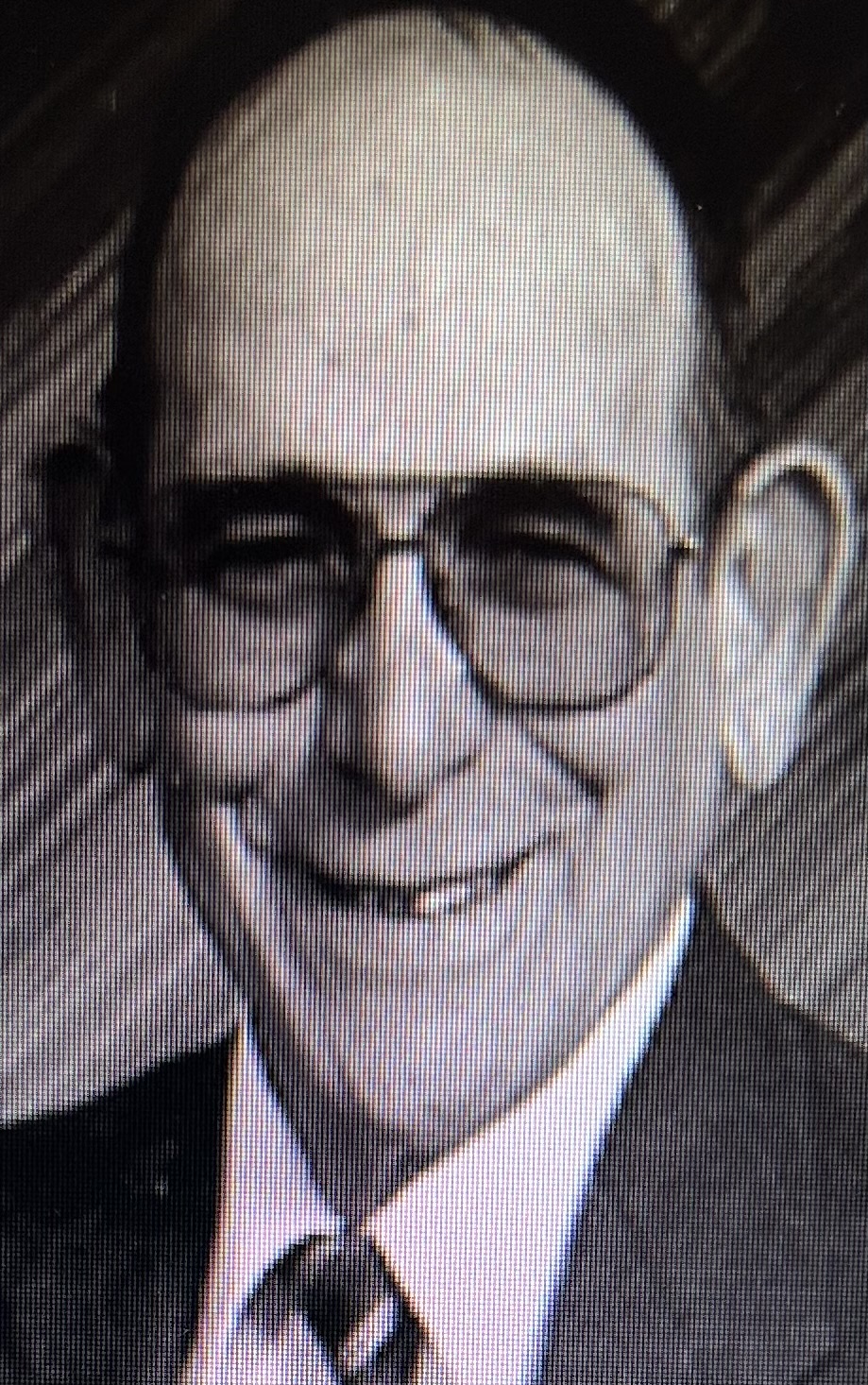
Here’s a Vietnam War story from an Air Force veteran, the late Herbert J. Tretter:
—

(Contributed photos)
There are such contrasting memories for those of us who were military and stationed in Vietnam. I was a career Air Force security policeman from 1950-70.
In 1966, I was stationed at Detachment 1, 78th Fighter Wing, Air Defense Command, Dispersal Site, Security Police Section, Siskiyou County Airport in Montague, California. This grandiose-sounding assignment was actually a tiny airport near the quaint town of Yreka in the beautiful Siskiyou Mountains just north of Mount Shasta and just south of the Oregon border.
I was only four years from retirement and very content with my current assignment when I received orders for transfer to “APO 96227.” I found out later that APO 96227 was Bien Hoa Air Base, Vietnam, about 16 miles north of Saigon. I had to report to Lackland Air Force Base, Texas, for a physical and combat training. Then I had to move my family 3,000 miles from California to my native home in Allentown, Pennsylvania. At that time, it was too expensive to fly, so we drove cross-country in five days.
On October 30, 1966, I flew out of ABE Airport [Allentown-Bethlehem-Easton, now Lehigh Valley International Airport] on United Airlines’ first jet flight out of ABE. I flew from Allentown to Chicago to Denver and finally to San Francisco, where I transferred to a military contract carrier to fly the final leg to Saigon’s Tan Son Nhut Air Base.
Flying over Vietnam would have been beautiful if there had not been a war going on. I remember deep blue rivers and lush tropical vegetation. Upon arrival in Vietnam, I had to stay overnight at Tan Son Nhut. The next morning, I boarded a bus bound for Bien Hoa Air Base. The bus had wire mesh on the windows to prevent hand grenades from being thrown in. In those days, there wasn’t air conditioning, so the bus windows were always open to the 90-degree sweltering heat.
At Bien Hoa, I was assigned to Flight B afternoon shift. We were on duty from 1-9 p.m. providing security for the base. The aircraft on this base flew 50% of the combat missions in Vietnam. We had a full squadron of Ranch Hand C-123 aircraft, which were assigned to defoliation. Across from our base was the camp of the 173rd Airborne Brigade, the only unit to make an airborne jump in Vietnam. These guys were tough, and they were trained to fight. If they weren’t fighting Viet Cong, they were fighting airmen, soldiers or sailors; they would even fight with each other on occasion. They were a tight-knit unit who fought together and drank together. If they wanted to go out to a local club for drinks, they’d throw a smoke bomb in, yell “Incoming!” and the bar would clear out for them.
(The Morning Call)
I was the security flight chief, so my first assignment was to inspect all security posts. Actually my first assignment was to find all the security posts. The non-commissioned officer that I replaced was already back in the U.S., so I had no idea where all the posts were. My solution to this problem was to drive to one post and ask the guard where the next post was. I eventually made it around the perimeter of the base by getting directions at each post.
As security policemen in Vietnam, we had to adapt to our tropical environment. I’ll never forget the time one of our outposts spotted a roaming wild tiger on the base. We had to put out a base-wide alert. We never did catch the tiger; he somehow evaded base security and wandered back out to the jungle, which was fine by me. Rats were a big — and I mean 8-inch big — problem. Many of our troops kept local mongrel dogs with them. These dogs would hunt and kill the rats for us.
In January 1967 during the Tet truce, the Viet Cong blew up our napalm storage area. The fire raged out of control for one-and-a-half hours, lighting up the night sky as if it were midday. The security police were later honored with an Air Force Outstanding Unit citation and a parade of two flights of security policemen and two flights of K-9 Corps dogs and handlers for their exceptional performance of duty. In May 1967, the Viet Cong shelled Bien Hoa with 125 rounds of 144-mm rockets, heavy mortar and recoilless rifle attacks, resulting in six American deaths and 31 Americans wounded. That night taught me what it is like to be scared. That night I tried to dig a foxhole in concrete with my bare hands and discovered it’s not possible.
During my tour, I was selected to be the non-commissioned officer in charge of the armory for the 3rd Security Police Squadron. Our weapons included the .38-caliber revolver, M-16 rifle, AR-15 submachine gun, 40-mm grenade launcher and the M-60 machine gun. I worked with and around a variety of weapons in those days. That exposure left me with no desire to ever own a weapon. After counting down 365 days on my FIGMO calendar, I left Vietnam on the Freedom Bird on October 26, 1967, with some of the most unforgettable memories of my life.
—
Tretter served in Japan during the Korean War as well as in Vietnam. After 20 years in the Air Force, he retired as a master sergeant. He died in 2011 at age 77. You can read his obituary here.
He sent me his story in 1999.
 David Venditta
Hi Dave. Another great story. To me, these true stories, biographical or autobiographical are the best. I really enjoy them. Thank you for including me on your distribution. I look forward to receiving them each Sunday night. Thanks again, Tom Ewing
LikeLike
Hi Tom, good to hear from you! I’m glad you like these personal stories. I sure do, except I’m running out, or might already have exhausted all the ones I had.
LikeLike
Thanks again for preserving these stories. They are very special and recall my memories of several occasions at Tan Son Nhut and Bien Hoa.
LikeLike
Hi Fred, thank you. I’ve said I plan to call you, and I mean it. It’s just that life has gotten in the way.
LikeLike
it’s so great that you’ve been able to collect and share these stories for men that can’t be here to tell us in person any longer.
i know we still don’t know enough about what the men went through during the Vietnam war. Sometimes no one ever really knew where the front lines were. And it seemed like it was more about casualty numbers as opposed to liberating cities and towns.
thank you for telling the stories from a young man’s point of view… Because that’s what these men were back then.
LikeLike