
“Thought you might enjoy a peaceful story of the war,” Dr. Jack E. Cole of Bethlehem, Pennsylvania, wrote to me in 1999. “It is true and unpublished.”
Here’s the former Army doctor’s account of his visit to Northern Ireland during World War II:
OFFICIAL LEAVE
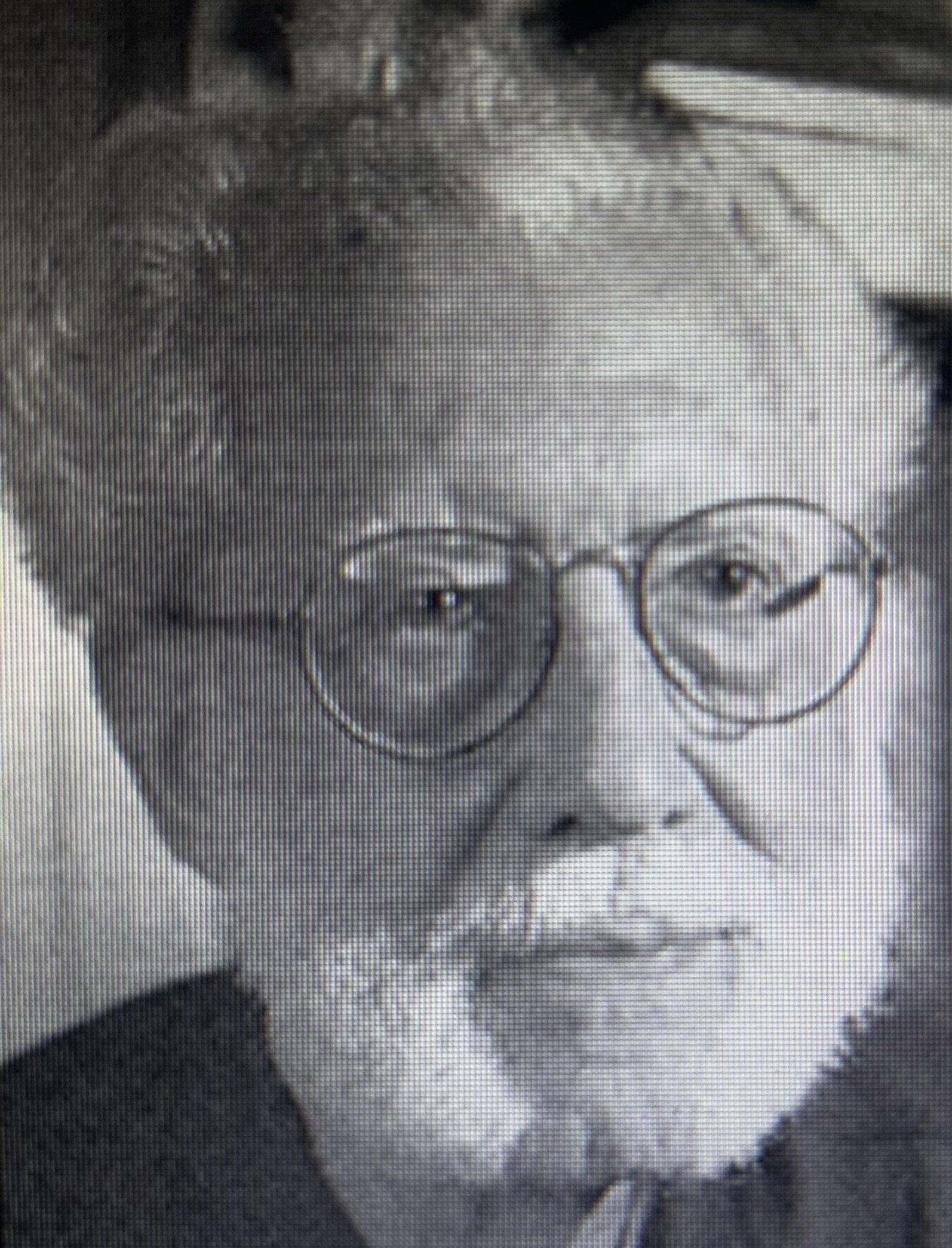
(The Morning Call)
She reached for the pack of gum which I had extended to her. I watched in amazement as she unwrapped each stick and stuffed it into her mouth. Since it was my week’s supply, it was a minor tragedy, but I had had the pleasure of being awed.
We had boarded the train in Enniskillen, bound for Belfast. It just happened we entered the same compartment, and being the only occupants, struck up a conversation. We soon learned we were both physicians. In her Irish brogue, which she managed around a huge wad of gum, she asked, “What do you do for a baby with a fever? All I know is give an enema.” I pointed out other methods that might be used. I never saw her again after arrival at Belfast, but I still picture her giving enemas while chewing a large wad of gum.
My purpose in Belfast and surrounding territory was to visit my in-laws. The commander of the 13th Infantry Regiment had urged us to use up some of our accumulating leave time. I grasped this opportunity because I did want to meet some of my wife Lynn’s relatives and to explore Ulster.
When the 8th Infantry Division was preparing to depart the USA, those of us of lesser rank had no idea to which part of the world we were headed. Just in case, I asked my Irish-born father-in-law, Bill Darragh, for names and addresses of his relatives and friends in Northern Ireland. Unbelievably, I was plunked down a few kilometers from them.
Belfast was in total blackout, having been bombed by the Luftwaffe. Groping my way from the train station, I found a cab and requested the driver to help me find a bottle of whiskey before going to a hotel. He knew just the place. Going a few blocks, we stopped in utter blackness and he said, “Wait here, I’ll be right back.”
He handed me a bottle of Old Bushmills and asked for 5 pounds ($20.15). After paying, I took a swig and immediately exclaimed, “This is at least half water!”
“Sir, you didn’t expect pure whiskey, now did you?”
Although the whiskey wasn’t pure, the blackness was. I knew I was defeated. “Take me to a hotel.”
The hotel desk clerk was working in candlelight. “And what is this?” I asked as he handed me a black chunk. “That is peat, sir. Burn it in your fireplace. You’ll get a chunk each day you’re here.”
The bus ride to Ballymoney was pleasant. Certainly, Emerald Isle is a fitting name for this lush green bit of land. Ballymoney, a city of about 20,000 and the ancestral home of Lynn, wasn’t as pretty as the countryside. When I found the home of her Uncle Jim, it was far from affluent. In fact, it was downright humble.
Jim Jr. met me outside the house. He was courteous but wary. I’m sure there were many eyes peeking out windows. Here was I, resplendent in an Army officer’s uniform, captain’s bars flashing in the sunlight, visiting a peasant area. It wouldn’t be safe for them to invite me into their home, not knowing whether I was Catholic of Protestant, and I looked so majestic.
Jim directed me to the general store and home of Mr. Crumbie, a close friend of Bill Darragh’s. … He gladly invited me into his home behind the store. He and Mrs. Crumbie treated me to tea, crumpets and scones. Conversation was warm, with many questions about Bill and his family.
Departing their home through the store, Mr. Crumbie said, “Now wait. I have a present for your Mrs. Darragh. Not Bill’s Mrs. Darragh, but yours.” He evidently had forgotten my name. He pulled out a pile of handkerchiefs, all labeled Pure Irish Linen. As he went through the pile, he picked out certain ones, saying, “That’s linen.” I was polite enough not to ask what the others were made of.
The bus ride along the east coast of Ulster on the Antrim Coast Road terminating at Portrush was a thrilling experience. The craggy shore churned a constant display of waves crested with white water. The 4,000 residents of Portrush thrived on tourism, and their homes indicated affluence.
Here I visited another friend of Bill’s, a Mr. Kittough. He shrewdly determined my religious affiliation by asking if I was a member of the Craft. When I answered that since I reached my majority, I had not lived in any one place long enough to join the Masonic Order. He was satisfied that I was a suitable house guest.
He had a lovely home and treated me royally. When I refused milk and sugar in my tea, he was distressed that he had no lemon. The German U-boats were sinking many of the Allies’ supply ships, and as a result, lemons, if one could be found, were $5 apiece. I relieved his pain by accepting milk in my tea. After answering the usual questions about my father-in-law and his family, and some discussion on the war, I took my leave and headed for the Giant’s Causeway, a short distance of seven miles.
The Causeway is a spectacular promontory of columnar basalt composed mostly of irregular hexagons, caused by a rapid cooling of lava flows into the sea. It is a must for anyone visiting Ulster.
An elderly gentleman who oversaw the Causeway conducted us — I had picked up another officer as a companion — on a guided tour. Since it was toward the end of winter, he hadn’t seen a tourist for several weeks. His volubility was stunning. He told us many stories, one of which was how an Irishman had written the Star-Spangled Banner.
In the vicinity was one of those shelters scattered throughout the world, set up by service organizations to cater to the needs of American servicemen and women. The lieutenant and I sought hospice there. We were overwhelmingly greeted by a young woman who hadn’t seen a fellow American since autumn. She had undiluted whiskey. We celebrated. We put her to bed before we hit the sack and left a note the next morning thanking her for her exuberant hospitality.
Arriving in Enniskillen, I had to endure the usual post-leave letdown. The Allies had made progress in spite of my week-long absence.
—
Cole was wounded in Europe and received a Purple Heart.
He went on to have a family practice in Bethlehem. In the late 1960s and early ’70s, he was a Peace Corps physician in Afghanistan, Swaziland (now Eswatini) and India. In 1987, he led a United Church of Christ medical team in Honduras. He was an author and poet.
Cole died in 2008, 13 days after the death of his wife, Evelyn Lynn D. Cole.
 David Venditta
Thanks again for this most interesting story pf our men in uniform from another time.
LikeLike
Hi Fred, I hope you are well. Thank you for being a loyal reader. There are so many stories to tell, and so many that will be left untold.
LikeLike
Every story gives us another piece of the past.
Thank you, David.
LikeLike
Thanks, GP. As you well know, there are so many stories, and so many untold.
LikeLiked by 1 person
one almost forgets, what the irish were going through during world war ii.
even though ireland was officially neutral, they had thousands of soldiers fighting with the british.
still, sounds like such a beautiful, friendly country.
LikeLike
Really enjoyed this ‘peaceful story of war’
LikeLike