

(Newspapers.com)
Private Earl Seibert died eighty-two years ago at a prison camp in the Philippines and was buried there. When the Defense Department announced last month that his remains have been identified, I reached for my filing cabinet.
In 2002, I interviewed a veteran who had much in common with Seibert– eastern Pennsylvania hometowns, service in the same Army unit, the Bataan Death March and a camp where more than 2,500 POWs died. The difference was that Joe Poster was spared.
—
Seibert was among seven men from Allentown who shipped out to the Philippines in the fall of 1941. Along with thousands of other U.S. and Filipino troops, they were taken prisoner the following spring, several months after Japanese forces invaded the islands. Ahead of them was the Death March and horrific captivity. Only three would survive.
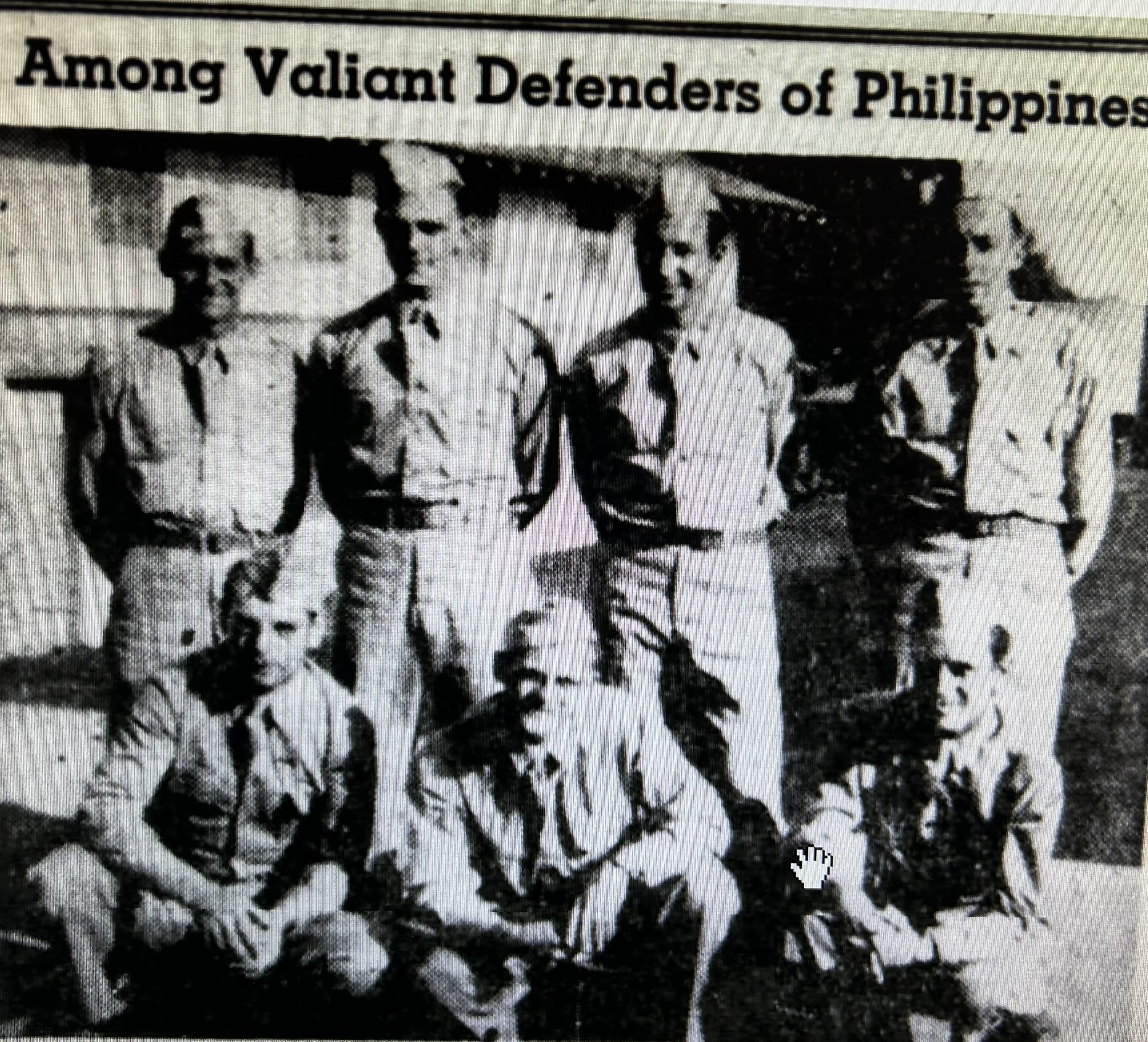
(Newspapers.com)
In December 1941, just days after the Japanese landed, The Morning Call of Allentown ran a photo of the seven men – Seibert, Eugene McNamara, Edwin Warfield, John Sokalsky, Raymond George, William Johnson and Walter Lamm. Citing a letter from McNamara dated November 29, the paper said they were together at Fort Stotsenburg/Clark Field, about fifty miles from Manila.
Before his Army service, Seibert was a mechanic at Hoffman Bros. auto salvage. He and the six others were inducted in June 1941 and got basic military engineer training at Fort Belvoir, Virginia. Assigned to the 803rd Engineer Aviation Battalion, they arrived on Luzon in October and were attached to the Far East Air Force. Their job was building airfields.
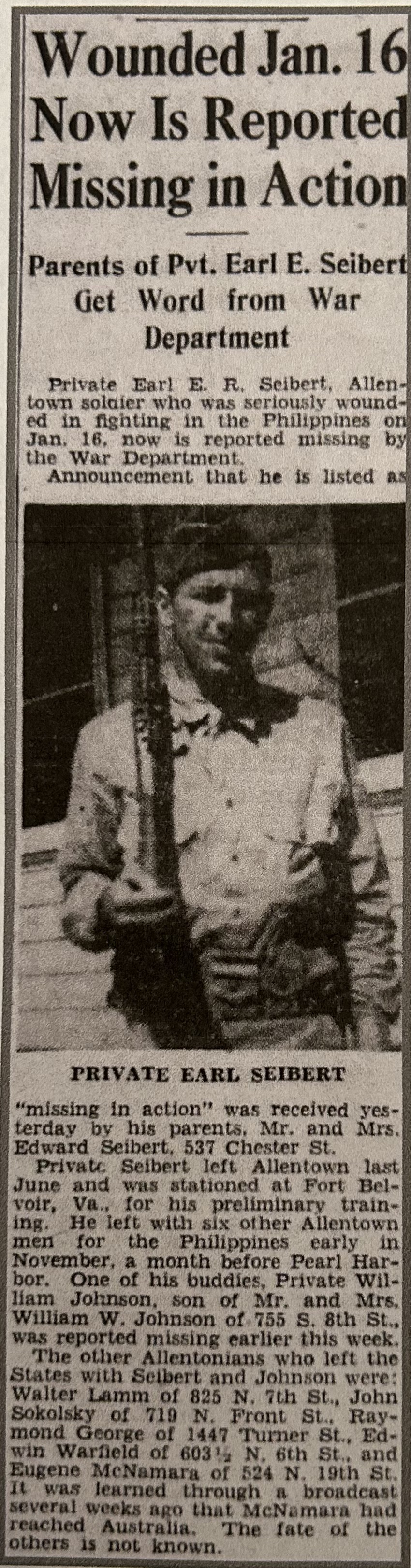
(Newspapers.com)
Seibert, of Headquarters Company, was badly wounded January 16, 1942, as the Americans and Filipinos fought to defend the Bataan peninsula. There were no details on his injuries.
After the Allies surrendered April 9, most of the men in the 803rd’s three companies on Bataan – a fourth company was on Corregidor — walked from Mariveles to San Fernando on the Death March, according to Good Outfit: The 803rd Engineer Battalion and the Defense of the Philippines, 1941-1942, by Paul W. Ropp. They were taken by train to Capas for internment at nearby Camp O’Donnell. Many of the engineers left the camp to toil for their captors in the mountains of northern Luzon. After a few months, they were marched to Cabanatuan Camp 1 , where disease, malnutrition and maltreatment took a dreadful toll.
Seibert, age twenty-three, died of diphtheria at Cabanatuan on July 27, 1942. He was buried in a common grave at the camp cemetery. His parents didn’t learn of his death until three years later, after Japan’s surrender.
Ropp’s 559-page history of the battalion lists what happened to its members. Here’s what the book says about the six other soldiers from Allentown, all of them members of Company B:
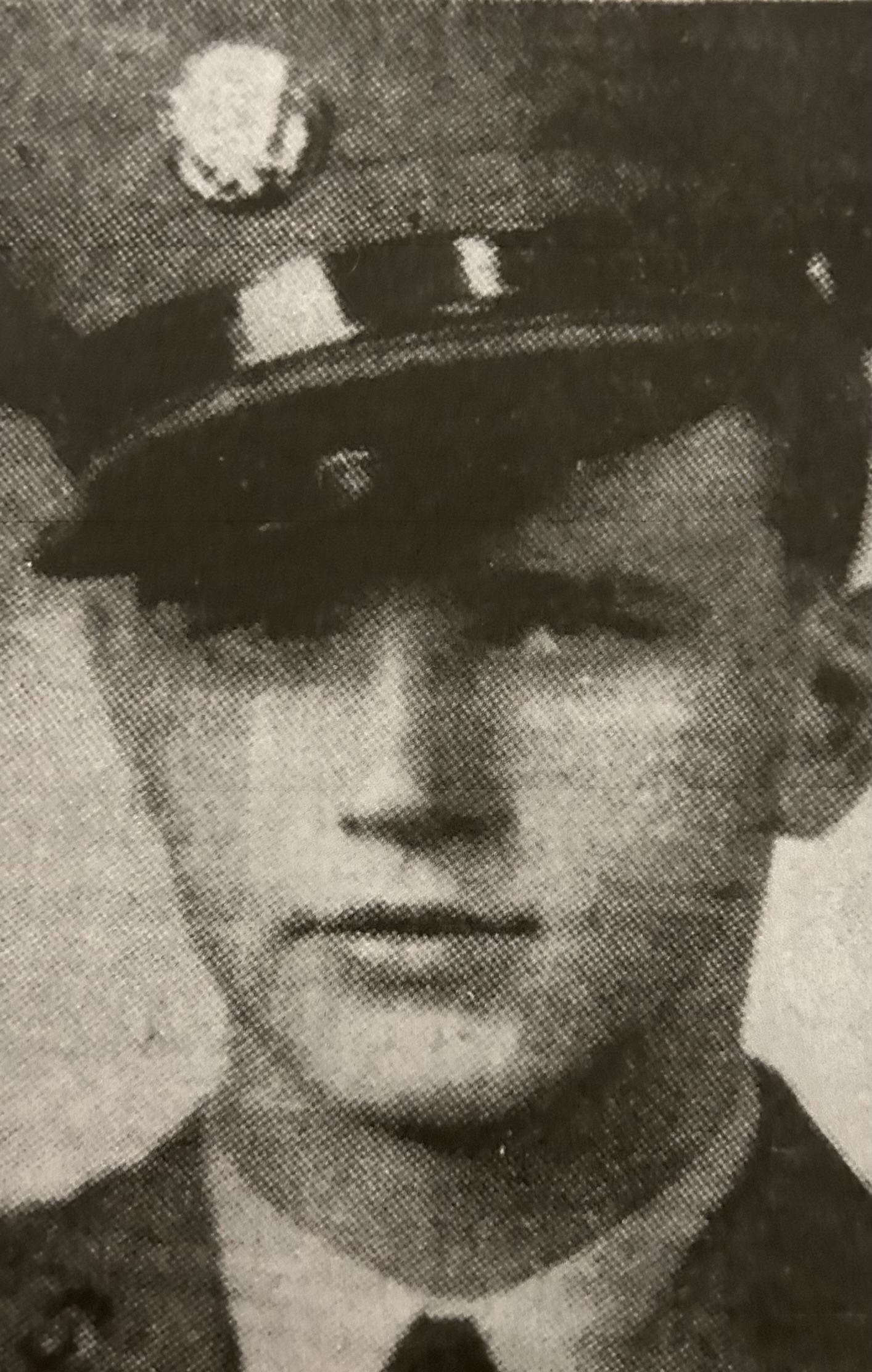
— Private Walter Lamm survived the war. He left Cabanatuan in September 1942, was transported on the hell ship Tottori Maru to Korea and then to a POW camp in Mukden, Manchuria. (He died in 2008 at age eighty-nine.)
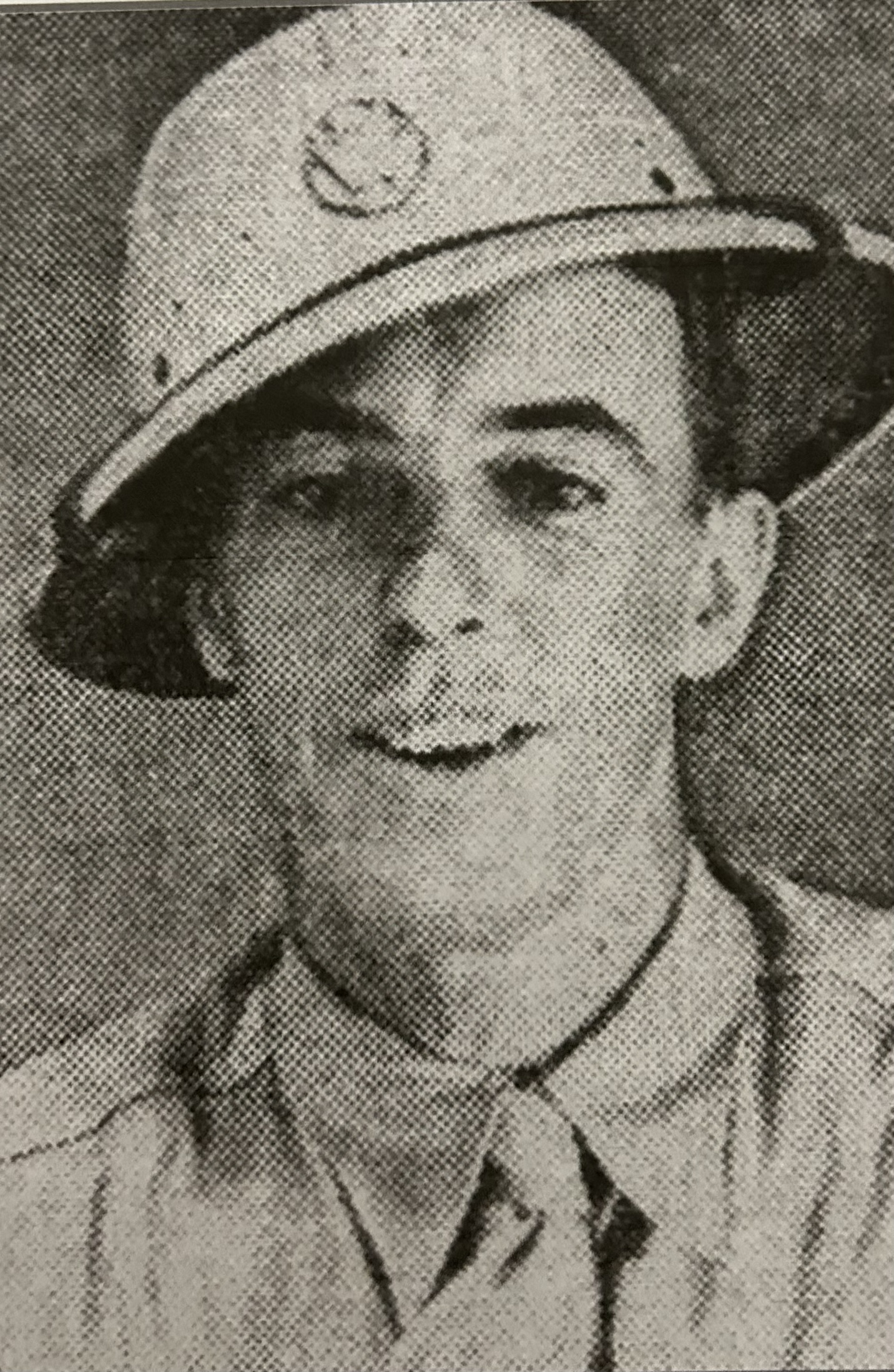
— Private First Class Edwin Warfield survived the war. He was taken from Cabanatuan in July 1944, transported on the hell ship Sehiiko Maru and held captive near Osaka, Japan. (He was eighty-six when he died in 2000.)

— Private First Class John Sokalsky survived the war. He was taken from Cabanatuan, transported on the Tottori Maru and taken to Mukden in October 1944. (He died in 1984 at age sixty-eight.)
— Private Eugene McNamara died May 1, 1942, at Camp O’Donnell of cerebral malaria and dysentery.

— Private Raymond George, twenty-four, died in the Cabanatuan hospital August 27, 1942, of dysentery. He had been wounded in action April 8. (Warfield helped bury him.)
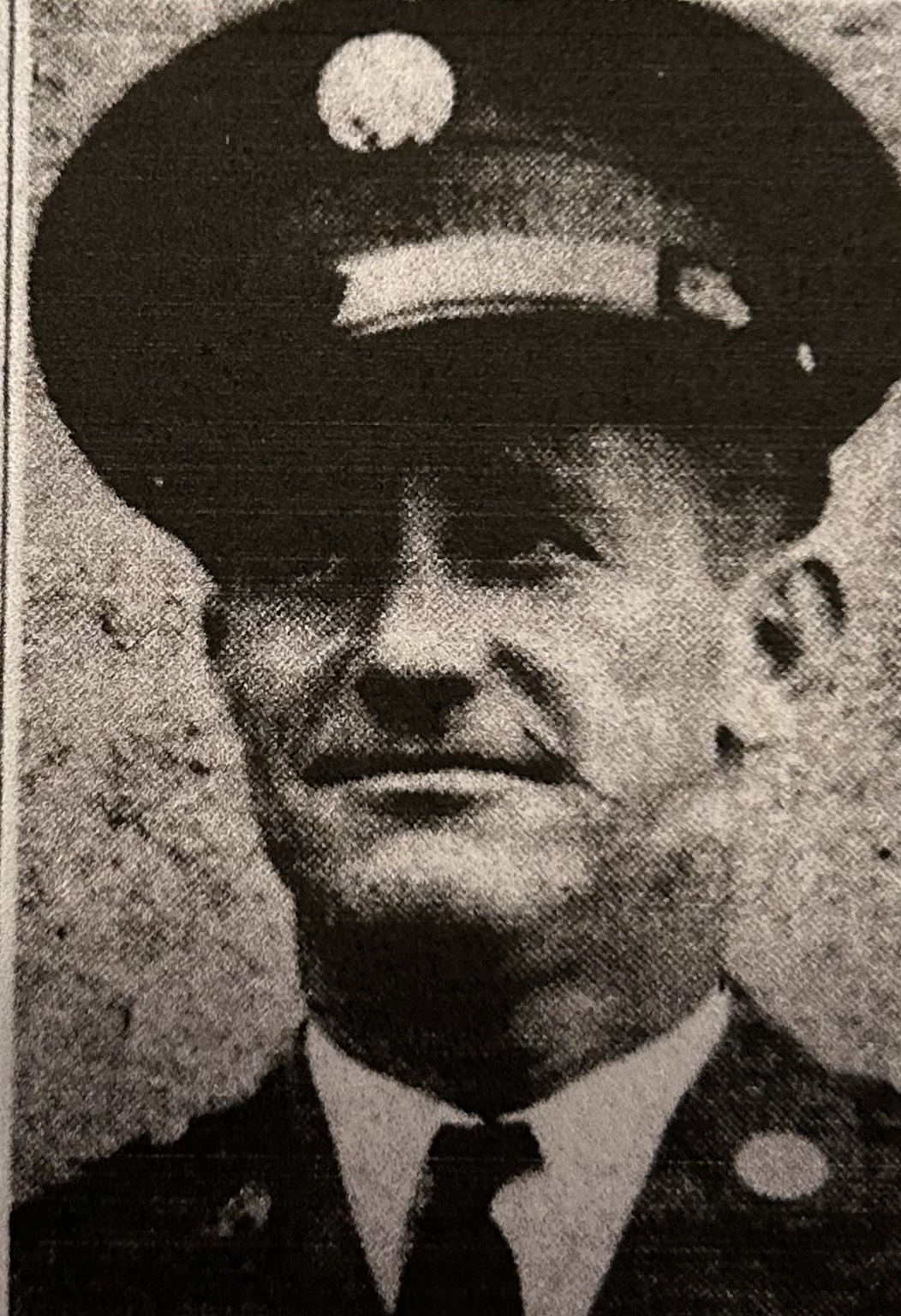
— Private William Johnson, twenty-eight, died April 15, 1942, of a fractured skull during the Death March. He might have been murdered near Balanga. According to a November 1945 story in The Morning Call, Warfield told Johnson’s parents their son collapsed during the march and was carried away, never to be seen again.
—
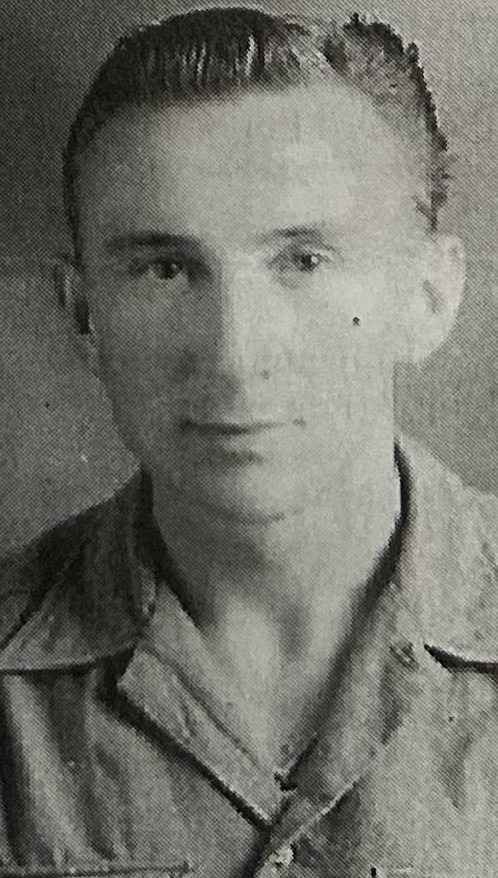
Word that Seibert died at Cabanatuan and his remains have been identified took me back to an interview I did for The Morning Call twenty-two years ago. Joe Poster grew up in Pottstown and served in Company B of the 803rd. He went on the Death March and the work detail in the mountains. At Cabanatuan, he once helped bury the dead. Sent to Manchuria, he almost died of nephritis at the Mukden camp.
“I can’t say how I made it,” Poster told me. “I lived day to day. I was scared all the time. I thought maybe tomorrow those Japanese will kill me. I never knew whether they were going to murder us or not. That’s the way it was for three-and-a-half years, even till the last day.”
Poster came home late in 1945. He got married, worked for Mack Trucks in Allentown and was a national commander of the American Defenders of Bataan and Corregidor.
When I arrived at his home for one of our interview sessions, he yelled that I was making him remember “all this stuff.” He was still haunted and couldn’t sleep.
He died in 2003, a year after my story ran. He was eighty-three.
 David Venditta
War is hell, I’m so saddened by these deaths and appreciate hearing their stories. Remembering is important!
LikeLike
I’m with you, Rick. And there are so many stories to tell.
LikeLike
After reading your stories, I always find myself pausing to send up a prayer of thanks to these courageous men. I feel such sadness for the men who died so young and under such horrific circumstances. My gratitude is deep for those souls as well as for those who survived and lived long lives in spite of their painful experiences. Thanks for reminding us of these brave soldiers.
LikeLike
Thanks, Jan. So well said. I’m glad I can touch your heart.
LikeLike
PVT Seibert arrived on US soil today. He will be laid to rest on Saturday 5/25, 1100am at Grandview Cemetery in Allentown.
LikeLike
Thanks. How do you know that?
LikeLike
Pingback: ‘Uncle Earl, you have never been forgotten’ | David Venditta