
There’s a new book, The Plot of Shame, about American soldiers who were executed for crimes committed in Europe during World War II.
I’m in it.
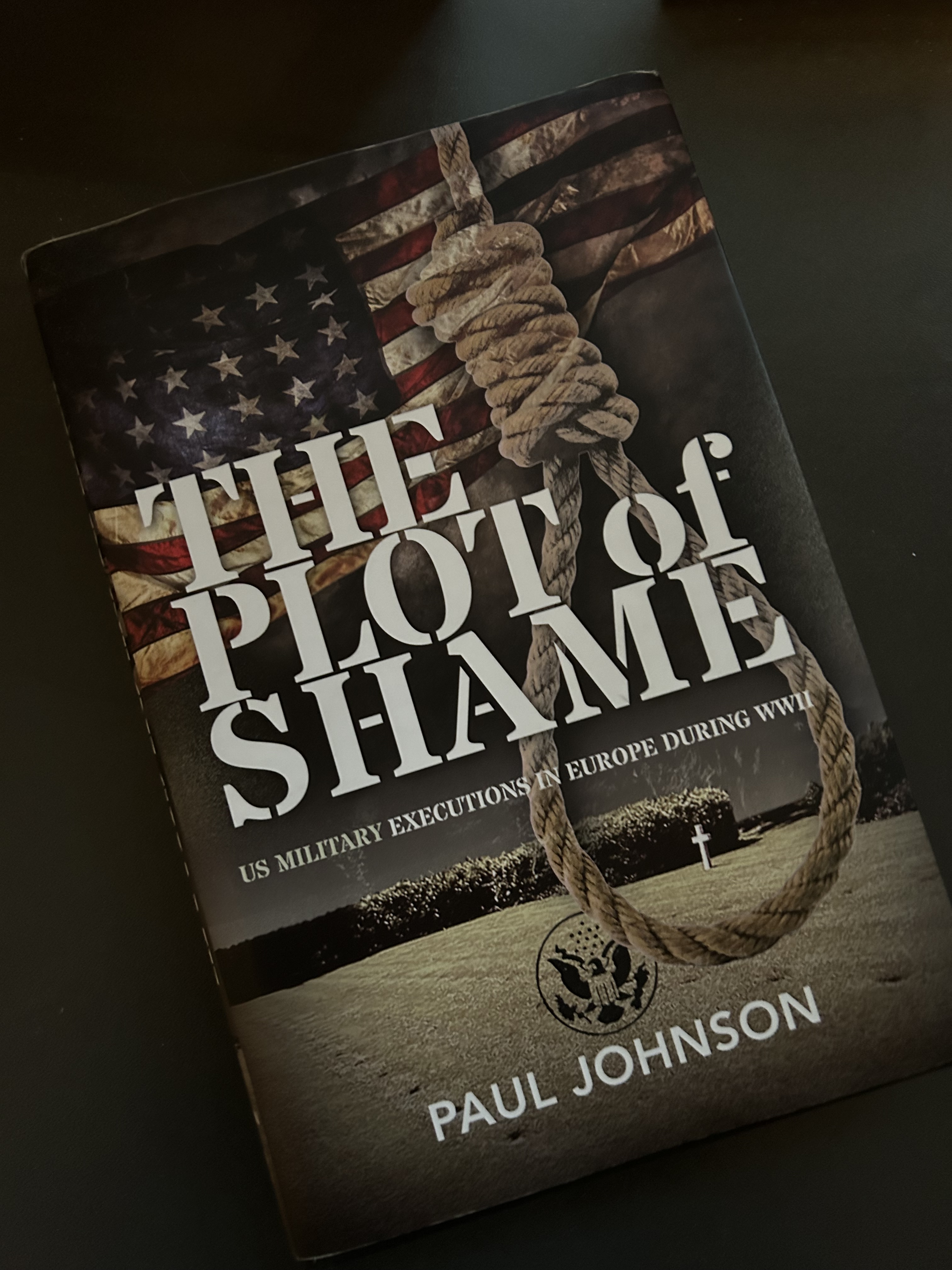
No, so far as I know, I didn’t have a previous life as a violent criminal. It’s just that British military historian Paul Johnson used some info and photos from one of my blogs and credited me in the text.
Johnson’s book is about a semi-secret tract at the Oise-Aisne American Cemetery in northern France. Called Plot E, it holds the remains of ninety-four Americans put to death by the U.S. military for wartime crimes of rape and murder. (In all, ninety-six Americans were hanged or shot, but the remains of two lie elsewhere.) The stories from Plot E are chilling. Johnson tells them in detail, with background on the criminals, narratives of their vile deeds, and an emphasis on the victims, who were both soldiers and civilians.
A contemptible soldier I’ve written about is buried in Plot E. He was Werner E. Schmiedel, alias Robert Lane, a German-born resident of Lehigh County, Pennsylvania, and rogue Army private who led a notorious gang of deserters called the Lane Gang. He was hanged by the military in 1945 for gunning down an Italian man in a Rome wine shop.
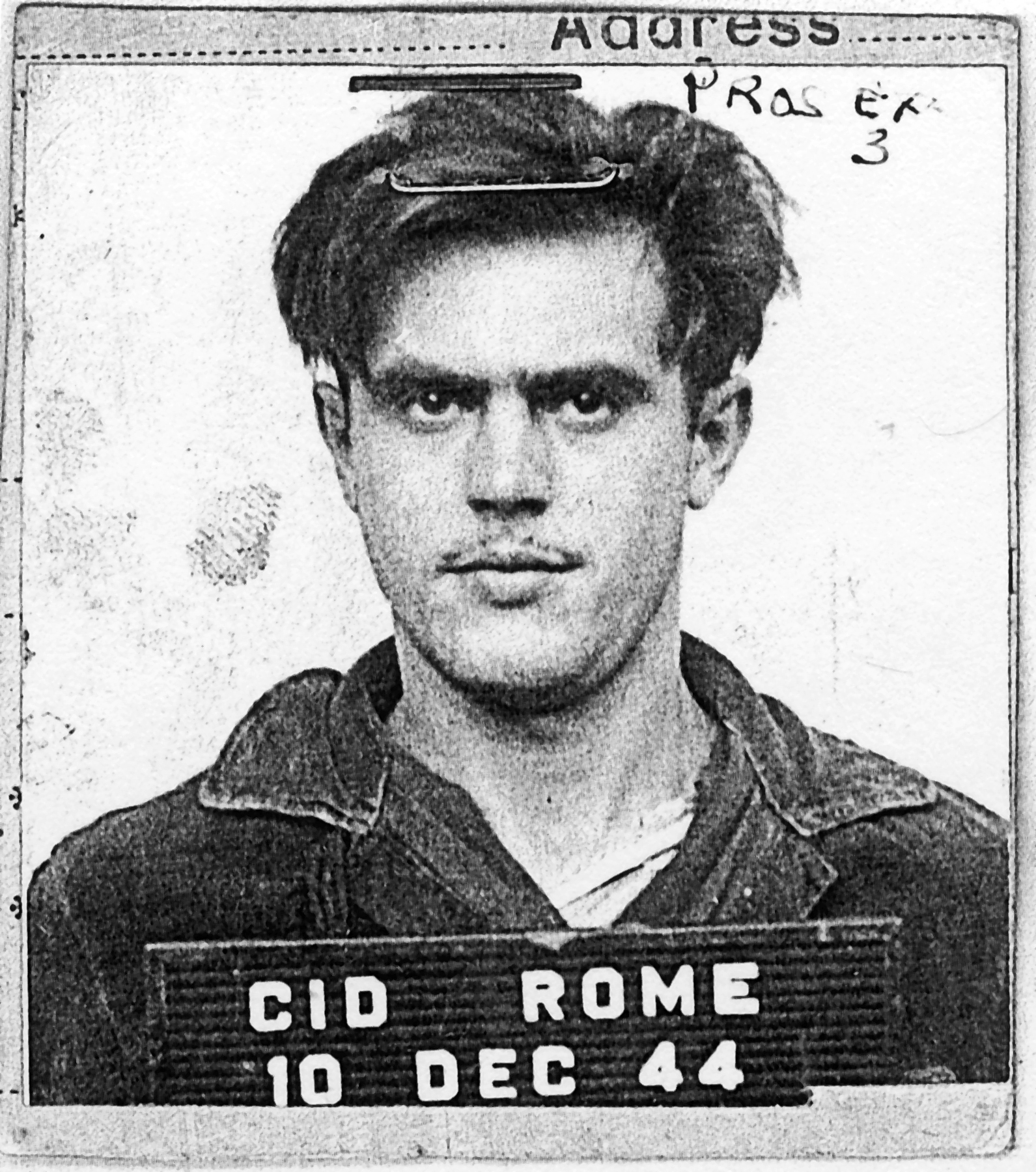
(National Personnel Records Center)
I told Schmiedel’s story in a 2015 piece for The Morning Call of Allentown, where I worked. Much of what I wrote was based on court-martial records from the National Personnel Records Center in St. Louis.
After I retired, I heard from a Joe LoPinto in upstate New York who wondered why his late father wasn’t in my story, which Joe’s son had seen online. The name John LoPinto didn’t ring a bell, but in fact he was a lead Army agent in the hunt for Schmiedel. What’s more, he had kept the complete report of the investigation, a document I didn’t have. Joe LoPinto shared it with me, along with stories his dad had told him about the case. With this new material, I wrote a blog in 2017 titled “Busting the Lane Gang: The John LoPinto Story.”
Johnson read my blog and emailed me in April 2022. His latest book, The Brookwood Killers, had just been published. It’s about twenty British soldiers who were executed for civil crimes and whose names are on a national memorial in Brookwood, Surrey. Now he was working on a book about Americans who’d been executed. The topic had been dealt with before, in an encyclopedic 2013 book by retired U.S. Army Colonel French L. MacLean called The Fifth Field, another name for Plot E. (I had interviewed MacLean for my newspaper story on Schmiedel.) Johnson knew of MacLean’s “excellent book” but wanted to look at the stories more from the victims’ perspective. He hoped to use some of my blog’s info concerning John LoPinto’s report. After checking with Joe LoPinto, I gave the OK.

(Courtesy of Joe LoPinto)
I’ve just finished reading The Plot of Shame. Johnson is up front about its disturbing material. If we don’t have the stomach for it, he says in his intro, we should “close the cover” right then and there. But that didn’t stop me from reading every entry on every sordid case. I have to say, though, it was so disturbing that I kept laying it aside to pick up the cheery book I was reading, Lucy Maud Montgomery’s Anne of Green Gables. (I can explain. My wife and I will be taking a road trip to Prince Edward Island, so I had to get familiar with Anne’s story.)
It was wrenching to read about John “The Clumsy Hangman” Woods and botched executions, about soldiers convicted and sentenced to death on evidence that seemed less than damning, about the disproportionate number of Blacks among the doomed men. You learn about horrifying crimes, how they played out and to whom they happened. Johnson calls special attention to the victims, at the end of each account asking us to remember them. One more thing: I’m glad he included the desertion case of Private Eddie Slovik, a guy with a bad record who clearly didn’t belong in combat and who, it seems, was unjustly singled out for the firing squad. Slovik was buried in Plot E, but in 1987 his remains were returned to his hometown of Detroit.
We honor those Americans who served in World War II for their sacrifice and courage, but a few disgraced the flag instead of upholding it. They committed terrible acts against fellow soldiers and innocent men, women and children overseas. They should have been liberators, not rapists and murderers. We don’t like hearing about them, but it’s important that we have a record of who they were and the evil they did. The Plot of Shame helps fill that role.
 David Venditta
This is a very sad part of the war history i have read little of. I once had an aquaintance who worked in the State Dept. who had the responsibility of arresting in the field soldiers found to be colluding with the enemy. He had said that they were given choice of summary execution or transport to prison for execution and that almost always they chose execution on location. For this he carried a Colt 45, and his memory of his gruesome responsibility still troubled him so many years later.
LikeLike
That’s sobering, Fred. I never heard of that happening.
LikeLike
My acquantance Wallace “Buck” Priester also went into the Andes in Peru to to take out Japanese observers who were monitoring Allied naval activities in the Pasific. He used a garrote wire to silently execute them.
LikeLike
Wow. I ordered the book
LikeLike
Wow that was very interesting will get the book
LikeLike
Go for it, Sue, but just so you know, it’s very disturbing.
LikeLike
Dave, crazy stuff I learn 75 years after the War.
RickSent from my iPhone
<
div dir=”ltr”>
<
blockquote type=”cite”>
LikeLike
You said it, Rick. Happy summer!
LikeLike