
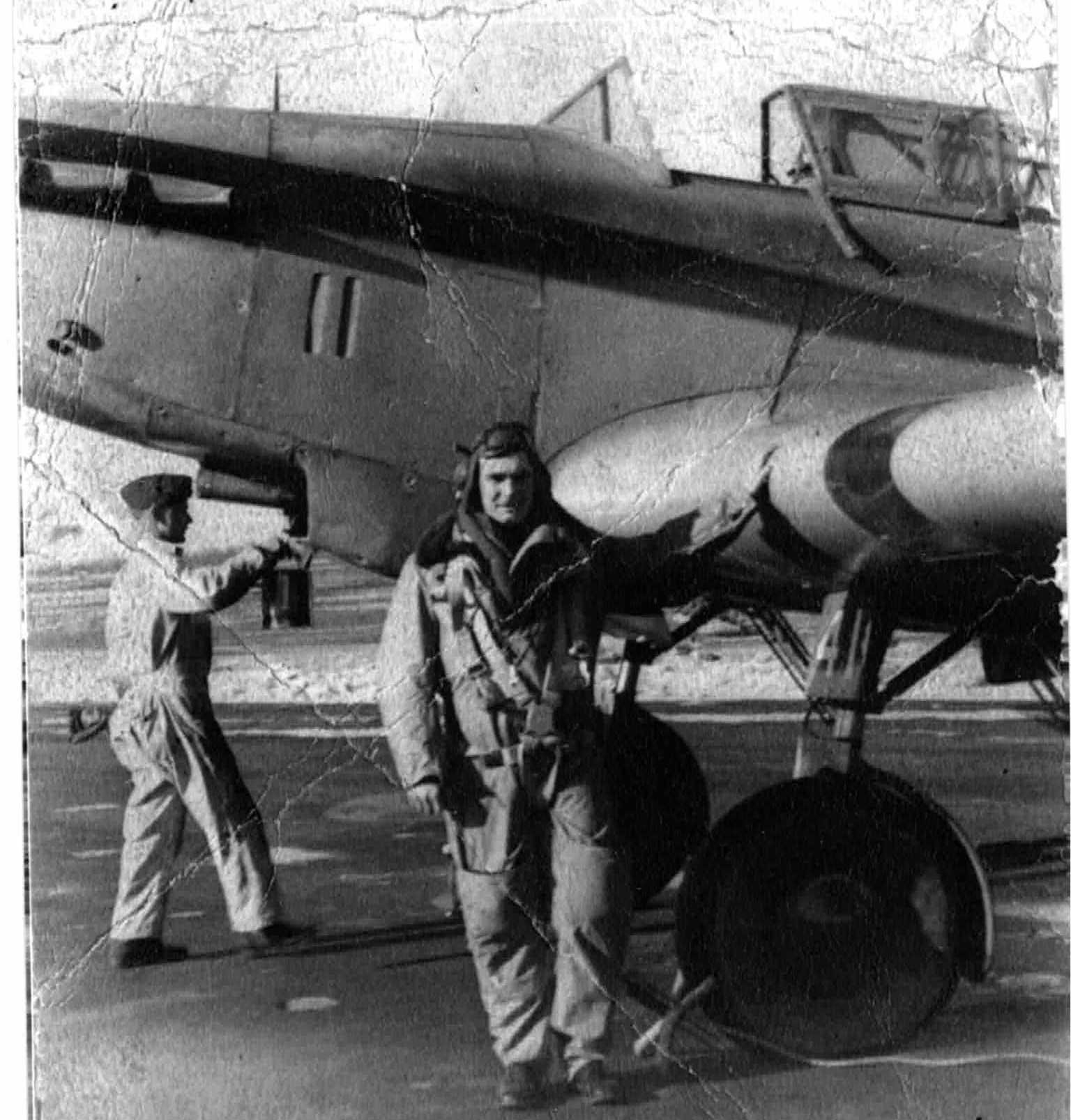
(Corinne Hudock Cazer)
Sometimes it can take years to have a story cover all of the bases.
Since 2000, I’ve been writing about a young pilot from Allentown, Pennsylvania, who was killed while serving with the Royal Canadian Air Force in World War II.
Robert H. Riedy, 20, died on a training flight in England in 1942. My most recent piece about him was a two-part blog in January after his medals were returned to his hometown.
I didn’t know of any other flyers from Allentown who fought under the Canadian flag and lost their lives, and didn’t look into it. But last fall I learned that Riedy was only part of the story I had been telling. He was not alone.
Chris Dickon, an author and former reporter who won awards as a public radio and television producer, put me on to John G. Hudock.
An Allentown High School graduate, Hudock was the navigator on a bomber that crashed in the North Sea, cause unknown, after a night mission to Hamburg in 1942. His body was never recovered.
I decided to write about him for my former employer, The Morning Call of Allentown. It was a good fit because the paper followed his service during the war and published several letters he sent home. They included breathless accounts of having tea with England’s king and queen, and of a harrowing raid on Nazi Germany.
Much of what I learned about Hudock came from his 72-page RCAF personnel file maintained online by the Government of Canada. I had help from Ancestry.com, Newspapers.com, the U.K. National Archives, researcher Kenneth Woolley III at the Allentown Public Library, and two Hudock nieces in upstate New York.
Along the way, I found out the war claimed a third RCAF flyer from Allentown, 21-year-old George G.J. Hower.

(Corinne Hudock Cazer)
My story on Hudock ran in The Morning Call last week in two parts. (If you’re not a subscriber, you can read it online for $1.) To pull it together, I created a timeline of his life and service.
Timelines are a handy way of nailing the narrative. And you can have more detail than you’d put in an article for general readership. That’s the case with this one I did for Hudock:
1918
May 19: John George Hudock is born in the coal town of Lansford, Pennsylvania, the eighth of nine children of Slovakian immigrants John and Mary Hudock.
1923
The Hudocks move about 40 miles south to Allentown, into a brick row house on Ridge Avenue near Gordon Street and the Lehigh River. They worship at St. John the Baptist Slovak Catholic Church on Front Street.
1924
John Hudock starts attending St. John’s grammar school.
1931
September 3: His father, John C. Hudock, dies at 66. He is buried at St. John the Baptist Church Cemetery.
1932

Hudock attends Central Junior High.
1933
He starts at Allentown High School, where he’s in the commercial curriculum and plays football for three years.
1936
June 23: Hudock graduates from Allentown High.
1936-38
He works as a lifeguard, chauffeur and for his brother George as a plumber’s helper.
1937
He has an operation on his left knee that leaves a scar.

1938
Hudock works as a stenographer/secretary at explosives maker Trojan Powder, leaves because of “broken engagement.” He moves to New York City.
1938-39
He lives in the 5000 block of Broadway in Bronx and manages the oyster bar at the Midston House club hotel at 38th Street and Madison Avenue in Manhattan.
1939
He leaves Midston House because of an opportunity to “own business,” becomes a concessionaire at Van Cortlandt Pharmacy in Bronx.
September 1: World War II begins with the German invasion of Poland.
1940
May 10: Nazis invade France, Belgium, Luxembourg and the Netherlands.
May 22: At age 22, Hudock enlists in the Royal Canadian Air Force at Recruitment Centre in Ottawa. He is 6 feet tall, weighs 177 pounds.
June 20: He gets “movement order” by rail from Ottawa to No. 1 Manning Depot, Toronto. He’s in RCAF under the British Commonwealth Air Training Plan.
June 30: He reports to No. 2 Initial Training School at Regina, Saskatchewan.
July 10 to October 31: Battle of Britain
August 15: Hudock advances in rank from aircraftman to leading aircraftman (LAC).
August 18: He starts at No. 1 Air Observer School at Malton, Ontario.

(Corinne Hudock Cazer)
November 10: He reports to No. 1 Bombing and Gunnery School in Jarvis, Ontario.
December 21: Promoted to sergeant, he reports to No. 1 Air Navigation School in Rivers, Manitoba, for advanced training.
1941
January 20: He completes advanced training in Manitoba.
January 28 to mid-February: On leave, he visits family and friends in Allentown.
February 20: He reports to Embarkation Station Debert in Nova Scotia, and will ship out to England from Halifax.
March 11: His overseas service begins.
March 24: In England, he’s at No. 3 Personnel Reception Centre, Uxbridge.
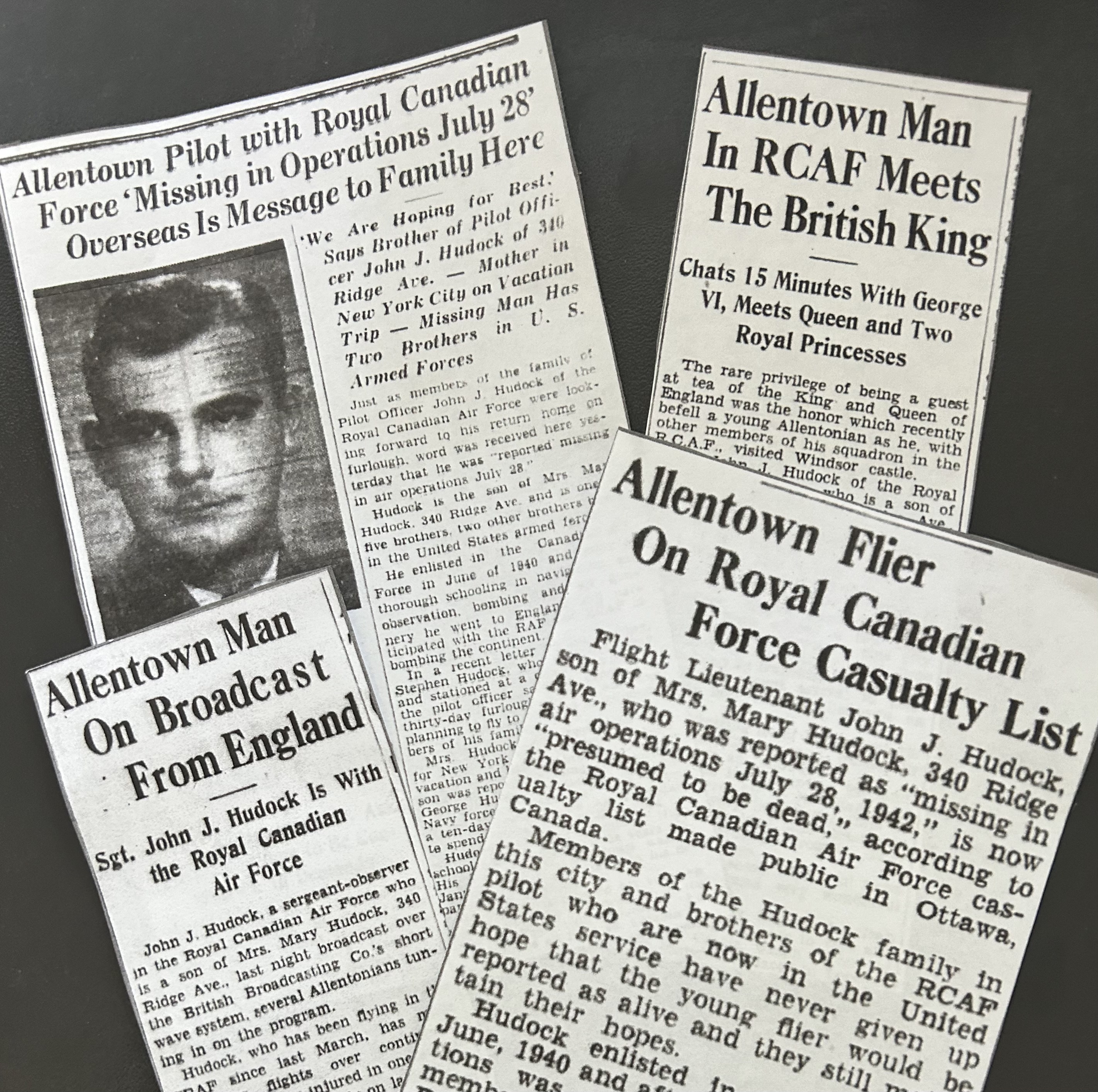
March: He has tea with King George VI and Queen Elizabeth at Windsor Castle with 23 others from his “flight,” a squadron subdivision. The king offers him a cigarette and lights it for him. Princesses Elizabeth and Margaret Rose ask him many questions about New York City.
April 7: Attached to Britain’s Royal Air Force, he arrives at No. 11 Operational Training Unit, part of No. 6 Group Bomber Command, at RAF Bassingbourn for night bomber aircrew training.

April 15: The Morning Call prints Hudock’s letter to his mother about having tea with the king and queen.
June 29: He’s assigned to No. 9 Squadron at RAF Honington, Suffolk, on Vickers Wellington bombers.
August 14: The Morning Call in Allentown prints a letter from Hudock recounting an air raid on Germany, his 10th combat mission.
September 1: Hudock is promoted to flight sergeant, a step up from sergeant.
September 18: He’s admitted to a Gloucester hospital. His fiancée, Doris Connolly of Toronto, later tells the Toronto Star he had a flying accident.
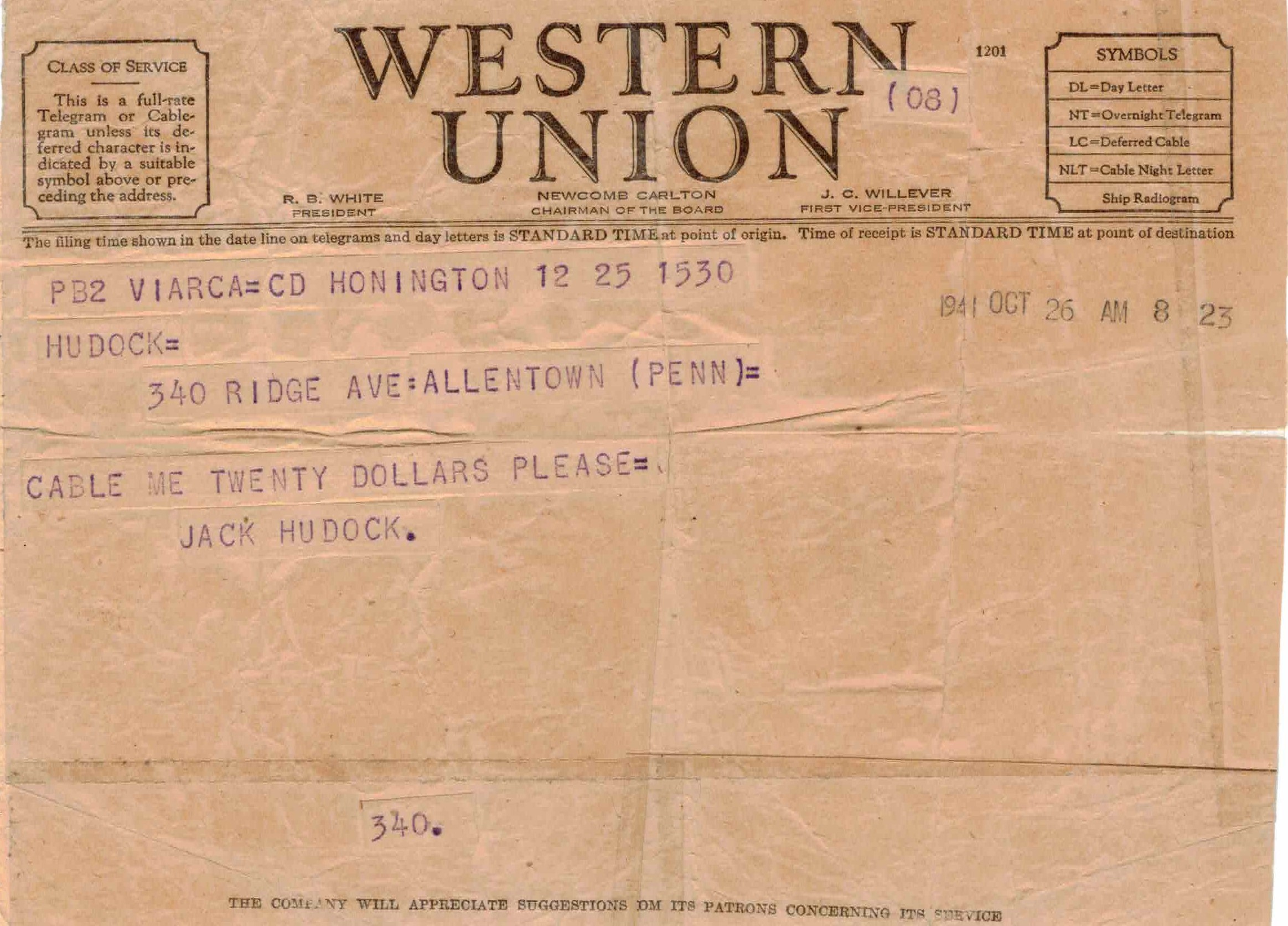
(Corinne Hudock Cazer)
October 16: Hudock returns to duty.
October 17: Over BBC’s American Eagle radio program in London, he tells his family he’d been injured and is now out of the hospital, asks them to send cigarettes.
1942
February 24: In its “RCAF Notes” column, the Toronto Star reports Hudock’s promotion to flight sergeant and says he was injured in a flying accident. The paper’s source was “his fiancé, Miss D. Connolly of Toronto.”
March: Hudock is on the BBC program again, but reception in Allentown is poor and he can’t be heard distinctly.

March 18: Robert H. Riedy, a 1938 Allentown High School graduate and RCAF pilot, is killed when his Wellington crashes moments after takeoff on a practice flight at Mount Farm in Oxfordshire.
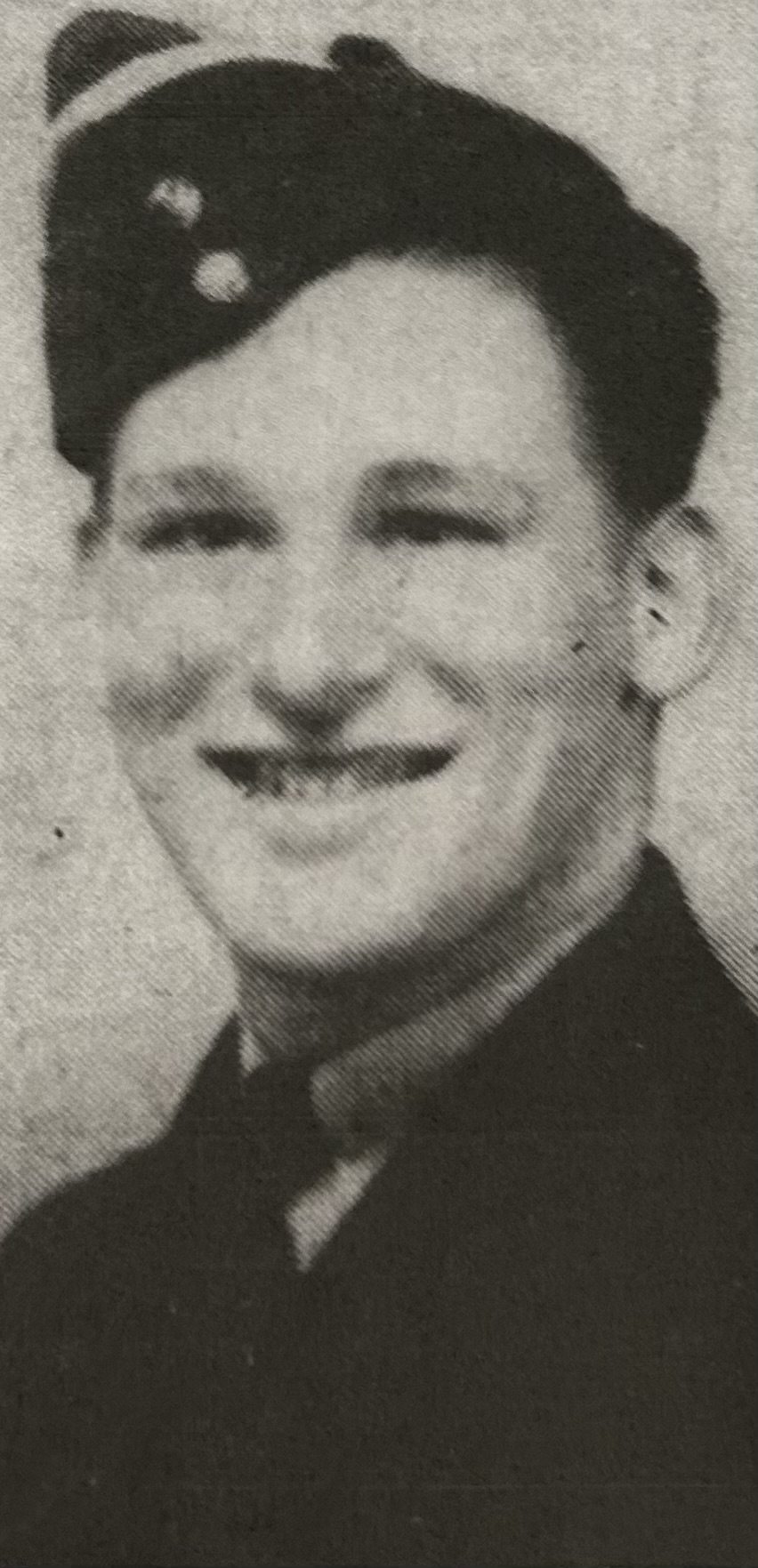
March 23: George G.J. Hower of Allentown dies in a mid-air collision during an RCAF gunnery exercise involving Fairey Battle bombers at Dafoe, Saskatchewan. He was training to be a wireless operator/gunner.
May 13: Hudock is commissioned a pilot/officer. (The rank doesn’t mean he was trained to fly a plane.)
June 29: He’s promoted to flight lieutenant and posted to No. 156 Squadron at RAF Alconbury, 65 miles north of London.
July 4: Mary Hudock is greeted by her son on the American Eagle radio program, the third time he’s on it. “I’ve just finished one lot of operations and I hope I’ll soon get a rest,” he says.
July 28: Hudock is the navigator aboard a Wellington Mk III, serial number BJ840, that takes off from Alconbury at 11:01 p.m. as part of a 256-plane bombing raid targeting Hamburg. His Wellington has a crew of six and carries a 4,000-pound bomb.
July 29: Hudock’s plane fails to return to base.
July 30: Mary Hudock leaves Allentown for a short vacation in New York City.
July 31: The family learns Flight Lieutenant Hudock, 24, is “missing in air operations.”
August 1: Canada’s Air Council, the RCAF’s governing body, says in a letter to Mary Hudock that on July 28-29, her son was the navigator on a Wellington “which carried out an attack on Hamburg on that night. The last wireless message received from the aircraft was at 3:10 a.m. when it was on the return journey and was from a position calculated to have been approximately 50 miles north of the Frisian Islands [in the North Sea].”
August 16: An airman whose body had washed ashore is buried in Kirkeby (St. Clemens) Churchyard on the Danish island of Romo, off the west coast of the Jutland peninsula. He is later identified as Flight Sergeant John T. Bray of the Royal Australian Air Force, the Wellington’s co-pilot.
Hudock and four others from the bomber – Wing Commander Herbert L. Price, the pilot and recipient of a Distinguished Flying Cross; Sergeant John Duthie, the wireless operator; and Sergeants William D. Evans and Michael W. Walsh, the gunners – are still missing. Their plane had crashed in the North Sea off Denmark, cause unknown.
1943
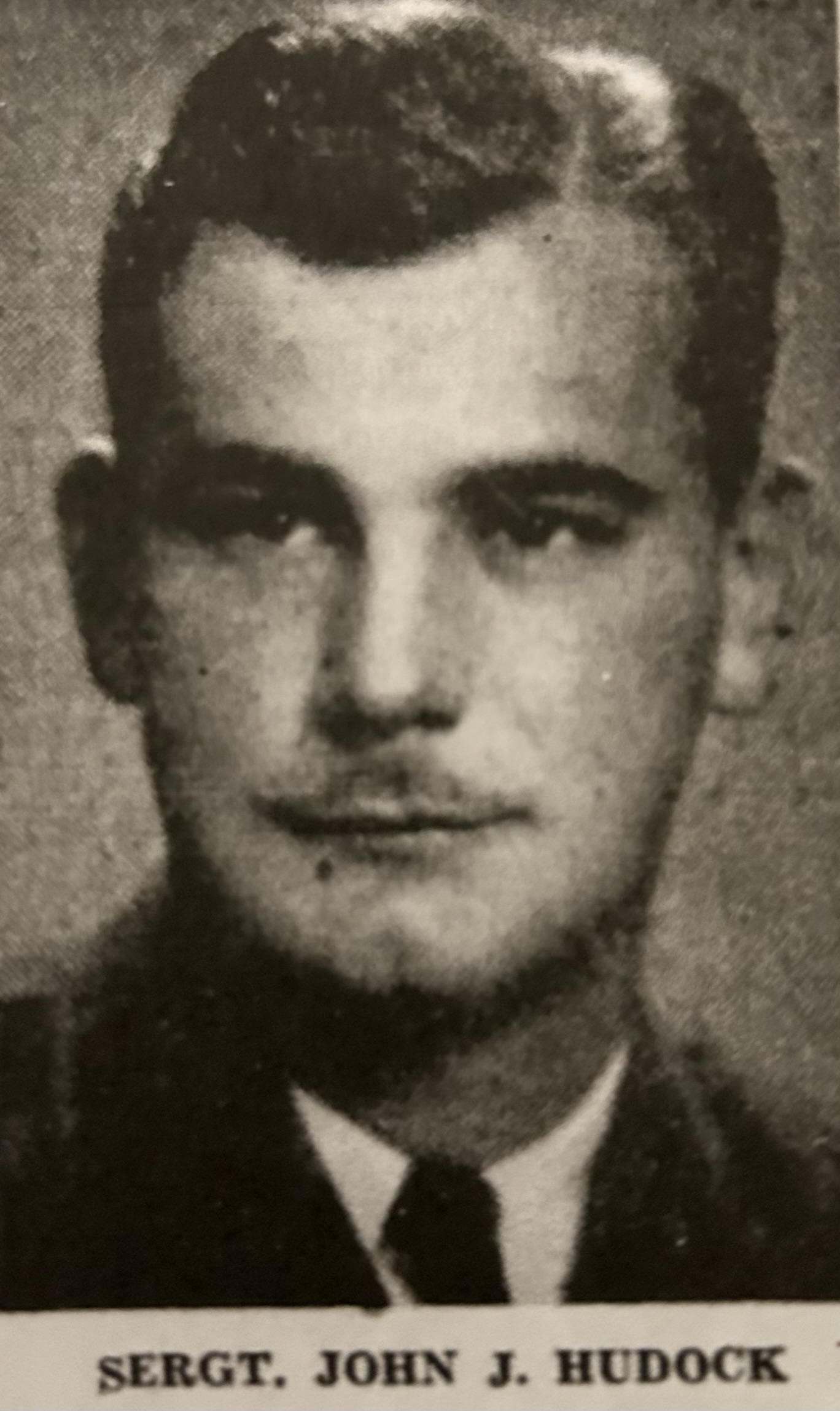
February 21: In a letter to the RCAF, Mary Hudock says she “will not give up hope … until some definite word of his being dead is received.”
March 27: An RCAF telegram informs Mary Hudock that her son is presumed dead.

April 3: The Morning Call reports Hudock is “presumed to be dead,” citing RCAF casualty list made public in Ottawa.
April 10: A Requiem Mass for Hudock is celebrated in St. John the Baptist Church in Allentown.
1946
May 14: An RCAF records officer sends Operational Wings and Certificate to Mary Hudock “in recognition of the gallant services rendered by your son, Flight Lieutenant J. Hudock.”
1952

June 6: RCAF casualties officer writes to Mary Hudock, saying “it must be regretfully accepted and officially recorded that [Hudock] does not have a known grave.”
1957
March 10: Mary Hudock dies in Allentown at 71. She is buried beside her husband in St. John the Baptist Church Cemetery.
(Corinne Hudock Cazer)
1986
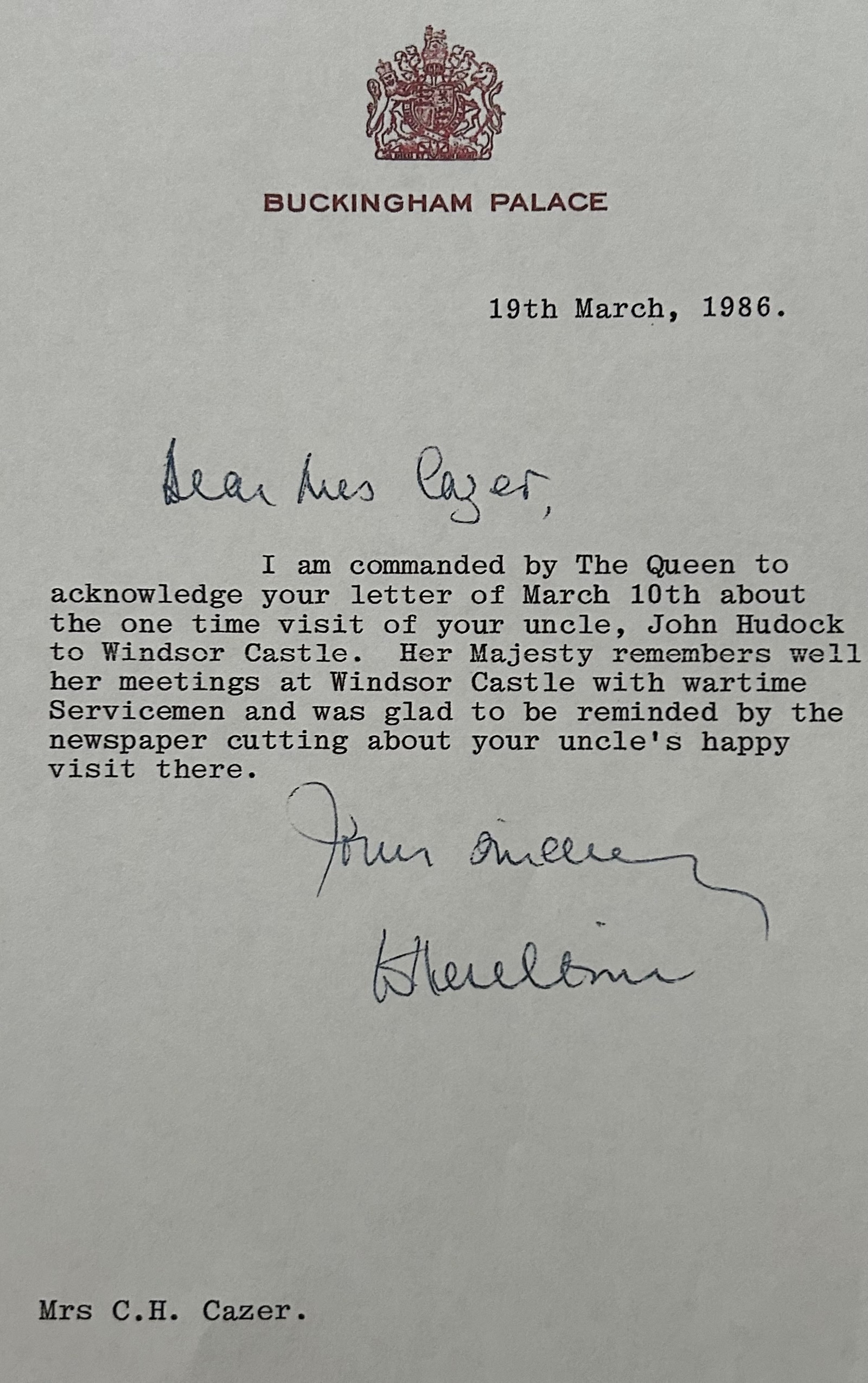
March 10: Hudock’s niece Corinne Cazer writes to Queen Elizabeth II, enclosing a Morning Call clip about Hudock’s visit to Windsor Castle in 1941 and asking if she remembered meeting him.
March 19: Buckingham Palace replies: “Her Majesty remembers well her meetings at Windsor Castle with wartime servicemen and was glad to be reminded by the newspaper cutting about your uncle’s happy visit there.”
 David Venditta